

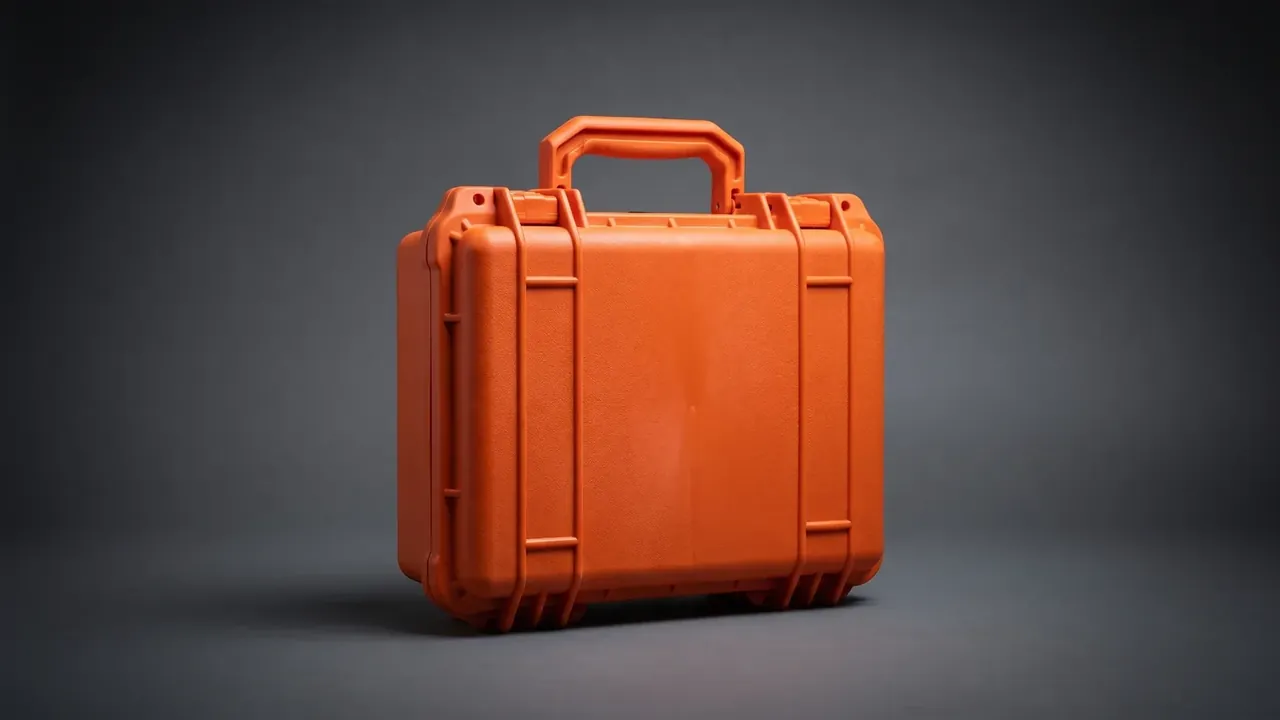
Quick answer: A Mobile Tool Cabinet spec sheet is only useful when its numbers reconcile. Fix the loaded weight and casters first, then build a chain that adds up.
Table of contents
- How a Mobile Tool Cabinet Dimension Chain Adds Up
- Wall Thickness: Nominal, Actual and the Fold
- Caster Dynamic Load: Why Static Ratings Mislead
- Shelf Deflection: Span and Load in Practice
- Tolerances and Fits on the Drawing
- FAQ
1. How a Mobile Tool Cabinet Dimension Chain Adds Up
Spec sheets fail less often from too few numbers than from numbers that contradict each other. A cabinet quoted 1000 mm wide with a 940 mm drawer interior leaves 60 mm unexplained.
The chain runs outside in: width is two uprights, clear interior and two door gaps; height is caster height, base pan and stacked clear heights. On a 1000 by 550 by 1050 mm Mobile Tool Cabinet casters take 125 mm, leaving 900 mm usable.
Depth is overstated most often. A nominal 550 mm loses door, drawer front, rear stiffener and slide allowance, leaving about 460 mm, so plan long tools on usable depth.
| Link | Typical value | Effect |
|---|---|---|
| Upright section | 40 mm by 40 mm | 40 mm per side |
| Door gap | 2.5 mm | 5 mm total |
| Caster height | 125 mm | Counted in full |
| Usable depth | Nominal less 90 mm | Long-tool fit |
2. Wall Thickness: Nominal, Actual and the Fold
Thickness is where specs collapse into one blanket figure. A Mobile Tool Cabinet does not load evenly: doors bend, uprights twist, shelves deflect. One millimetre serves a door, 1.5 mm an upright, 0.9 mm folded beats 1.2 mm flat.
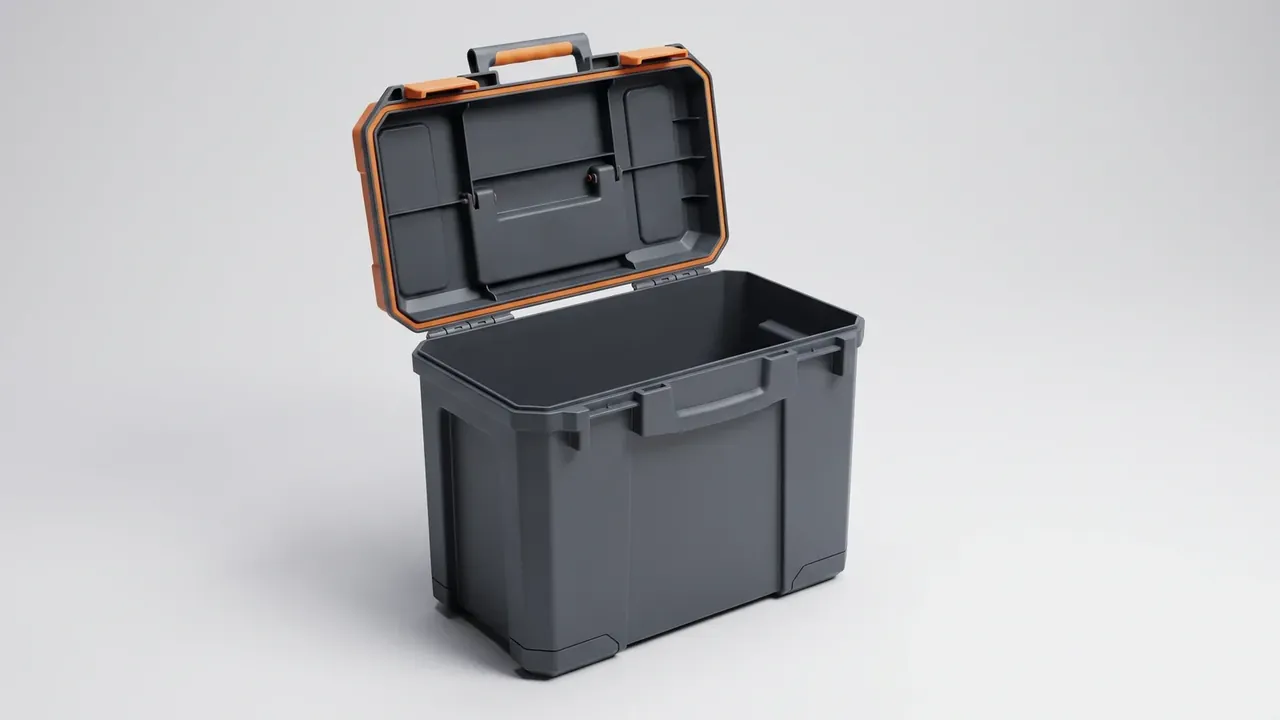
Cold-rolled sheet carries a permitted minus deviation, so a 1 mm nominal often measures 0.94 to 0.98 mm, and the bend radius runs five to eight percent thinner.
The fold is usually left off the sheet. A 0.9 mm shelf with a 12 mm downturned edge and two swages gains twice the section modulus and halves deflection.
3. Caster Dynamic Load: Why Static Ratings Mislead
Casters carry every kilogram, yet they are the parts most often specified by a static figure. In motion a threshold or a turn pushes the momentary load to two or three times static.
Work backwards: loaded weight, divided by wheel count, times a dynamic factor. A 68 kg Mobile Tool Cabinet carrying 300 kg reaches 368 kg, or 92 kg per wheel, so at 2.5 each wheel needs a 230 kg rating.
| Wheel | Dynamic rating | Loaded weight | Push over 10 mm |
|---|---|---|---|
| 80 mm | 100 kg | up to 160 kg | about 180 N |
| 100 mm | 130 kg | up to 208 kg | about 145 N |
| 150 mm | 280 kg | up to 448 kg | about 90 N |
Diameter sets push effort: an 80 mm wheel needs about 180 N over a 10 mm threshold, a 150 mm about 90 N, at the price of a higher centre of gravity.
4. Shelf Deflection: Span and Load in Practice
Shelf deflection is rarely on a spec sheet and is the first thing anyone notices on the floor. It scales with the fourth power of span and the inverse cube of thickness.
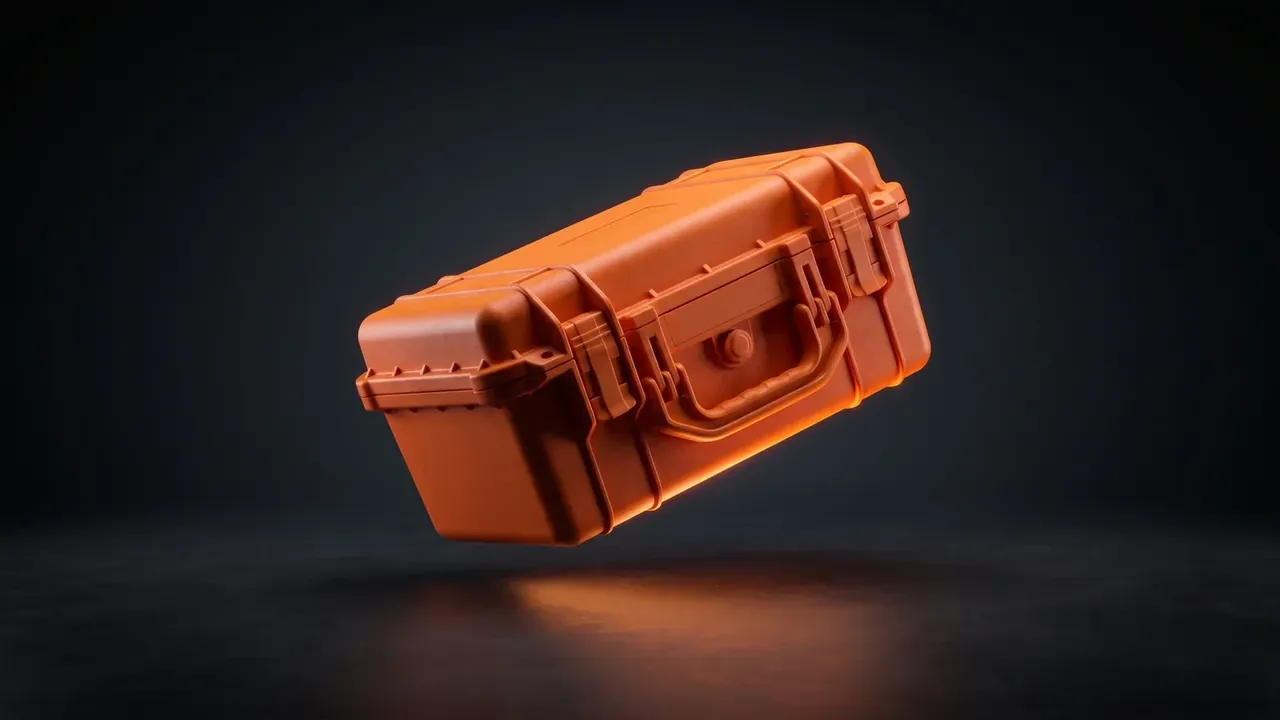
Going from 900 mm to 1200 mm does not add a third to deflection; it multiplies it by 3.2. A wider cabinet must thicken the shelf, add a centre support or deepen the fold.
A workable limit is span over 200: on 900 mm that is 4.5 mm, read after 24 hours loaded and an hour after unloading, with residual set under 0.5 mm.
5. Tolerances and Fits on the Drawing
The last block usually says to national standard, which says nothing, because two workshops read the same clause a factor of two apart. A Mobile Tool Cabinet needs size, diagonal, flatness and hole position stated.
Two millimetres either way on size is enough when the coating alone varies by ten microns. Of two cabinets quoted 1000 mm wide, the one with a 3 mm diagonal error will bind a drawer.
Hole position is the hidden assembly cost. Caster, bracket and hinge holes each held to plus or minus 1 mm can accumulate until a shelf will not seat.
Conclusion
A specification is not a longer table but a chain that holds. Reconcile the dimensions, match thickness to load, size casters on dynamic load and name the gauge for every tolerance. A Mobile Tool Cabinet documented that way can be quoted and inspected.
This article discusses only the container (case body) side of specifications and design intent, and does not cover any handling, loading or use of the contents.
Related Reading
- How to choose a mobile tool cabinet
- Mobile tool cabinet versus alternatives
- Reading a tool chest specification sheet
- Rolling tool case selection points
Related Products
- 8 Series — Gun Cases; Military Equipment Cases; Camera Equipment Cases; Drone Cases; Watch Cases; Knife Cases; First Aid Cases; Electronics Equipment Cases
- WL8-2812 PP Gun Case — model WL8-2812
- All protective cases and toolboxes: 7 series, 158 models