

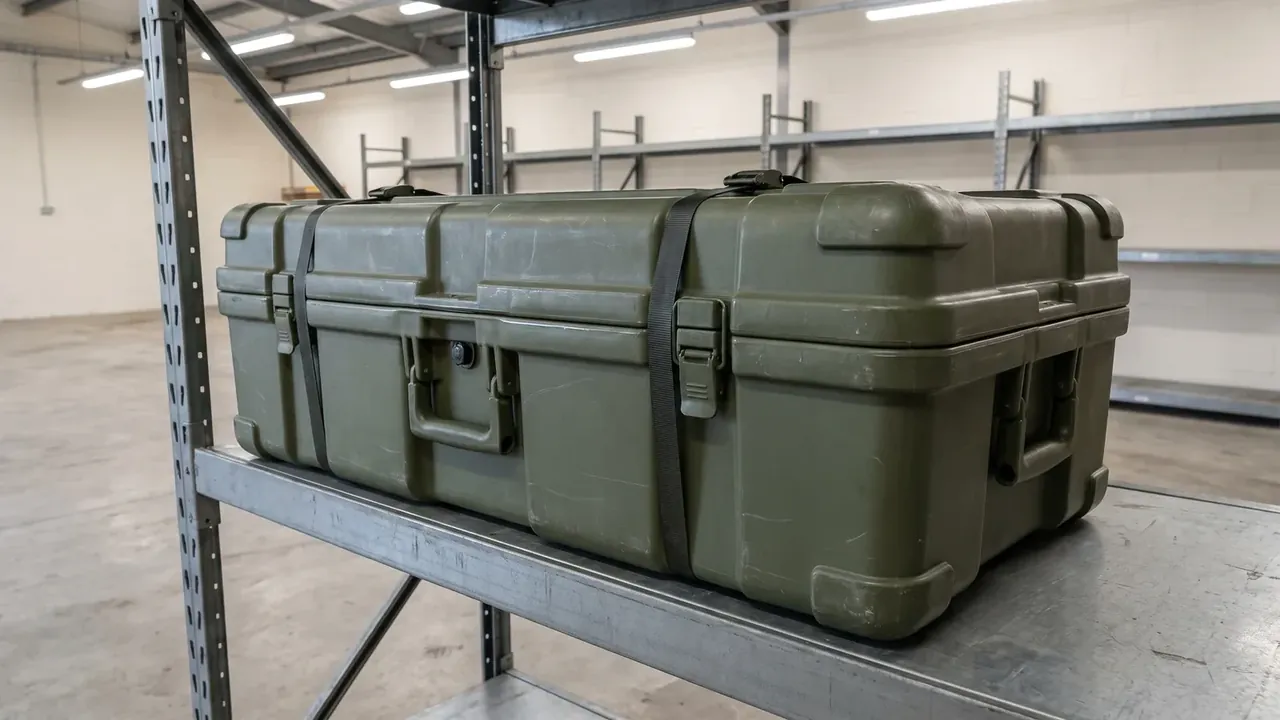
Quick answer:A modular interior for a medical case is settled by its interface: an 8 mm base plate, four locating pins, 0.2 mm pin clearance, interchange held at plus or minus 0.5 mm, 3 kg per module and a swap under 20 seconds. Fix the interface and any grouping of the five module types fits.
Table of contents
- Where the Modular Boundary Sits
- The Base Plate and Locating Pin Interface
- The Tolerance Chain Between Modules
- Three Combinations for Three Scenes
- Modules and the Cleaning Cycle
- FAQ
1. Where the Modular Boundary Sits
The worth of a modular interior is not that it comes apart, but that it goes back to the same seat afterwards. One module off by 1 mm and four stack into 4 mm, the lid will not close, and nobody at the scene wants ten minutes of that.
Draw the boundary around whole blocks: instrument, drug, consumable, waste and record, five families of gear. What changes is how they are grouped; what cannot change is the interface of plate thickness, pin position and module outline.
The other edge matters as much: a module is not a part. Split syringes, swabs and tape into separate wells and the count climbs from five to thirty pieces, which takes longer to load than no modules at all.
2. The Base Plate and Locating Pin Interface
The base plate is the datum. An 8 mm PP plate barely sags across 400 mm, while a 5 mm plate drops 2 mm in the middle and the pins lose grip. Four pins sit on it, two on the diagonal for location and two against rotation, at 0.2 mm clearance, since under 0.1 mm nothing enters and over 0.3 mm the module turns.
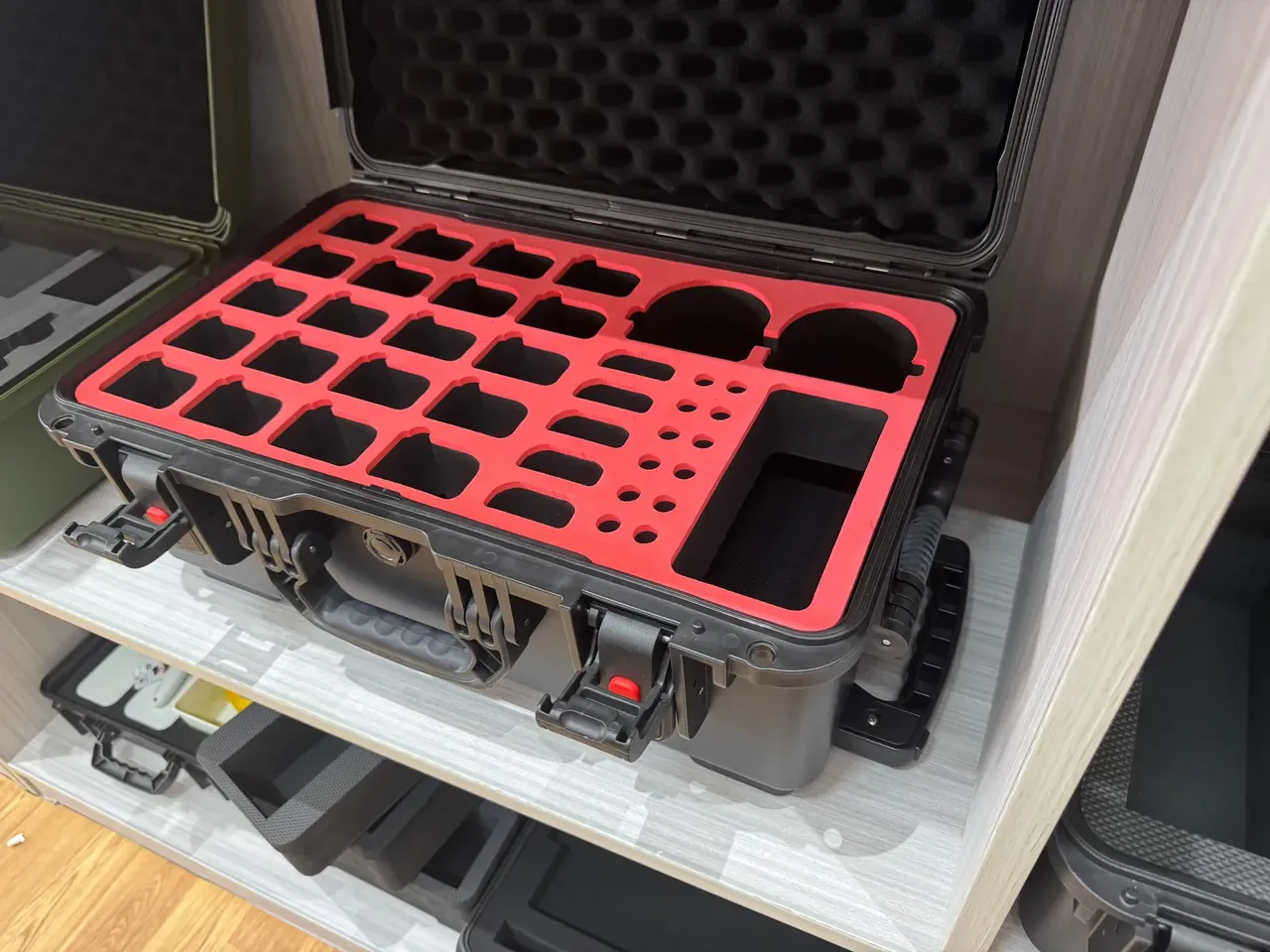
Pin shape decides how a swap feels. A cylindrical pin with a tapered nose guides itself in, and only the last 2 mm runs straight, at 1.5 times the pin diameter; shorter and it rocks, longer and it seizes. Ribs under the boss matter, because a drop loads the root in shear.
The plate fastens to the floor on countersunk screws at 80 to 100 mm pitch, heads sunk 1 mm into the plate so a module never rides on one. Floor flatness stays within 0.5 mm, or the plate follows every wave.
Each module is rated 3 kg over four pins, with drop peaks at ten times gravity. Pins run glass-filled PA66 for wear, plates run PP for toughness, both stable at 60 C in a closed van.
3. The Tolerance Chain Between Modules
Tolerance stacks up from the floor: 0.5 mm flatness, plus or minus 0.2 mm on plate thickness, 0.3 mm on pin position, 0.5 mm on module outline, about 1.5 mm at worst case. Interchange needs 0.5 mm on the drawing, with the other three links giving up half.
| Link in the chain | Nominal | Allocated tolerance | Stacked worst case |
|---|---|---|---|
| Floor flatness | 400 mm span | 0.3 mm | 0.3 mm |
| Plate thickness | 8 mm | plus or minus 0.2 mm | 0.5 mm |
| Pin position | 4 hole centres | plus or minus 0.3 mm | 0.8 mm |
| Module outline | 200 by 150 mm | plus or minus 0.5 mm | 1.3 mm |
Moulding shrink adds a layer. PP shrinks 1.0 to 2.5 percent, which is 3 to 7.5 mm across a 300 mm module; ABS shrinks 0.4 to 0.7 percent, so the same tool returns a smaller module. One compound for plate and module keeps the chain unchanged.
The figure is measured, not assumed: with the module on its pins, push each corner, and movement past 0.5 mm fails, because a shifting module lets a drug well lid press on its neighbour.
Measurement matches too: pin position on a coordinate machine, the module-to-divider gap on a feeler gauge, both with the case assembled. Measured loose, a sprung plate makes the numbers incomparable.
4. Three Combinations for Three Scenes
Three combinations cover ward transfer, field response and on-site service. A swap reorders modules rather than replacing the case, so size and interface are fixed once.
| Combination | Module families fitted | Swap time | Typical scene |
|---|---|---|---|
| Transfer | instrument, drug, record | 20 s | between wards |
| Response | instrument, consumable, waste | 25 s | field and ambulance |
| Service | instrument, consumable, record | 15 s | service visits |
Twenty seconds assumes one hand, four pins and two modules seated first time. Past thirty, crews swap whole cases and give the saving back.
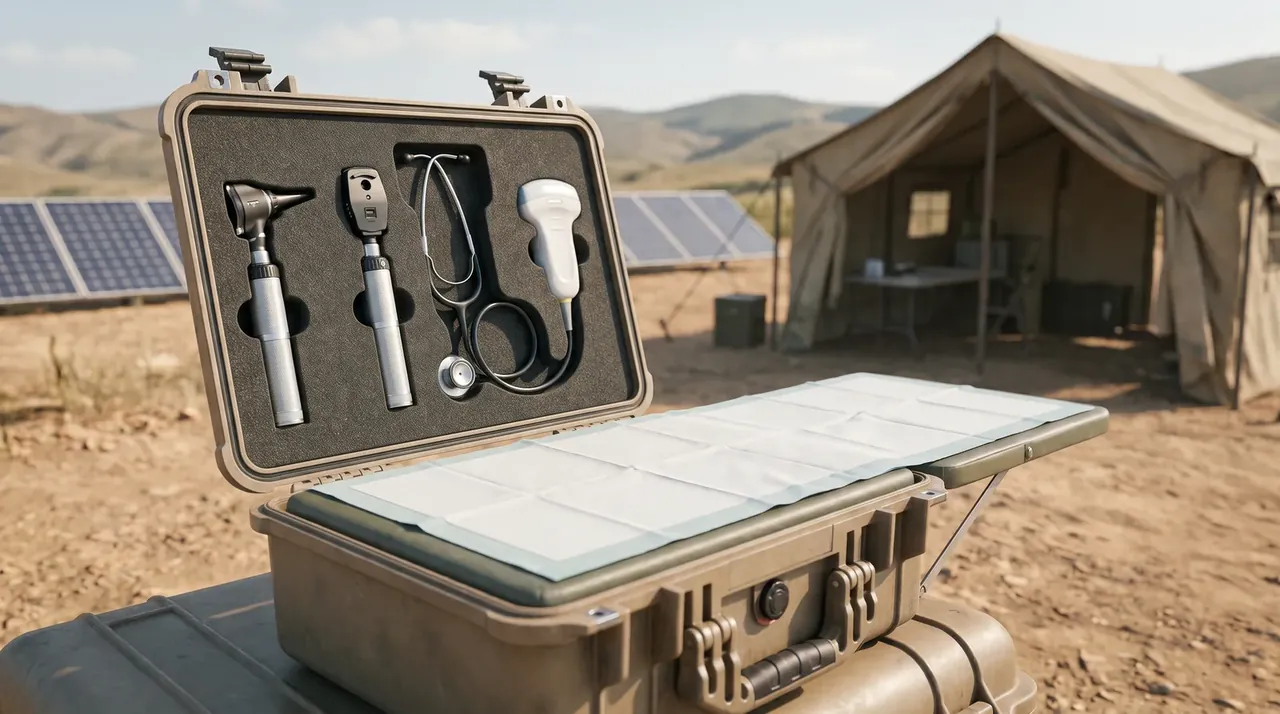
The lid never comes into it: a strap holds the otoscope and stethoscope through every change, and base compartments keep dressings, so an emptied base doubles as a working surface.
5. Modules and the Cleaning Cycle
Cleaning is the hidden cost. What hoses down as a whole cannot always soak in pieces: EVA at 24 to 180 kg per cubic metre is open-cell and needs 24 hours to dry, PP takes a direct wash, ABS whitens under chlorine.
| Module material | Lifts out whole | Cleaning method | After repeated wiping |
|---|---|---|---|
| PP moulded tray | yes | running water, neutral detergent | no bloom, ink wipes off |
| ABS tray | yes | wipe only, keep chlorine away | blooms after strong chlorine |
| EVA block | yes | dry wipe, low-frequency disinfection | slower recovery once wet |
Removable is what makes it cleanable. With modules out, debris in the corners and pin holes can be reached; the hole is the trap, 6 mm across and 8 mm deep, and a swab must reach bottom.
Dry before refitting. Water sits in a hole, a module seals it in, and a week later a white ring appears that no wiping removes. Stand modules on a drain rack for 30 minutes, holes down.
Related Reading
- Custom inserts and the module base plate
- Counting the volume a module takes
- Selection order for a modular fit-out
- Disinfection and removable modules
Conclusion
A modular interior for a medical case stands on one interface, one tolerance chain and one cleaning routine: 8 mm plate with four pins and 0.2 mm clearance, interchange at plus or minus 0.5 mm, modules that lift out and dry off.
This article covers only the case side of specification and design.
Related Products
- 8 Series — Gun Cases; Military Equipment Cases; Camera Equipment Cases; Drone Cases; Watch Cases; Knife Cases; First Aid Cases; Electronics Equipment Cases
- WL8-2812 PP Gun Case — model WL8-2812
- All protective cases and toolboxes: 7 series, 158 models