

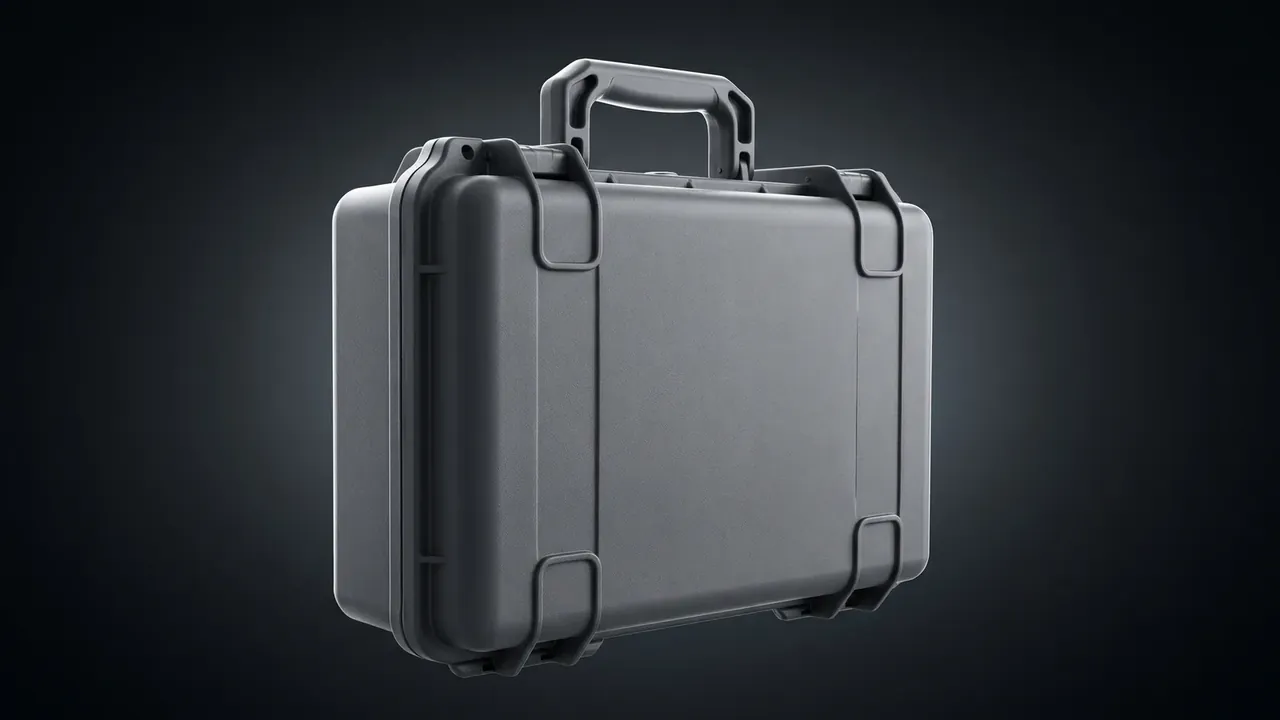
Quick answer: Modular storage for engineering cases at a 25 mm slot pitch with 6 mm dividers returns 18 cells and 78% utilisation, one-hand pull force held at 45 N.
Table of contents
- Cell Planning in Modular Storage for Engineering Cases
- Divider Slot Pitch and Module Ratios
- Working Out the Volume Utilisation
- Divider Pull Force Over Repeated Fitting
- The Module Figures a Stores Team Works To
- FAQ
1. Cell Planning in Modular Storage for Engineering Cases
A full case is not a packed case: one wrong slot pitch and usable space drops by a slice. Modular storage for engineering cases starts with a 495 × 355 × 180 mm cavity, slots every 25 mm along the length and modules at 1/2, 1/3 and 1/6; six columns by three rows gives 18 cells. The shell is 540 × 400 × 220 mm outside on a 4.0 mm wall, 5.0 kg empty.
More cells is not better. Seven of 12 dividers hold the 18 cells and five are spares; long items need two 1/6 modules swapped for one 1/3 with the middle divider out. Fixing the divider count is what caps the cells, and every cell carries a label pocket cut into the mouth so it never competes with a divider.
2. Divider Slot Pitch and Module Ratios
The pitch rule for modular storage for engineering cases has one form: cell width plus divider thickness. A 75 mm cell on a 6 mm board takes 81 mm, three 25 mm pitches. The series runs 10, 12.5, 15, 20 and 25 mm, and 25 mm suits items around 100 mm.
Slot width is divider thickness plus 0.3 to 0.6 mm. A 6 mm board sits in a 6.4 mm slot, the extra 0.4 mm covering shrink and assembly: PP moulds at 1.5% to 2.2%, or 0.8% to 1.4% with talc, which is 4 to 11 mm over 495 mm, so slots are laid from the centre outwards.
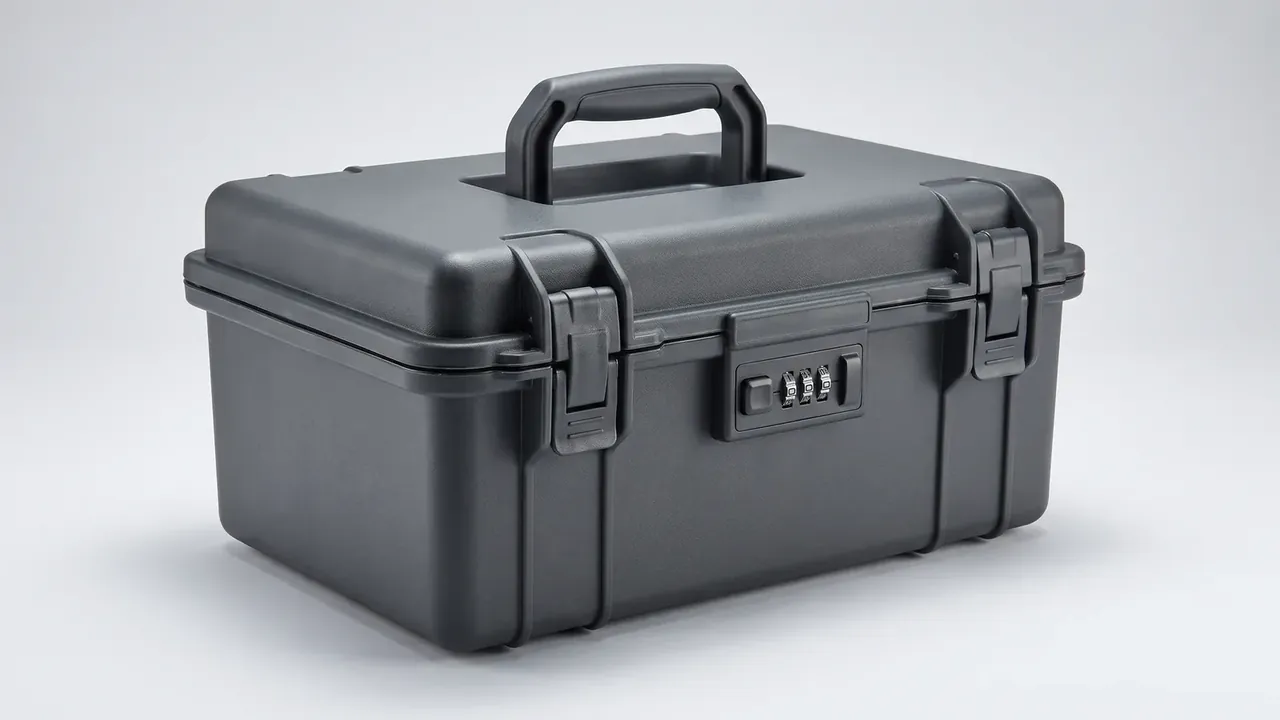
The slot edge in modular storage for engineering cases carries a 0.5 mm chamfer and insertion depth is 15% of divider height or 8 mm: a 150 mm divider sits 25 mm in. Eighteen slots at 6.4 mm add to 115 mm, 23% of the cavity length, so wall stiffness holds.
| Module | Width | Pitches | Fits |
|---|---|---|---|
| 1/6 | 75 mm | 3 | Small parts, fittings |
| 1/3 | 150 mm | 6 | Instruments, cable sets |
| 1/2 | 225 mm | 9 | Long items, rolls |
3. Working Out the Volume Utilisation
Utilisation in modular storage for engineering cases is not cavity volume divided by itself. The 31.6 L cavity loses 4.1 L of dividers, 1.9 L of side margin and 0.9 L of slot bosses, leaving 24.7 L, which is 78%. Dividers take 13%: twelve boards under 0.4 kg each still hold an eighth of the volume.
Corners count too: in modular storage for engineering cases four R20 corners take 344 mm² of floor, 0.06 L at 180 mm deep, yet each divider end clears 3 mm so the cell stays square.
| Reading | Basis | Verdict |
|---|---|---|
| Above 82% | 8 dividers, 12 cells | Long items only |
| 78% to 82% | 12 dividers, 18 cells | General purpose |
| 70% to 78% | 16 dividers, 24 cells | Finding beats loading |
| Below 70% | 20 dividers or more | Boards eat more than they hold |
4. Divider Pull Force Over Repeated Fitting
Pull force is what a tight pitch costs. A 6 mm board in a 6.4 mm slot grips on 0.4 mm of interference, and the one-hand ceiling for modular storage for engineering cases is 45 N, well under the 50 to 100 N of a two-handed tote.
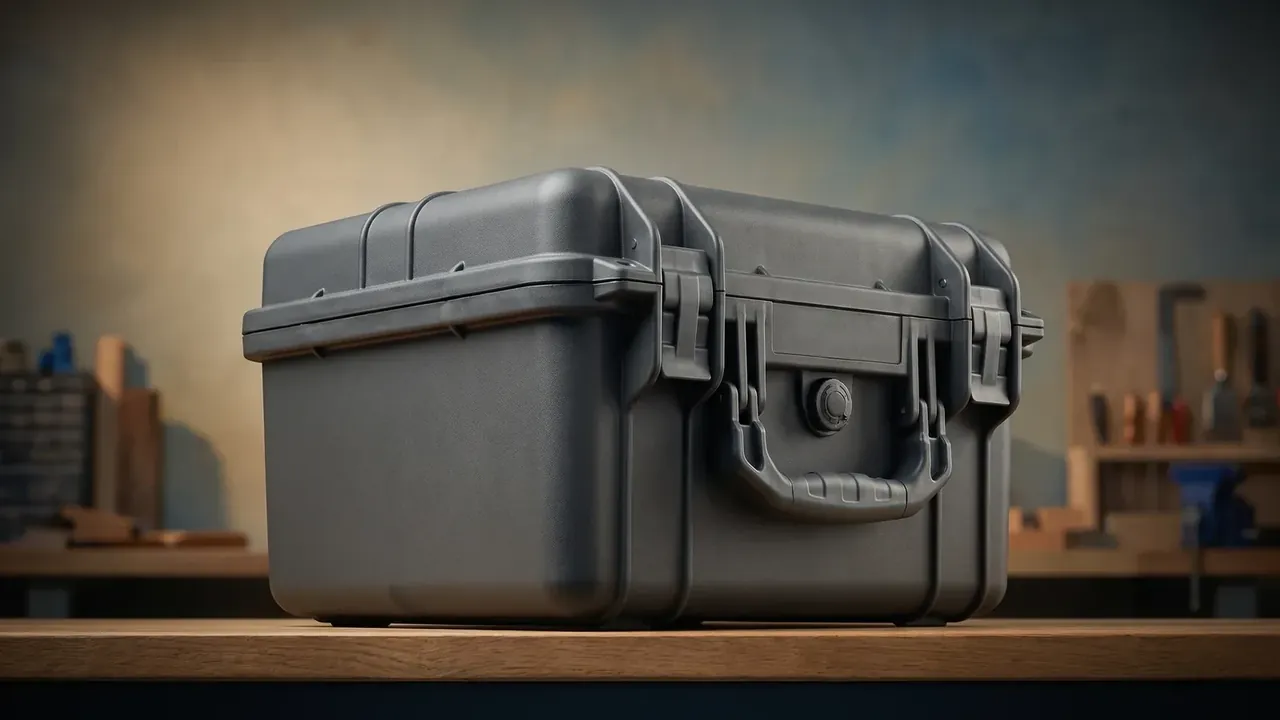
At a 15 mm pitch a 75 mm cell leaves 9 mm between slots and pull force climbs; the edge rounds over, stops gripping, and the divider slides down. The 0.5 mm chamfer moves that wear onto a slope.
Divider thickness should not move once the pitch is set for modular storage for engineering cases. At 8 mm the slot needs 8.4 mm, eighteen slots take 151 mm, and the wall loses 30% of its length.
The case opens 4,700 times while dividers are fitted twice a week, two at a time, about 200 fittings in two years. IP66 sealing lives in the lid gasket, not in the dividers.
| Fitting round | Force | Slot state |
|---|---|---|
| First | 45 N | Chamfer intact |
| 50 rounds | 42 N | Chamfer polished |
| 200 rounds | 36 N | Rounded, base grip |
| 500 rounds | 28 N | Replace board |
5. The Module Figures a Stores Team Works To
The module tier is the pitch that still returns over 78% utilisation at eighteen cells; tighter and pull force passes 45 N. That line ties utilisation to pull force, because a tighter pitch adds cells while the dividers take back more than the cells return.
A stores team accepts modular storage for engineering cases on three checks: one divider inserted one-handed under 45 N; eighteen label pockets read by column inside two minutes; 5.0 kg cases stacked five high for 24 h with the bottom lid under 5% set, per the static-load method of GB/T 4857.3.
At five high the bottom case carries four above plus itself, about 60 kg at 15 kg loaded each, so ribs must line up; half a cell out of register and the load lands on hollow panel.
Conclusion
Modular storage for engineering cases is costed in cells: a 25 mm pitch with 6 mm dividers puts utilisation at 78% across eighteen cells, and one pitch tighter pushes pull force past 45 N for space the boards take back. Seven dividers in place and five spare is the rule for an acceptance sheet, with 5.0 kg shells stacked five high behind it.
Related Reading
- The Usable-Volume Calculation
- Handling Methods for Site Equipment Cases
- Hard Case and Carton in Transit
Related Products
- 8 Series — Gun Cases; Military Equipment Cases; Camera Equipment Cases; Drone Cases; Watch Cases; Knife Cases; First Aid Cases; Electronics Equipment Cases
- WL8-2812 PP Gun Case — model WL8-2812
- All protective cases and toolboxes: 7 series, 158 models