

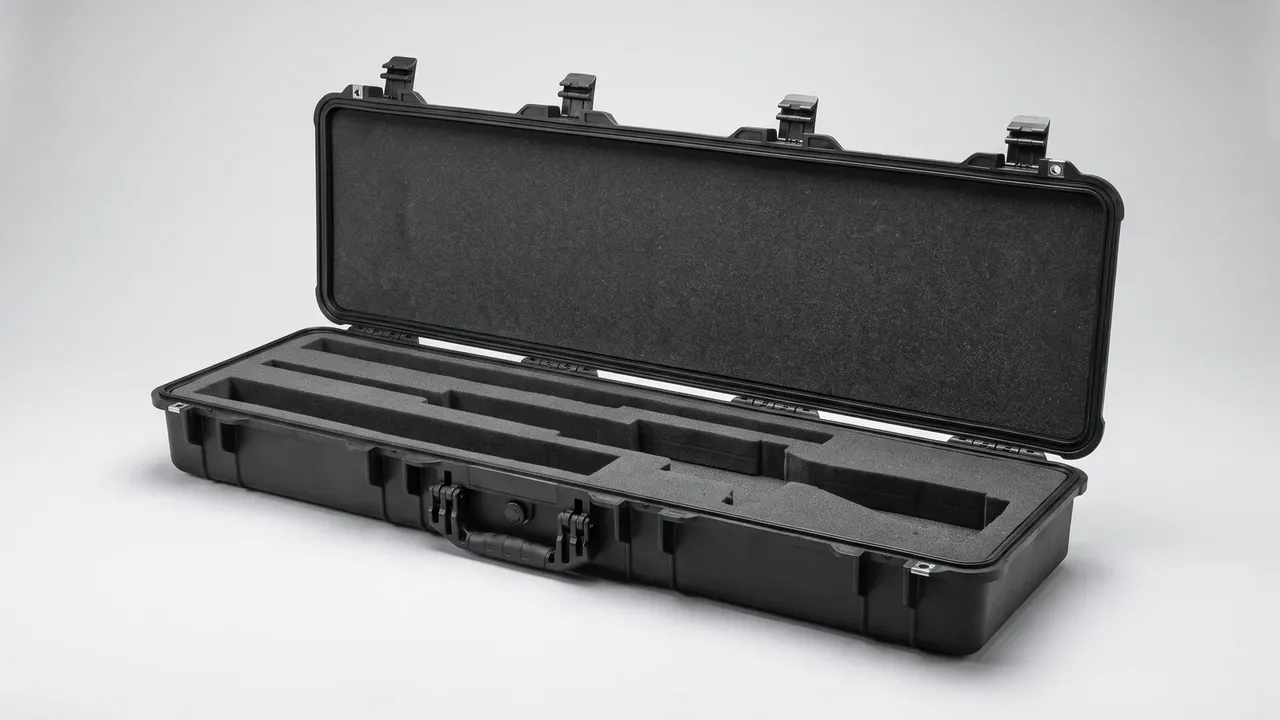
Quick answer: Price a Munitions Shipping and Storage Container in three parts — shell weight, hardware and gasket, interior and labor — then verify each on the floor with a feeler gauge, a scale, a handle load test, a 500-cycle latch check and a thumb press on the hole walls. A 45 CNY gap per unit looks small until a 200-unit batch passes a three percent rework rate.
Table of contents
- Where the Price Gap Comes From
- Five Checks You Can Run On the Spot
- Match the Cavity, Stack Height and Handling
- Fold Rework Cost Into the Unit Price
- FAQ
1. Where the Price Gap Comes From
Same cavity size, same four latches, and two quotes forty-five yuan apart. The difference rarely hides in overhead. It sits in three visible lines: shell weight, hardware and gasket, interior and labor.
| Cost line | Gap per unit | How to check on site | What the saving costs you |
|---|---|---|---|
| Shell weight | 25 to 45 CNY | Weigh empty cases of the same size | Thin walls, lid dishes under stack load |
| Hardware and gasket | 15 to 30 CNY | Latch feel, gasket section height | Leaks, brittle latches in cold |
| Interior and labor | 20 to 40 CNY | Hole wall straightness, sheet thickness | Movement, hole walls worn round |
Start with weight. Two Munitions Shipping and Storage Container units of identical outline, one at 9.8 kg and one at 8.3 kg, differ by a kilo and a half of wall. Rotomolded weight tracks thickness almost linearly, so the light one is thinner, not cleverer.
Hardware is next. Latches are either die-cast or stamped and bent; gaskets are either molded as one loop or pushed in as segments. Segmented gaskets are cheaper, and every joint is a leak path.
Interior is the line buyers skip. Five millimeters of sheet thickness changes nothing by hand and everything after one long haul: soft walls let the load rub until white powder shows at each pocket.
2. Five Checks You Can Run On the Spot
No lab is needed to judge a Munitions Shipping and Storage Container. If any of these five fails, the price talk can wait.
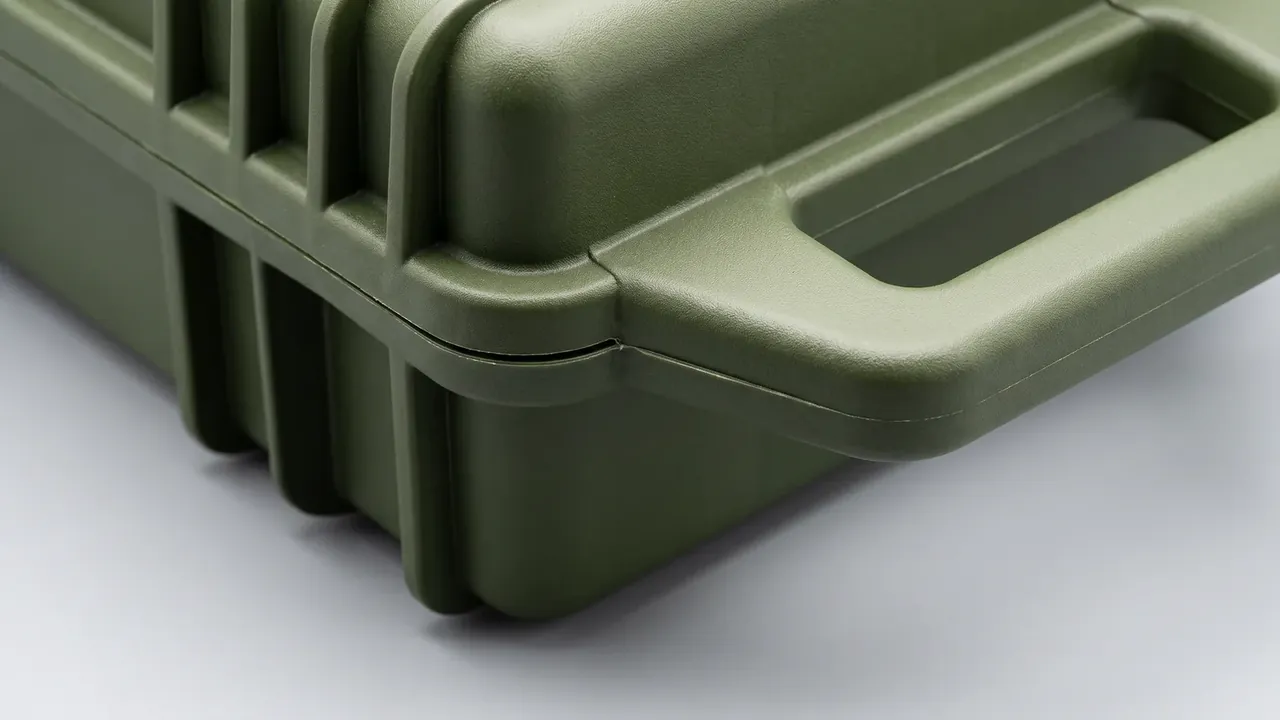
- Feeler gauge. Run a 0.25 mm blade around the rim. Every point that accepts it marks low compression; two or more and the batch goes back.
- Scale. Two cases of the same cavity that differ by more than 1.5 kg need a wall thickness figure in writing.
- Handle load. Fill to half the rated load, 50 kg, hang for ten minutes, then look for whitening or hairline cracks at the handle root.
- Latch decay. Cycle the latches 500 times and re-measure preload. A drop beyond fifteen percent means cheap rubber or a thin latch seat.
- Hole wall. Press a thumb down each wall. Any soft collapse means the sheet is thin; then check that every pocket floor sits level.
The five take twenty minutes, faster than a third-party report and more reliable than photos. Samples are always sorted; only batch parts tell you anything.
3. Match the Cavity, Stack Height and Handling
Passing the checks only proves the Munitions Shipping and Storage Container is well made. Fit is a separate question. A cavity of 710 by 410 by 290 mm is common, and the same outline comes in 4.2 mm and 5 mm walls, a stack layer apart.
| Handling pattern | Cavity L × W × H | Wall | Usual stack | Note |
|---|---|---|---|---|
| Single unit upright | 710 × 410 × 290 mm | 5 mm | Four high | High center of gravity, level the base |
| Rows in pockets | 710 × 410 × 240 mm | 4.2 mm | Five high | Sheet carries load, wall can drop |
| Layered packing | 800 × 500 × 350 mm | 5 mm | Three high | Heavy unit, check handle and lifting points |
Measure your transport unit first, then the case. A 1.2 m by 1 m pallet takes two 800 mm cases side by side only by overhanging, so they end up in a single row, one stack layer disappears, and freight per unit climbs.
Fit also hides in opening frequency. Above three openings a day, specify the reinforced latch seat; once a week, the standard one is enough.
4. Fold Rework Cost Into the Unit Price
Forty-five yuan cheaper per Munitions Shipping and Storage Container is nine thousand on a 200-unit batch. The saving is real until one rework event lands: 3,800 CNY for the return truck, three days of line stoppage, inspection at eight yuan a case, plus an expedited shipment.
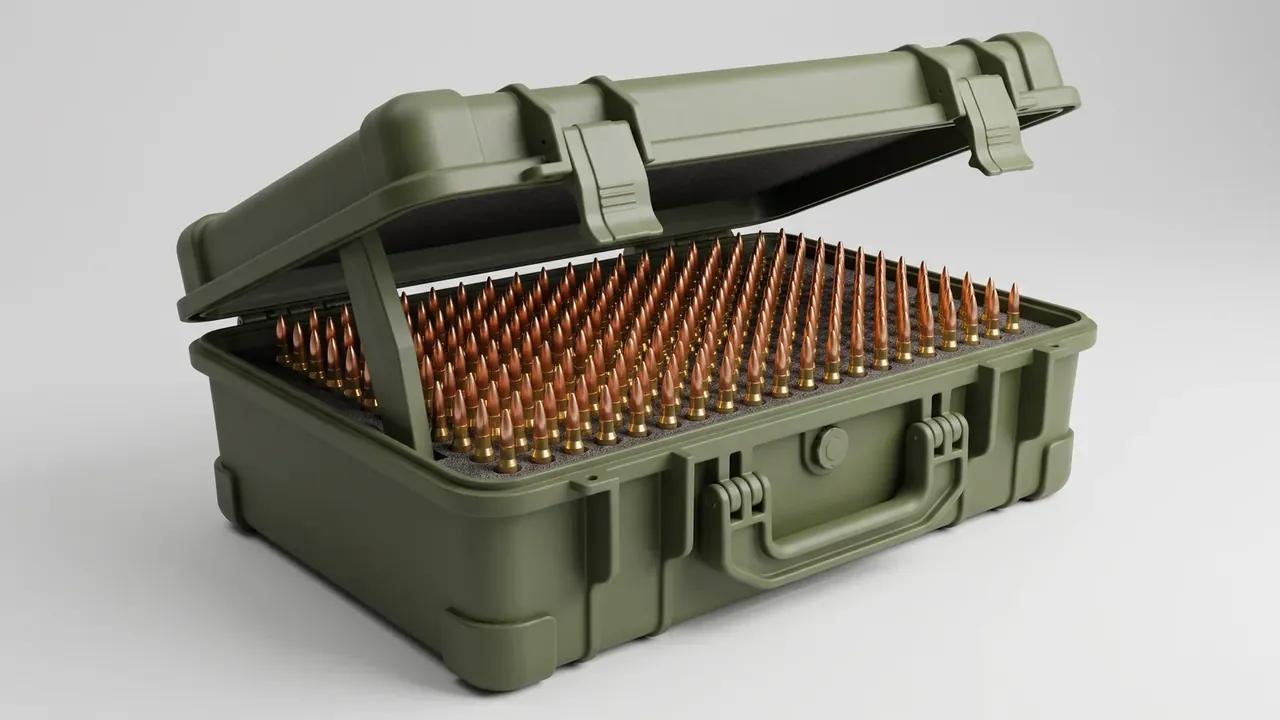
At that rate, a three percent rework rate wipes out the nine thousand, and five percent pushes the effective unit price fifteen percent above the quote you rejected. Rework rates are not guesses: pull twenty cases from the first delivery, run the feeler and the scale, and the range appears.
Lead time belongs in the sum. Fifteen days against twenty-two matters only if the gap lands inside your shipping window, but one air freight bill then cancels the discount.
Conclusion
The gap on a Munitions Shipping and Storage Container is designed in, not negotiated away: wall, gasket, sheet thickness, each leaving a mark on the quote. Add rework and lead time, and cheap and expensive often trade places.
This article discusses only the container (case body) side of specifications and design intent, and does not cover any handling, loading or use of the contents.
Related Reading
- Load, sealing and cushioning design of munitions cases
- Reusable cases against the alternatives
- How to read application configurations for special cases
Related Products
- 8 Series — Gun Cases; Military Equipment Cases; Camera Equipment Cases; Drone Cases; Watch Cases; Knife Cases; First Aid Cases; Electronics Equipment Cases
- WL8-2812 PP Gun Case — model WL8-2812
- All protective cases and toolboxes: 7 series, 158 models