

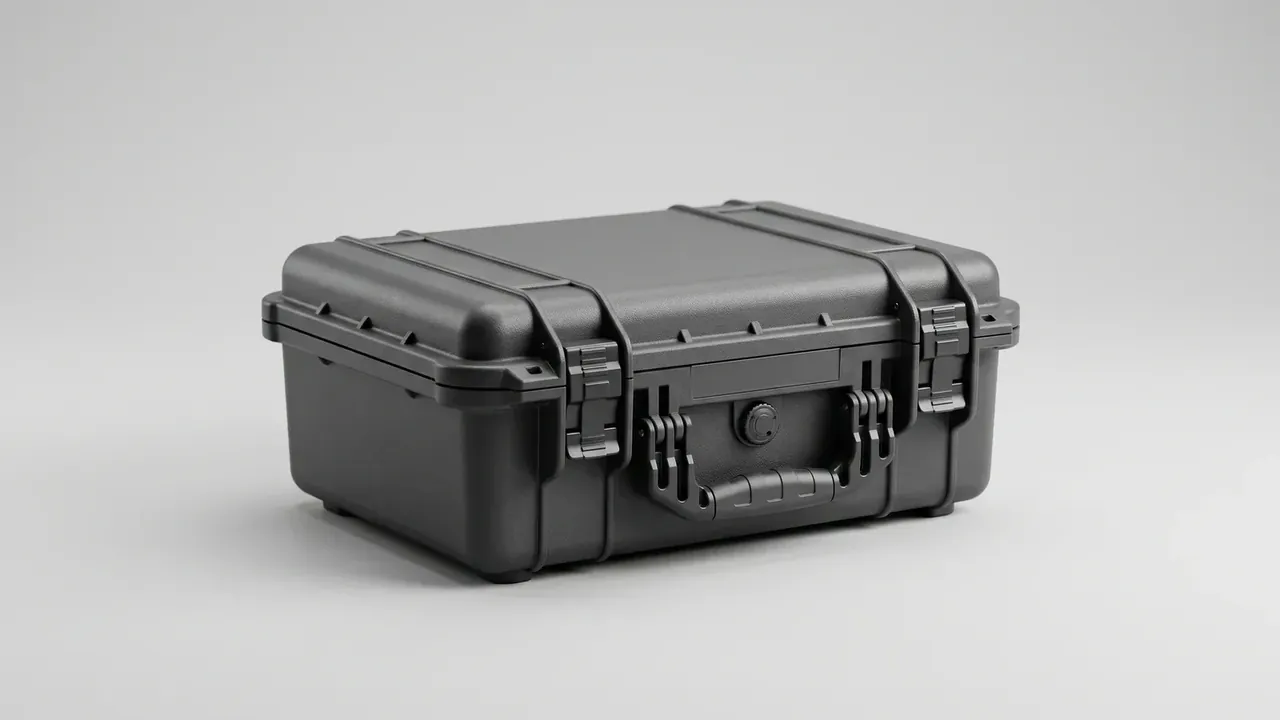
Quick answer: Choosing an OEM protective case starts before the price list. Settle who owns the tooling, how samples are judged, and which delivery dates go into the contract. Tooling decides whether you can change the structure, sampling decides whether mass production reworks, and dates decide whether the goods reach your launch.
Table of contents
- OEM protective case selection starts with tooling
- Who owns the tool: stock, modified or private
- Sampling: from bare shell to production sample
- Order quantity: amortising the tool cost
- Delivery: putting dates into the contract
- FAQ
1. OEM protective case selection starts with tooling
The first fork is the tool, not the look. A 600 mm case from a stock mould, recoloured, ships in 25 days; a new steel tool runs 45 days or more to first shot.
Ask whose tool it is, how many shots it has run, whether the structure can change, then whether a change needs a new tool, and only then the price.
| Route | Tool cost | MOQ | First order | Exclusivity |
|---|---|---|---|---|
| Recolour stock mould | None | 200–500 | 25–30 days | None |
| Modify stock mould | CNY 5k–20k | 500–1,000 | 30–40 days | Partial |
| Private tool | CNY 80k–250k | 1,000–3,000 | 45–60 days | Contractual |
2. Who owns the tool: stock, modified or private
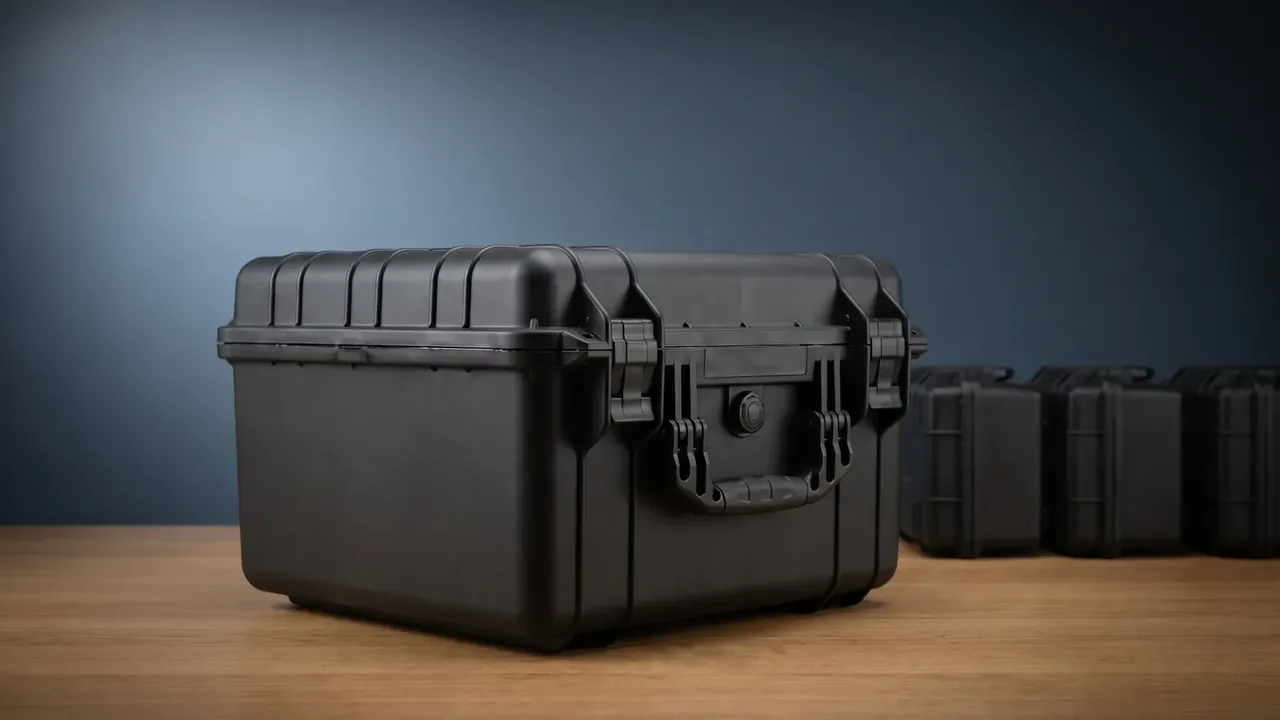
Recolouring is the lightest route: the shell stays, only compound and liner change, tool cost zero, but the model is shared with competitors. It suits a first test or a channel-exclusive colour, not a flagship.
Modification sits between: a handle position, a liner slot or a metal latch, costed by volume at CNY 5,000 to 20,000 over three to four weeks. Adding material is easy, removing it is not, and moving a feature usually needs a new insert.
A private tool is cleanest and dearest. Steel runs 300,000 shots; aluminium needs rework after 3,000 to 5,000. Three clauses belong in the contract: cost in the unit price, refund threshold, ownership at exit.
3. Sampling: from bare shell to production sample
Sampling runs in three stages: first an appearance model, CNC or printed, five to seven days, for proportion and handle height; then the first shot, a bare shell, for wall thickness, latch interference and gasket groove; then the production sample for colour and finish.
Put numbers on it: Delta E within 1.5 in a batch and 2.0 between, wall thickness plus or minus 0.2 mm, lid gap under 0.3 mm, and an immersion or pressure-decay test to the stated IP rating. Without numbers, approval becomes a nod.
| Stage | Lead time | Judged on | If it fails |
|---|---|---|---|
| Appearance model | 5–7 days | Proportion, handle, opening angle | Change the drawing |
| First shot, bare | 20–25 days after tooling | Wall, interference, gasket groove | Rework tool, 1–2 weeks |
| Production sample | 3–5 days | Colour, print, assembly | Adjust colour or process |
4. Order quantity: amortising the tool cost
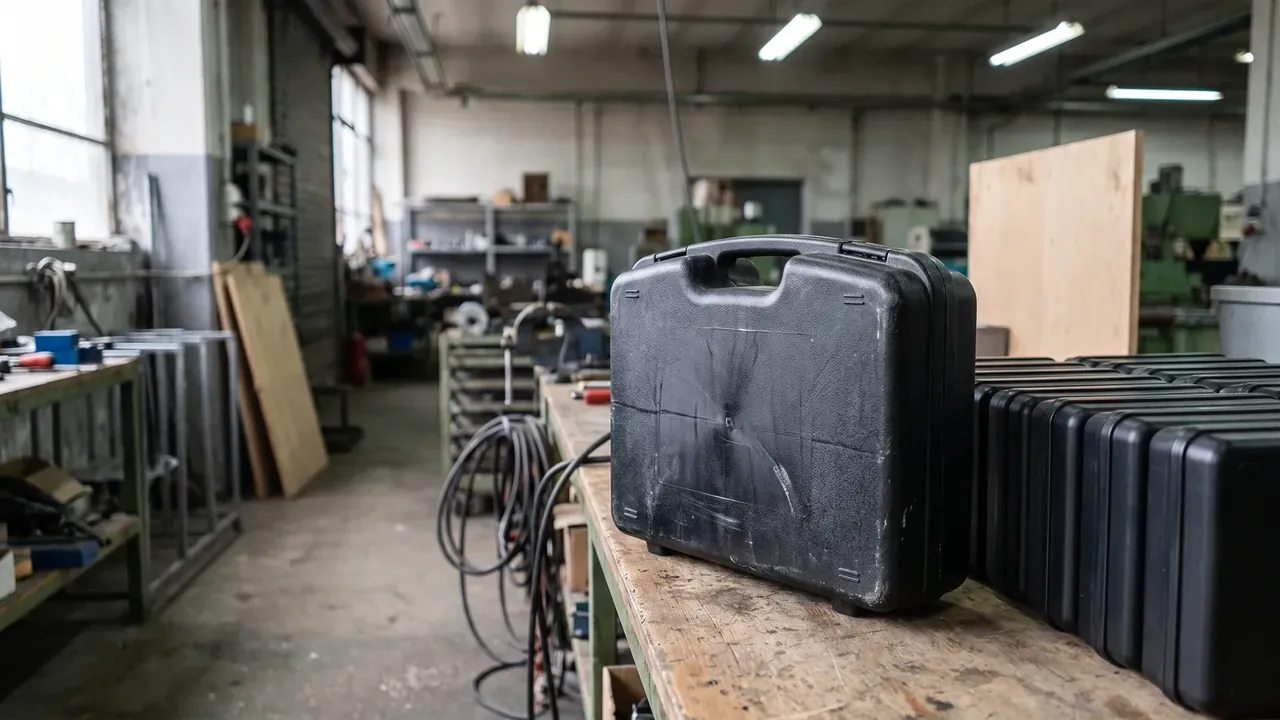
MOQ spreads three costs over a run: tool, foam die, print screens. A die costs CNY 800 to 2,000 and each screen CNY 300 to 800, billed apart, so at low volume they outweigh the shell.
Pay once and the unit price carries no amortisation, suiting a short run. Amortise it and the price rises ten to twenty percent, refunded at an agreed cumulative quantity. Write the counting basis into the clause: same model or same contract.
The first order is seldom a capacity floor but the line where tool cost thins. A CNY 80,000 tool at CNY 10 margin needs 8,000 units, so 3,000 carries an extra CNY 17 each.
5. Delivery: putting dates into the contract
Break delivery into stages: tooling 25 to 35 days, first shot 5, rework 7 to 10, production 25 to 30, sea freight 30 to 35. Stage dates beat a single total.
Put the buffer where the risk is: a week on tooling, three days on production.
Conclusion
OEM protective case selection moves in three steps: tooling sets capability, sampling sets the standard, dates set the risk. Settle all three before the quotation, or the negotiation turns into damage control.
This article covers container-side specifications and design implications only, not the handling, loading or use of the contents.
Related Reading
- How to choose a case OEM factory
- What a case mould really costs
- From drawing to first shot
- Setting a baseline MOQ for cases
Related Products
- 8 Series — Gun Cases; Military Equipment Cases; Camera Equipment Cases; Drone Cases; Watch Cases; Knife Cases; First Aid Cases; Electronics Equipment Cases
- WL8-2812 PP Gun Case — model WL8-2812
- All protective cases and toolboxes: 7 series, 158 models