

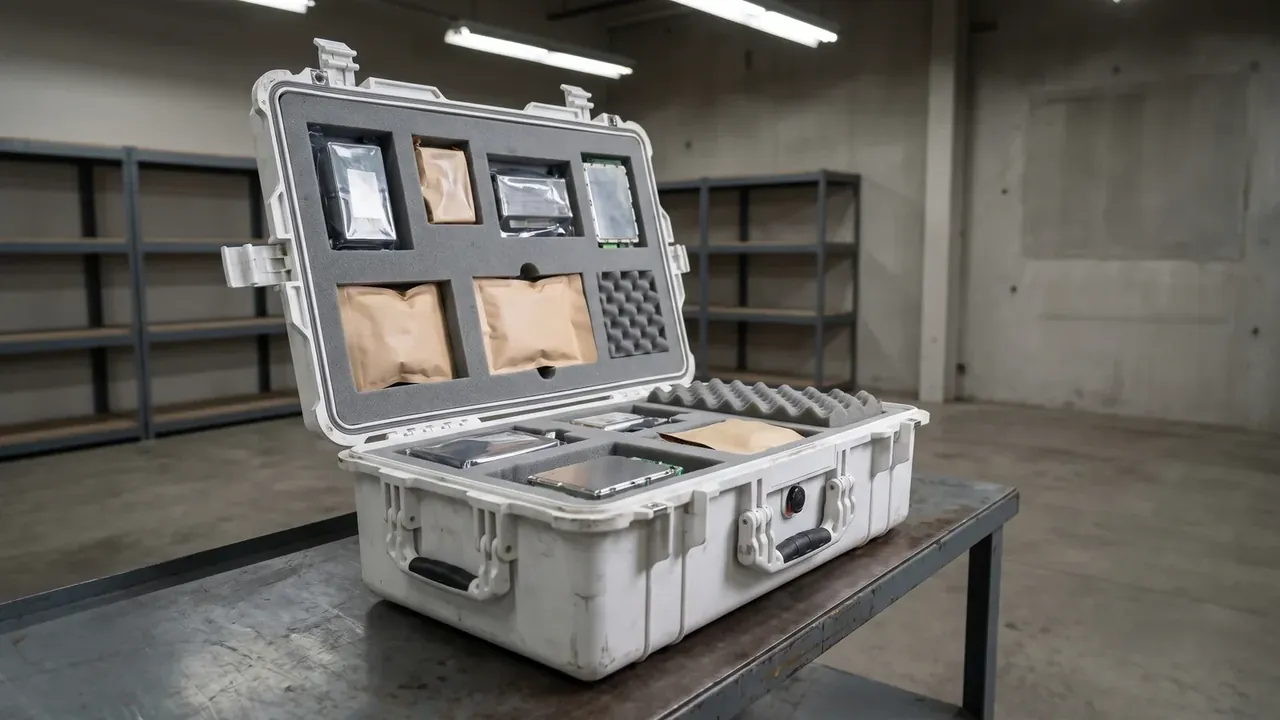
Quick answer: An OEM Protective Case Supplier is audited in five moves: licences and a visit list, capacity maths, sample approval, tool and jig ownership, then change control with lot traceability. Sixty-two items take two days, samples run three rounds, changes need 30 days notice.
Table of contents
- What to Audit in an OEM Protective Case Supplier
- Licences and the Factory Visit List
- Capacity and Equipment Maths
- Sample Approval and a Light PPAP
- Tooling, Jigs, Changes and Traceability
- FAQ
1. What to Audit in an OEM Protective Case Supplier
Most audits collapse into a tour: two lines, a folder of certificates, photos. Six months later the moulding sits with a neighbour workshop, the 1300-tonne press is really 800, the buyer's tool runs a rival's case.
An audit of an OEM Protective Case Supplier collects evidence, not impressions: licences, press plates, trial reports, lot ledgers. Eighteen of the 62 items are key.
| Stage | Evidence | Time on site | If failed |
|---|---|---|---|
| Licences | Licence, QMS certificate, reports | Half day | Stop |
| Capacity | Press plates, tool ledger | Half day | Stop before quoting |
| Samples | Three rounds, measured reports | Half day | Conditional |
| Tooling | Engraving, storage agreement | Half day | Fix before signing |
| Change and trace | Change log, lot ledger | Half day | 30 days to close |
2. Licences and the Factory Visit List
For an OEM Protective Case Supplier three lines must agree: the licence scope lists plastic products and mould making, the address matches the plant, the QMS scope covers moulding and assembly. A sales-only scope or an old address must close before samples.
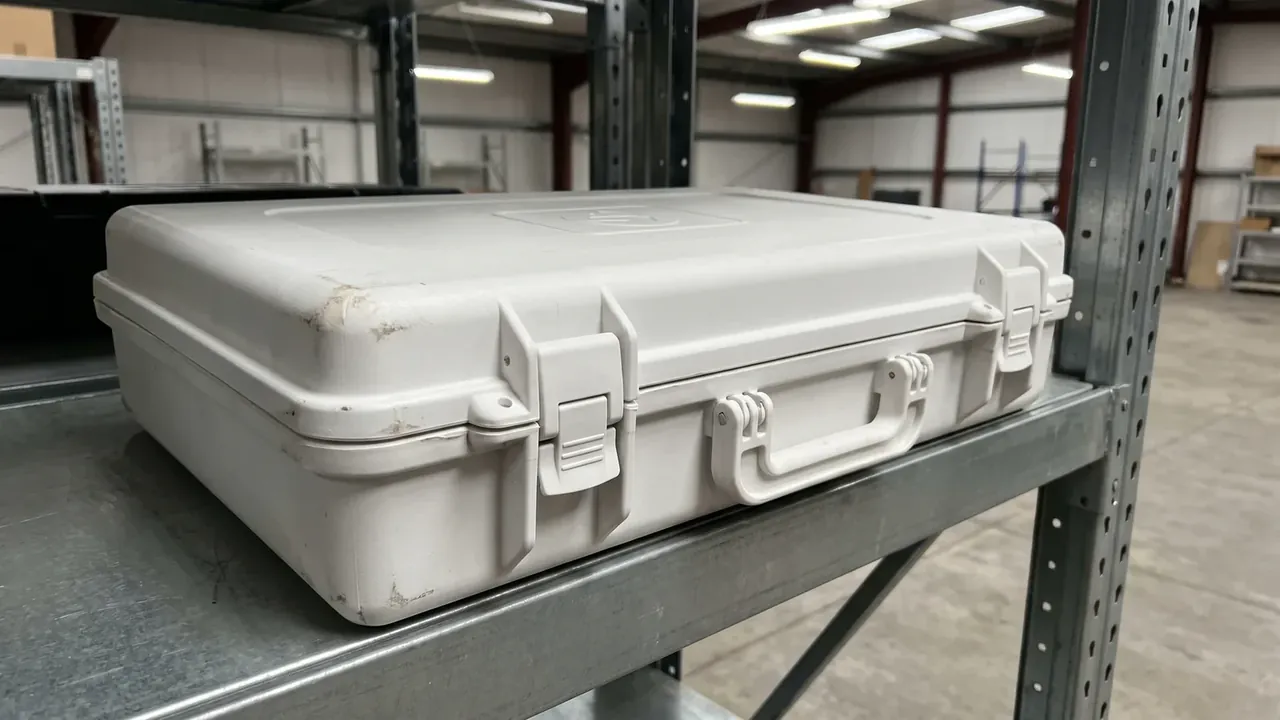
Reports need the right issuer: material data from the case maker, a CNAS or CMA mark, grade, tensile strength, Izod impact, ten RoHS substances. Finished reports carry drop, leak and latch fatigue within 12 months.
Soft items are usually missed: discharge permit, waste manifests, fire acceptance, power for 14 presses, customs registration. None sits on a certificate, yet each decides whether capacity runs.
3. Capacity and Equipment Maths
Capacity is calculated, not quoted: presses times 26 days, 22 hours, cavities and yield, divided by cycle time. One 800-tonne press at 210 seconds gives roughly 9,300 cases a month; a 30,000 order needs four such presses.
Look at tonnage spread, not headcount: fourteen presses from 550 to 1600 tonnes, four above 1000, hold a 700 mm case. Ancillaries count too: dryers, mould controllers at plus or minus 3 °C, robots, a drop tower, a leak bench.
| Item | Benchmark | Evidence |
|---|---|---|
| Presses | 14 units, 550 to 1600 t | Plates with model, year |
| Large presses | 4 above 1000 t | Current schedule board |
| Mould heat | Plus or minus 3 °C | Setpoints on screen |
| Testing | Drop, leak, salt spray | Labels, 48-hour records |
4. Sample Approval and a Light PPAP
In an OEM Protective Case Supplier audit samples run three rounds: five T1 hand parts for fit and foam, fifty T2 parts from the real tool, five hundred T3 parts for consistency. Keep one piece per round for 36 months.

A light PPAP works: level 3 means 18 documents, from design record and dimensional results to process study, control plan, measurement analysis and submission warrant. Key dimensions need Cpk of 1.33 or the tool goes back.
Allow 15 working days, five per round plus review.
5. Tooling, Jigs, Changes and Traceability
Tools in an OEM Protective Case Supplier plant need a ledger: buyer code and tool number engraved on the side, jigs numbered by operation, handed over in sets of 12. Acceptance takes three trials: fill, dimensions, 200 consecutive shots.
Change control covers man, machine, material and method: a new resin grade, another press, a cavity change or a process tweak need 30 days notice and a fresh first article.
Traceability rides on the lot number. Twelve digits combine date, press, shift and serial, tying shipping to feeding records for 36 months, so a claim finds its press in two hours.
| Record | Content | Retention |
|---|---|---|
| Tool ledger | Number, cavities, trials | Whole life |
| Jig list | Operation, sets, handover | 36 months |
| Change notice | 4M type, date, first article | 36 months |
| Lot trace | 12-digit lot and feeding record | 36 months |
Conclusion
Auditing an OEM Protective Case Supplier turns five questions into records: may they mould, can the presses hold the size, do samples repeat, who owns the tool, can a lot be traced. Run them in order and the OEM Protective Case Supplier is chosen on evidence.
This article discusses only the container (case body) side of specifications and design intent, and does not cover any handling, loading or use of the contents.
Related Reading
- Three gates of case supplier qualification
- What to check on a factory visit day
- How a supplier scorecard is scored
- How to choose an OEM protective case
Related Products
- 8 Series — Gun Cases; Military Equipment Cases; Camera Equipment Cases; Drone Cases; Watch Cases; Knife Cases; First Aid Cases; Electronics Equipment Cases
- WL8-2812 PP Gun Case — model WL8-2812
- All protective cases and toolboxes: 7 series, 158 models