

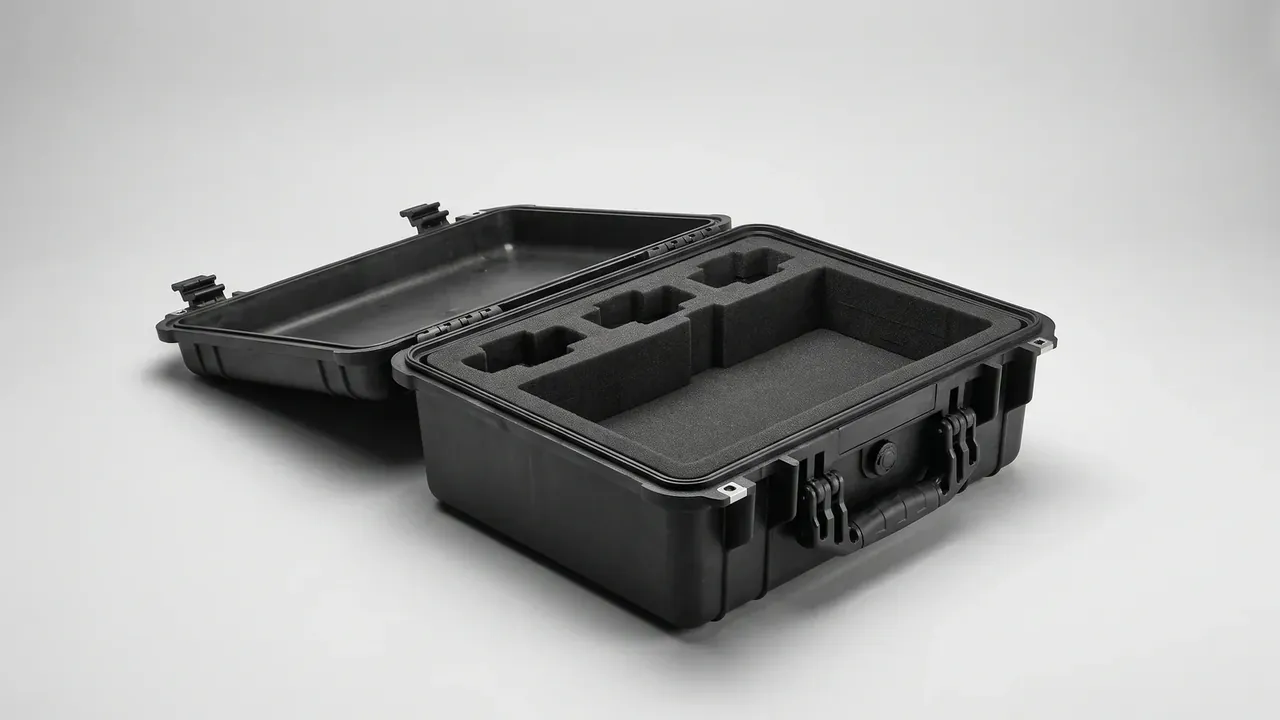
Quick answer: An Ordnance Packing Box wins on reuse, lockdown and foam location, and loses on tare weight, unit price and turnaround cost. For one-way shipments, long items, salt-heavy storage or daily opening, plywood, steel, corrugated sets or soft bags often cost less. Three questions settle it: how often the box travels, what it has to survive, and who repairs it.
Table of contents
- What an Ordnance Packing Box is compared with
- Four situations where it loses
- The weight and volume arithmetic
- Foam, lids and hidden differences
- FAQ
1. What an Ordnance Packing Box is compared with
Buying guides treat an Ordnance Packing Box as the default answer, yet the real comparison rarely happens between similar products. A rotomoulded hard case is measured against plywood crates, welded steel boxes, corrugated sets with cushioning, and soft carry bags.
| Option | Empty weight | Reuse | Sealing | Unit cost |
|---|---|---|---|---|
| Ordnance Packing Box, rotomoulded HDPE | 9–14 kg | 50 trips or more | gasket plus latches, up to IP67 | high |
| Plywood crate with steel banding | 12–20 kg | 3 to 5 trips | liner bag and desiccant | medium |
| Welded steel box | 18–30 kg | 30 trips, needs upkeep | weld or gasket, 96-hour salt spray | high |
| Corrugated set with cushioning | 2–4 kg | one trip | none, desiccant only | low |
| Soft carry bag | 1.5–3 kg | around 20 trips | splash resistant, not immersed | low |
The column most often misread is reuse. Fifty trips is the life of the shell, not the number of missions; gasket ageing, foam replacement and hardware corrosion come out of it. The three to five trips quoted for plywood assume careful handling, and most crates delaminate at the corners after two moves.
The last column is where the decision actually turns. One Ordnance Packing Box costs about six plywood crates of the same volume, or twenty corrugated sets. Whether that is worth paying depends on how many times the box is opened, closed and loaded inside your own process.
2. Four situations where it loses
- One-way shipment with no return load: a crate or corrugated set costs a third as much, and with nothing coming back the whole unit price sits on one journey;
- Items over 1.6 m long: the longer the rotomoulded mould, the harder wall thickness is to hold, and straightness is better served by a steel frame;
- Coastal or deck storage: the shell resists salt, but latches, hinges and valves do not, so a hot-dip galvanised steel box needs less attention;
- More than two openings a day: wear lands on the gasket and the latch seat, and a replacement round every two years can outrun the price gap.
None of these is a quality argument. Each is a question of how often the box moves and what it moves through.
3. The weight and volume arithmetic
A 120-litre Ordnance Packing Box weighs 12.6 kg empty; a plywood crate of the same volume weighs 9.8 kg, and a corrugated set 3.2 kg. On tare alone the hard case is the worst of the three.
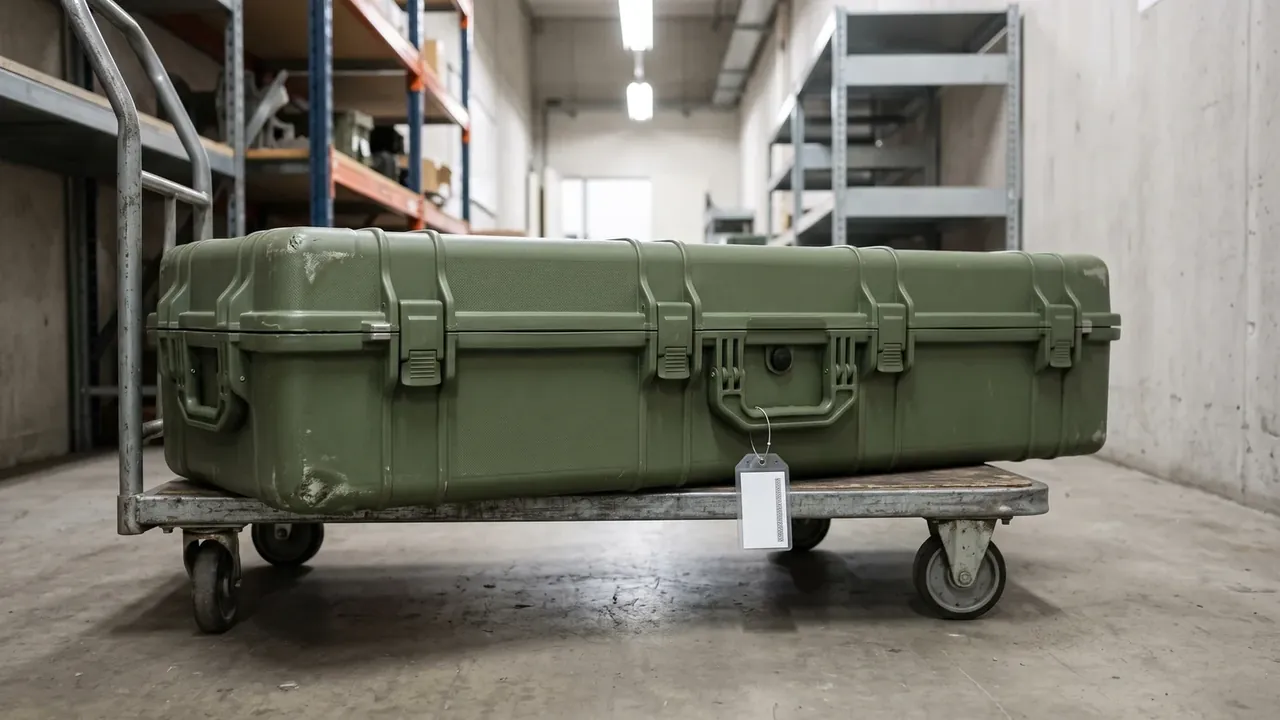
Air freight bills on volumetric weight, and with a divisor of 6000 a 120-litre box charges as 20 kg, so 9.4 kg of extra shell becomes nearly half again on every flight. Sea freight bills by container and the difference almost disappears. The same box priced against air and against sea gives opposite answers. Rail and full-truck loads follow a third rule, where cube utilisation matters more than tare. That is why the transport mode has to be fixed before box prices are compared. Storage adds one more line: hard cases stack three high, plywood usually stops at two, so the same floor area holds a third more stock.
4. Foam, lids and hidden differences
Foam decides whether equipment is located or merely stuffed. Cut-to-item foam makes a missing piece obvious, at the cost of a new insert whenever the kit changes; compartment trays are cheaper and shift in transit.
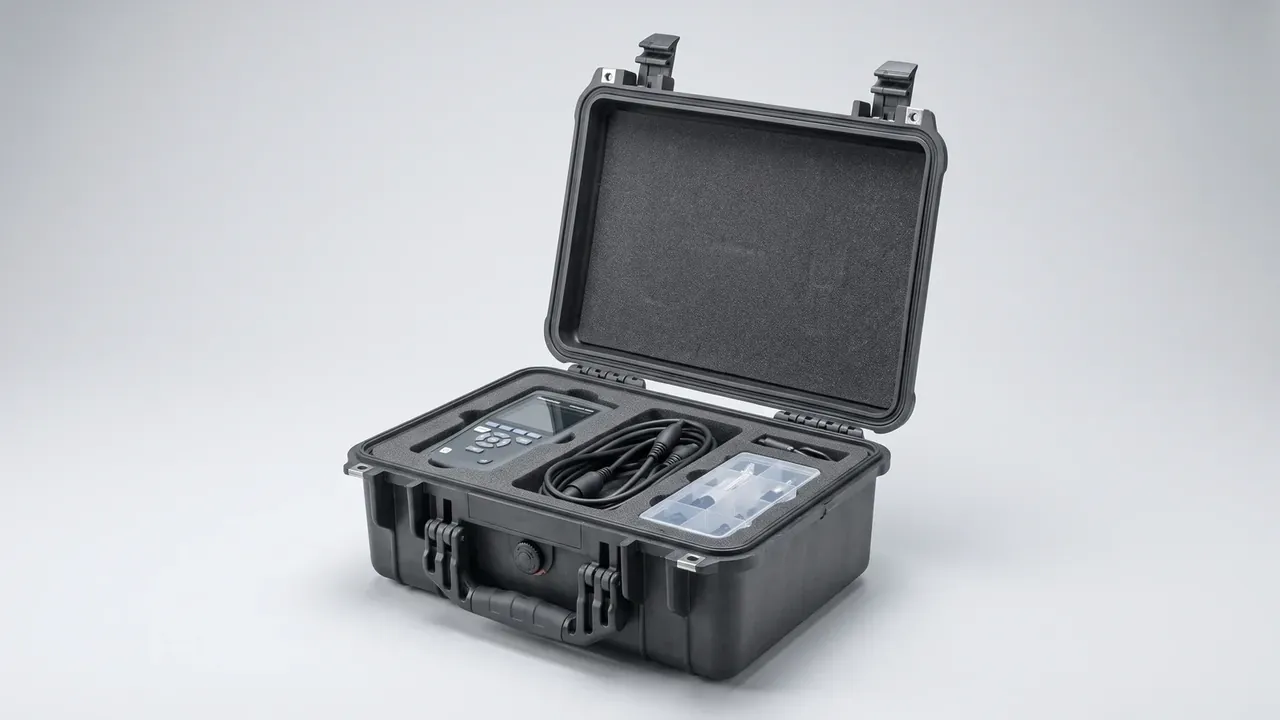
Lids come in three forms: full opening, a ninety-degree stop, and removable.
| Lid type | Fits | Cost |
|---|---|---|
| Full opening | bench work, whole case spread out | needs bench area, lid can blow over |
| Ninety-degree stop | use on a vehicle or in a narrow bay | deep pockets are awkward to reach |
| Removable | crane loading, two-person work | hinge pins get lost, refitting takes two |
Choosing the wrong lid hurts daily work more than choosing the wrong wall.
Foam usually lives half as long as the shell, and almost nobody prices that in.
Conclusion
An Ordnance Packing Box is not better because it costs more. Its value appears only when reuse, sealing and location are needed at the same time. One-way shipments, long items, salt-heavy storage and daily opening all point to another option that is cheaper to buy and easier to live with. Fix the transport mode, then the number of trips, then the price. Do that and the choice of an Ordnance Packing Box answers itself.
This article discusses only the container (case body) side of specifications and design intent, and does not cover any handling, loading or use of the contents.
Related Reading
- Ordnance packing box materials compared
- Inspection items and pass limits
- Material trade-offs for military packing
Related Products
- 8 Series — Gun Cases; Military Equipment Cases; Camera Equipment Cases; Drone Cases; Watch Cases; Knife Cases; First Aid Cases; Electronics Equipment Cases
- WL8-2812 PP Gun Case — model WL8-2812
- All protective cases and toolboxes: 7 series, 158 models