

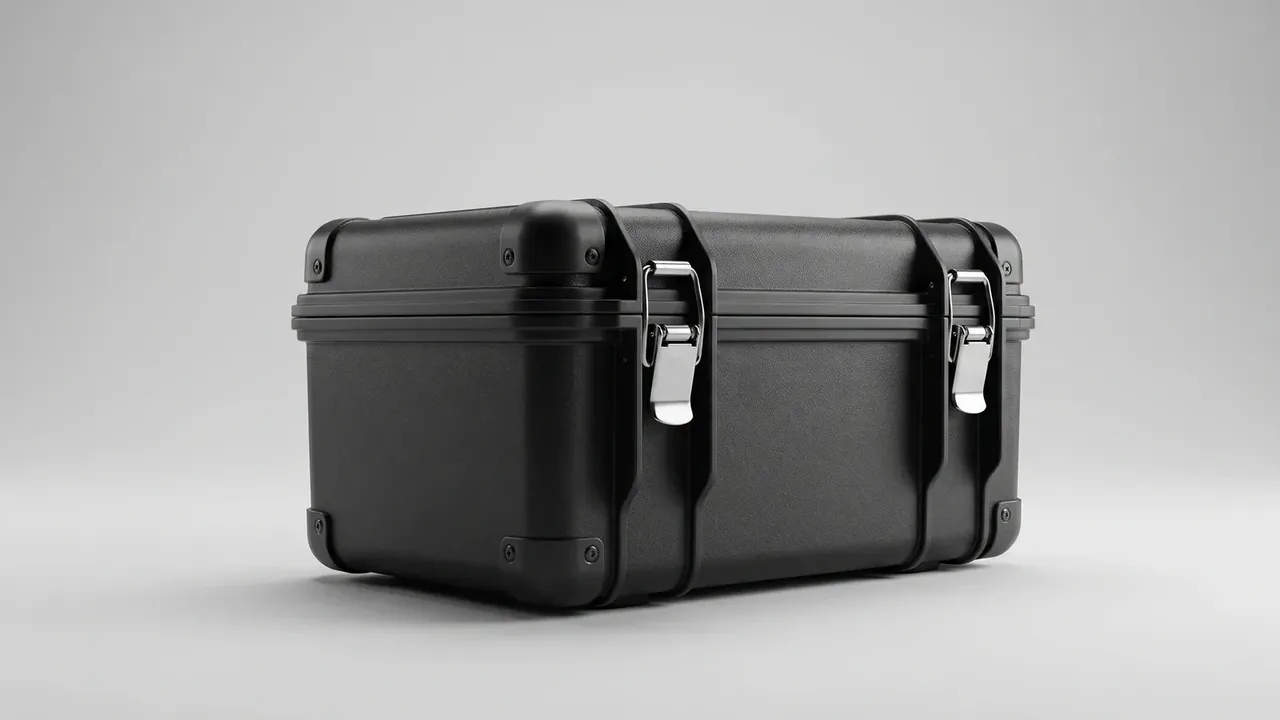
Quick answer: An ordnance packing box cannot be ranked by material quality alone. Drop height, stack height, damp heat, salt and storage life decide which of plywood, steel, aluminium, rotomolded polyethylene or composite is comparable at all. Specific strength sets weight, corrosion resistance the maintenance interval, repairability the trip count, and tooling cost the minimum order. Screen out what fails, then compare unit cost among the survivors; a ranking without the duty behind it is only noise.
Table of contents
- Fixing the duty: four inputs for an ordnance packing box
- Five shell materials side by side
- Service-life differences: surface, repair, upkeep
- Seals, lining and hardware: what the shell cannot decide
- A selection chain built backwards from life and volume
- FAQ
1. Fixing the duty: four inputs for an ordnance packing box
Four inputs fix an ordnance packing box comparison; shift the weighting and the same table reverses.
- Drop height sets impact margin: timber absorbs by fibre failure, plastic by wall thickness, steel by yielding.
- Stack height sets lid pressure; plastic creeps, steel deflects.
- Damp heat and salt set the coating budget.
- Storage life sets ageing margin; five and fifteen years disagree.
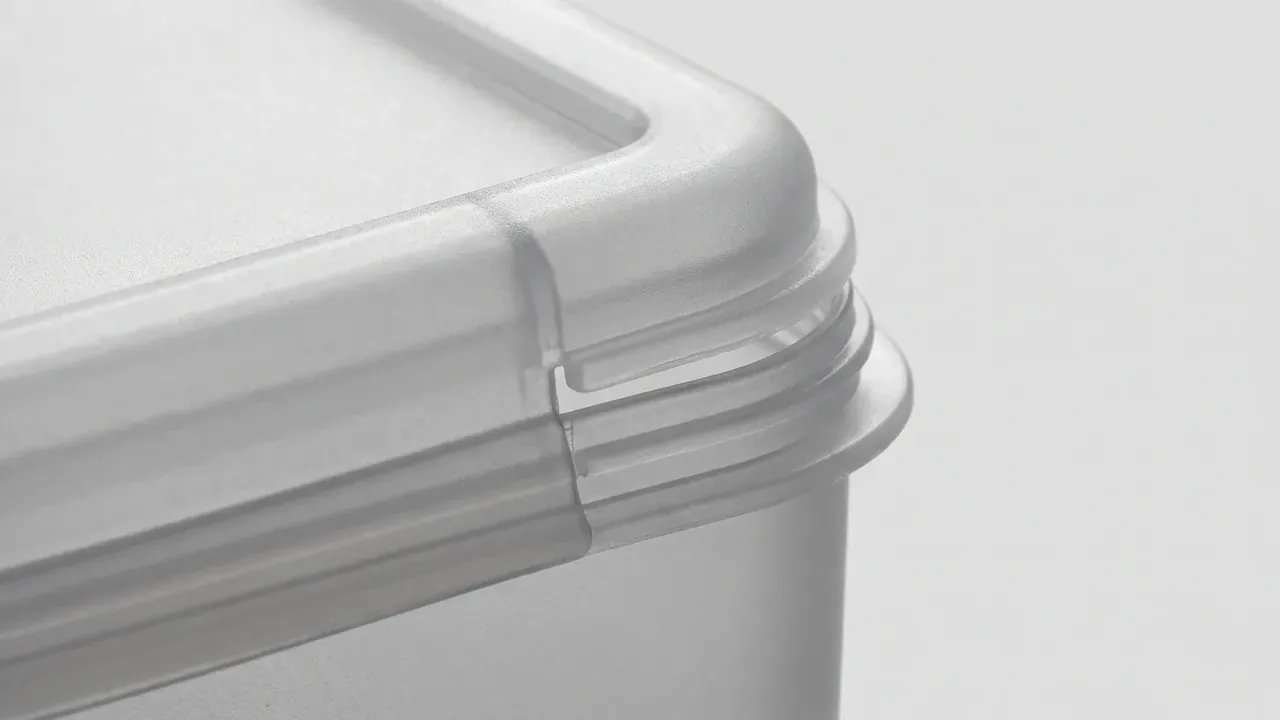
The stepped lips show what a material can be moulded into: one moulding must produce the interlock step and the gasket groove, which injection and rotomolding manage, timber needing machining.
2. Five shell materials side by side
Five shell materials are common on an ordnance packing box; composite is a custom sixth.
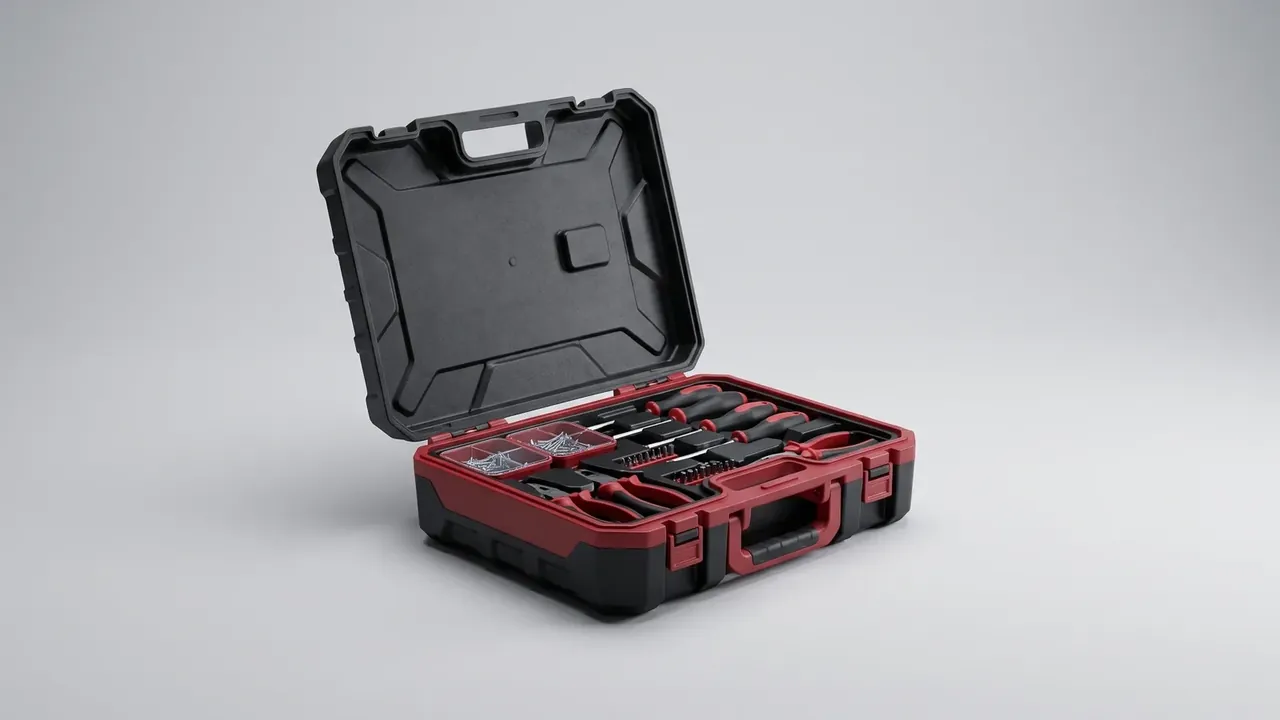
The red case is the thin-wall route: two to three millimetres, stiffness from ribs. Rotomolded shells run six to ten millimetres, buying impact tolerance at a weight cost.
| Material | Specific strength | Corrosion | Repairability | Unit cost | Tooling |
|---|---|---|---|---|---|
| Plywood and timber | Medium | Poor | High | Low | Very low |
| Painted steel | High | Medium | Medium | Medium | Medium |
| Aluminium | High | Good | Medium | High | Medium-high |
| Rotomolded polyethylene | Low | Good | High | Medium | Low |
| Moulded plastic | Medium-high | Good | Low | Low at volume | High |
| Fibre composite | Highest | Good | Low | High | Medium-high |
The columns do not add up: steel is seven times the density of polyethylene, so strength means nothing without wall thickness.
3. Service-life differences: surface, repair, upkeep
A data sheet never shows service-life cost: how hard damage is to treat and whether it can be repaired.
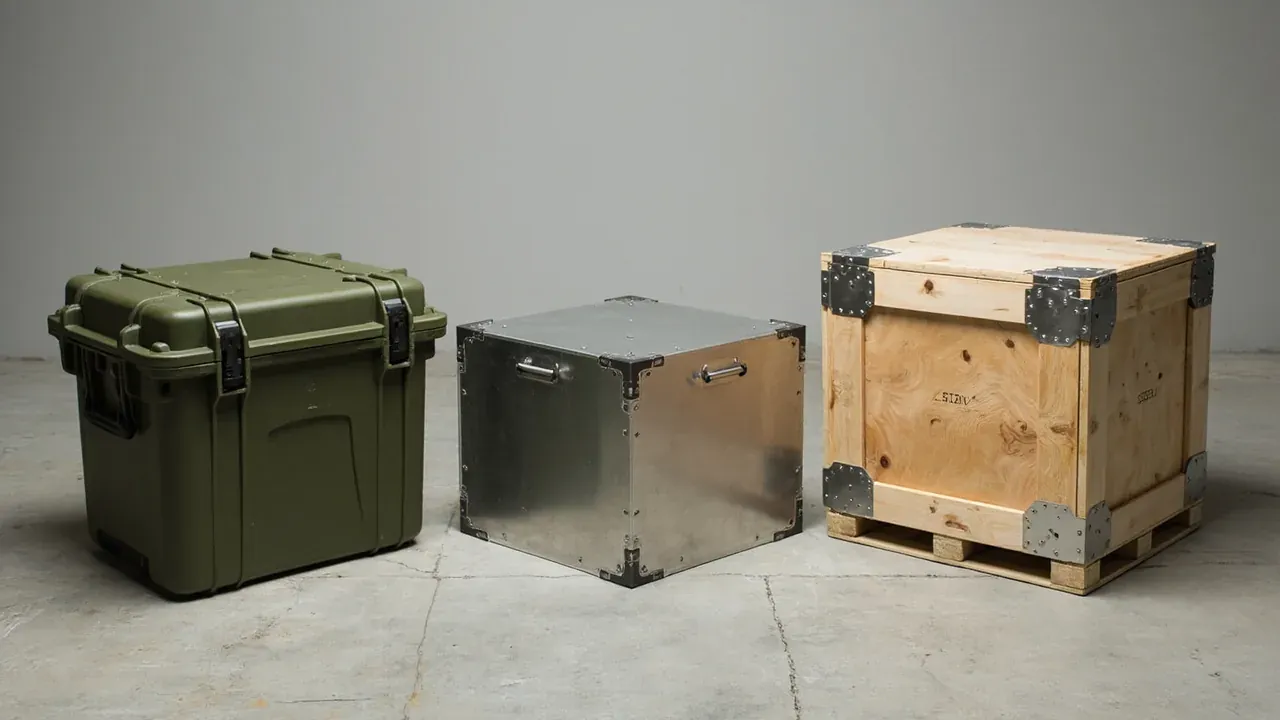
Three units, three repair routes. A scuff on rotomolded polyethylene is cosmetic and a split can be welded; painted steel must be recoated or rust spreads from the chip; damp plywood is re-panelled. Polyethylene and aluminium hold the longest interval, timber the shortest.
4. Seals, lining and hardware: what the shell cannot decide
Shell material sets wall strength and corrosion resistance only. Protection comes from the gasket, the desiccant and barrier film, the foam lining.
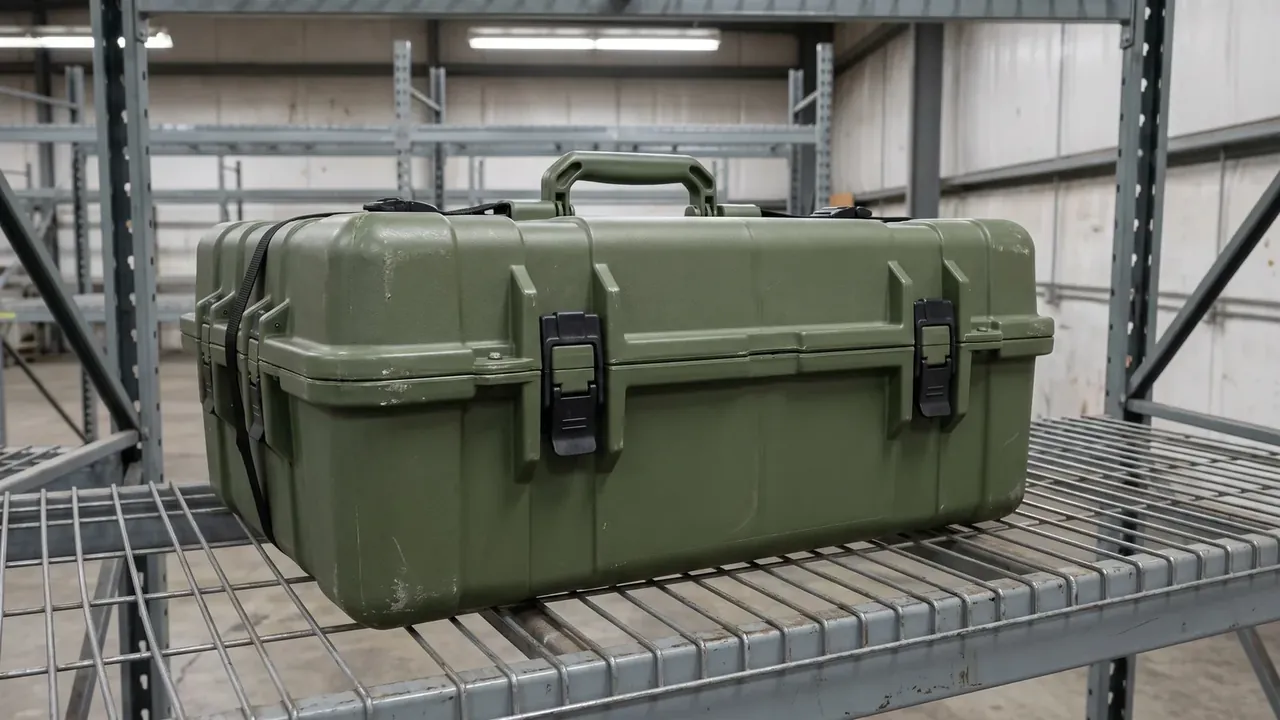
The black latches are typical hardware. A plastic latch draws clamp force from its own elasticity, wear gathering at the tongue pivot; stainless holds force longer but needs an insulating washer against aluminium. Spacing sets pressure evenness, material the durability.
- Gasket: nitrile for oil, silicone for heat, EPDM for weather.
- Barrier and lining: the desiccant absorbs, the film blocks, polyethylene takes repeated compression.
Changing the shell may leave the rating untouched; a thin wall in an old groove loses the seal.
5. A selection chain built backwards from life and volume
Selection runs from life and volume, not a material name.
- Life: one-way shipment favours moulding or plywood; repeated trips, rotomolding or aluminium.
- Volume: below tooling break-even, rotomolding and joinery win.
- Handling: manual lifting caps unit weight, so low strength means a smaller shell.
- Environment: salt and damp remove painted steel and untreated timber.
- Repair: without site welding, a weldable shell beats steel.
Mismatches and signals:
| Mismatch | Signal |
|---|---|
| Thin-wall box as a returnable | Lid rim cracks within three months |
| Painted steel in salt spray | Coating blisters inside a year |
| Timber in long storage | Mould on opening, moisture above record |
| Composite at small volume | Unit cost three times rotomolding |
Conclusion
An ordnance packing box is specified in one order: fix the candidate set with drop, stack, damp heat and storage life, cut routes that fail on cost, then close the gap with gasket, lining and hardware. Reverse the order and maintenance cost overtakes the purchase price.
This article covers container-side specifications and design implications only.
Related Reading
- Box structure and dimensions
- Choosing gasket compounds for cases
- Material Evolution of Military Storage Boxes: The Lightwei…
- Foam lining design
Related Products
- 8 Series — Gun Cases; Military Equipment Cases; Camera Equipment Cases; Drone Cases; Watch Cases; Knife Cases; First Aid Cases; Electronics Equipment Cases
- WL8-2812 PP Gun Case — model WL8-2812
- All protective cases and toolboxes: 7 series, 158 models