

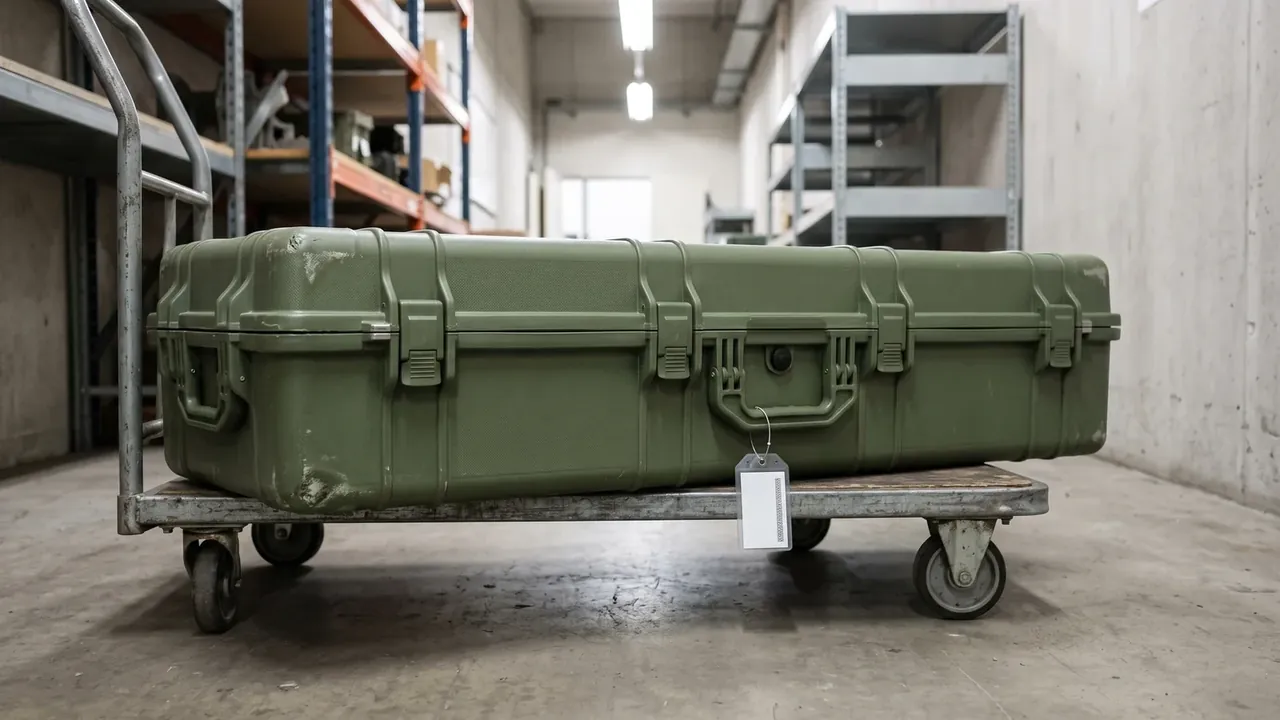
Quick answer: An ordnance packing box stays serviceable through three numbers: seal compression of 25%–30%, a 0.3 mm feeler that will not enter the lid gap, and hinge pin clearance under 0.5 mm. Intervals follow open-and-close counts, and anything past its limit is repaired, downgraded or scrapped.
Table of contents
- What an ordnance packing box inspection should measure
- Setting intervals by open-and-close counts
- Seal compression and the pressure-decay retest
- Hinge, latch and handle wear limits
- Repair, downgrade or scrap: three decision lines
- FAQ
1. What an ordnance packing box inspection should measure
Maintenance starts before anything breaks: turn "is it still good" into a number on a gauge. An ordnance packing box is checked in four groups — shell, hardware, seal system and structure — and only the shell is judged by eye. The rest need a caliper, a 0.3 mm feeler and a dial indicator.
| Check | Tool | Pass line | Past the line |
|---|---|---|---|
| Shell cracks | Torch, 10× loupe | No through-crack | Stop use, immersion test |
| Lid contact | 0.3 mm feeler | Will not enter | Adjust latch, reseal |
| Seal compression | Vernier caliper | 25%–30% | Replace below 20% |
| Pin clearance | Dial indicator | ≤0.5 mm | New pin and bushing |
| Cam wear | Vernier caliper | ≤0.4 mm | Replace latch |
The overlooked row is lid contact, which warns earlier than compression: a pulled latch keeper, not the gasket, is usually the cause.
2. Setting intervals by open-and-close counts
Intervals follow duty, not the calendar. One ordnance packing box may open fewer than ten times a year in a store room; another on rotation opens thirty times a week. Under 50 cycles a year is storage grade, inspected quarterly; 50 to 500 is rotation grade at monthly; above 500 is high-frequency grade at weekly, costing 25, 18 and 12 minutes a box.
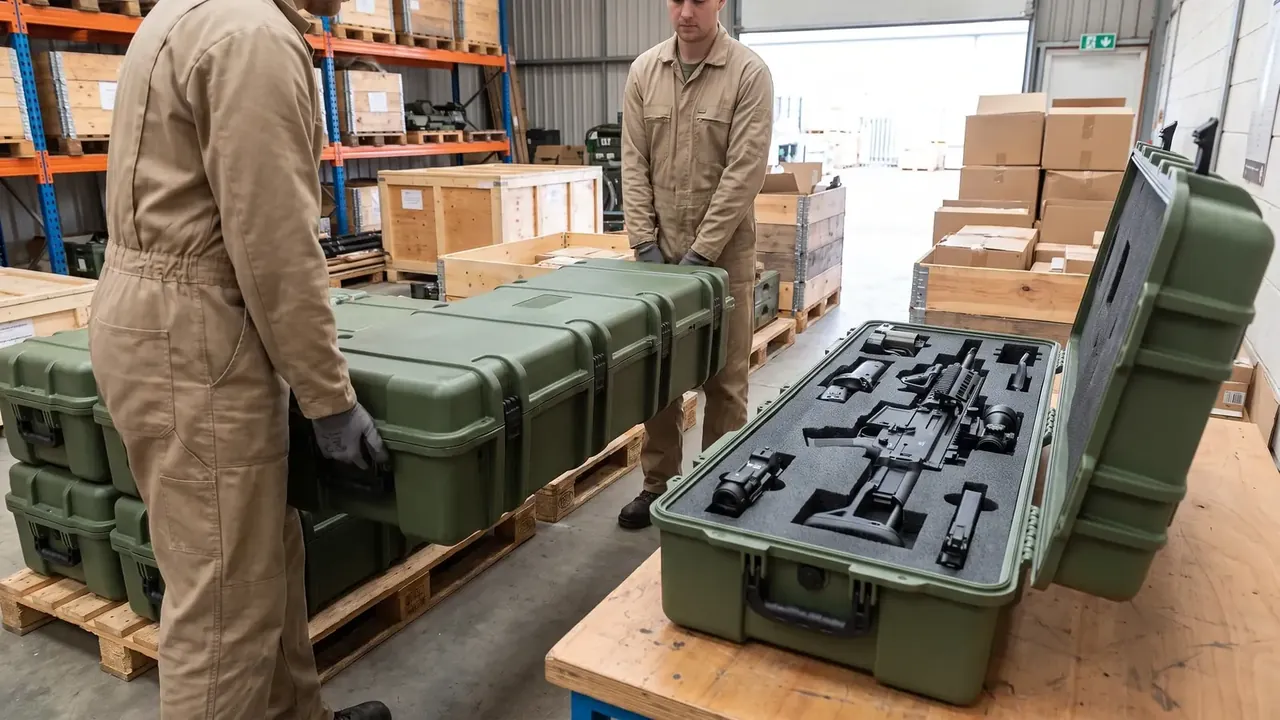
A thousand rotation-grade boxes means a thousand dimensional checks a month, about 25 labour hours, cut to 15 by a three-minute look each shift.
3. Seal compression and the pressure-decay retest
The gasket is a consumable, and one number decides its fate: a 12 mm profile should sit at 8.4 to 9 mm when latched, which is 25%–30% compression. Anything still thicker than 9.6 mm has taken a set and will not spring back.
Measure at each long-side midpoint and one rounded corner pair; corners read 1 to 2 mm low. If corners fall under 20% while the sides are fine, the lid face is not flat.
The retest charges to 4 kPa and allows 0.25 kPa of decay in ten minutes; a 0.1 kPa jump between tests means looking inside. Cold lies: at minus 20 °C the gasket reads 70 Shore A instead of 55, so let the box stand four hours first.
4. Hinge, latch and handle wear limits
Hardware fails in stages: loose, stiff, broken. Pin clearance is 0.15 mm when new; past 0.5 mm the lid drops and flattens the gasket on one side, and a pin and bushing set costs a twentieth of the box. By 0.8 mm the hinge boss distorts.
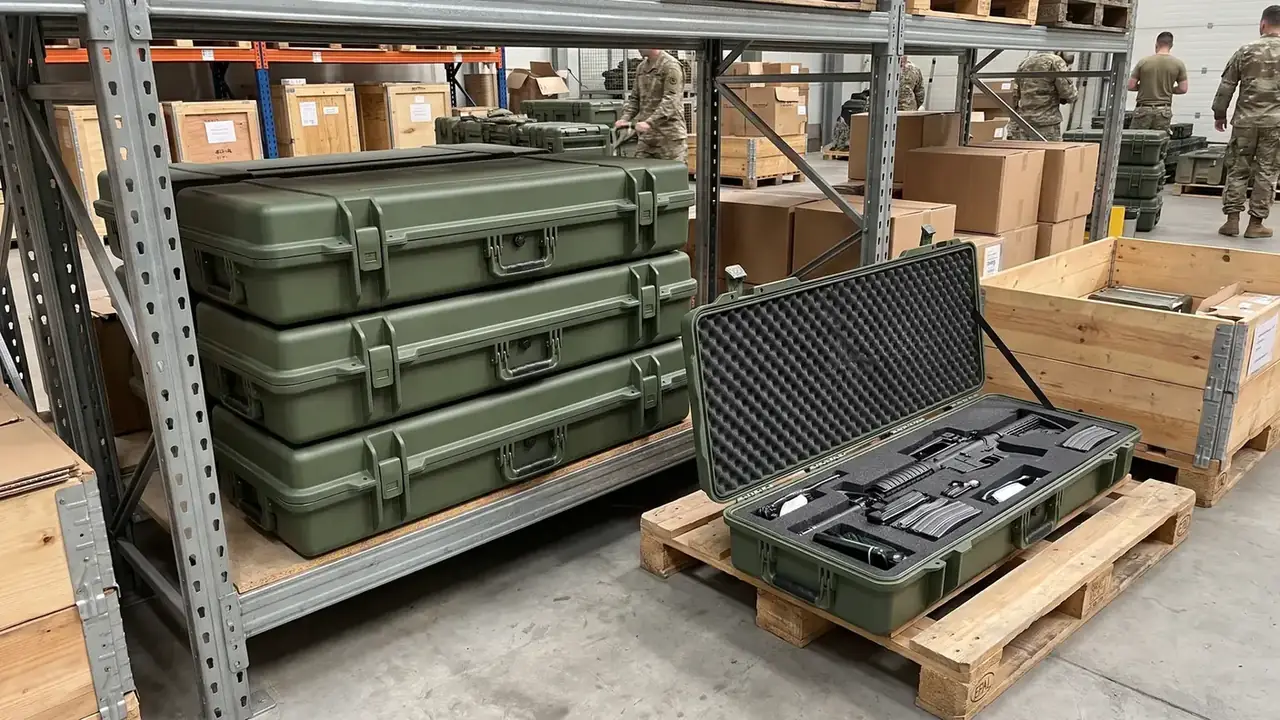
Latches fail past 0.4 mm of cam wear, or below 120 N of clamp force from 180 N; M6 bolts take 8 N·m and are retightened every two years by hand. Handles carry twice the gross weight for ten minutes; 1.5 mm of set retires them. Neutral salt spray for 96 hours: red rust means replacement, not paint.
5. Repair, downgrade or scrap: three decision lines
Three levels on the card keep the decision off the bench floor: service, static storage only, scrap.
| Part | Level one | Level two | Level three |
|---|---|---|---|
| Shell | Scratches ≤0.5 mm | Dent ≤3 mm, no crack | Through-crack |
| Gasket | Compression ≥20% | 20%–25% | Hard, crumbling |
| Latch | Wear ≤0.4 mm | One failed | Two or more failed |
An 800×500×400 mm ordnance packing box costs about 1,280 yuan, with 60 yuan a year in consumables; a third repair of one area passes 320 yuan. Scrapping is final: cut the handle, drill two 12 mm drain holes, grind off the number.
Conclusion
Maintenance holds up when it is written as numbers rather than habits: 25%–30% compression, a 0.3 mm feeler that will not enter, 0.5 mm of pin clearance, 0.4 mm of cam wear. Those four lines separate repair from replacement, and grading intervals by open-and-close counts saves two fifths of the inspection hours on the ordnance packing box.
This article discusses only the container (case body) side of specifications and design intent, and does not cover any handling, loading or use of the contents.
Related Reading
- Marking and transport requirements for an ordnance packing box
- Material comparison and selection logic for ordnance packing boxes
- How ammunition and nuclear ordnance boxes are built
- Routine maintenance points for ammunition storage boxes
Related Products
- 8 Series — Gun Cases; Military Equipment Cases; Camera Equipment Cases; Drone Cases; Watch Cases; Knife Cases; First Aid Cases; Electronics Equipment Cases
- WL8-2812 PP Gun Case — model WL8-2812
- All protective cases and toolboxes: 7 series, 158 models