

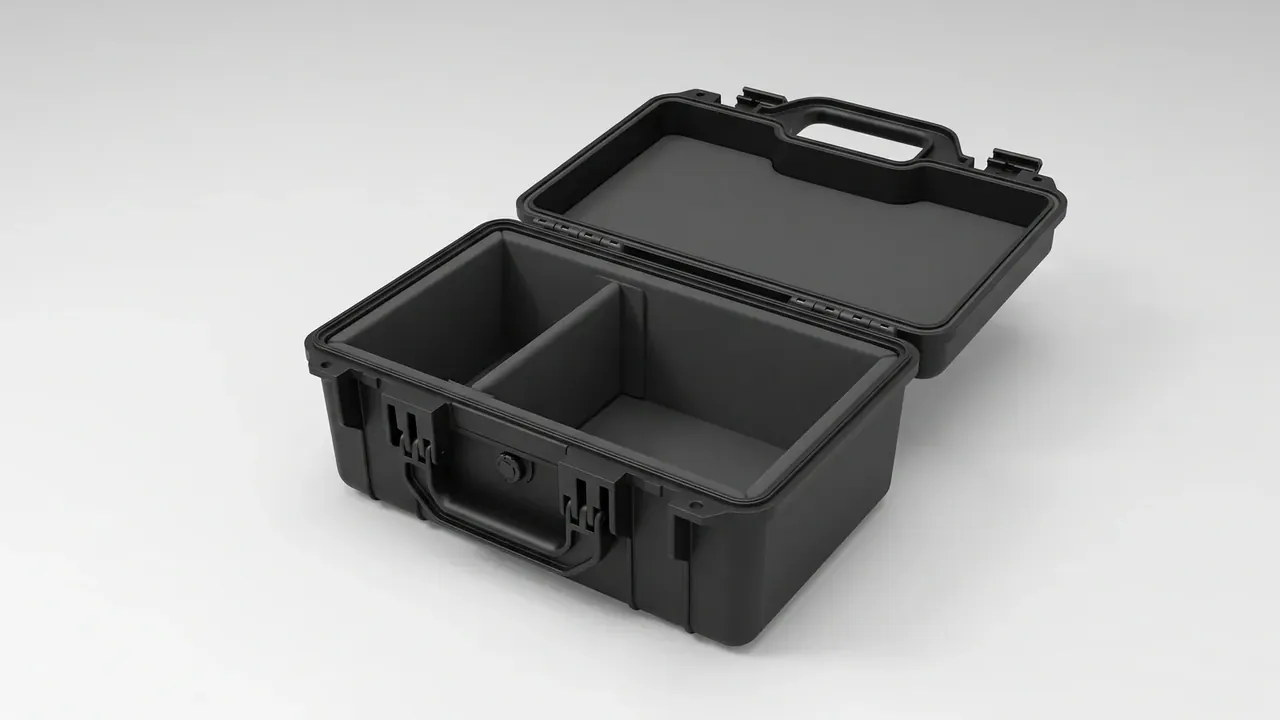
Quick answer: An Outdoor Battery Storage and Transport Case is a compliance item before it is a box: at 30% charge, spacing and records decide the rest.
Table of contents
- State of charge and transport compliance
- Thermal spacing between cells
- What the eight UN38.3 tests ask of the case
- Case markings and the opening log
- Isolating a swollen cell
- FAQ
1. State of charge and transport compliance
Paperwork clears before cushioning matters. From 1 January 2026, cells packed with equipment (PI 966, above 2.7 Wh) must ship at 30% state of charge or less. Cells inside equipment (PI 967) stay a recommendation, at 30% or 25% indicated capacity, while UN 3480 alone has long been mandatory at 30%. Three routes, three answers.
The cap has a physical basis: a full cell has given up more lithium from its cathode, an internal short starts at a lower temperature, and the same impact releases heat faster. An Outdoor Battery Storage and Transport Case cannot change chemistry, but it decides whether cells sit pressed together and whether a fault in one reaches the next.
| Packing route | State of charge | Status | What it means for the case |
|---|---|---|---|
| UN 3480, cells alone | ≤30% | Mandatory for years | Cells only, bays set divider count |
| PI 966, with equipment | ≤30% | Mandatory from 2026 | Cells and device in separate cavities |
| PI 967, inside equipment | ≤30% or ≤25% indicated | Recommended | Fixing wins, cushioning gives way |
Three tasks land on the case: ship the UN38.3 summary, zone the interior in 100 Wh steps, mark the charge at loading. A transport assessment compares paper with hardware; cells that differ from the summary fail however complete the file.
2. Thermal spacing between cells
The first structure inside an Outdoor Battery Storage and Transport Case is not foam thickness; it is the 10 mm of air between neighbouring cells. Press two cells together and a fault in one conducts heat through the shells faster than any divider reacts.
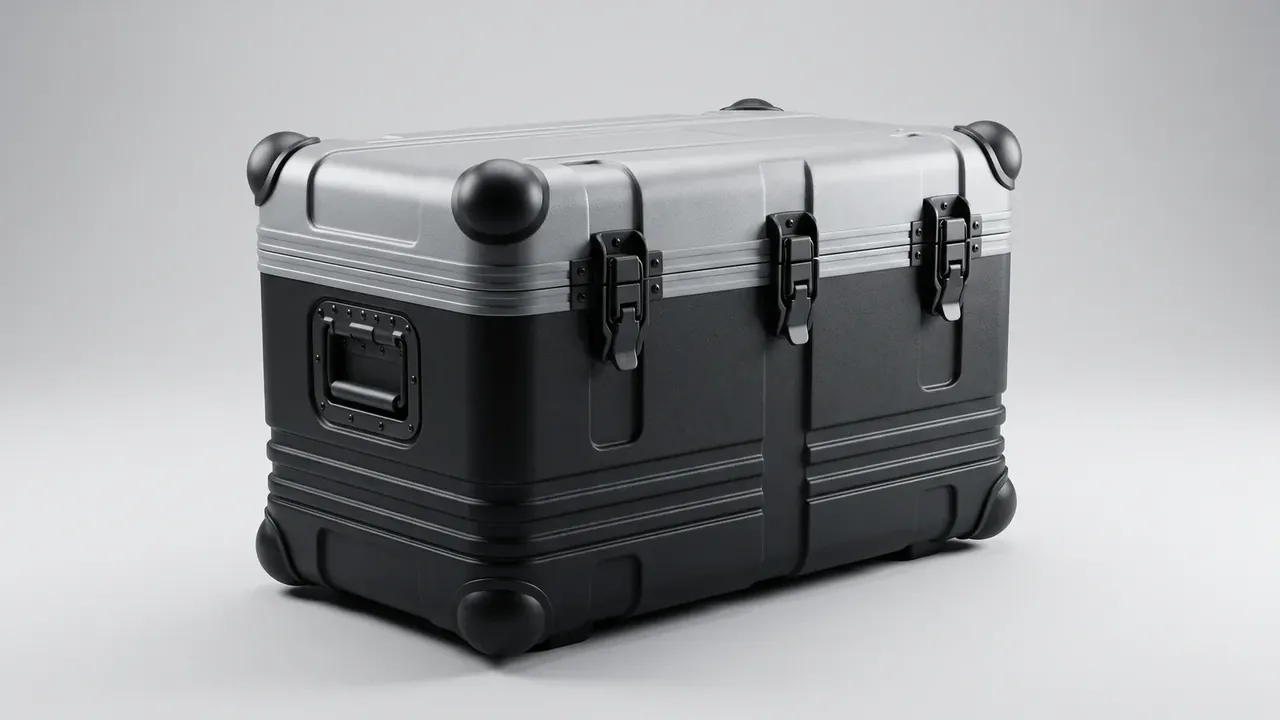
Dividers, foam channels or a height rail hold that gap, each returning the cell after a bump. The divider locates, foam fills gaps; foam doing both collapses after a few loadings.
Spacing costs volume: two rows with a 10 mm gap in a mid-size body lose one tier of cavity; the way back is standing cells upright, thinning the divider, and moving cables into edge slots.
Read spacing with the centre of gravity: cells bunched on one side make the case hang crooked. Keep the heavy tier near the handle.
3. What the eight UN38.3 tests ask of the case
The eight tests run on cells, not the box, whose only job is to add no risk: no short, no extra crush, no movement.
T1 holds a sample at 11.6 kPa for 6 h, imitating a hold at altitude; T2 runs 10 cycles between −40 and 72 °C; T4 applies 150 g for 6 ms, near a dock drop; T5 shorts at 55 °C through a loop under 0.1 Ω, with no fire within 6 h.
| Test | Condition | Where the case helps |
|---|---|---|
| T1 altitude | 11.6 kPa, 6 h | Relief path not blocked by foam |
| T2 thermal cycling | −40 to 72 °C, 10 cycles | Dividers hold as parts shrink |
| T3 vibration | 7–200 Hz, 12 sweeps per axis | No rubbing, terminals clear |
| T4 shock | 150 g, 6 ms | Corners absorb, cells do not |
| T5 external short | 55 °C, loop below 0.1 Ω | No loose metal across terminals |
| T6 impact/crush | Crush per the standard | Clearance for the cell to give |
| T7 overcharge | Charge rate per the standard | Port fixed, no cable on cells |
| T8 forced discharge | Discharge per the standard | Polarity marked, reversal caught |
T5 is where an Outdoor Battery Storage and Transport Case most often lets the side down: a latch, a screw or a trimmed frame edge that drops into the cavity after vibration can bridge two terminals. Wrapping metal edges and burying fasteners under foam beats a warning label.
4. Case markings and the opening log
On an Outdoor Battery Storage and Transport Case, markings face outward, the log faces inward, and the two must agree. Markings move the shipment; the log traces a batch after failure.
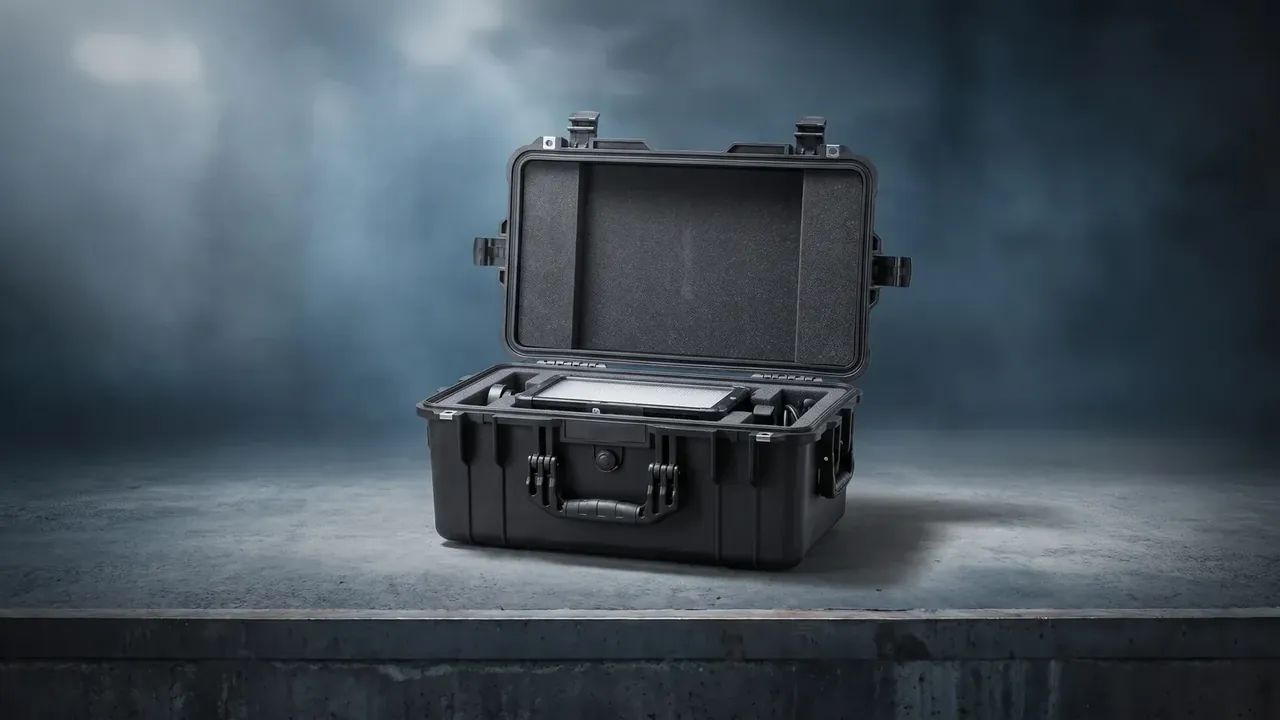
Markings must survive wiping: alcohol, diesel and seawater reach the shell, and printed codes fade within three months outdoors, so put UN number, watt-hour tier and charge in moulded characters too.
Five log fields suffice: batch, open-circuit voltage, swelling, internal temperature, charge. Read before every load, they mean something only as a series: one reading says little, three falling in one bay send you to that string.
| Record | How it is taken | Action triggered |
|---|---|---|
| Cell batch | Copied from the inner label | Different batches, separate bays |
| Voltage | Meter, cell by cell | Outlier re-read against group |
| Swelling | Straight edge and caliper | Past 3 mm, isolate |
| Temperature | Once before loading | Above 60 °C, stop loading |
| Charge | Estimated by 100 Wh tier | Above 30%, discharge first |
5. Isolating a swollen cell
Swelling is slow, and by the time the lid of an Outdoor Battery Storage and Transport Case will not close, the box has done too much. Storage verdict: a cell swollen by more than 3 mm, or an internal temperature above 60 °C, stops that case from loading.
The order is isolate, measure, decide. Move the suspect cell to its own cavity with at least 10 mm to its neighbour, never press it to vent gas, never charge it back, and let it reach room temperature before measuring the largest edge.
Whole-case and single-cell responses differ: one swollen cell means a new cavity, a new divider and a log entry, and the case carries on; two or more in one bay point at heat or fixing there, so the case leaves service.
Swelling arrives with heat: measuring internal temperature inside an Outdoor Battery Storage and Transport Case before loading beats feeling the shell, because a hot vehicle in summer stacks heat on the cell's own rise, and 60 °C is not a high bar.
Related Reading
- Packing lithium batteries for air freight under IATA rules
- Impact absorption and thermal insulation in battery cases
- Battery safety cases against the alternatives
- Structure and acceptance of military battery transport cases
JUNZHIJIA
Related Products
- 8 Series — Gun Cases; Military Equipment Cases; Camera Equipment Cases; Drone Cases; Watch Cases; Knife Cases; First Aid Cases; Electronics Equipment Cases
- WL8-2812 PP Gun Case — model WL8-2812
- All protective cases and toolboxes: 7 series, 158 models