

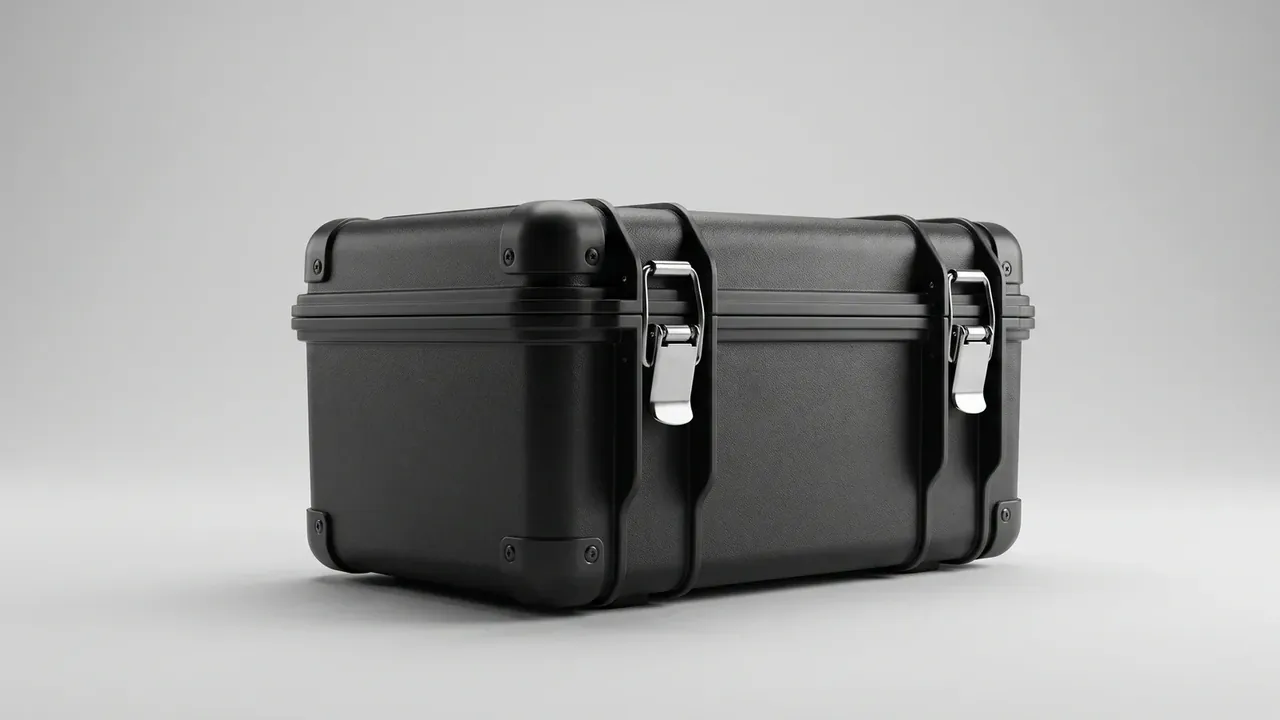
Quick answer: An outdoor case is selected by ingress protection, gasket and pressure valve, UV and thermal cycling, then wheels and harness. The rating is the item most often overstated, because one IP67 can hide two different tests.
Table of contents
- How to choose an outdoor case: five checks in order
- Ingress protection: two numbers behind the IP code
- UV and thermal cycling: what shows in year three
- Gasket and pressure valve: where the closing force goes
- Wheels, harness and field access
- FAQ
1. How to choose an outdoor case: five checks in order
An outdoor case lives in weather: sun at sixty degrees, a night at minus thirty, rain in between. Work backwards — water first, then whether the lid opens, then how the plastic ages.
Choose on wheels first and you buy thin walls with a narrow gasket; two kilometres later the wheels are fine and the inside is damp.
| Check | Decide first | Typical | If wrong |
|---|---|---|---|
| Ingress protection | depth and time | IP67, 1 m for 30 minutes | water inside |
| Gasket and valve | swing, altitude | valve at 0.15 bar | lid sucked shut |
| UV and cycling | years in sun | 1000 hours xenon | brittle in year three |
| Wheels and harness | weight, distance | 100 mm, 22 kg | bent axle |
| Locks and access | last | two latches | slow on site |
One item never appears in a brochure: the lid overlap. Below 8 mm driving rain climbs the joint; above 15 mm the rim stiffens.
2. Ingress protection: two numbers behind the IP code
IP67 means one metre of still water for thirty minutes. IP68 is agreed between buyer and supplier, commonly two metres for an hour.
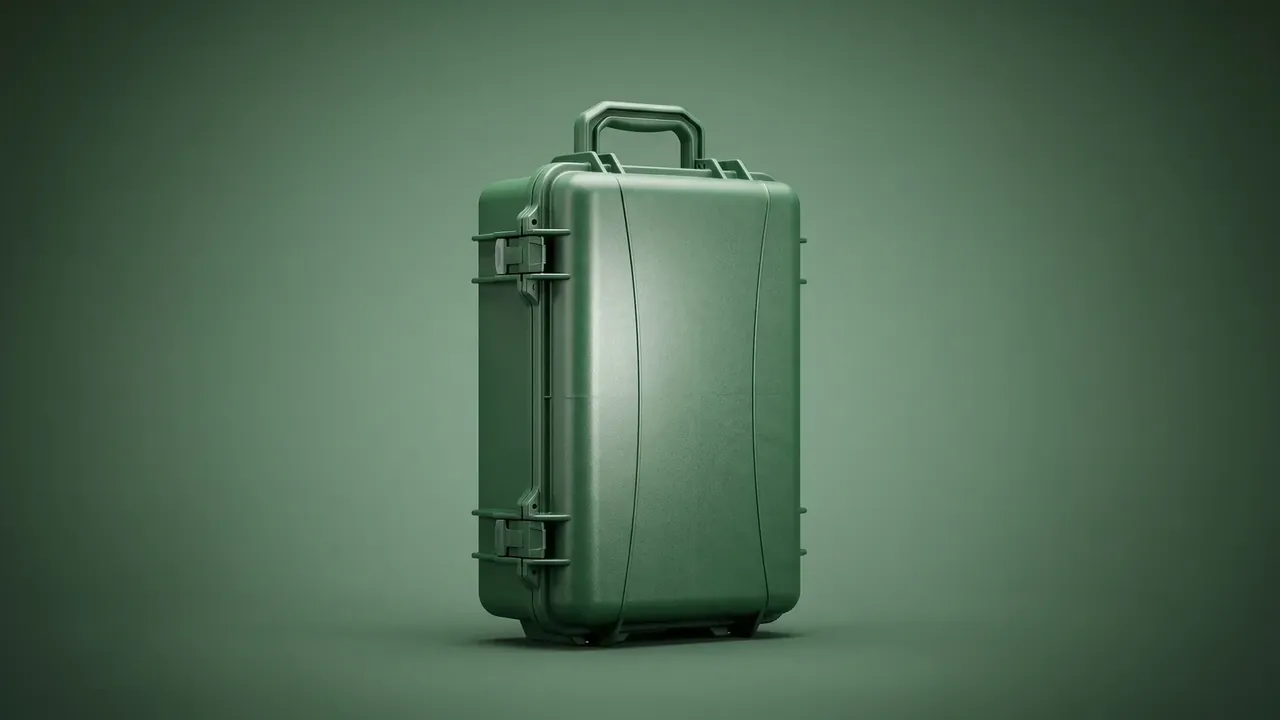
Ask about gasket life, not the first dip: once compression set passes twenty percent, the second immersion leaks. Retest after 200 opening cycles.
| Rating | Test condition | Typical use | Failure |
|---|---|---|---|
| IP65 | jets from all directions | short rain | seeps under standing water |
| IP67 | 1 m still water, 30 minutes | drops, washdown | leaks as the gasket ages |
| IP68 | 2 m for 1 hour, agreed | wading, rafting | distortion opens the joint |
Pressure also bends the body: at 4.5 mm the side panel bows about 1 mm at one metre, changing gasket compression, while a thin wall bows 2 mm.
3. UV and thermal cycling: what shows in year three
UV does not break a case on the day; it makes plastic brittle over years. A thousand hours of xenon is about two years outdoors, judged on colour within ΔE 3 and strength above eighty percent.
Thermal cycling is harsher than steady heat: ten cycles from −30 °C to +60 °C, two hours each, diagonal change within 1.5 mm.
Colour counts too: a dark case runs 15 to 20 °C hotter and ages faster. At altitude the additive package matters more than the shade.
4. Gasket and pressure valve: where the closing force goes
The gasket keeps water out; the valve lets you back in. A 30 °C rise or a 2000 m climb gives about 0.2 bar, and the opening force climbs from 80 N to over 200 N.
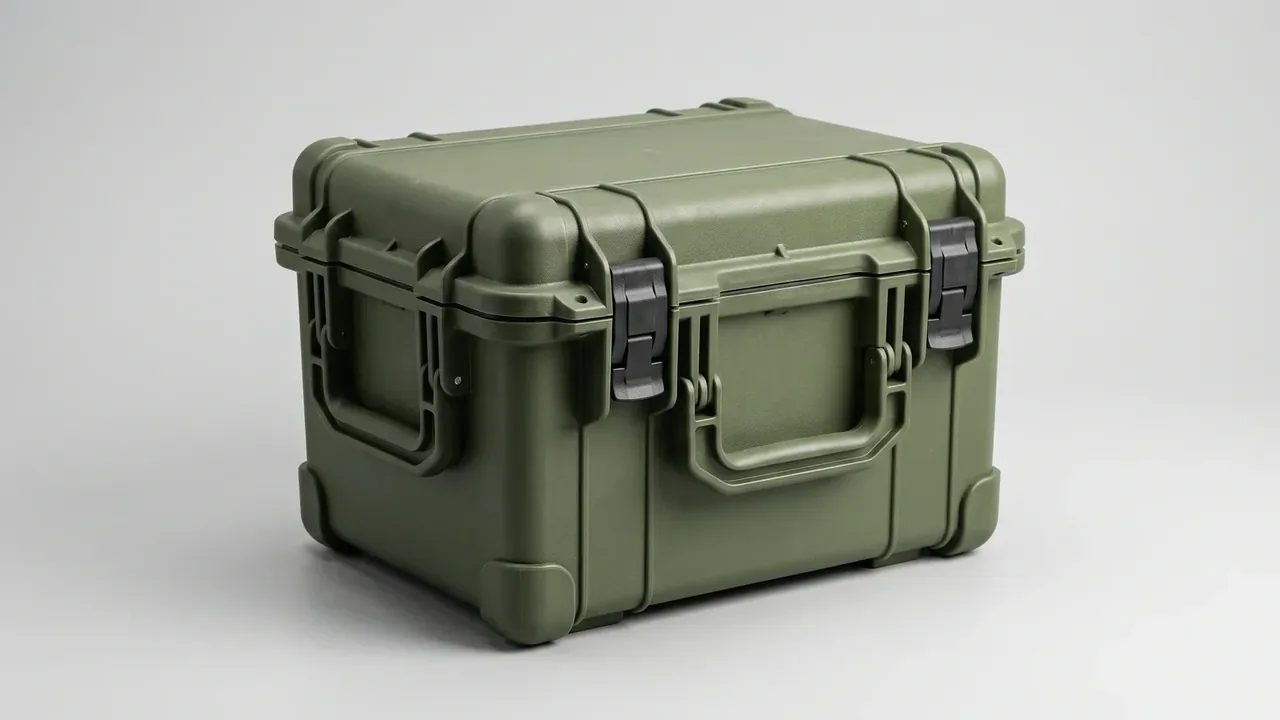
Set the valve to open at 0.15 bar: lower trips in transit and lets dust in, higher leaves the lid hard work.
Latch force only counts if it reaches the gasket. Two latches should leave compression even within ten percent; a 0.2 mm feeler should not enter deeper than 20 mm.
5. Wheels, harness and field access
Wheels fail first because they take every impact. A 22 kg load on 100 mm wheels over 50 km of gravel should keep the axle straight.
A three-stage handle at 900 mm with no more than 3 mm of play stays put on gravel. An empty weight of 5.8 kg is the ceiling for a wheeled case.
Shoulder straps suit loads under 15 kg and the back panel needs channels. Side handles are accepted at 25 kg static.
Conclusion
The chain runs one way: both IP figures against the water the case will meet, a valve for the temperature and altitude swing, a UV package for the years in sun, then wheels or a harness by weight. Get depth, differential and sunlight right, and an outdoor case still closes cleanly in its third year.
This article discusses only the container (case body) side of specifications and design intent, and does not cover any handling, loading or use of the contents.
Related Reading
- Forms of the multi-purpose outdoor case
- Test criteria for waterproof hard cases
- How dust protection grades read
- Comparing hard shell case materials
Related Products
- 8 Series — Gun Cases; Military Equipment Cases; Camera Equipment Cases; Drone Cases; Watch Cases; Knife Cases; First Aid Cases; Electronics Equipment Cases
- WL8-2812 PP Gun Case — model WL8-2812
- All protective cases and toolboxes: 7 series, 158 models