

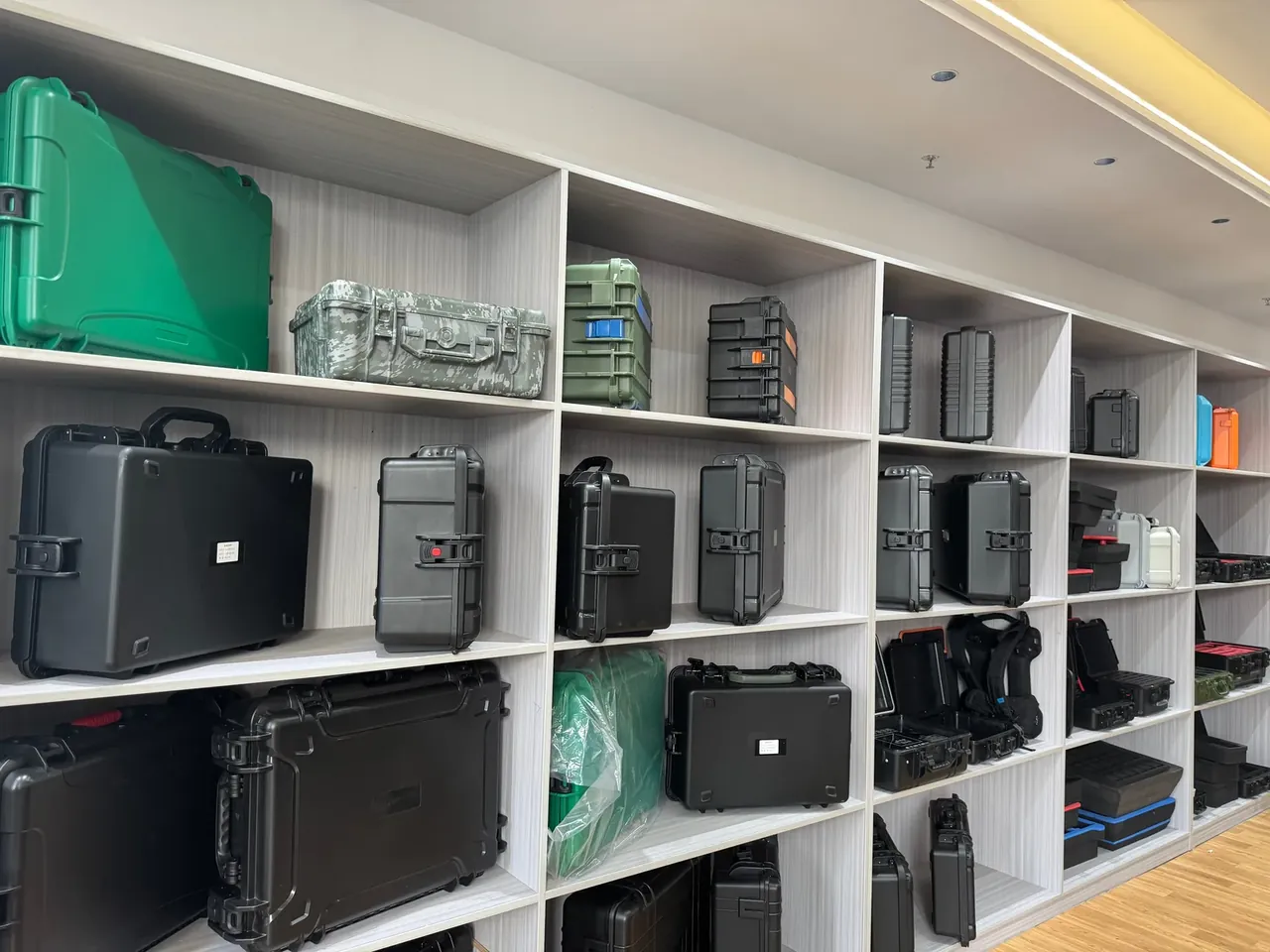
Quick answer: An outdoor Electrical Equipment Case keeps IP67 only when the cable entries, bonding studs and drain valve are sealed as well as the moulding.
Table of contents
- Cable entries and gland selection
- Earthing and equipotential bonding
- Condensation and drain valve position
- Protection rating and electrical clearance
- Lockout and tagging during maintenance
- FAQ
1. Cable entries and gland selection
Most failures of an outdoor Electrical Equipment Case start at a cable entry, not at a cracked wall. The moulding holds IP67 for years; the hole drilled into it is where water enters. Position, hole size and sealing hardware have to be settled together, because changing one disturbs the other two.
Put entries in the floor. Rain runs down a cable, and a side entry lets it track along the sheath into the gasket. A floor entry with a drip loop takes the water to the low point and drops it.
Hole size follows the gland thread, usually M16 to M25. An oversized hole leaves the washer bridging air; an undersized one strips the plastic thread on the first attempt. Deburr and chamfer the rim, since a burr under the washer is a leak path.
Pick the gland by cable outside diameter, not by current rating. Two cables of the same conductor size can differ by a whole clamping range. Blanking plugs close the spare holes and take the same torque as a gland.
| Cable outside diameter | Gland size | Sealing method | Common mistake |
|---|---|---|---|
| Thin control cable | M16 | Single clamping insert | Oversized gland, cable slips |
| Standard supply cable | M20 | Insert plus locknut | Locknut left out, joint loose |
| Heavy sheathed cable | M25 | Two-stage seal | Sheath stripped too far back |
Locking torque runs 2.5–4.0 N·m. Plastic threads rebound, so an over-torqued gland looks dry in week one and splits a season later.
2. Earthing and equipotential bonding
The moulding of an outdoor Electrical Equipment Case does not conduct, so earthing depends on the metal inside. Mounting plates, DIN rail and door brackets all run a conductor back to one stud. That is equipotential bonding: every touchable metal part sits at one potential, so a hand bridging two completes no circuit.
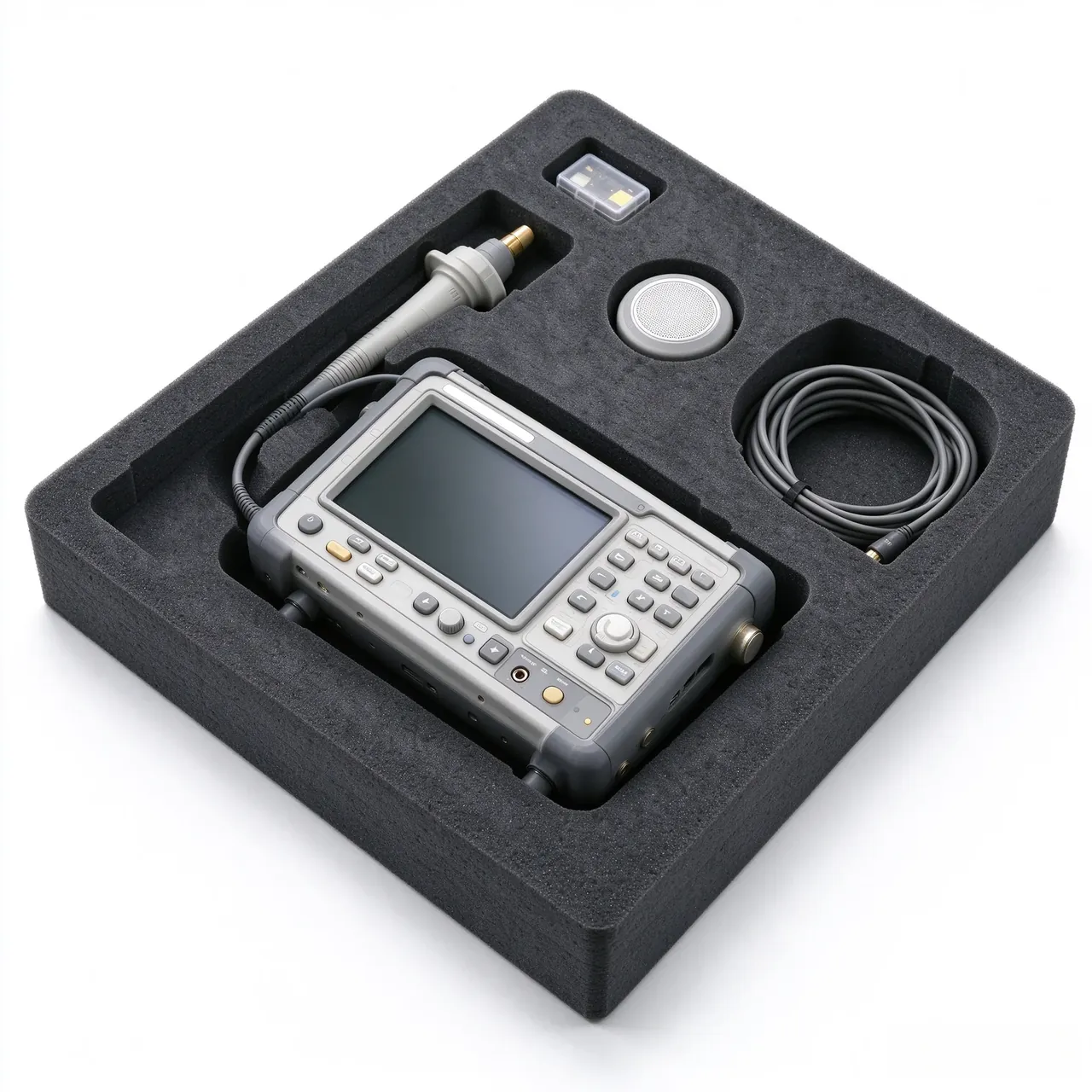
Specify a stud with a crimp lug, never a self-tapping screw driven into plastic. Plastic creeps, the screw loses a half turn within a year, and bonding resistance climbs with nothing visible outside.
Screened cable needs the screen clamped 360 degrees at the gland and short-tailed to the stud. Twisting the screen into one wire and landing it on a terminal gives almost nothing at high frequency. Where the box houses a drive, this decides whether the instrument inside reads cleanly.
3. Condensation and drain valve position
Condensation is not leakage. Moist air gives up water when the wall cools; droplets form on the coldest surfaces and collect at the low point.
The drain valve on an outdoor Electrical Equipment Case sits at that low point and opens at 0.1 bar, about 10 kPa. Water builds until the diaphragm cracks open, the box empties, and the diaphragm reseats. Move the valve a few centimetres and the water pools where the valve never reaches.
Brackets, trunking and foam inserts must not cover the inlet. If the box is mounted out of level, the low corner moves and the valve has to follow.
Where an outdoor Electrical Equipment Case sees hard day-night swings, a drain alone is not enough. A breather membrane equalises pressure so the gasket is not pushed and pulled twice a day; without it, moist air is drawn in through the weakest gland.
4. Protection rating and electrical clearance
IP67 means immersion at 1 m for 30 min with the sample and the water within 5 K of each other, and a talcum chamber with 8 h of extraction on the dust side. It does not include jetting; IPX5 and IPX6 are separate tests, and moving water is harder to keep out.
Once a hole is cut into an outdoor Electrical Equipment Case, the rating belongs to the gland, not the moulding. A shell rated IP67 with an ordinary connector is, as a whole, only as good as that connector. Test the assembly, not the empty shell.
Live parts inside need clearance and creepage. Allow at least 8 mm of clearance and 10 mm of creepage; the margin covers dust and the condensation bead that forms overnight.
Wall thickness is chosen between 2.0 and 3.5 mm. Below 2.0 mm the rim distorts when a large hole is cut, the gland seats unevenly and the washer is tight on one side only. Keep a margin from hole to wall edge as well.
An outdoor Electrical Equipment Case is released for service only above 1 MΩ. Disconnect the load and wait for a steady reading; repeat after the box dries if the first number is low on a damp morning.
5. Lockout and tagging during maintenance
Maintenance on an outdoor Electrical Equipment Case does not begin with opening the lid. It begins with isolation, verification, a tag and a lock. The tag carries the asset number, the name of the person working and the expected finish; the lock has one key, held by that person.
Before the lid comes off, look at the sealing face. Grit pressed into the gasket leaves a dent, and that dent is the entry point for the next storm. Wipe with a damp cloth, never solvent, which hardens the rubber.
Measure insulation resistance on the outdoor Electrical Equipment Case before re-energising and record the number. Close the lid by drawing the latches down in diagonal pairs so the gasket compresses evenly. After energising, watch for a smell or a rise in temperature and isolate at once if either appears.
| Stage | Action | Who | Record kept |
|---|---|---|---|
| Isolate | Open upstream switch, verify dead | Technician | Signed isolation note |
| Secure | Fit tag and personal lock | The same technician | Tag and lock number |
| Work | Wipe seal face, replace gland | Maintenance crew | Parts replaced |
| Reassemble | Diagonal latch sequence, retest | Technician | Insulation reading |
| Restore | Remove tag and lock, energise | Shift supervisor | Time of restoration |
If insulation resistance falls below 1 MΩ, or water is found inside, the box is taken out of service for repair.
Related Reading
- Electrical standards for waterproof plastic boxes
- Enclosure applications for electrical equipment
- Industrial electrical equipment case
- When a drain valve has to be fitted
JUNZHIJIA
Related Products
- 8 Series — Gun Cases; Military Equipment Cases; Camera Equipment Cases; Drone Cases; Watch Cases; Knife Cases; First Aid Cases; Electronics Equipment Cases
- WL8-2812 PP Gun Case — model WL8-2812
- All protective cases and toolboxes: 7 series, 158 models