

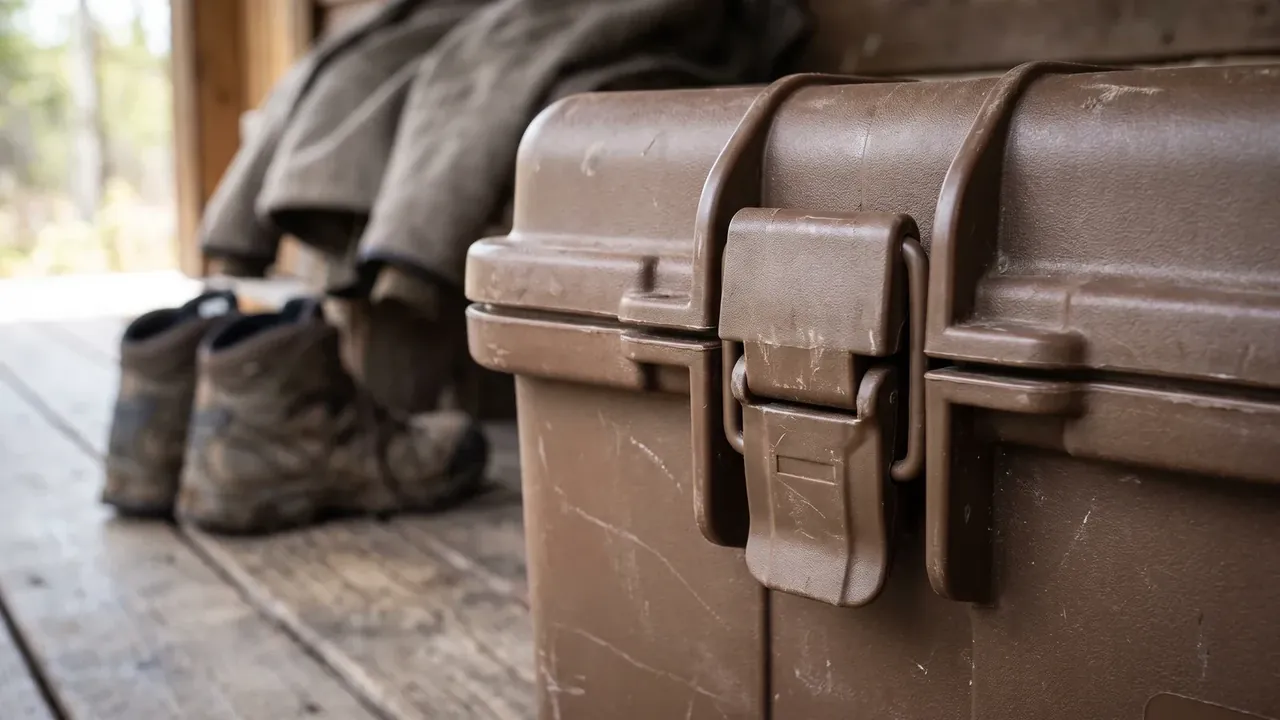
Quick answer: Match the rating to the water, not to the brochure. Camping rain is covered by IPX5 at 12.5 L/min from a 6.3 mm nozzle; boat decks need IPX6 spray plus IPX7 for 1 m for 30 minutes; a vehicle needs IPX6K against a pressure washer and IP6X against dust. Of the three, only the boat calls for immersion.
Table of contents
- Read the water before the rating
- Camping: what a night of rain delivers
- Boats: spray on deck and going over the side
- Vehicles: pressure washing and dust
- Comparing the three and picking in order
- FAQ
1. Read the water before the rating
The digits after IP cover different things: the first is dust, 0 to 6, and the second is water, 0 to 8. Stock is marked IP65, IP66 or IP67, three unrelated tests.
A water rating is a repeatable rig condition, not an adjective.
IPX5 uses a 6.3 mm nozzle at 12.5 L/min and 30 kPa for three minutes. IPX6 keeps the nozzle and lifts flow to 100 L/min at 100 kPa. IPX7 drops spraying for immersion, lowest point 1 m under, for 30 minutes. A case marked IP67 has proved it can be dunked, not that it can be hit with a jet.
| Rating | Test condition | What it stands for |
|---|---|---|
| IPX4 | Oscillating tube, 10 L/min, 10 min | Driving rain, splash |
| IPX5 | 6.3 mm nozzle, 12.5 L/min, 30 kPa, 3 min | Heavy rain, hosing down |
| IPX6 | 12.5 mm nozzle, 100 L/min, 100 kPa, 3 min | Deck spray, low-pressure wash |
| IPX7 | Still water, 1 m, 30 min | Going overboard, short immersion |
Pick the water first, the rating second. Working backwards buys sealing force nobody needed and a lid that fights every opening.
2. Camping: what a night of rain delivers
Moderate rain falls at about 10 mm per hour. Over a 0.5 m² lid that is 5 litres an hour, which will not push past a gasket on its own; wind and standing water will.
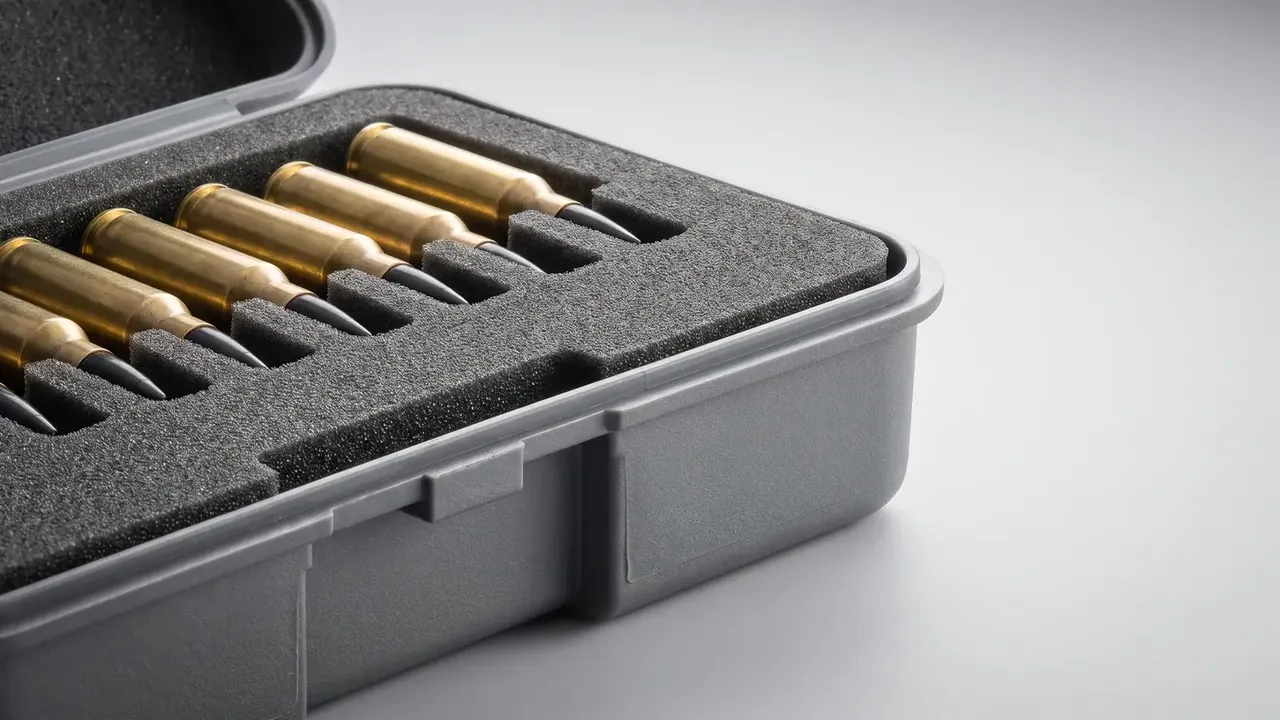
At a 30 degree wind angle the upwind seam holds a film of water for hours, and one under-compressed section of gasket lets it track through the lid gap. The IPX4 tube covers that angle but delivers 10 L/min, which will not clear mud packed into a latch recess.
The margin that matters at a campsite is ground clearance. A storm can leave 20 mm of water along the tent edge, and a case sitting in it has a water path between its own skids. A rock 50 mm high, or a body with 15 mm feet, removes most of that risk.
Rain load varies more than people expect:
- Under a tarp: wind-blown mist only, IPX4 is enough
- Open pitch in a thunderstorm: angled rain plus runoff, plan on IPX5
- A sandbar by a river: 100 mm of overnight rise, plan on IPX7
3. Boats: spray on deck and going over the side
On a boat there is only one kind of water, and it keeps arriving.
Deck spray is judged at IPX6: 12.5 mm nozzle, 100 L/min, 100 kPa, from 3 m, for three minutes. A bow slamming a wave puts about 30 kPa on the case, below the test value, but it repeats 200 times an hour.
Immersion is judged at IPX7: 1 m for 30 minutes, a depth set by reach, not by shell strength.
Buoyancy needs arithmetic. A 40 litre case weighing 6 kg displaces about 46 litres closed, so it floats 40 kg in theory; loaded to 25 kg it sits two-thirds down with the lid seam at the waterline.
A lashing point beats buoyancy. Two 8 mm holes take a 6 mm nylon line tied to a rail, and nobody goes into the water after a dropped case.
Gasket compression should sit at 25 percent: a 5 mm cord in a 4 mm groove, closing to a lid gap under 0.4 mm. Push compression past 40 percent and the seal holds the first time, then recovers only 70 percent after three months and leaks sooner than a softer one.
4. Vehicles: pressure washing and dust
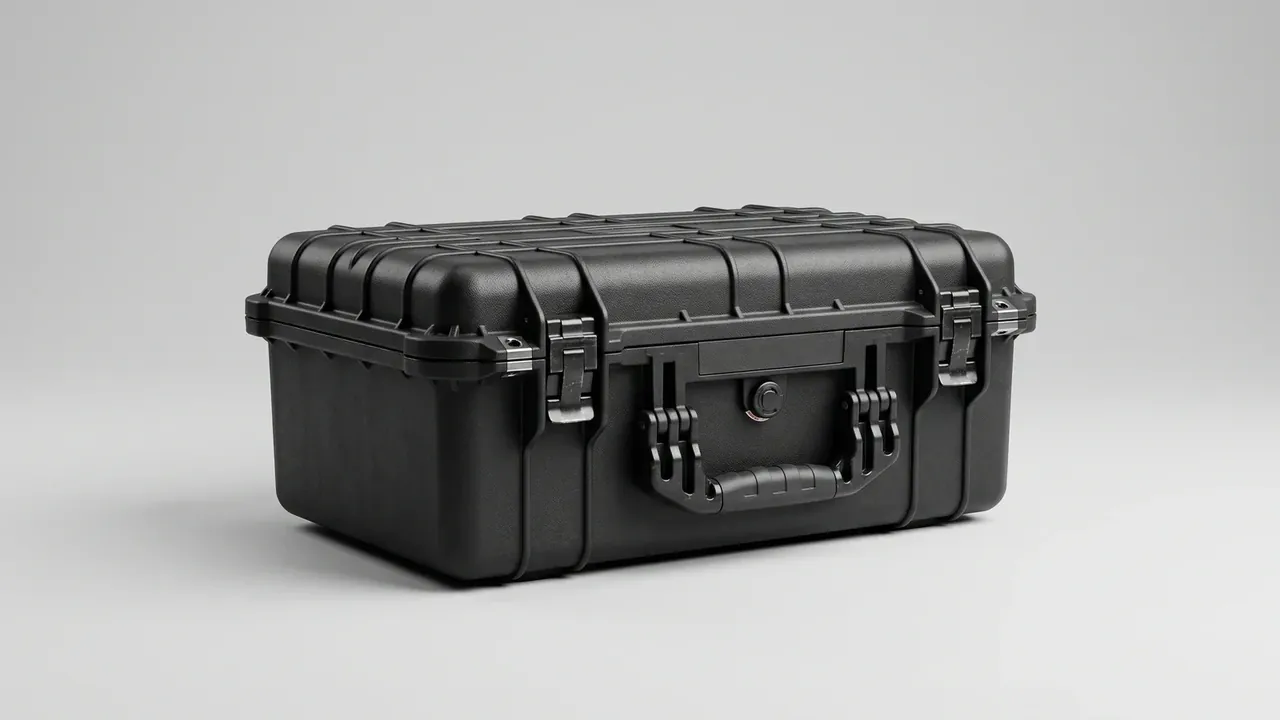
Water on a vehicle comes from a lance, not from weather.
A forecourt lance runs at 8 MPa with 40 °C water, held 300 mm away. That sits beyond the 100 kPa of IPX6 and needs IPX6K: 1000 L/h at 80 to 100 bar, from 3 m, for three minutes. At 100 mm no rating survives, because the jet wedges under the gasket.
Dust is a separate attack. A gravel road leaves 2 mm of grit between the lid ribs, and IP6X is tested with talc at 2 kg/m³ under negative pressure for eight hours. The weak points are the latch recesses and the vent.
Securing the case matters more than its rating. Rear-floor vibration reaches 3 g at 60 km/h, and an unstrapped case travels until it hits a wheel arch. Two 25 mm straps crossed over the lid cost less than another millimetre of wall.
Temperature belongs here too. A closed vehicle reaches 65 °C in summer and -25 °C on a northern night, and a gasket shifts 15 points of hardness across that range. Silicone holds the spread better than nitrile.
5. Comparing the three and picking in order
| Environment | Water type | Rating to specify | Also required |
|---|---|---|---|
| Camping | Angled rain, standing water | IPX5, IPX7 near a river | 15 mm feet, kept off the ground |
| Boat | Spray, immersion | IPX6 plus IPX7 | 8 mm lashing holes, positive buoyancy |
| Vehicle | Pressure wash, dust | IPX6K plus IP6X | Straps, -25 °C to 65 °C |
Four steps, in this order:
- Write down the water type: rained on, jetted, or dunked
- Set the rating: IPX4 to IPX5 for rain, IPX6 to IPX6K for jets, IPX7 for immersion
- Add the extras: IP6X for dust, a vent for sea freight, silicone for cold
- Size the body last: 4 mm walls, two latches, feet underneath
A vent is compulsory wherever temperatures swing. A shipping box at 55 °C by day and 15 °C at night pulls near 0.01 MPa, and without a vent the lid needs 30 kg of force while the gasket is drawn in.
Conclusion
An outdoor case does not need the highest rating on the chart, only the one that matches the water it meets: IPX5 for campsite rain, IPX6 plus IPX7 for spray and immersion on a boat, IPX6K plus IP6X for a lance and a gravel road. Below the rating, the 15 mm feet, 8 mm lashing holes, 25 percent gasket compression and a vent opening at 0.01 MPa decide whether it holds.
This article discusses only the container (case body) side of specifications and design intent, and does not cover any handling, loading or use of the contents.
Related Reading
- Waterproof hard case grades and how they are judged
- How a waterproof hard case is built
- Where multi-purpose outdoor cases are used
- Choosing a camping storage box
Related Products
- 8 Series — Gun Cases; Military Equipment Cases; Camera Equipment Cases; Drone Cases; Watch Cases; Knife Cases; First Aid Cases; Electronics Equipment Cases
- WL8-2812 PP Gun Case — model WL8-2812
- All protective cases and toolboxes: 7 series, 158 models