

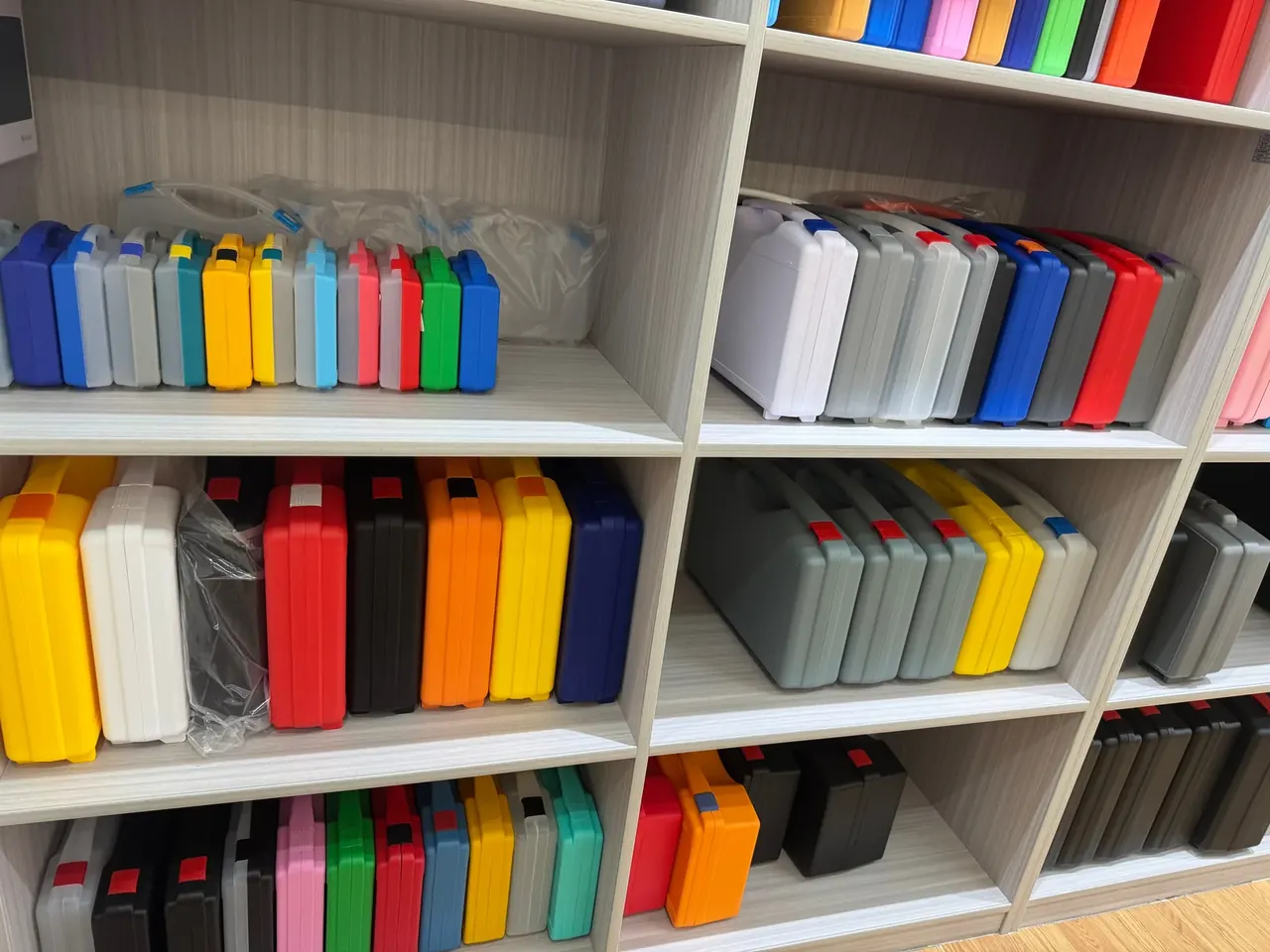
Quick answer: An Outdoor flashlight battery moisture-proof box pairs a 2.8 mm seal lip with 14% divider holes, holding humidity rise under 8% RH after 48 h.
Table of contents
- Seal lip height of an Outdoor flashlight battery moisture-proof box
- Open area of the desiccant bay divider
- Humidity rise after the damp-heat cycle
- Groove rebound in the rain recheck
- Lip height floor for the moisture-proof batch
- FAQ
1. Seal lip height of an Outdoor flashlight battery moisture-proof box
Seal failures rarely start with a torn gasket; they start where lip height and divider open area fall out of step, and moisture takes the divider route. A 2.8 mm raised lip in the lid groove presses one seal to 17% compression, and that whole travel comes from the lip. An Outdoor flashlight battery moisture-proof box measures 340 by 250 by 120 mm outside and 295 by 210 by 85 mm inside at a 3.4 mm wall; shave the lip and the groove leaks first, raise it and groove rebound fades after 4600 open-close cycles.
The rig splits lid shells into three lip grades and files lip height, compression and rebound together, since no single one is a comparison. Lip grades for an Outdoor flashlight battery moisture-proof box start at 2.2 mm, sit at 2.8 mm and top out at 3.4 mm, and 48 h at 40 °C / 90% RH does not push the rise down in a straight line, the middle grade proving steadiest.
| Lip height grade | Raised seal lip | Cavity rise after 48 h |
|---|---|---|
| Thin | 2.2 mm | 11% RH |
| Nominal | 2.8 mm | 6% RH |
| Thick | 3.4 mm | 5% RH |
2. Open area of the desiccant bay divider
A 14% divider open area governs the other moisture path. The desiccant bay is cut off from the inner cavity by this panel: too few holes and the bay cannot reach the cavity air, too many and outside damp nearly passes straight through. At 14% the bay keeps working area without turning the panel into an open door. An Outdoor flashlight battery moisture-proof box writes open area beside lip height on one grade sheet, so a change to either sends the other back for review.
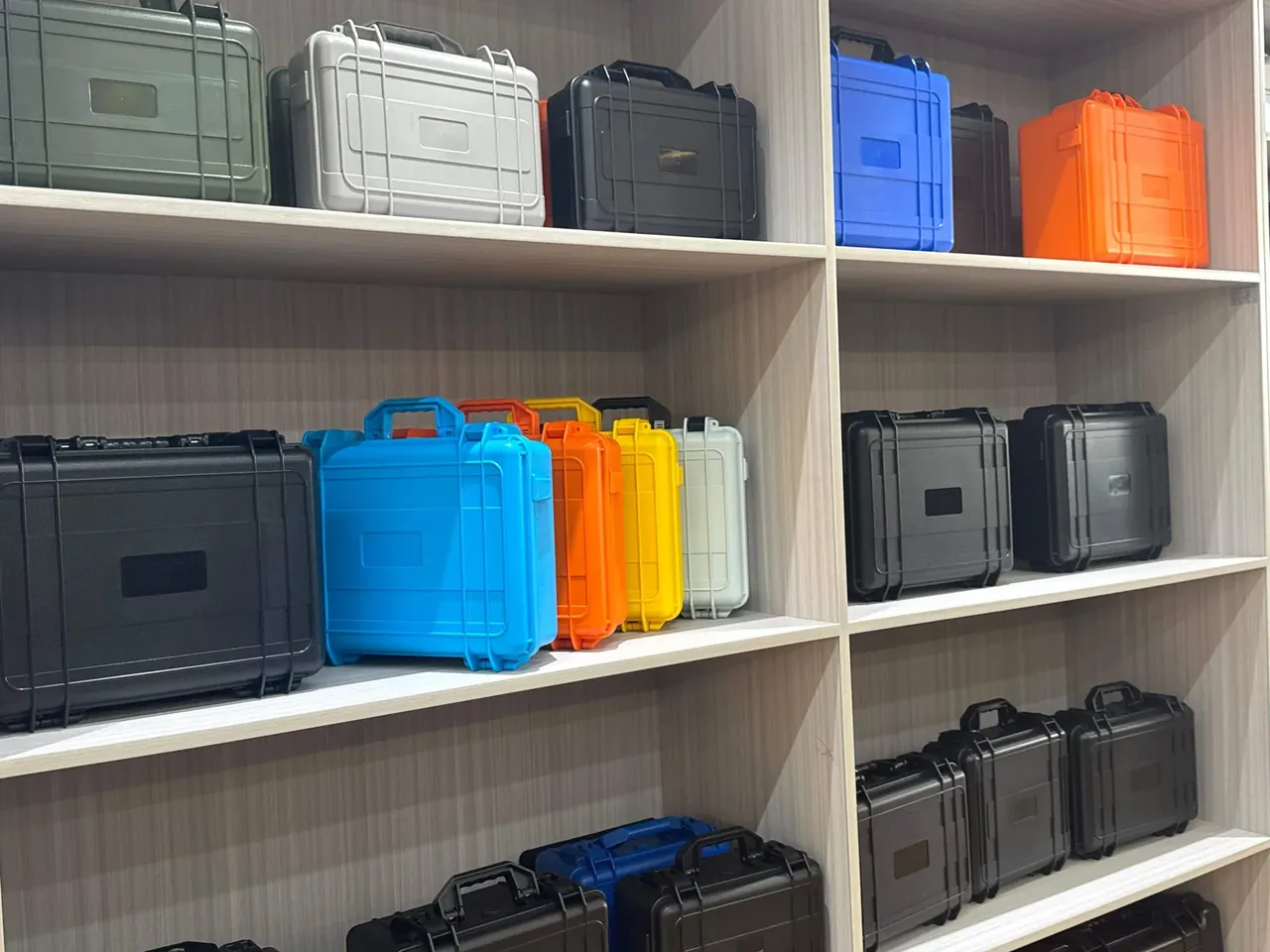
On the rain rig at 60 L/(m²·h) for 30 min, the pressure difference across the divider is read before and after the spray to see whether a water film has blanked the holes. Two latches at 285 N each hold the lid onto the divider stop, and a loose clamp lets the panel lift and spoils the reading. For an Outdoor flashlight battery moisture-proof box, inspectors number each hole row and recheck the 14% figure whenever lip height moves.
3. Humidity rise after the damp-heat cycle
The 40 °C / 90% RH / 48 h cycle on an Outdoor flashlight battery moisture-proof box runs in three stages of warm-up, steady hold and cool-down readback, so a short spike is not logged as long-term rise. Cavity humidity is taken at 0 h, 12 h, 24 h and 48 h, and the last reading minus the first is the humidity value for that shell, judged against 8% RH. Loaded 3.5 kg shells and empty shells are measured apart, never mixed in one column.
| Cycle stage | Cavity humidity | Rise over 0 h |
|---|---|---|
| 0 h | 32% RH | 0% RH |
| 12 h | 35% RH | 3% RH |
| 24 h | 37% RH | 5% RH |
| 48 h | 38% RH | 6% RH |
Across the four stages the rise moves from 3% RH to 6% RH with no late jump, which says the 2.8 mm lip and 14% open area have kept the moisture path in check. A loaded run more than 2% RH above the empty one sends the nominal grade back for recalculation. An Outdoor flashlight battery moisture-proof box keeps every stage reading on the rig log rather than handing over one final difference.
4. Groove rebound in the rain recheck
An Outdoor flashlight battery moisture-proof box then moves to the rain rig, where groove rebound of 90% or more is the pass mark. Water at 60 L/(m²·h) for 30 min shifts the raised lip slightly against the one seal, and rebound measures whether the groove closes again afterwards. Shells after 4600 open-close cycles take the same step; IP65 stays in the log as a benchmark method, with the measured readings deciding whether the grade is held.
| Humidity value | Rebound after rain | Decision |
|---|---|---|
| 5% RH | 94% | Release |
| 6% RH | 92% | Release |
| 8% RH | 89% | Reject |
Each grade carries its own rebound: 5% RH rise gives 94%, 8% RH gives 89%, so both lines tighten together. The rain recheck only counts after the cycle.
5. Lip height floor for the moisture-proof batch
The moisture-proof batch closes on one line drawn from both the cycle sheet and the rain sheet. The lip height floor takes the lowest grade whose 48 h rise still stays under 8% RH, and any lid shell below it is left out of the moisture-proof configuration. Empty 1.9 kg, loaded 3.5 kg, 4600 cycles, two latches at 285 N and one seal at 17% compression are boundary values locked onto the floor sheet with the shell of an Outdoor flashlight battery moisture-proof box.
Sampling reports four items per shell: lip grade, open area, 48 h rise and rebound, and all four must share one grade. A crossed line tags that shell for its own retest. Rig logs for an Outdoor flashlight battery moisture-proof box are filed by temperature and humidity, and drawing tolerances follow.
Conclusion
An Outdoor flashlight battery moisture-proof box holds damp out through the balance of lip height, open area and rebound, where changing one term pushes moisture onto another path. The 2.8 mm lip, 14% divider and 8% RH rise limit make one grade, with rebound as its cross-check. JUNZHIJIA files the 4600-cycle and 48 h logs, and Kexin New Materials (Guangdong) Co., Ltd. issues lid drawing tolerances from them.
Related Reading
- Camping light and outdoor power bank heavy duty hard case
- What waterproof rating an outdoor equipment case needs: camping, boat and vehicle
- Four uses of a multi-purpose outdoor protective case: camping, driving, field work and emergency
- How to choose an outdoor adventure and camping gear protective case
Related Products
- 8 Series — Gun Cases; Military Equipment Cases; Camera Equipment Cases; Drone Cases; Watch Cases; Knife Cases; First Aid Cases; Electronics Equipment Cases
- WL8-2812 PP Gun Case — model WL8-2812
- All protective cases and toolboxes: 7 series, 158 models