

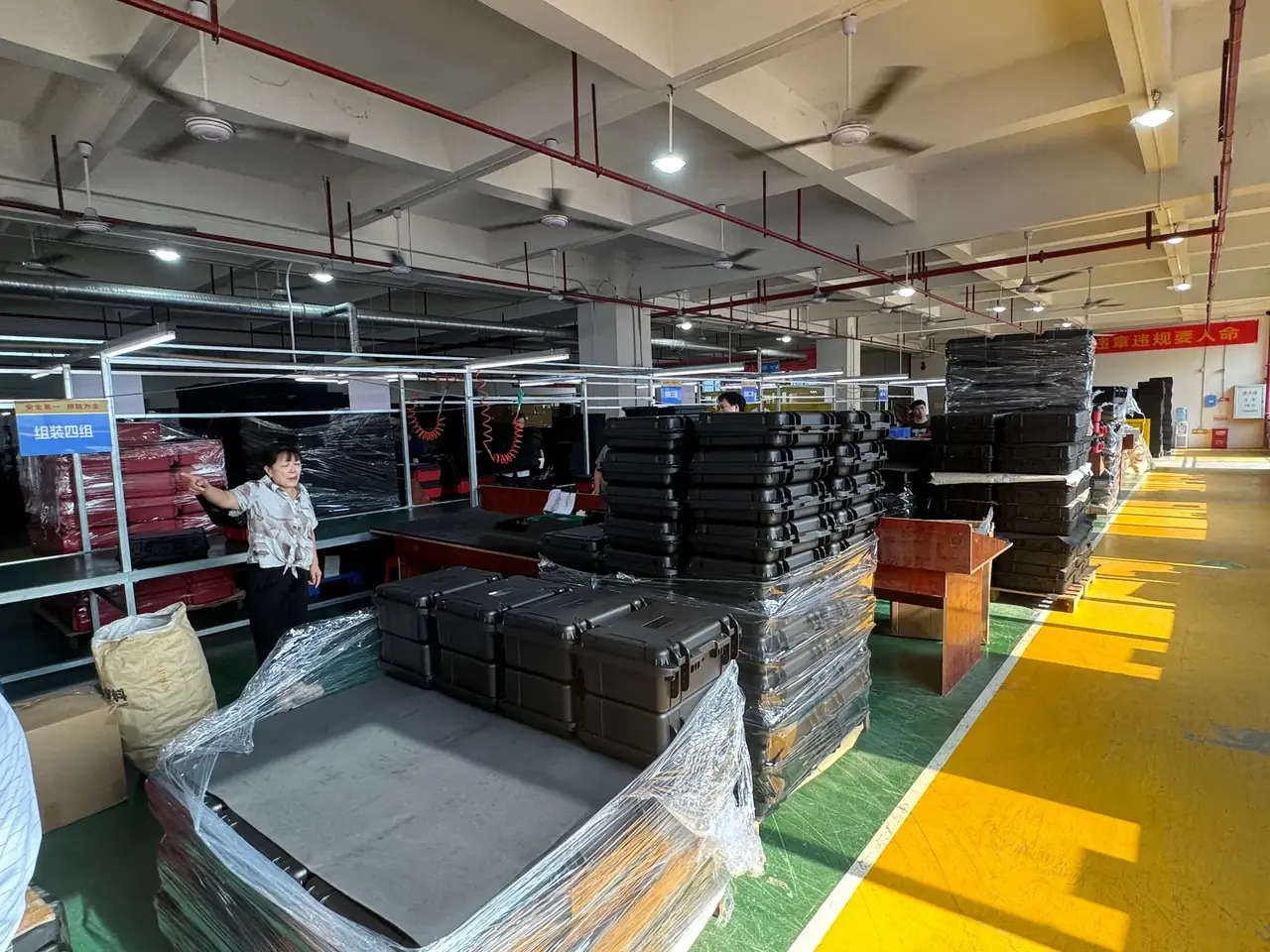
Quick answer: Outdoor GPS tracker safety protective box holds post-rain humidity rebound under 6% RH by matching a 6.5 mm seal groove with a 2.2 mm window frame.
Table of contents
- Seal groove depth of the Outdoor GPS tracker safety protective box
- Thickness allocation of the antenna window press frame
- Humidity rebound readings across the rain period
- Groove-mouth recheck after thermal cycling
- Groove-depth reject line for outdoor batches
- FAQ
1. Seal groove depth of the Outdoor GPS tracker safety protective box
The Outdoor GPS tracker safety protective box measures 430 × 310 × 165 mm outside and 375 × 260 × 115 mm inside with a 3.4 mm wall, but the figure that governs post-rain dryness is the lid seal groove. At 6.5 mm deep with one gasket compressed 17%, the lip folds into the channel and forces water along a long return path. At 3.1 kg empty and 6 kg loaded the lid stays stiff enough to hold that depth.
Deeper is not better. Moving the same tool from 5.0 mm to 8.0 mm makes compression rise then fall: a shallow groove bottoms the gasket out, a deep one lengthens the free span until the press frame bows at mid-span. We hold 6.5 mm because it keeps 17% after 3800 open-close cycles, while the other settings drift to 12% and 21%.
| Groove setting | Depth | Behaviour after compression |
|---|---|---|
| Shallow | 5.0 mm | Compression near its limit, little rebound after thermal cycling |
| Middle | 6.5 mm | 17% compression on target, steadiest humidity rebound |
| Deep | 8.0 mm | Long free span, press frame prone to bowing |
2. Thickness allocation of the antenna window press frame
An antenna window in the lid is not just a hole; the press frame around it must clamp the gasket without blanking the aperture. At 2.2 mm it is thinner than the 3.4 mm wall, so the 315 N from each latch reaches the gasket first. The Outdoor GPS tracker safety protective box uses a closed loop with rounded corners to keep a sharp angle from tearing the groove mouth.
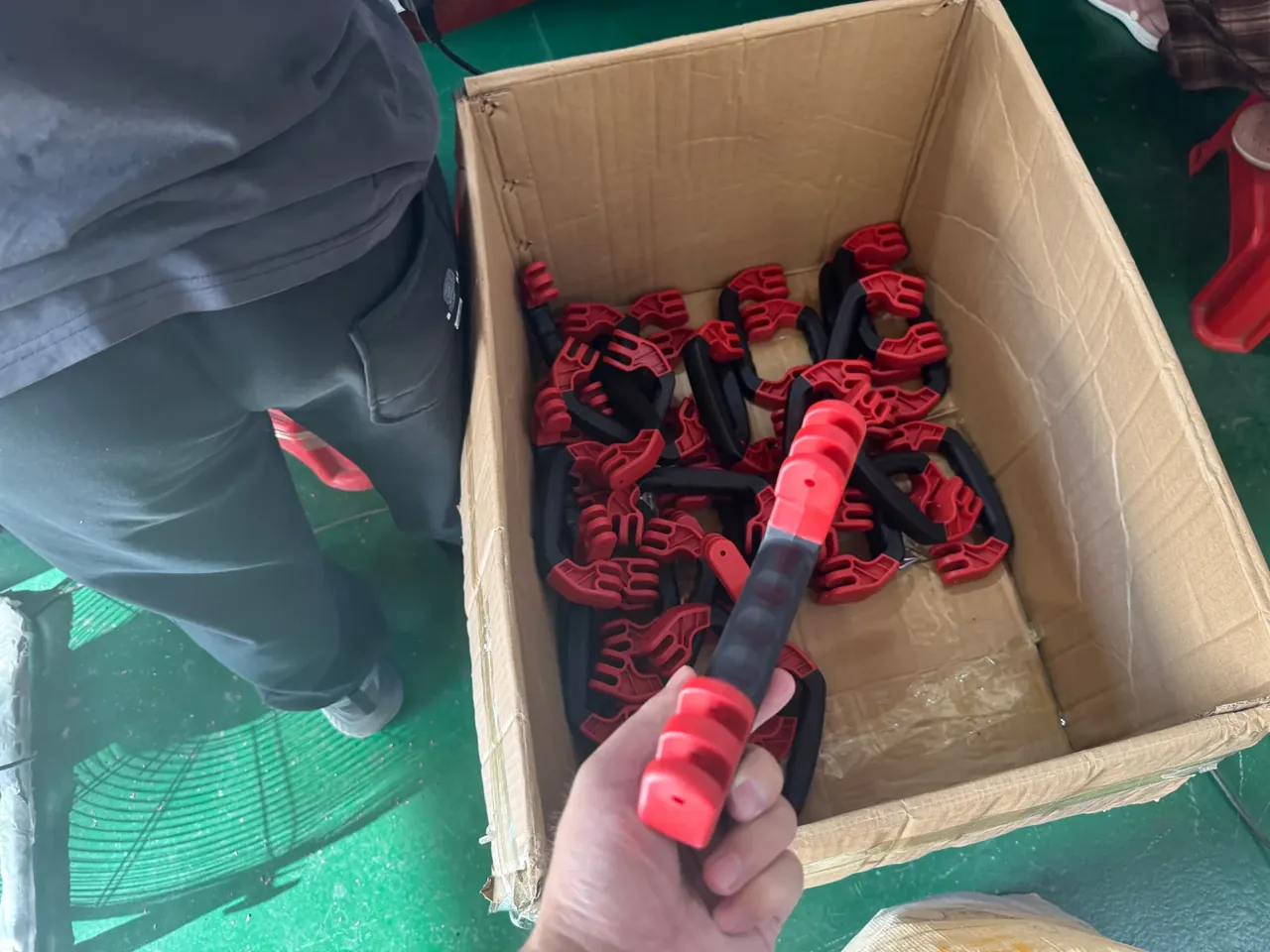
Two latches at 315 N press the lid ends first and the middle last. A frame of equal thickness lets the mid-section meet the gasket late, so moisture returns there; we keep the latch-side runs at 2.2 mm and let the middle give 0.2 mm to even out compression.
3. Humidity rebound readings across the rain period
The rig sprays at 60 L/(m²·h) for 30 min with the lid up and latches at 315 N, then reads cavity humidity after 24 h of still air. The criterion for the Outdoor GPS tracker safety protective box is a rebound of <=6% RH within 24 h, not a claim that no water got in: outer-wall water during the spray does not count, only the slow climb inside after it stops.
Readings fall in three windows. The first 10 min logs outer-wall water; from 10 to 30 min mouth humidity is read every 10 min for early damp at the frame mid-span; after the spray the 24 h curve matters most, and staying under 6% RH means the 6.5 mm return path held.
| Rain window | Spray rate | Logging action |
|---|---|---|
| 0-10 min | 60 L/(m²·h) | Lid closed, record outer-wall water only |
| 10-30 min | 60 L/(m²·h) | Read mouth humidity every 10 min |
| 24 h after spray | Still air | Read cavity humidity rebound |
4. Groove-mouth recheck after thermal cycling
Sixteen cycles from -25 °C to 55 °C are hardest on the groove mouth. Lid and shell expand at different rates, the 6.5 mm depth tightens in the cold and opens in the heat, and the 315 N from each of two latches drifts. Measure mouth width every 4 cycles and compare at cycle 16; a lid more than 0.15 mm off gets a new frame match.
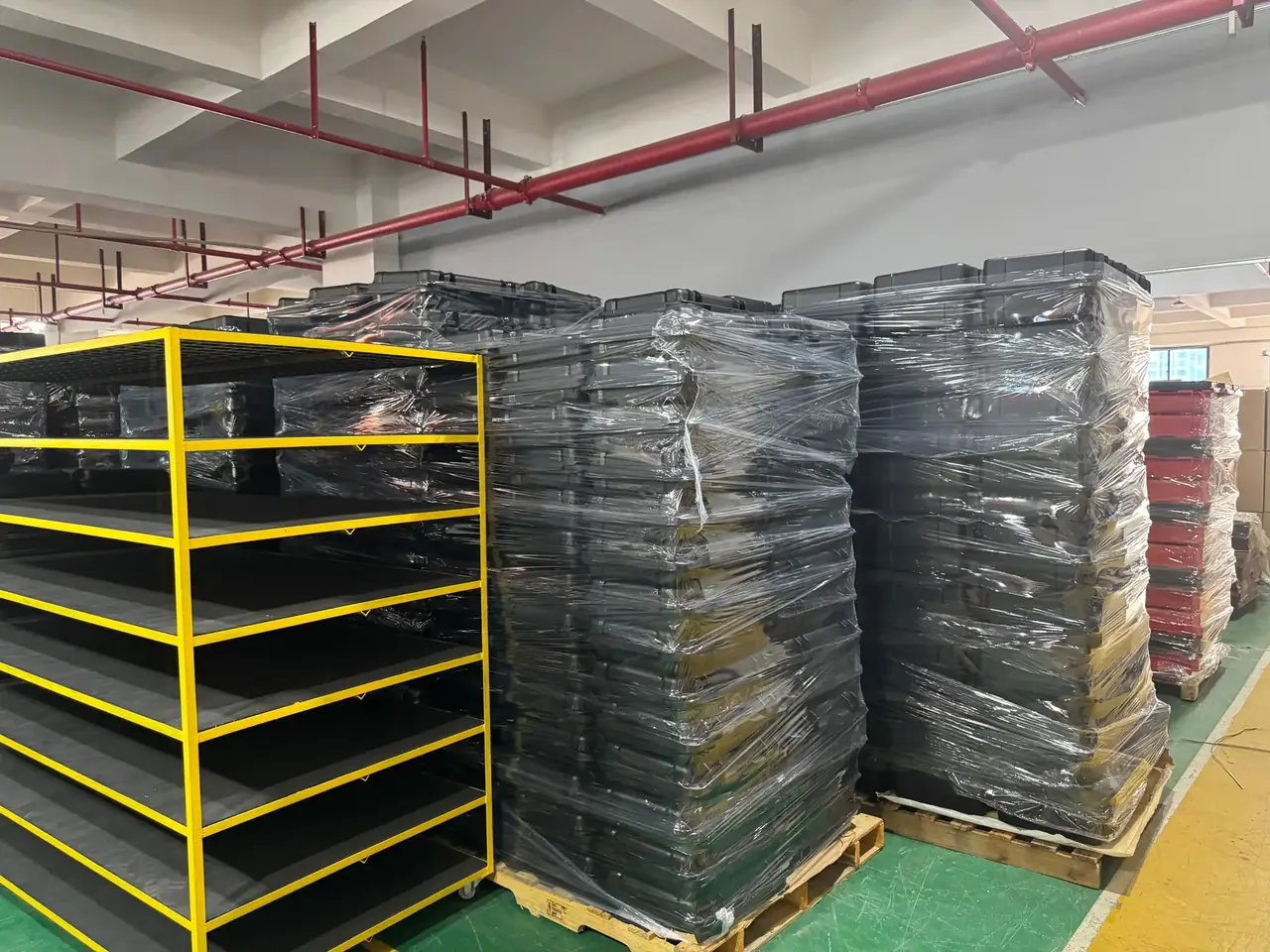
Judgement waits for recovery. A lid back from -25 °C to room temperature carries condensation, and spraying at 60 L/(m²·h) then would mix wall moisture into the rebound. The rig calls for 2 h recovery, a wiped wall, then the spray, with 24 h rebound still <=6% RH. The Outdoor GPS tracker safety protective box keeps before-and-after readings side by side on the card.
5. Groove-depth reject line for outdoor batches
Batch release cannot rely on a few samples. The Outdoor GPS tracker safety protective box sets its groove-depth reject line at 6.5 mm ±0.2 mm: below 6.3 mm compression passes 19% with no rebound room; above 6.7 mm the frame mid-span clamps poorly and 24 h rebound after a 30 min spray crosses 6% RH. Out-of-band shells go back to the tool.
| Rebound value | Reading | Action |
|---|---|---|
| <=4% RH | Rebound converged | Release |
| 4%-6% RH | Borderline | Recheck groove depth once more |
| >6% RH | Beyond criterion | Reject and review frame thickness |
The line reads with two other numbers. At 3.1 kg empty and 6 kg loaded the lid deflects differently, so a good groove still fails if frame thickness leaves 2.2 mm ±0.1 mm; a good frame with a shallow groove loses 17% too. JUNZHIJIA makes both fields mandatory on one card, filed by shell number for outdoor batches.
Building to the IP67 reference is only the entry point. What decides whether a batch of the Outdoor GPS tracker safety protective box ships is <=6% RH over 24 h after 60 L/(m²·h) / 30 min, the groove recheck after 16 cycles from -25 °C to 55 °C, and compression after 3800 cycles, all resting on the 6.5 mm groove and 2.2 mm frame.
Conclusion
The sealing result of an Outdoor GPS tracker safety protective box rests not on wall thickness but on the 6.5 mm groove and 2.2 mm frame pairing. A 24 h rebound <=6% RH after 60 L/(m²·h) for 30 min is the reading that says it passed; 16 cycles from -25 °C to 55 °C, 3800 cycles and two latches at 315 N pin that reading to the whole batch. One inspection card makes the Outdoor GPS tracker safety protective box batch release repeatable.
Related Reading
- Protecting electronics in an outdoor case
- Case asset numbering, register and audit
- EDC outdoor tool shockproof protective box
- Five criteria for choosing an outdoor case
Related Products
- 8 Series — Gun Cases; Military Equipment Cases; Camera Equipment Cases; Drone Cases; Watch Cases; Knife Cases; First Aid Cases; Electronics Equipment Cases
- WL8-2812 PP Gun Case — model WL8-2812
- All protective cases and toolboxes: 7 series, 158 models