

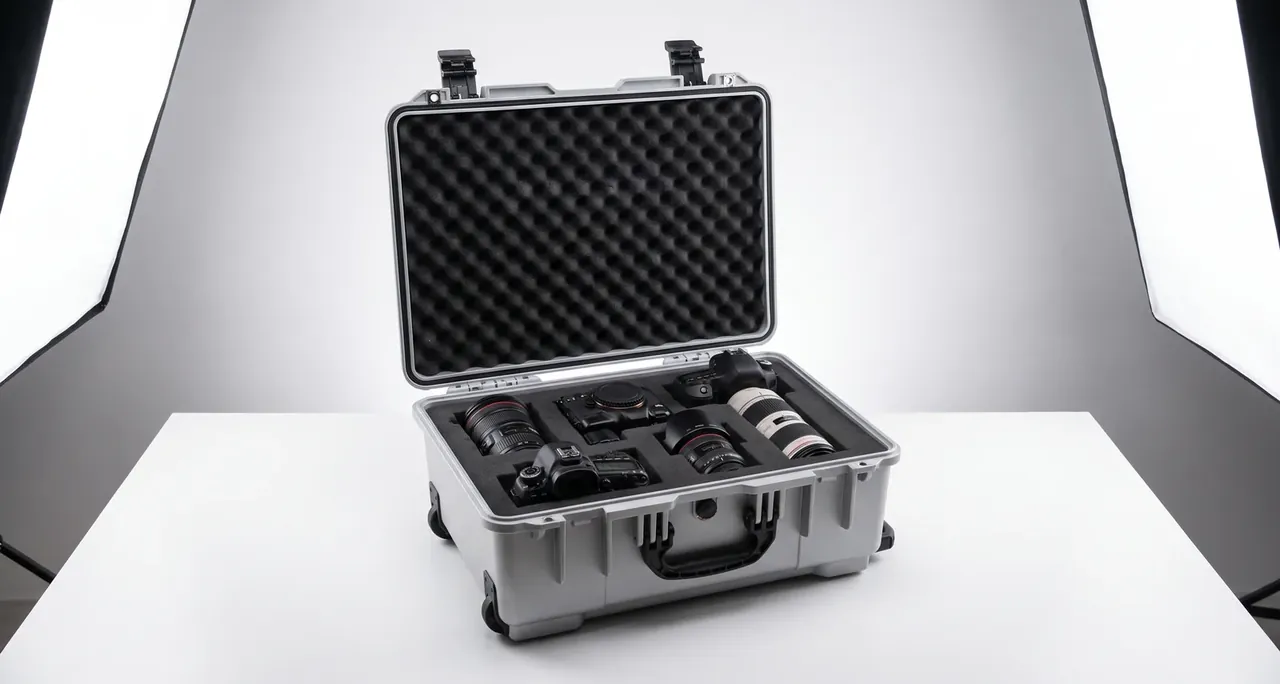
Quick answer: In case overseas warehouse planning, 6 of 25 SKUs bring 78% of shipments; cut to 8 core models, set safety stock at daily sales × 35 days × 1.5.
Table of contents
- Cutting 25 SKUs to 8
- Safety stock: daily sales × lead time × 1.5
- 45 to 60 days of turns and cubic-foot rent
- Dead stock at 180 days and 35-day sea replenishment
- FAQ
1. Cutting 25 SKUs to 8
Twenty-five models landed in the case overseas warehouse and the tail showed up in month one: 6 models took 78% of outbound orders, while the other 19 shared less than a quarter of demand and occupied 62% of the cube.
The test is 90-day pick frequency. Six or more picks puts a model in the core pool, 3 to 5 keeps it but merges outer dimensions, 2 or fewer goes to direct ship from the factory.
| Group | Models | 90-day outbound share | Cube used | Action |
|---|---|---|---|---|
| Core pool | 8 | 78% | 38% | Stocked, replenished monthly |
| Merger group | 6 | 14% | 30% | Merged into neighbouring size |
| Direct ship | 9 | 8% | 32% | Space cleared, ship on order |
| Discontinued | 2 | 0% | 0% | Clear at discount |
The cheapest merger pairs a 620 × 420 × 280 mm shell with a 600 × 400 × 260 mm shell. The 20 mm gap is invisible to buyers, the factory runs one mould, inserts drop from 3 designs to 1 and spare parts from 3 sets to 1.
The 8 core models need structural spread: 4 volume standards, 2 wheeled, 2 pressure-equalised sealed units, split 5:2:1 so a stock-out in one class is covered by a neighbour.
2. Safety stock: daily sales × lead time × 1.5
Stock in a case overseas warehouse follows one formula: safety stock = daily sales × lead time × 1.5. At 6 units a day over a 35-day cycle that is 315 units, and the reorder point adds one lead time for 585.
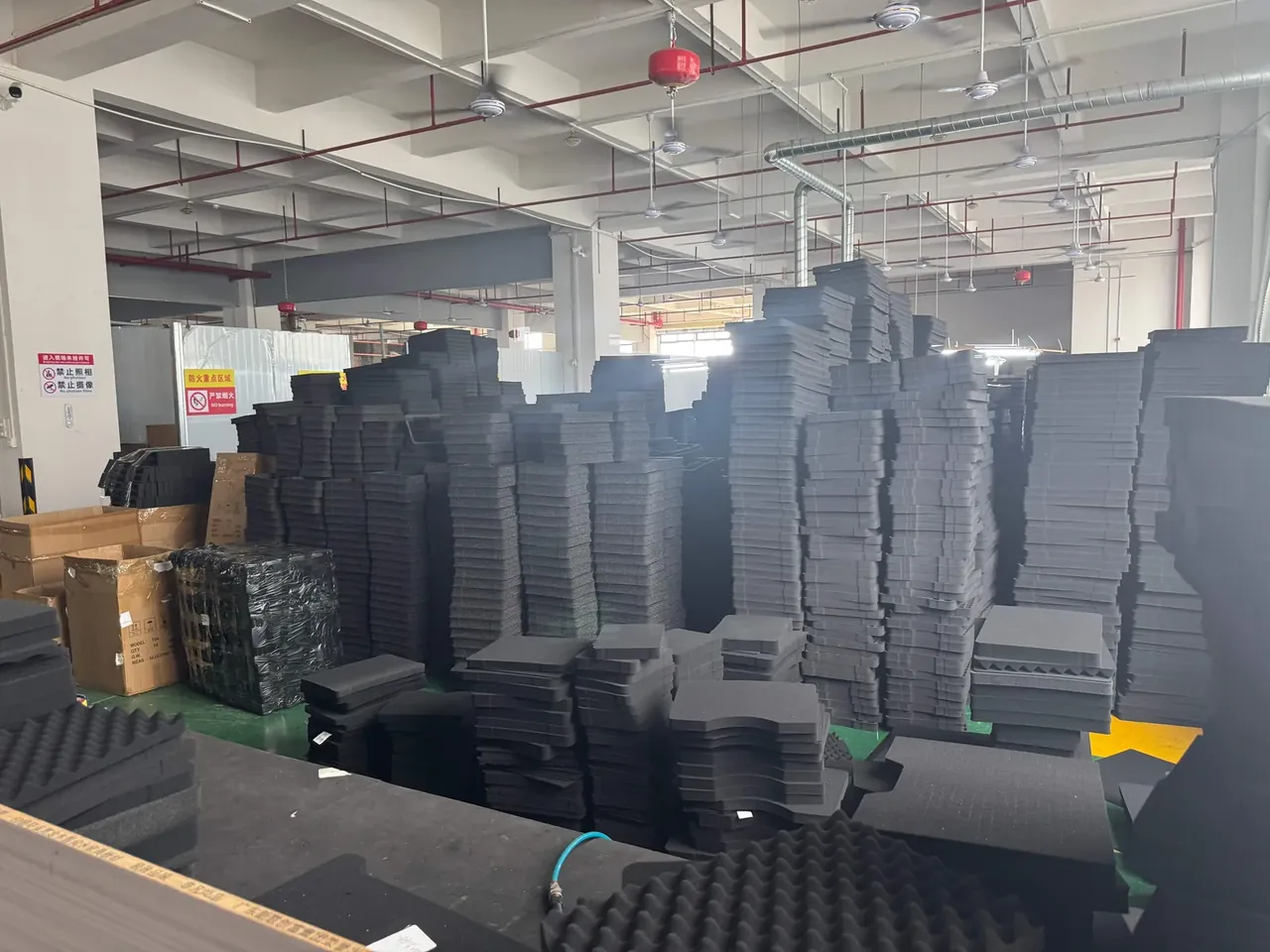
The 1.5 factor follows demand variance: 1.3 suits steady sellers, 1.8 suits peak-season movers. One factor across a whole range guarantees stock-outs on fast models and dead stock on slow ones.
| Model | Daily sales | Lead time (days) | Safety stock | Reorder point | Turns (days) |
|---|---|---|---|---|---|
| A standard | 12 | 35 | 630 | 1,170 | 60 |
| B standard | 9 | 35 | 473 | 878 | 58 |
| C wheeled | 5 | 35 | 263 | 488 | 55 |
| D sealed | 3 | 35 | 158 | 293 | 50 |
| E oversize | 1.5 | 35 | 79 | 146 | 47 |
Lead time must be written in full: 35 days at sea, 7 days clearance, 3 days to the rack. The 35 in the formula matches the sailing schedule, but planning runs on 45, and dropping those 10 days empties the shelf in a peak week.
The reorder point sits above double safety stock and still lands inside 45 to 60 days of turns, because one 400-unit load spread over 8 models arrives more evenly than scattered shipments.
3. 45 to 60 days of turns and cubic-foot rent
Rent is billed per cubic foot, so case volume sets the bill. A 620 × 420 × 280 mm case measures 0.073 m³, or 2.58 ft³, costing USD 1.94 a month at USD 0.75 per ft³, plus a USD 0.35 oversize surcharge above 2 ft³.
Turns must be read with rent. On the same 400-unit holding, 45 days against 60 days moves average stock from 300 to 225 units and rent from USD 581 to USD 436.
| Turns (days) | Average stock | Cube (ft³) | Rent a month | Rent a year |
|---|---|---|---|---|
| 45 | 225 | 581 | 436 | 5,232 |
| 50 | 250 | 645 | 484 | 5,808 |
| 60 | 300 | 774 | 581 | 6,972 |
| 75 | 375 | 968 | 726 | 8,712 |
Rent is a small slice of landed cost, USD 2.29 against an USD 80 case, but it is the only fixed charge that runs by the day. Every 15 days of extra turns in a case overseas warehouse adds USD 1,740 a year that no quote sheet shows.
Ask three questions about the tariff: pallet position or cubic foot, monthly or daily, and where the oversize threshold sits. A slot of 1200 × 800 mm billed at USD 18 a month holds 9 cases, roughly USD 2 each, yet empty slots still bill.
4. Dead stock at 180 days and 35-day sea replenishment
Dead stock is defined at 180 days without a sale, with a warning at 90 days without a pick. At 90 days the tag and images get checked, at 180 the model enters disposal, and a case overseas warehouse is healthy below an 8% dead-stock rate.
Disposal runs in three steps: transfer to a faster warehouse at 40%, discount 30% to local distribution at about 55% of value recovered, strip inserts and fittings for reuse at 10%. Follow the order; discounting first is the expensive habit.
Replenishment is scheduled backwards from 35 days at sea. Order on the 1st, cut off on the 5th, 35 days sailing, 7 days clearance, 3 days to the rack, and the next load lands 45 days later with 10 days of slack.
Peak season needs a load 60 days early. At 30 units a day across a 30-day peak the gap is 900 units, two full loads. Early means rent, late means two weeks of stock-out, and both cost more than freight.
Conclusion
The whole case overseas warehouse plan ends on one SKU parameter sheet with six columns: model, daily sales, lead time, safety stock, reorder point and turns. Fill it in the order that cut 25 models to 8, set safety stock at daily sales × lead time × 1.5, set the reorder point on the 45-day lead time and hold turns between 45 and 60 days. Then run three checks: core-pool safety stock under 60% of the cube, rent under 3% of landed cost, dead stock below 8%. If a check fails, change the model list before changing the factor. Refill the sheet on the 1st of each month and the 35-day sea rhythm follows on its own.
This article discusses container-side specifications and design implications only, and does not cover any handling, loading or use of the contents.
Related Reading
- Four storage conditions for cases
- Case weight against freight cost
- Four data layers for foam insert stock
Related Products
- 8 Series — Gun Cases; Military Equipment Cases; Camera Equipment Cases; Drone Cases; Watch Cases; Knife Cases; First Aid Cases; Electronics Equipment Cases
- WL8-2812 PP Gun Case — model WL8-2812
- All protective cases and toolboxes: 7 series, 158 models