

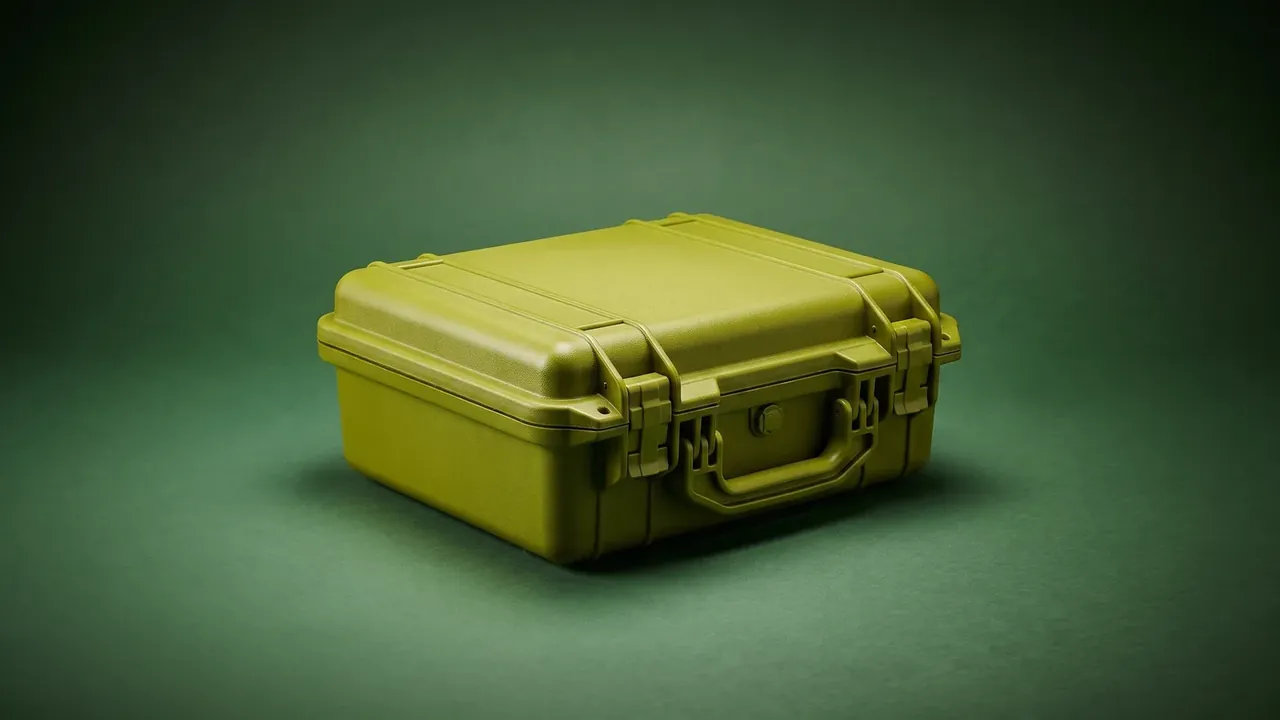
Quick answer: Case warehouse storage has to be planned four times over. A cold room attacks latches at minus 25 C, a steel shed pushes air inside the case to 61 C, the export leg adds salt spray, and the line-side rack is decided by a 45-second pick.
Table of contents
- Case Warehouse Storage Sorted by Temperature Band
- Cold Room at Minus 25 C: Latch and Gasket Margin
- Steel Shed Heat: Roof Radiation and 61 C Inside
- Export Freight and Multi-leg Transfer: Three-high Stacking
- Line-side Holding: Pick Cycle and Lid Orientation
- A Field Checklist for the Four Conditions
- FAQ
1. Case Warehouse Storage Sorted by Temperature Band
Case warehouse storage is shaped by what the goods live through, not by floor area. Inside one plant, finished cases pass four stages: cold room, steel shed, export leg, line-side rack, across an 86 C spread. Apply one stacking rule to all four and the case fails wherever nobody is watching.
Failure points differ: a brittle latch, a permanent gasket set, salt spray, and people.
| Stage | Temperature band | Dominant stress | Specification to lock |
|---|---|---|---|
| Cold room | -25 C to -18 C | Impact, condensation on exit | Latch compound, gasket rebound |
| Steel shed | 22 C to 61 C | Roof radiation, day-night swing | Wall thickness, liner limit |
| Export leg | 10 C to 55 C | Three-high load, road shock, salt spray | Corner strength, tie-down points |
| Line side | 18 C to 32 C | Frequent handling, takt time | Shelf pitch, lid orientation |
2. Cold Room at Minus 25 C: Latch and Gasket Margin
The cold-room failure usually happens after the case leaves the room. Hold a case at minus 25 C for 72 hours and a material that feels tough at room temperature keeps a third of its notched impact strength. In the fifteen seconds between rack and dock, one knock against steel starts a corner crack. Raising wall thickness from 4.5 mm to 5.2 mm buys margin, but a low-temperature compound and a latch root radius opened from 1 mm to 2.5 mm do more.
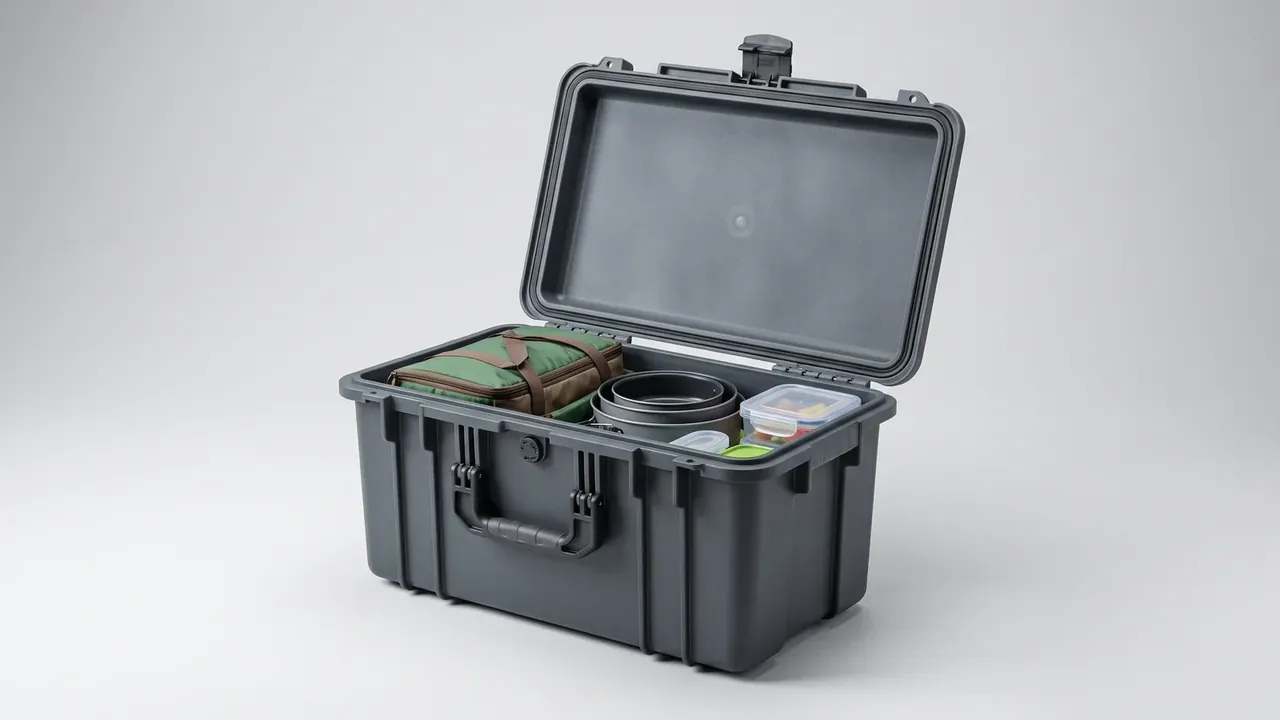
The gasket needs its own calculation. Silicone keeps resilience at minus 25 C; EPDM takes a compression set above 25 percent, so the lid stops sealing after warm-up.
3. Steel Shed Heat: Roof Radiation and 61 C Inside
A steel shed in summer deserves more arithmetic than the forecast. Under noon sun, 0.8 mm corrugated sheet reaches 68 C on its outer face, and the air 1.5 m below runs 6 to 9 C hotter than outside. On the top tier near the ridge, 61 C inside the case is unremarkable, and that is past the long-term limit of most PE foam liners.
Temperature is not uniform: the third tier runs 14 C hotter than the floor tier, and the end wall adds 3 to 5 C. Read the 13:00 to 15:00 peak, not a daily average.
| Logger position | Outside air | Peak inside the case | Action |
|---|---|---|---|
| Third tier at the ridge | 38 C | 61 C | Drop below the second tier |
| Second tier mid-shed | 38 C | 53 C | Keep, cut dwell to five days |
| Floor tier | 38 C | 47 C | Use for long-term storage |
4. Export Freight and Multi-leg Transfer: Three-high Stacking
A 40-foot high cube is 2350 mm wide inside, which takes four 600 mm cases plus a 100 mm inspection gap. Once case warehouse storage enters the export leg, the question stops being whether a person can reach the top. A bottom case carries the two above it, 13.6 kg at 6.8 kg each, so strength is rarely the issue. What breaks corners is strap tension and road shock.
Judge salt spray by route. On a 30-day coastal sailing, humidity inside the box stays above 85 percent, and steel latches show white rust after 96 hours of neutral salt spray. Rust water on the lids below generates a claim.
5. Line-side Holding: Pick Cycle and Lid Orientation
Line-side work is judged by people and takt time, not by strength. Four shelf tiers at 600 mm pitch put the top pick at a 1650 mm reach, which needs neither a stoop nor a stretch.
The lid has to open toward the aisle. A case facing the wall turns half a revolution on every pick, stretching it from 45 seconds to 68 seconds; against a 90-second takt, two stations wait at once.
6. A Field Checklist for the Four Conditions
- Cold room: log one in-and-out cycle; latch root radius at least 2.5 mm; specify the gasket by compound.
- Steel shed: three loggers, ridge to floor; move anything above 55 C down two tiers.
- Export leg: tie-down points as ribs, not flat wall; latch and rivets in one alloy.
- Line side: top pick under 1650 mm; lid to the aisle; replenish by half shift.
- Handover: photograph the stack at every carrier change.
Conclusion
Case warehouse storage solves four different problems: cold-room impact, roof radiation, export stacking and line-side reach. No single specification serves all four, so splitting it by stage is what saves money. Log the peak temperature and the failing part once per stage, and case warehouse storage stops being a matter of habit.
This article discusses only the container (case body) side of specifications and design intent, and does not cover any handling, loading or use of the contents.
Related Reading
- Stack height and aisle width in case warehouse storage
- Firearm cases in stores and transfers
- Explosive cases inside a depot
- Cabinet layouts for duty rooms
- Specialised shipping and storage cases
Related Products
- 8 Series — Gun Cases; Military Equipment Cases; Camera Equipment Cases; Drone Cases; Watch Cases; Knife Cases; First Aid Cases; Electronics Equipment Cases
- WL8-2812 PP Gun Case — model WL8-2812
- All protective cases and toolboxes: 7 series, 158 models