

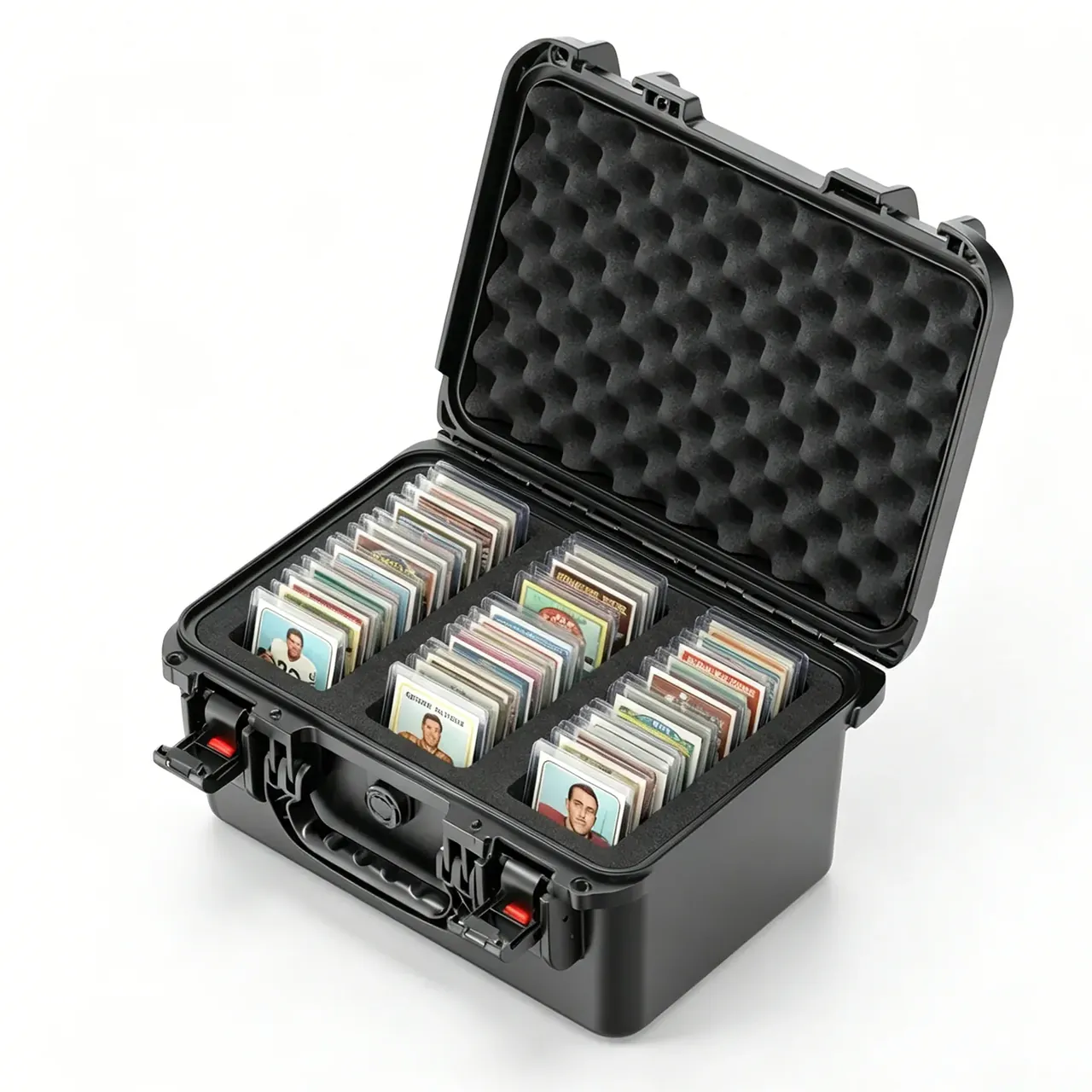
Quick answer: Most case lock options fail on dimension: a 5 mm hole, an 8 mm shackle and a 6 mm cable each need a different path through one latch.
Table of contents
- Three load points for a locked case
- A 5 mm hole against an 8 mm shackle
- Cable at 6 mm and 1.5 kN
- TSA locks, salt spray and cut marks
- FAQ
1. Three load points for a locked case
A padlock hangs on the latch, the cable refuses to pass the 22 mm gap beside it, and the whole plan stalls. That scene repeats every week because three dimensions get treated as one: the moulded hole is 5 mm, a common padlock shackle is 8 mm, and a coated cable measures 6 mm. They serve three different fixing methods.
Case lock options stand or fall on three load points. The hole takes shear, the shackle takes pull-out, and the cable takes the wrap around a fixture. Any mismatch at one point drops the whole assembly to the strength of its weakest link.
| Part | Standard | Common mismatch | Result |
|---|---|---|---|
| Case hole | 5 mm | forced over an 8 mm shackle | wall cracks, lock will not sit |
| Padlock shackle | 8 mm | hung on a 5 mm hole | shackle bridges the hole, pries open |
| Coated cable | 6 mm | paired with a TSA mini lock | hole too tight, cable will not pull through |
| Hole spacing | 22 mm | 40 mm wide lock body | body presses on the handle |
Spacers do not fix a mismatch. A spacer moves the load off the hole wall onto the middle of the shackle, and shear capacity falls by 30%.
The three loads differ by an order of magnitude: a 6 mm cable at 1.5 kN puts 12 MPa of bearing stress on a 5 mm hole, against a 25 MPa allowable for PP, so the safety factor is just 2.
2. A 5 mm hole against an 8 mm shackle
A 5 mm hole cannot pass an 8 mm shackle; that is geometry, not effort. Forcing it cracks the wall first: at 3 mm wall thickness, opening the hole to 6.5 mm leaves under 1.8 mm of material, and one pull on the shackle splits the edge.
An 8 mm shackle belongs in the open slot of the latch, not through a hole. Cases with metal ears leave a 9 mm slot where the two ears overlap, and the shackle crosses that slot so the load lands on steel rather than on a plastic hole wall.
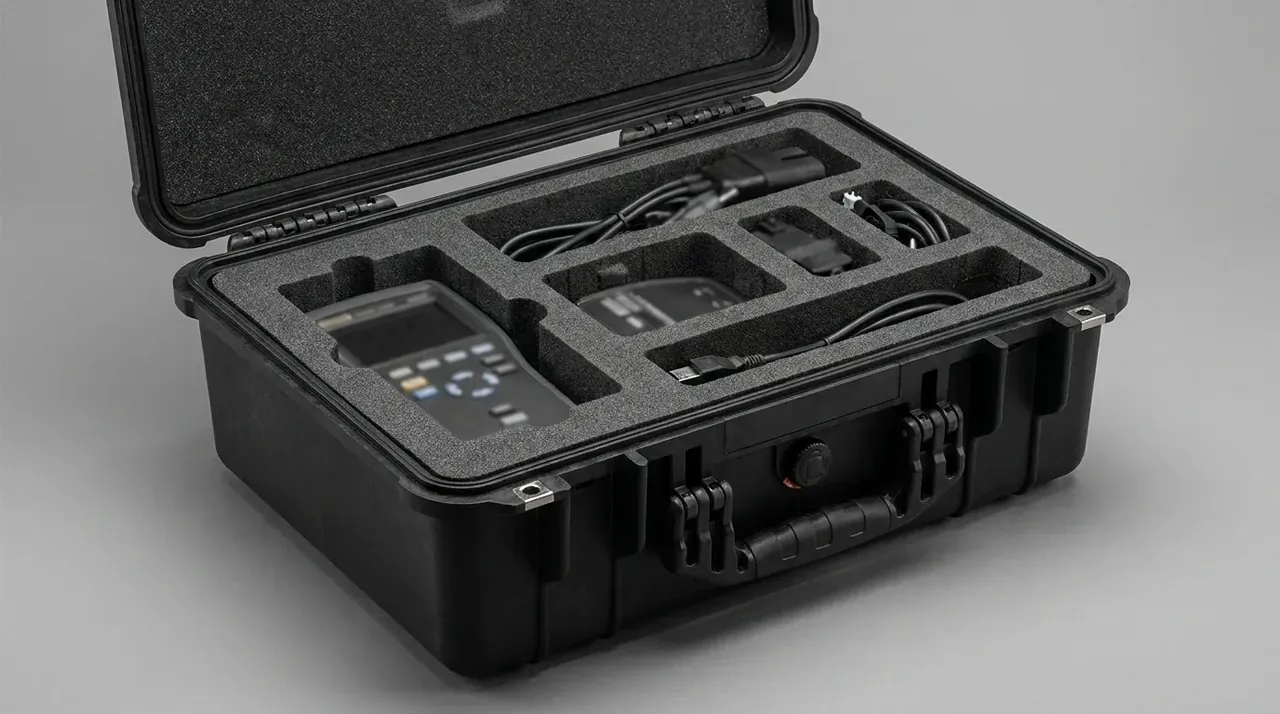
The 5 mm hole is reserved for cable. A 6 mm coated cable measures 4.5 mm at the core, leaving 0.5 mm of clearance, so it threads easily and does not rub the wall once locked. The 22 mm spacing between the two holes also caps lock body width: past 30 mm the body presses the handle and the key is hard to turn.
Measure the bore, not the rim. A moulded hole with 1° of draft and 3 mm of depth differs by 0.05 mm between entry and exit, and measuring the wrong end orders a cable that will not fit.
3. Cable at 6 mm and 1.5 kN
A 6 mm coated cable shears at 1.5 kN, about 150 kg of static load. That is modest on purpose: the cable is not built to beat a hydraulic cutter but to tie the case to a fixture, so a casual theft needs tools and time.
The cable is weakest at its ends. The crimp holds only 12 mm of effective length, and broken strands start at the crimp root after 200 bends. Double crimps push that to beyond 800 bends.
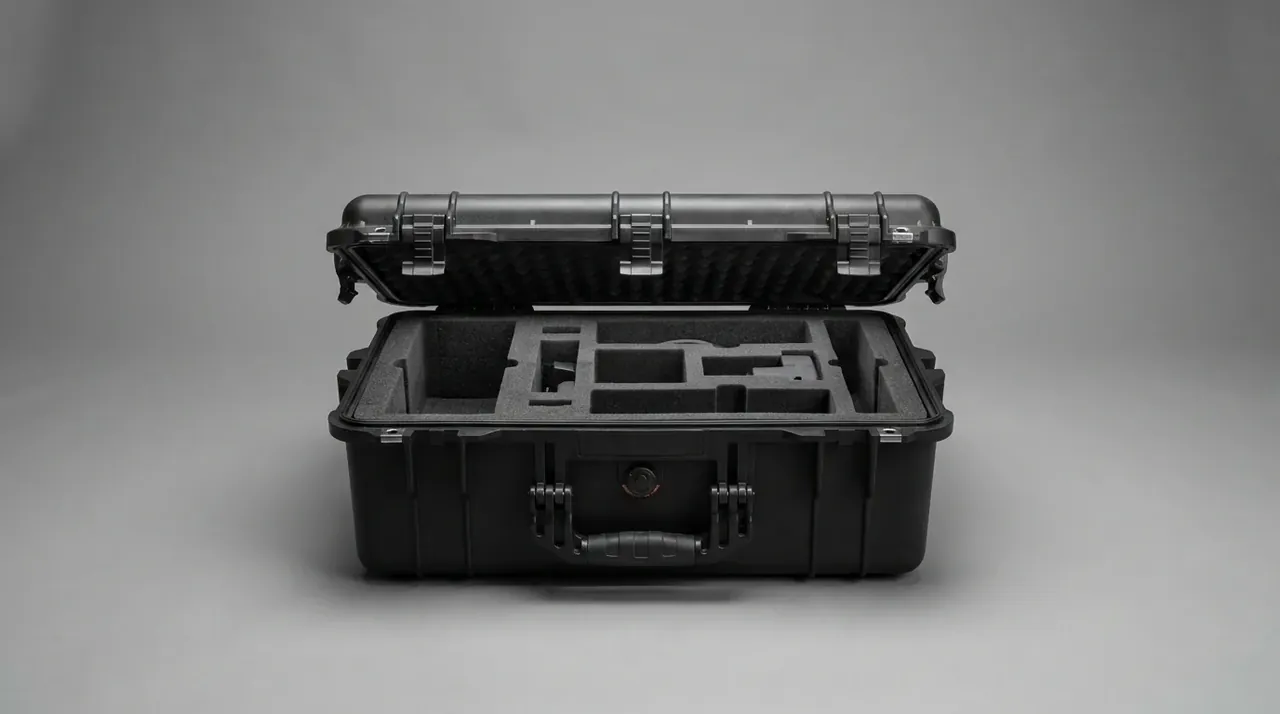
A 7×7 cable bends to an 18 mm radius and suits repeated wrapping; a 1×19 is stiffer but needs a 40 mm radius and breaks strands inside when wrapped tight. Most cases take 7×7, because the fixture changes every trip.
Routing decides real strength. Thread one end through the case hole, pass it around the fixture, return through the second hole, and lock both ends outside with one padlock. Cut either run and the case stays tethered by the other.
Wrapping the handle alone is the usual mistake. The handle root is 4 mm thick and pulls apart at 600 N, so a taut cable deforms the handle while the case stays exactly where it was.
Leave slack on the run. A cable lying against the shell wears through its coating under vibration, and exposed wire breaks within 2 months. Keep 20 mm of movement, or slide a 3 mm rubber sleeve over the contact point.
Length follows a simple sum: the perimeter of the fixture, plus the distance between the two case holes, plus 150 mm for locking. Common sizes are 1.2 m for railings and racks and 1.5 m for posts and shelving; extra length only hangs down and rubs the shell.
4. TSA locks, salt spray and cut marks
A TSA 3-digit lock offers 1000 combinations and customs holds a master key, so it solves cutting, not prying. It suits checked luggage and fails in a warehouse: 1000 combinations fall to a brute-force run in under 40 min.
These mini locks carry a 3–4 mm shackle, which passes a 5 mm hole neatly and rattles in a 9 mm slot. When paired with cable, add an 8 mm quick link as a transition, otherwise the narrow body flips and the dial ends up against the shell.
After 48 h of salt spray, a stiff cylinder is guaranteed. A zinc alloy body blooms white rust over roughly 15% of its surface in 5% salt fog, salt packs the pin chambers, and the key needs three jiggles to seat. Flush with clean water, blow dry, then apply 0.05 g of graphite powder; oil seals the salt inside the chamber.
Coastal sites see this first. The same batch of locks stays smooth for 6 months inland and needs jiggling after 3 months by the sea. Lock rating should match the case hardware: a latch tested to 48 h of salt spray paired with a 24 h lock simply moves the weak point.
Cut marks identify the tool. Bolt cutters leave a 45° bevel with the coating rolled outward; a hydraulic cutter leaves a near-flat face with the coating crushed rather than peeled. Two parallel grooves on a shackle mean a saw, not a cutter.
Conclusion
Case lock options reduce to one order of operations: measure the hole, measure the slot, then buy the lock. A 5 mm bore takes a 6 mm coated cable, a 9 mm slot takes an 8 mm shackle, and lock body width stays under 30 mm so it clears the handle. Then match the job: customs travel calls for a TSA 3-digit lock, fixing to a fixture calls for a 1.5 kN cable threaded twice, and a job needing both takes an 8 mm quick link between them. Then watch wear: check the cylinder after 48 h of salt spray, read a 45° bevel with rolled coating as a cutter and a flat face as hydraulics, and reinforce accordingly. The locks themselves differ by under 20 yuan; a mismatch costs a cracked shell or a missing case.
| Use | Recommended pairing | Key dimensions | Not suitable |
|---|---|---|---|
| Short vehicle trips | 8 mm shackle padlock through the slot | body width ≤30 mm | long cable around the handle |
| Warehouse tie-down | 6 mm cable threaded twice plus padlock | 5 mm bore, 22 mm spacing | TSA combination lock |
| Air travel | TSA 3-digit lock | 3–4 mm shackle | 1.5 kN cable |
This article discusses container-side specifications and design implications only, and does not cover any handling, loading or use of the contents.
Related Reading
Related Products
- 8 Series — Gun Cases; Military Equipment Cases; Camera Equipment Cases; Drone Cases; Watch Cases; Knife Cases; First Aid Cases; Electronics Equipment Cases
- WL8-2812 PP Gun Case — model WL8-2812
- All protective cases and toolboxes: 7 series, 158 models