

Quick answer: When the swatch matches but the moulding reads red, case pantone matching usually fails at gloss, not pigment, since the same recipe shifts 0.8 in ΔE once a matte face turns glossy.
Table of contents
- Look at gloss before pigment
- Running two colours in one trial
- Landing the acceptance line at 1.5
- What three gloss levels cost
- 500 kg pigment and batch control
- FAQ
1. Look at gloss before pigment
A swatch that matches on paper but reads red on the part points at the surface, not the recipe. The same Pantone number sits grey on a matte face and drifts warm on a glossy one, where the eye reads 1.8 and the spectrophotometer 0.9.
A matte face scatters light and lifts dark colours; a glossy face keeps a highlight band that deepens pale ones. This is where case pantone matching actually breaks, not in the tinting room.
Three variables have to be locked together: gloss, light source, substrate. Leave one loose and the deviation reappears somewhere else, with the trial blamed in turn.
Pigment systems carry their own cast. The same number in iron oxide reads dull and in organic pigment reads bright, 0.7 apart under D65 and 1.3 under warm light, so the chemistry is settled before the code, carrier included.
2. Running two colours in one trial
Two colours in one trial means compressing the variables: one machine, one base resin lot, 60 °C mould, one tool, five parts per colour, no more than 30 min apart. A new resin lot, a 5 °C mould drift or a dirty screw will all be charged to the pigment.
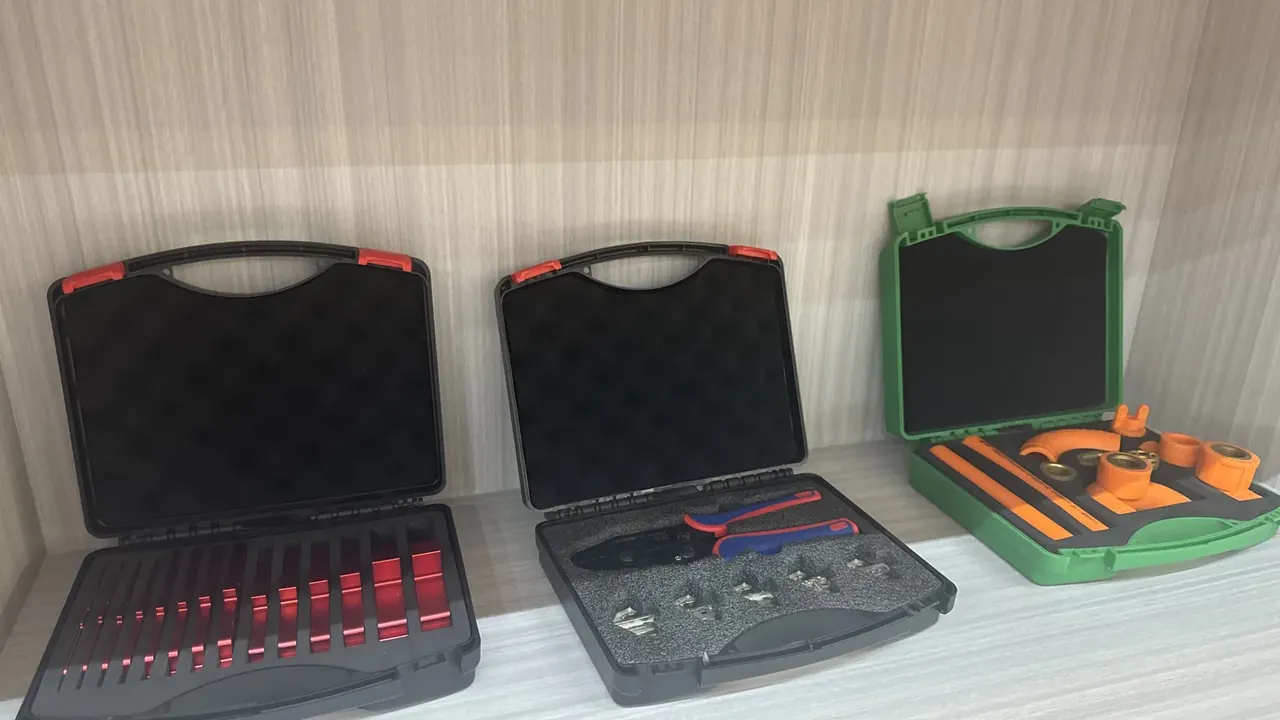
Three rounds to convergence is normal. The first lands at ΔE 2.6 from poor dispersion, the second after a colour addition reaches 1.4, the third with 0.2% more titanium white settles at 1.1.
| Round | Trial content | Lead time | Pass line |
|---|---|---|---|
| First | 5 parts per colour, 2 colours | 5 days | ΔE ≤2.5 to continue |
| Second | 5 parts after colour addition | 4 days | ΔE ≤1.8 |
| Third | 10 parts at final gloss and resin | 4 days | ΔE ≤1.5 to sign |
Purge time is not optional. Going dark to light needs three passes of purge compound and a drop to 200 °C before reheating, or the first five parts carry black specks.
Two colours on one tool queue up: 2% dark residue in the barrel drops L* by 1.5 on the pale part, and a 20 min purge per change costs 8% of machine hours.
Sign-off keeps three parts: one for the customer, one for the floor, one sealed in the dark. Re-measure at 18 months, and a rise past 1.0 in ΔE says the pigment lacks weather resistance.
3. Landing the acceptance line at 1.5
ΔE 1.5 is the edge between visible and invisible, and the line most case pantone matching specs adopt. Three settings come first: D65 illumination, a 10° observer and SCE mode.
D65 approximates 6500 K daylight, which is how a case is normally seen; switching to illuminant A at 2856 K measures 0.4 redder. Hold 1000 to 1500 lx on a neutral grey background, with the case beside the swatch at 45°.
SCE excludes specular reflection and tracks the eye; SCI folds it in and can differ by 0.6 on a glossy shell, so the mode belongs in the specification next to the number.
On a 480 mm case take five points, the lid centre, the lid front edge, both sides and one base corner, then require a 1.5 mean and a 2.0 maximum. Centre-only checks miss the edges, where shear aligns pigment differently.
Substrate shifts the same code: PP sits yellow in b*, while ABS reads 1.8 higher in L* and 1.2 lower in b*, pushing the case to ΔE 2.4, so a new resin means a new trial. Calibrate the instrument yearly, since an uncalibrated unit can read 0.9 low and pass a batch customers call dark.
4. What three gloss levels cost
Half of the visual result in case pantone matching comes from gloss: matte 5 to 10 GU, semi-matte 20 to 30 GU and gloss 70 to 85 GU, with 0.6 to 1.2 of apparent difference between steps.
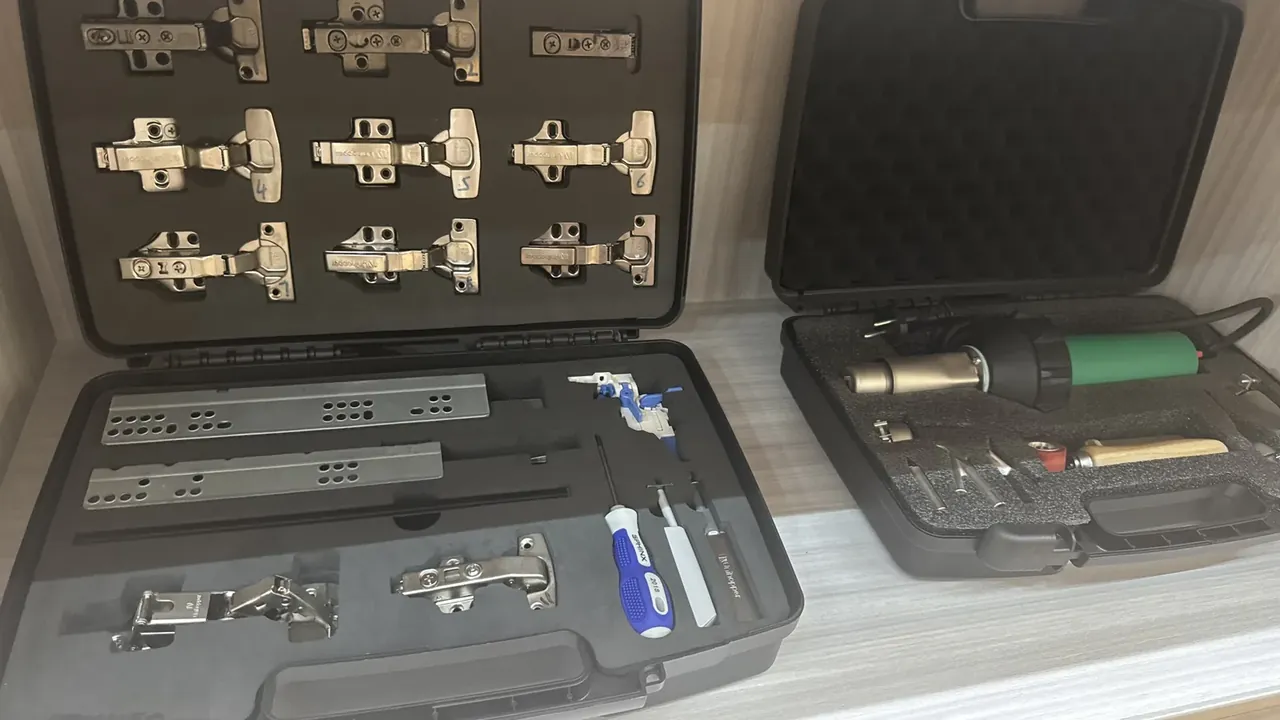
Matte surfaces scatter light, so dark colours wash out and black turns grey; a glossy highlight band hides part of the colour and pale shades read deeper.
| Gloss level | 60° units | Tool surface | Visual ΔE added |
|---|---|---|---|
| Matte | 5–10 GU | Etched Ra 3.2 μm | +1.2 |
| Semi-matte | 20–30 GU | Etched Ra 1.6 μm | +0.6 |
| Gloss | 70–85 GU | Polished Ra 0.2 μm | Baseline |
Gloss comes from the tool, not from a coating. Etching gives matte, polishing gives gloss, and re-texturing one tool means re-etching over 7 days at a cost per area.
Re-texturing voids the samples: 0.2 μm of etch depth moves gloss by 6 units, so samples and production parts should share one tool.
Gloss is decided before the trial. Fix gloss, then the code; reversed, three rounds still will not converge.
5. 500 kg pigment and batch control
A 500 kg pigment minimum is the mill threshold. Masterbatch starts at 25 kg, but its carrier must match the resin or flow marks appear. At 12 g a case, 500 kg covers 40,000 units.
Batch control at ΔE 1.0 rests on three habits: locking the pigment lot, counting mixing sections and keeping first-off samples.
Locking the lot is cheapest: keep one pigment batch behind a repeat order and re-trial whenever the lot number changes, since lots drift about 0.5 in cast.
Mixing lives in the screw: five sections, 8 MPa back pressure and a 225 °C melt disperse the pigment evenly, while 4 MPa lets two consecutive parts differ by 0.7 and the difference is visible.
Keep three first-off parts and re-check every 500 kg. After three consecutive batches inside 1.0, the interval can widen to 1000 kg.
Weather resistance belongs in the same clause. Outdoor cases need 500 h of xenon arc with ΔE under 2, indoor cases 200 h, and pigment stored beside titanium white pulls b* by 0.6.
Conclusion
The order for case pantone matching is gloss, light, substrate, then code, and reversing it guarantees repeated trials. Fix gloss by level, 5 to 10 GU matte, 20 to 30 GU semi-matte, 70 to 85 GU gloss, each tied to one tool surface; hold D65 at 1000 to 1500 lx in SCE mode so readings track the eye; confirm PP or ABS before signing, since the two sit 1.8 apart in L*; only then put two codes on the machine and converge to ΔE 1.1 in three rounds. Accept a five-point mean of 1.5 with a 2.0 maximum, lock pigment lots and re-check every 500 kg, and swatch and moulding finally meet on a table someone can sign.
| Stage | Check | Value | Record |
|---|---|---|---|
| Trial | ΔE in first two rounds | ≤2.5 / ≤1.8 | 5 parts, keep 3 |
| Sign-off | Final ΔE | ≤1.5 | 5-point mean, 2.0 max |
| Gloss | 60° units | 5–10 / 20–30 / 70–85 GU | Lid centre each batch |
| Substrate | PP against ABS drift | L* 1.8, b* 1.2 | New trial on change |
| Production | Batch ΔE | ≤1.0 | Re-check every 500 kg |
This article discusses container-side specifications and design implications only, and does not cover any handling, loading or use of the contents.
Related Reading
- Colour difference standards for coloured cases
- Working out a custom colour minimum order
- Visual colour management on case lines
- ΔE 2 against ΔE 5 in case colour
Related Products
- 8 Series — Gun Cases; Military Equipment Cases; Camera Equipment Cases; Drone Cases; Watch Cases; Knife Cases; First Aid Cases; Electronics Equipment Cases
- WL8-2812 PP Gun Case — model WL8-2812
- All protective cases and toolboxes: 7 series, 158 models