

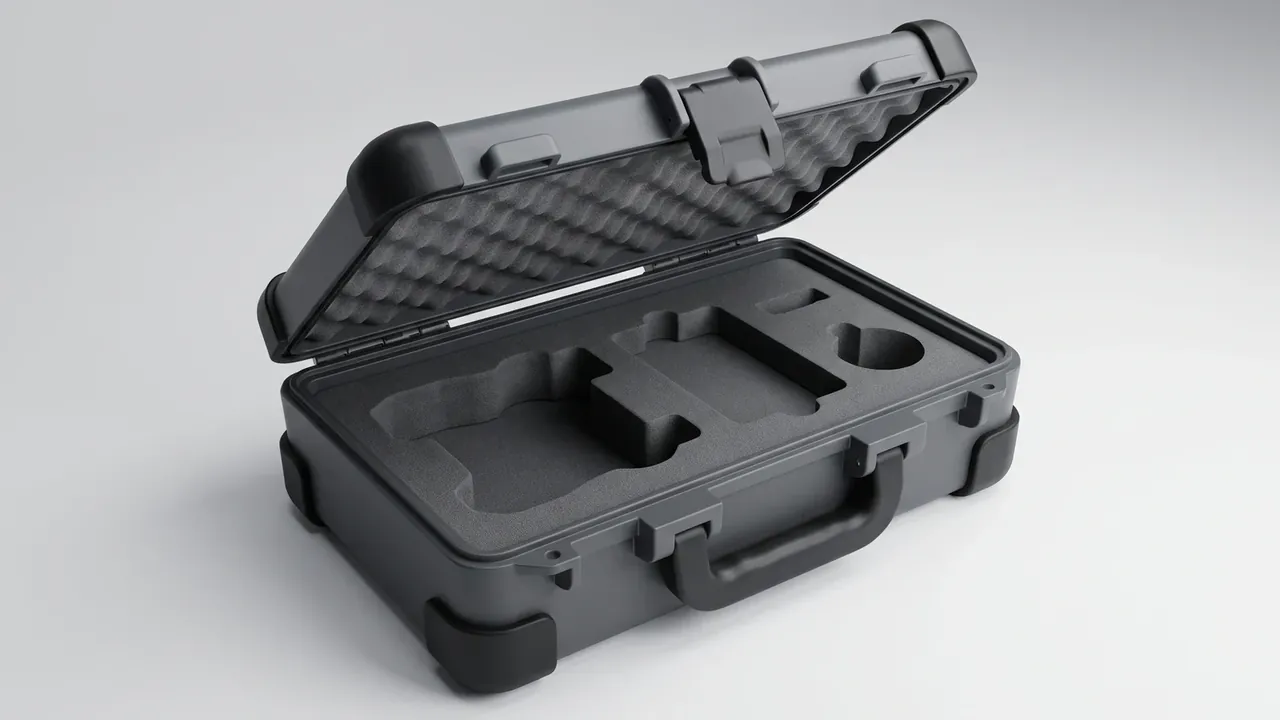
Quick answer: Judge a photographic gear plastic case in five steps: cavity size, lid stiffness, liner type, latch and seal, then carry style and dead weight. A 420 x 300 x 165 mm cavity with 15 mm EVA holds one body and two lenses, and the loaded case should stay under 4 kg.
Table of contents
- Five Checks a Photographic Gear Plastic Case Must Pass
- Check One and Two: Cavity Size and Lid Stiffness
- Check Three: Cut Foam or Dividers
- Check Four: Latches and Seal by Hand
- Check Five: Carry Style and the Weight Bill
- FAQ
1. Five Checks a Photographic Gear Plastic Case Must Pass
Shopping by camera model is the usual mistake: the same body with different lenses needs a cavity 90 mm longer, and a city shoot and a plateau trip ask for different latches.
| Check | Figure to read | Failure mode |
|---|---|---|
| Cavity size | net space after foam | lens will not seat |
| Lid stiffness | sag under 30 kg | stack bows |
| Liner | density, pocket wall | crumbs on glass |
| Latch and seal | 55 N, 30 percent squeeze | rain ingress |
| Carry style | dead weight, wheel size | sore hand at 800 m |
The same footprint runs from CNY 180 to 460, with six tenths of that spread in wall and liner.
2. Check One and Two: Cavity Size and Lid Stiffness
Measure the largest combination, not the body. A 1.35 kg camera with a 1.42 kg 70-200 lens and hood, laid flat, needs 420 x 300 x 165 mm; standing the lens up pushes depth to 210 mm.
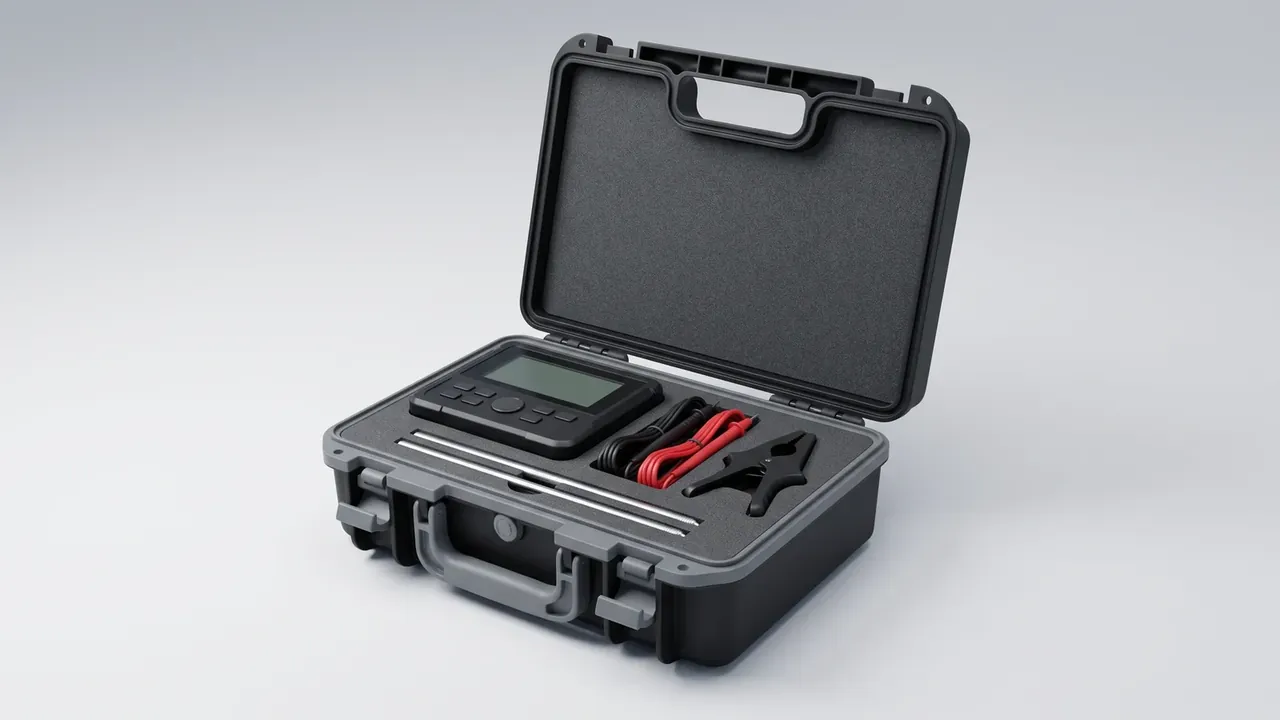
Lid stiffness decides stacking: a 30 kg load for 24 hours should leave under 0.8 mm of sag, and past 1.5 mm the seam opens. Three figures hold it, 3.4 mm wall, 2.8 mm lid, six ribs; over 72 hours at minus 15 to 55 C, dimensions move under 0.3 percent.
3. Check Three: Cut Foam or Dividers
A photographic gear plastic case liner follows how often the kit changes: a fixed set suits cut EVA, a body that swaps weekly suits dividers.
| Liner | Build | Best for | Change cost |
|---|---|---|---|
| Cut EVA | 38 kg/m3, 15 mm wall | fixed body, two lenses | full liner |
| Layered EPE | 25 kg/m3, three slices | batteries, parts | pull a layer |
| Dividers | 2 mm PP, slotted | body plus primes | move a slot |
Walls under 10 mm round off after a few dozen lifts and shed crumbs on a front element. Pockets run 5 mm deeper so the egg-crate foam presses down, and a 6 mm router bit with a 3 mm corner outlasts hot-wire cutting, which powders.
4. Check Four: Latches and Seal by Hand
Two latches are enough, but they must close one-handed. At 55 N a gloved hand manages it; under 35 N the case pops open when a check-in belt squeezes it.
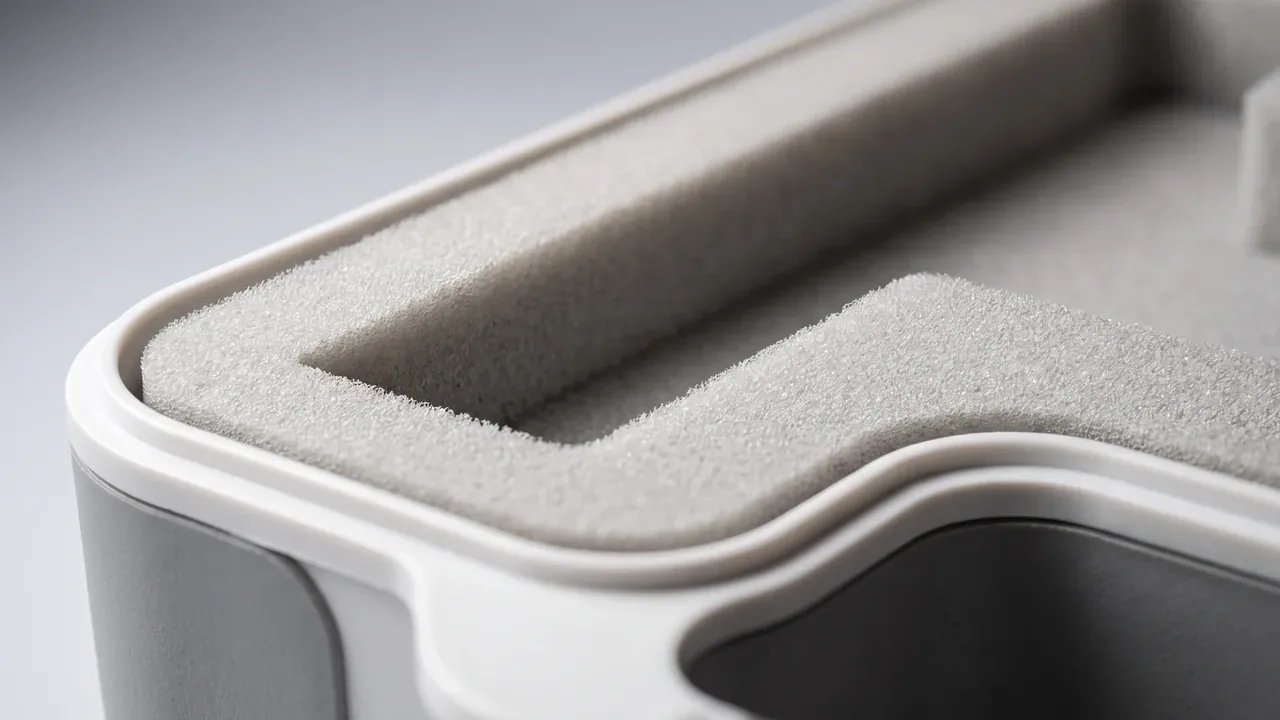
Cord squeeze and a pressure valve carry the seal. A 6.5 mm cord pressed to 4.5 mm keeps a third of its travel in reserve; under 3 mm it leaks on the second close. Test with paper trapped in the seam, then check the 4 mm hinge pin, which should hold under 0.3 mm of play after 3,000 cycles.
5. Check Five: Carry Style and the Weight Bill
A photographic gear plastic case is bought for one dominant trip. Two kilometres on foot caps the load at 6 kg, while 55 mm wheels halve the effort through airports.
| Carry | Wheels or harness | Load cap |
|---|---|---|
| Hand | 28 mm grip | 6 kg |
| Trolley | 55 mm wheels, 3 stages | 12 kg |
| Backpack | 40 mm straps, waist belt | 9 kg |
Economy allows 23 kg per piece, and a 420 mm case carries about 9 kg of kit, so 3.2 kg empty leaves 10 kg for a tripod. Cutting 0.5 kg out of the wall saves weight until a drop cracks a corner, and 48 hours of salt spray is the floor for coastal hardware.
Conclusion
Run the five checks in order and the shortlist writes itself: cavity by the largest combination, stiffness at 30 kg, liner by how often the kit changes, seal by the paper test, carry by the trip that happens most. Five figures narrow the price band and stop you paying for features the kit never uses, so a photographic gear plastic case gets chosen on numbers rather than feel.
This article discusses only the container (case body) side of specifications and design intent, and does not cover any handling, loading or use of the contents.
Related Reading
- Comparing camera case formats
- Foam density and pocket walls
- Divider slots inside a case
- Cushioning for aerial camera kits
Related Products
- 8 Series — Gun Cases; Military Equipment Cases; Camera Equipment Cases; Drone Cases; Watch Cases; Knife Cases; First Aid Cases; Electronics Equipment Cases
- WL8-2812 PP Gun Case — model WL8-2812
- All protective cases and toolboxes: 7 series, 158 models