

Quick answer: List every inspection item, fix a measurable limit for each, draw enough samples for the batch, then file the verdict with its records. Miss an item and no sampling recovers it; leave a limit vague and two inspectors disagree.
Table of contents
- The Inspection Item List
- Verdict Limits for Appearance and Dimensions
- Sampling Plans Mapped to Batch Size
- Functional Verdicts for Sealing and Latches
- Decision Rules and Records
- FAQ
1. The Inspection Item List
Inspection items for a pistol case fall into three groups: visible, measurable, testable. Visible covers appearance and marking, measurable covers cavity size and wall thickness, testable covers sealing, latch force, drop and salt spray. Miss one group and a failure mode goes unwatched.
| Item | Method | Limit |
|---|---|---|
| Appearance | visual, 500 lx | no cracks, no through scratches |
| Cavity size | calipers, three points | inside drawing tolerance |
| Wall thickness | ultrasonic, five points | 90% of nominal or more |
| Sealing | 30 kPa held 60 s | drop of 2 kPa or less |
| Latch force | push-pull gauge, every unit | 60–90 N |
| Hinge play | feeler gauge | 0.5 mm axial or less |
| Corner drop | 1 kg ball from 1 m | no cracks, no whitening |
| Salt spray | neutral, 48 h | no red rust |
| Marking | visual plus tape pull | matches batch code |
Sealing, wall thickness and drop carry the weight; failure in any stops the lot. The list also fixes measuring points: cavity at both ends and the middle, wall at four corners plus the base centre.
2. Verdict Limits for Appearance and Dimensions
A limit for a pistol case has to be a repeatable action: a 0.2 mm feeler at the rim, no deeper than 5 mm, is executable by anyone.
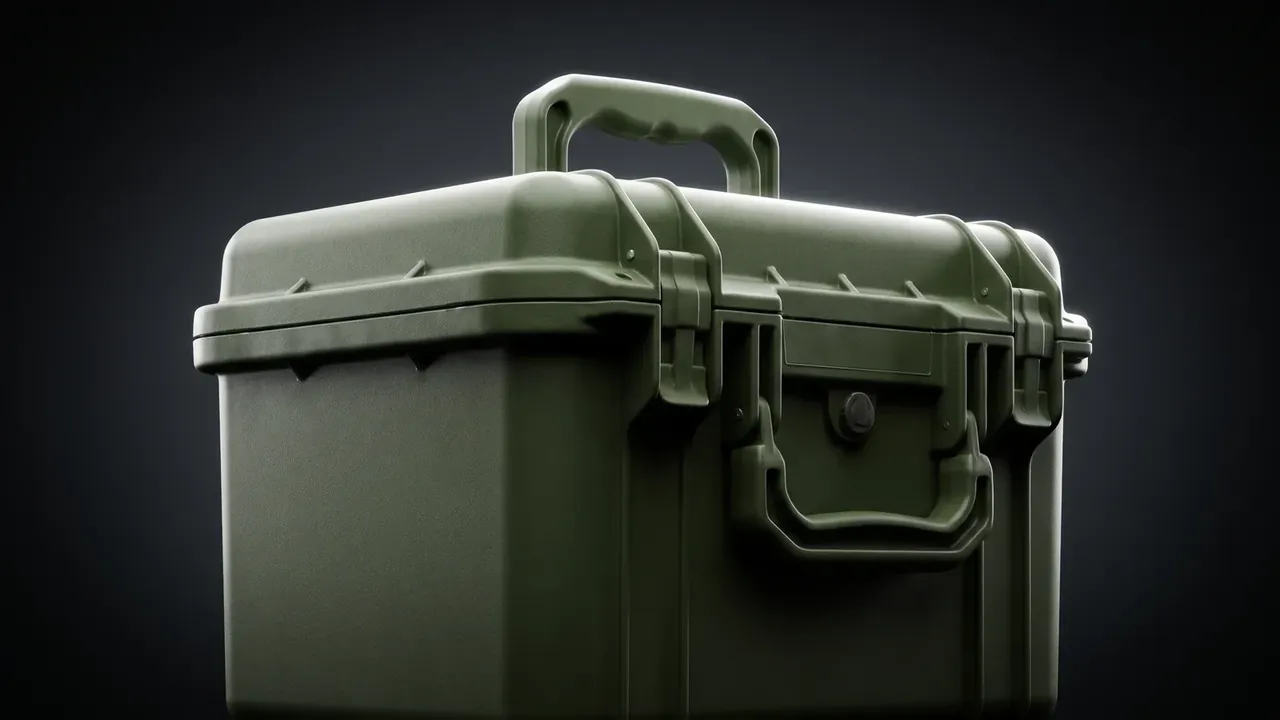
Sink marks are judged by position: one in the gasket groove breaks sealing and counts as major, a shallow sink on a side wall as minor. Scratches exposing substrate are major; colour is read at ΔE 1.5 or less.
Dimensions are judged against the tolerance band only: over the upper limit foam sits loose, under the lower it will not fit, so both ends fail. If outer size misses but stacking is unaffected, a concession is allowed.
3. Sampling Plans Mapped to Batch Size
Sampling follows an adjustment scheme at general level II, normal severity, single sampling, applied to the pistol case lot as a whole.
| Lot size | Sample | Critical Ac/Re | Major Ac/Re | Minor Ac/Re |
|---|---|---|---|---|
| 151–280 | 32 | 0/1 | 1/2 | 3/4 |
| 281–500 | 50 | 0/1 | 1/2 | 5/6 |
| 501–1200 | 80 | 0/1 | 2/3 | 5/6 |
| 1201–3200 | 125 | 0/1 | 3/4 | 7/8 |
Draw samples across the lot, not from the top pallet. Units from one mould on one shift hide every other mould, so stratify by mould number. Never replace failed units with extra ones, since that inflates the pass rate.
4. Functional Verdicts for Sealing and Latches
Judge sealing by pressure decay: latch the case, charge to 30 kPa, hold 60 s, accept 2 kPa or less. Immersion leaves no gasket margin number.
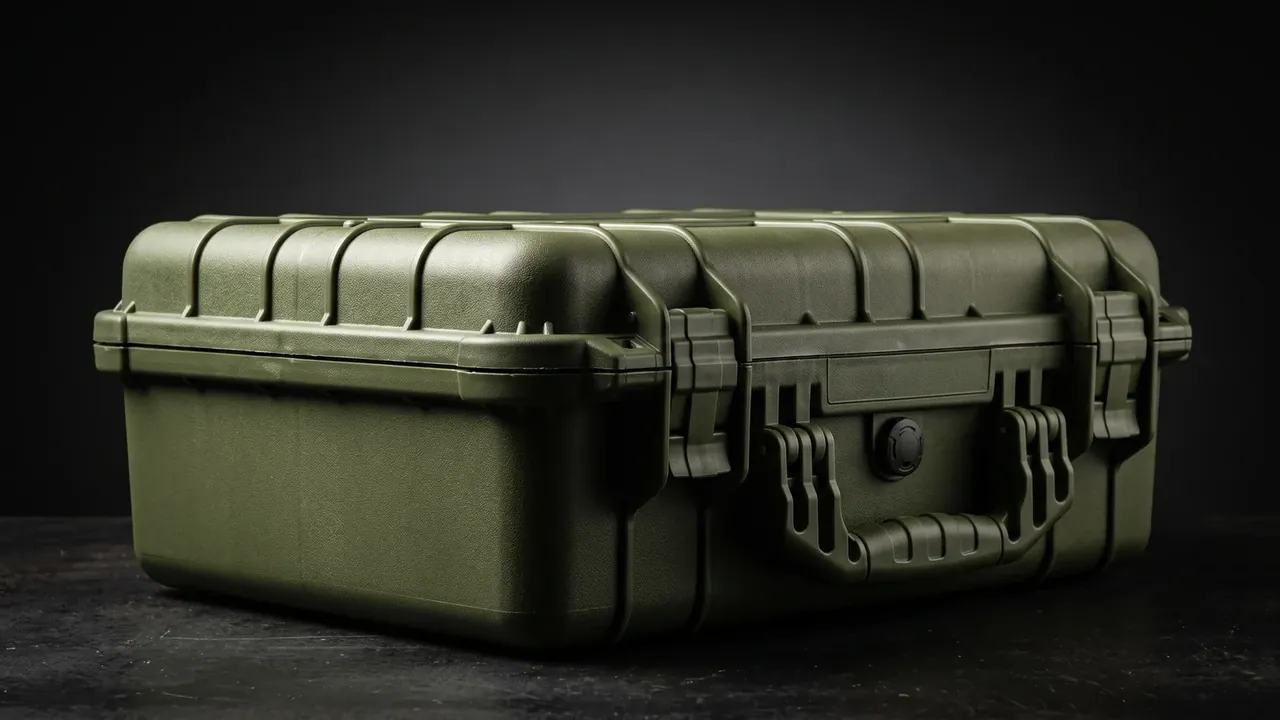
Test latch force on every unit, 60–90 N. Below 60 N the latch may pop open in transit; above 90 N it is too tight for one hand and the catch seat cracks. A spread wider than 20 N in one lot points to drift; double the sample.
Hinge and corner are judged together. Axial play over 0.5 mm lets the lid rock and loads the gasket unevenly; a corner that whitens after a 1 kg ball drops 1 m fails drop performance. Both are functional defects.
5. Decision Rules and Records
Rules for a pistol case run by defect class in three tiers, with no conversion.
| Class | Rule | Action |
|---|---|---|
| Critical | one unit rejects the lot | 100% sort or return |
| Major | Ac 2, Re 3 | reject, switch to tightened |
| Minor | Ac 5, Re 6 | concession with written approval |
Keep three records: inspection sheet 3 years, two retained units 12 months, third-party reports 5 years. Two lots with a major defect move a pistol case programme to tightened inspection; five clean lots restore normal.
Conclusion
A pistol case acceptance standard turns “acceptable” into measurable items, three decision rules and one traceable record set. A workable pistol case acceptance standard lets anyone reproduce the verdict.
This article discusses only the container (case body) side of specifications and design intent, and does not cover any handling, loading or use of the contents.
Related Reading
- How to set pistol case specifications: size, wall and load
- What a pistol case is: structure and protection logic
- Where transport case acceptance requirements come from
- How to write decision points into a production SOP
Related Products
- 8 Series — Gun Cases; Military Equipment Cases; Camera Equipment Cases; Drone Cases; Watch Cases; Knife Cases; First Aid Cases; Electronics Equipment Cases
- WL8-2812 PP Gun Case — model WL8-2812
- All protective cases and toolboxes: 7 series, 158 models