

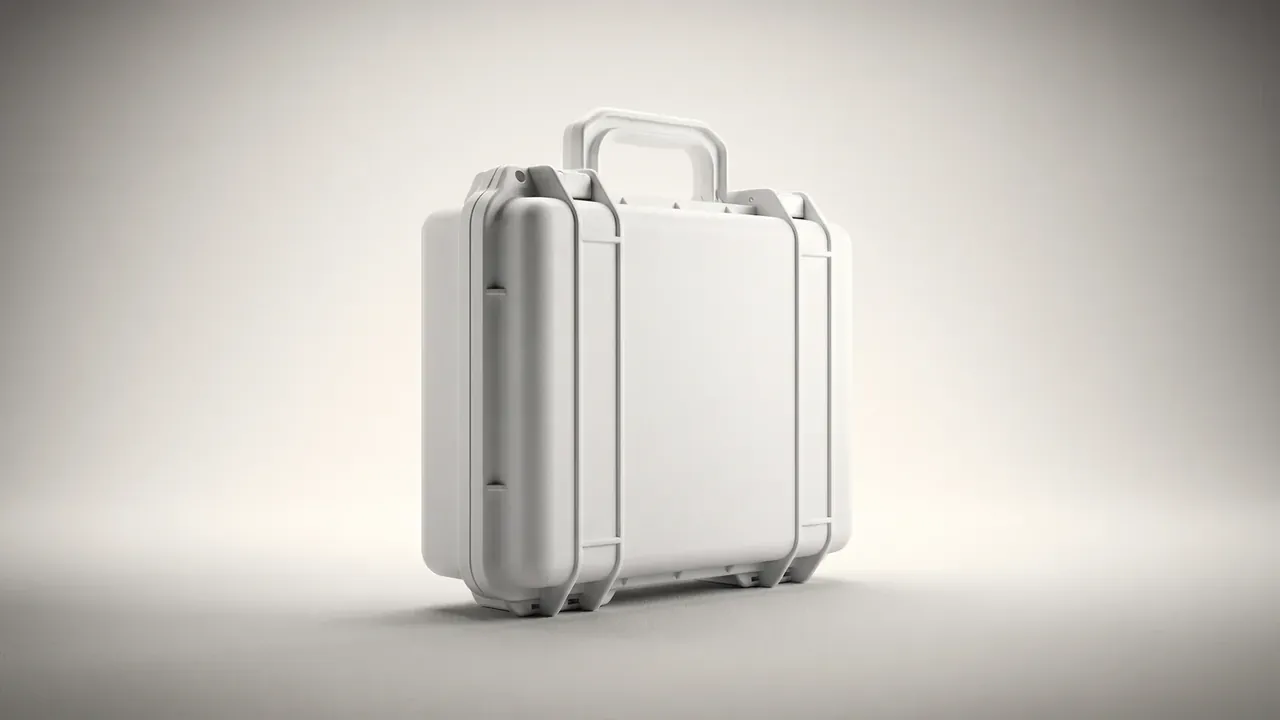
Quick answer: Judge a plastic box container on five checks: resin and light transmission, internal clear size, stacking and shelf access, latches and sealing, unit cost. The first two are hard limits; the rest explain the price gap.
Table of contents
- Five Checks for a Plastic Box Container
- Check One on Resin and Light Transmission
- Check Two on Internal Clear Size and Dividers
- Check Three on Stacking and Shelf Access
- Checks Four and Five on Latches Sealing and Cost
- FAQ
1. Five Checks for a Plastic Box Container
Most rework comes from the order of the questions. Buyers pick a colour, measure the inside, then find the box will not fit the shelf.
| Check | What to measure | Target | Usual mistake |
|---|---|---|---|
| Resin and light | grade, wall thickness | 1.5 to 3.0 mm | colour over wall |
| Internal size | length, width, height | plus or minus 2 mm | outside read as inside |
| Stacking | layers, hand clearance | 3 loaded layers | floor only |
| Latches | count, holding force | 120 N each | catch read as seal |
| Unit cost | price, tooling share | cost per thousand | price only |
The first two are hard limits: get them wrong and the batch goes back.
2. Check One on Resin and Light Transmission
Polypropylene resists chemicals and washes clean; 1.5 mm suits light loads, 2.0 mm is the general grade, 3.0 mm survives stacking. A clear box allows stock counts without lifting the lid, at a UV cost.
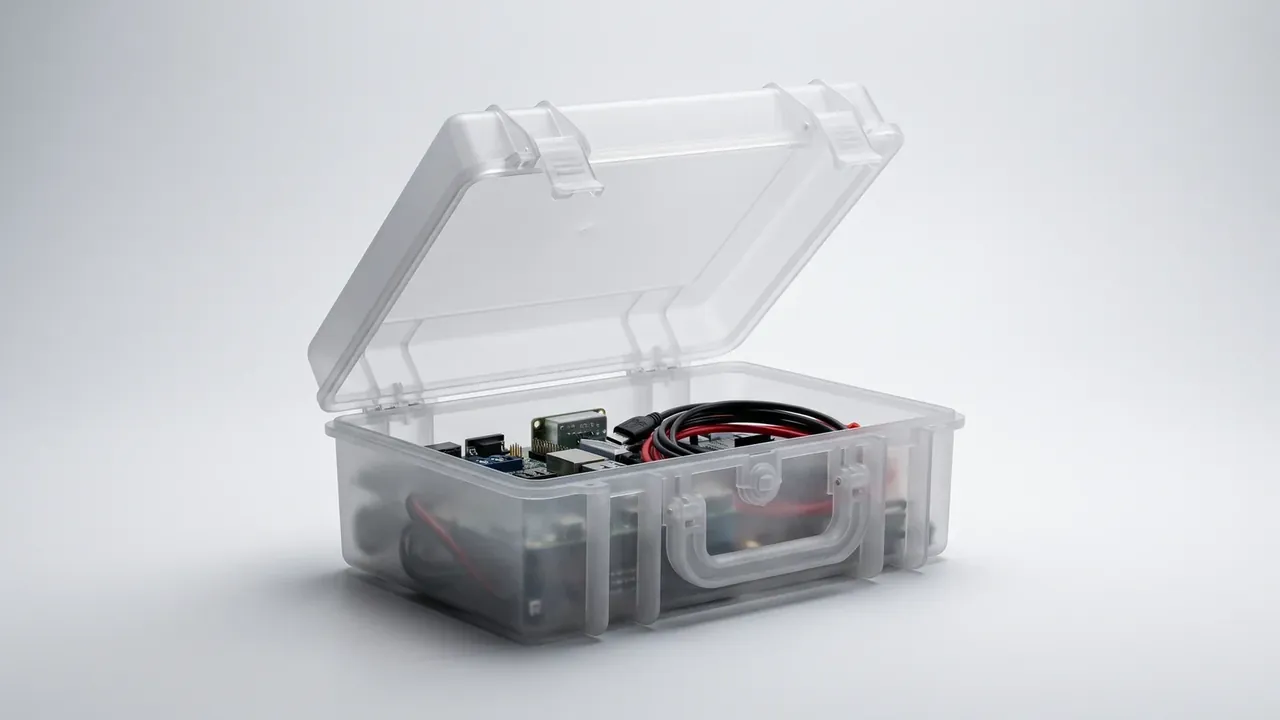
A drop test separates the walls. With a 1.5 kg head from one metre at 0 °C, a 1.5 mm box usually cracks, a 2.0 mm box passes, a 3.0 mm box takes a dent. A warehouse at 0 °C behaves one grade worse than 20 °C, so specify against the cold figure.
3. Check Two on Internal Clear Size and Dividers
Internal clear size is where a plastic box container is most often overstated. An outside size of 480×350×250 mm loses wall, ribs and lid boss, leaving 455×325×220 mm inside, roughly thirty percent less volume.
| Nominal | Outside | Internal clear | Suited to |
|---|---|---|---|
| 20 L | 480×350×250 mm | 455×325×220 mm | cable, small parts |
| 35 L | 560×400×300 mm | 535×375×270 mm | tools, matched sets |
| 60 L | 650×450×350 mm | 620×420×320 mm | spares, consumables |
| 100 L | 780×560×420 mm | 745×525×390 mm | machine accessories |
Ask for the tolerance: moulded interiors run plus or minus 2 mm, so two boxes can differ by 4 mm, which shows in a rack row. Dividers add up too, at 4 mm each, six compartments eat 20 mm of width.
4. Check Three on Stacking and Shelf Access
An empty plastic box container stacks five high; loaded at 25 kg a layer, the bottom lid carries 75 kg at the fourth layer and starts to dish within six months. Three loaded layers is the safe line.
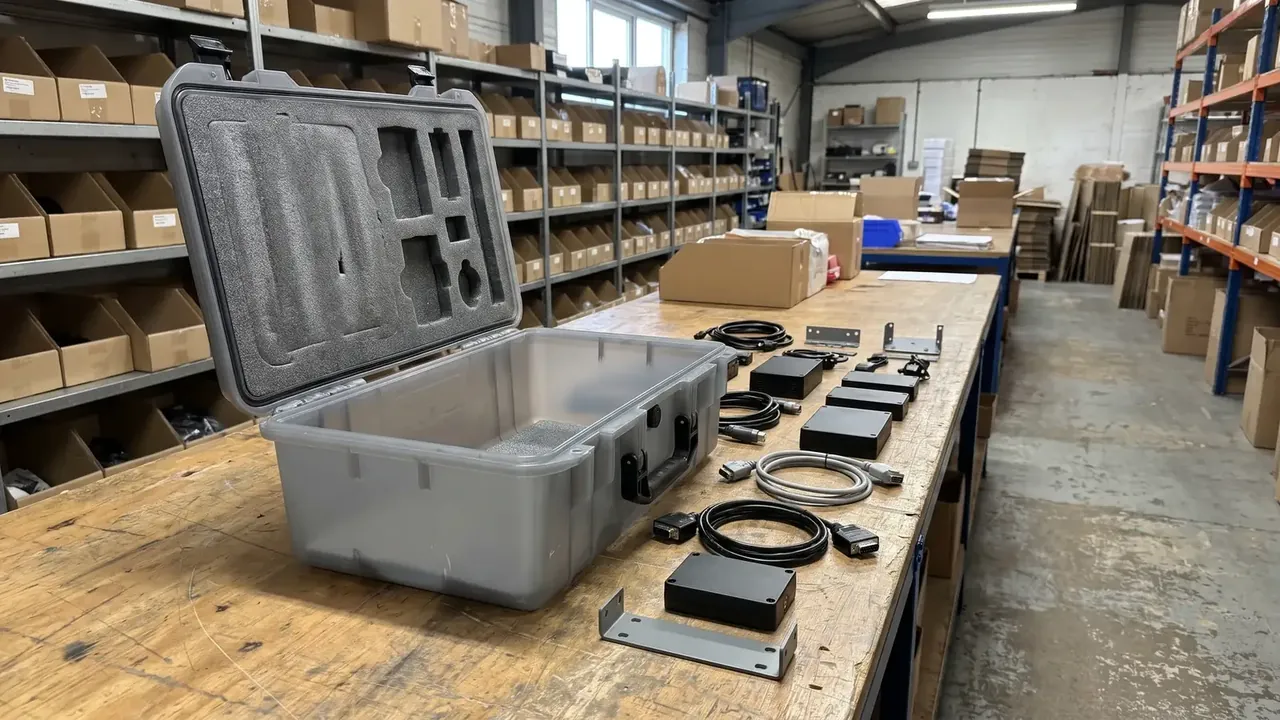
Stacked six high at 300 mm, the top handle sits 1.75 m off the floor, above the reach of a 1.6 m operator, so fast movers belong between 0.6 m and 1.4 m. A 90×50 mm matt panel takes marker pen and wipes clean; without it, labels curl off in three months.
5. Checks Four and Five on Latches Sealing and Cost
Latches decide sealing and whether a box opens in transit. At 120 N holding force, two opposed latches beat four small catches because the load sits on the outer walls. For dust, a standard catch reaches IP54; IP65 needs a foam gasket.
| Item | Light | General | Heavy |
|---|---|---|---|
| Wall | 1.5 mm | 2.0 mm | 3.0 mm |
| Latches | two catches | two catches, rib | two cams |
| Seal | none | one foam line | two foam lines |
| Loaded stack | 2 layers | 3 layers | 4 layers |
| Price per 1000 | 18 to 24 CNY | 26 to 34 CNY | above 40 CNY |
Cost belongs per thousand. One mould serves all three levels, and tooling over a 500-piece minimum adds 3 to 6 CNY per unit; at 2000 pieces the unit drops about fifteen percent, but lead time stretches from 22 to 35 days.
Conclusion
Choosing a plastic box container is five checks in sequence: resin, clear size, stacking, latches, cost. The first two cost a whole batch when wrong; the rest only cost money. Settle them first, and the plastic box container fits the rack, the load and the budget.
This article discusses only the container (case body) side of specifications and design intent, and does not cover any handling, loading or use of the contents.
Related Reading
- Lockable storage box selection guide
- Case internal divider selection
- Warehouse stacking and access
- Preventing damage in storage
Related Products
- 8 Series — Gun Cases; Military Equipment Cases; Camera Equipment Cases; Drone Cases; Watch Cases; Knife Cases; First Aid Cases; Electronics Equipment Cases
- WL8-2812 PP Gun Case — model WL8-2812
- All protective cases and toolboxes: 7 series, 158 models