

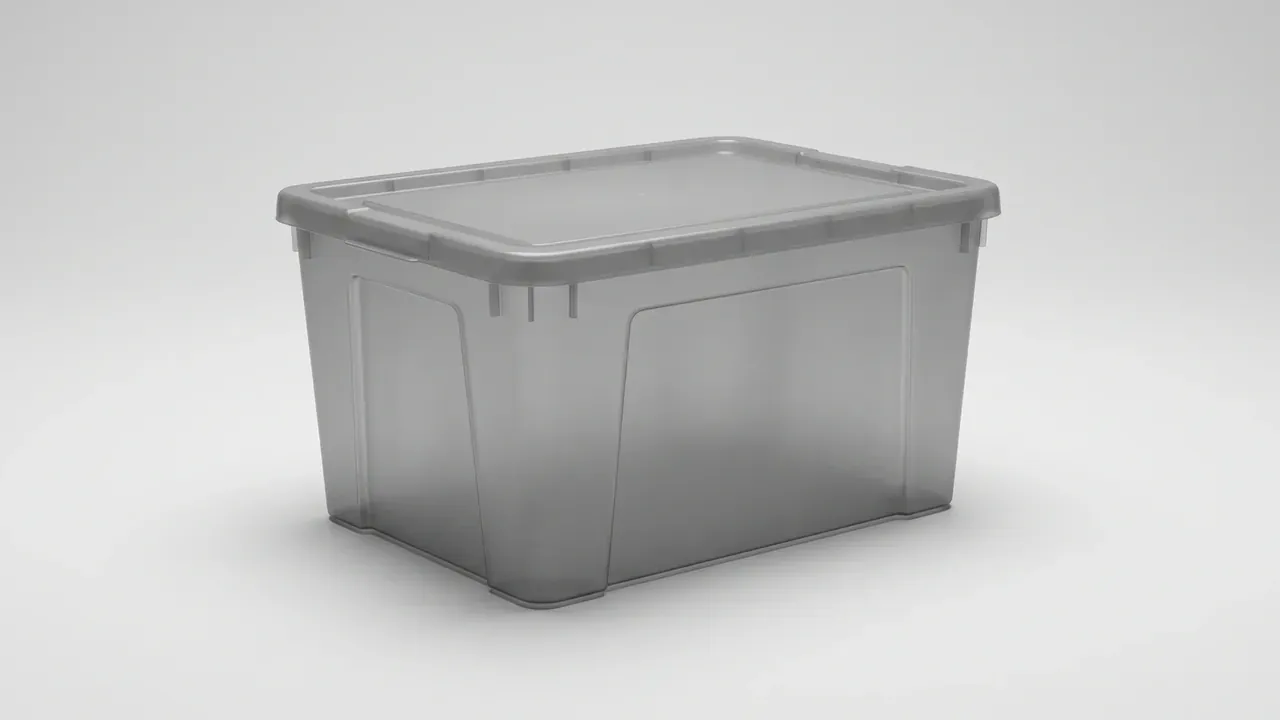
Quick answer: Judge a Plastic Box by five measurable criteria rather than the catalogue footprint: internal cavity, base stack load, wall against rib pitch, latch holding force with its sealing grade, and a material window matched to batch size.
Table of contents
- Five Criteria for Plastic Box Selection
- Cavity Size and Stack Load Arithmetic
- Reading Wall Thickness and Rib Pitch
- Latch Holding Force and Sealing Grade
- Material Temperature Window and Batch Size
- FAQ
1. Five Criteria for Plastic Box Selection
The usual mistake is ordering a Plastic Box on outside dimensions and reading a static load figure as a stack rating. Four criteria settle on one sample with calipers, a pull gauge and an oven.
Order matters: cavity decides fit, stacking decides base ribs, wall and rib pitch decide drop behaviour, latch and seal decide the closing face, and batch decides cost last.
| Criterion | Measure | Usual mistake | Line to hold |
|---|---|---|---|
| Internal cavity | Clear length, width, depth | Outside size used | 5 mm clearance |
| Base load | Uniform load on the floor | Static read as stack load | 1.5 times the tiers |
| Wall and ribs | Side and base thickness | Thickest point only | 2.2 to 2.6 mm |
| Latch and seal | Holding force, IP grade | Judging by feel | Above 120 N |
| Material and batch | Temperature range, cavities | Pricing first | No fracture at minus 20 C |
2. Cavity Size and Stack Load Arithmetic
On a 600 x 400 x 280 mm Plastic Box with a 2.4 mm wall, deduct two wall sections and 0.8 mm of draft per side: 592 mm remains. The lid lip takes 8 mm more, leaving 262 mm of usable depth.
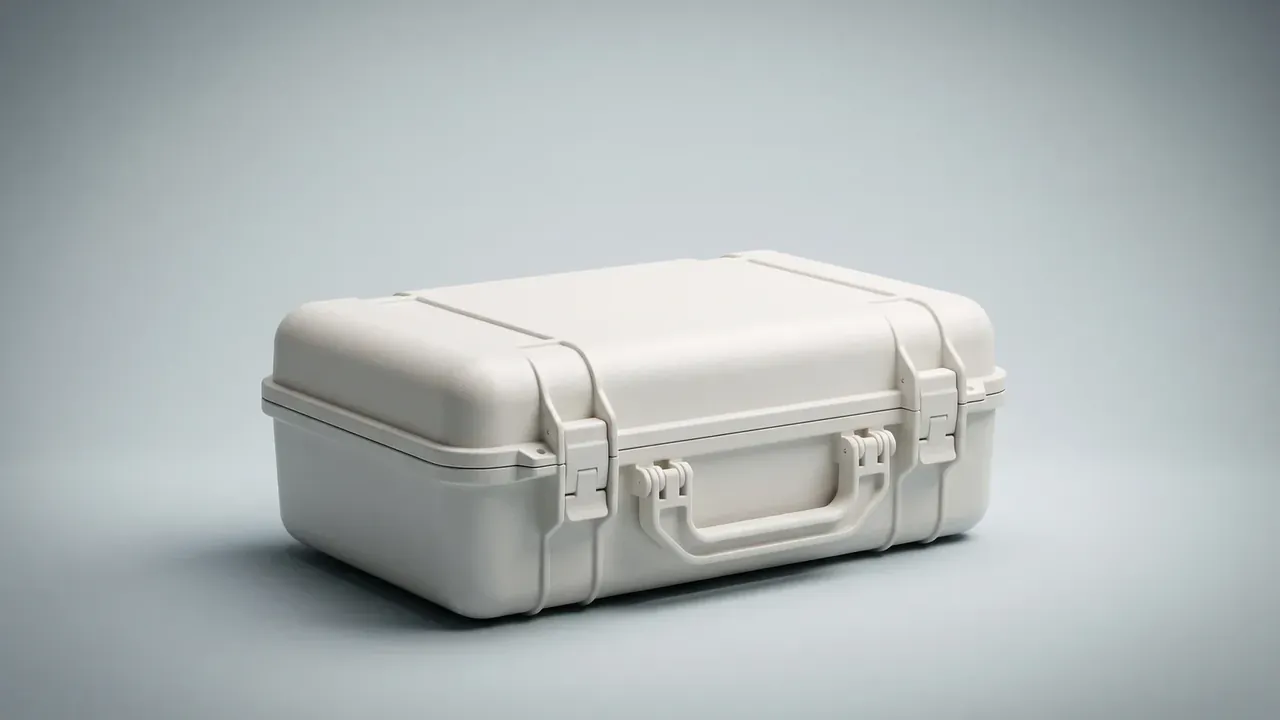
Five tiers at 18 kg put 72 kg on the base. At 40 C for 48 hours the wall creeps 40 percent faster, so rate 1.5 times, or 108 kg, with two ribs 6 mm high. A 10 mm lid spigot engaging 6 mm keeps the column square.
3. Reading Wall Thickness and Rib Pitch
A load-bearing Plastic Box runs 2.4 mm sides, 3.0 mm base and 2.2 mm lid. Read 30 mm below the rim and 30 mm above the base, then judge the lower.
Rib pitch matters more than height: 90 mm with 6 mm ribs and a 1.4 mm root suits that wall; 60 mm sinks the outer face into shadows. Drop the loaded box from 1.2 m at minus 20 C on six faces, three edges and one corner; square rib roots crack, and an R2 fillet recovers them.
4. Latch Holding Force and Sealing Grade
An over-centre latch on a Plastic Box should hold at 150 to 180 N and open at 25 to 40 N. Under 120 N, an 18 kg load bulges the wall and the latch walks itself open.
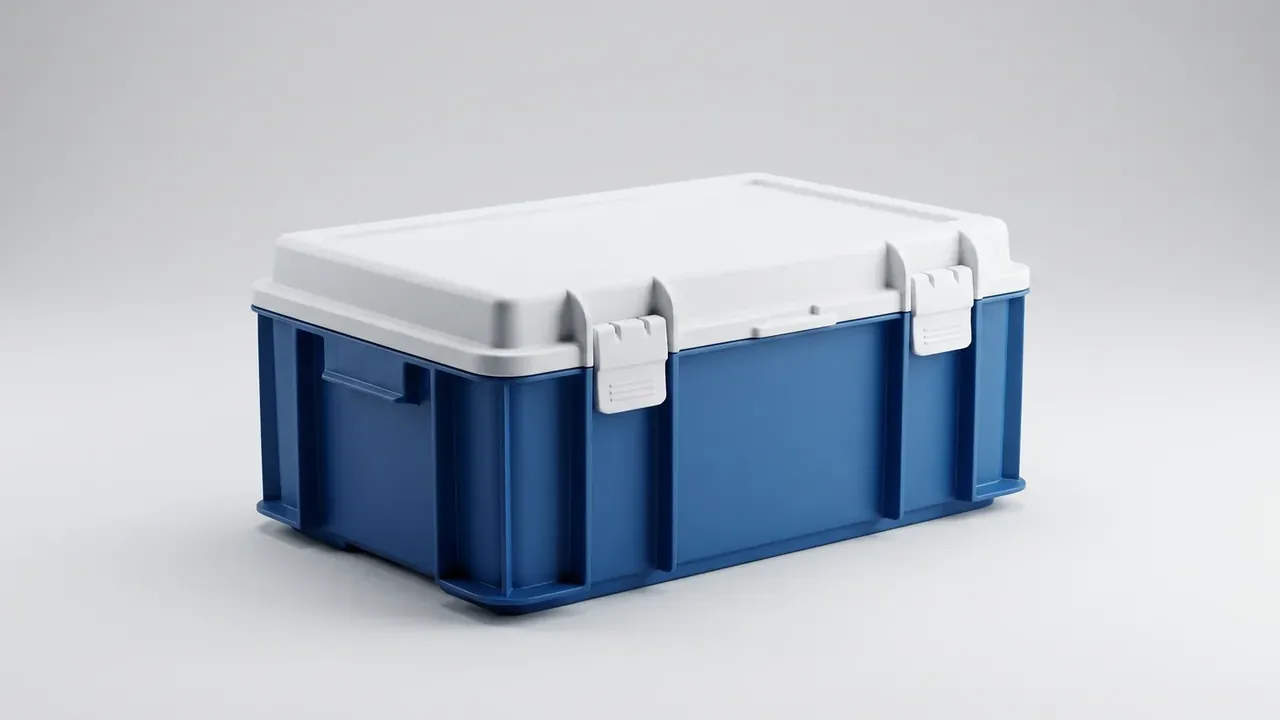
IP54 covers indoor dust and splash. Open-yard rain needs a 3 mm gasket compressed near 30 percent, since over-compression hardens the rubber in cold and leaks worse. Metal parts take 48 hours of salt spray, and red rust rejects the batch.
5. Material Temperature Window and Batch Size
At minus 20 C, demand a 6 J drop with no radial whitening behind the strike. A week in a 60 C trailer must not soften the walls, so keep 15 C of margin under the heat deflection temperature.
Small runs recolour an existing tool with 40 minutes of purging. Above 3,000 units a new Plastic Box tool runs on a 780 tonne press at a 62 second cycle and 300,000 shots, holding colour to 1.5 ΔE with regrind capped at 20 percent.
| Batch | Tooling route | Amortised | First delivery |
|---|---|---|---|
| 500 to 1,000 | Recolour existing | 0.8 CNY | 12 days |
| 1,000 to 3,000 | Add cavities | 2.4 CNY | 18 days |
| Above 3,000 | New single cavity | 6.5 CNY | 25 days |
| Above 10,000 | New two cavities | 4.2 CNY | 30 days |
Conclusion
Five numbers settle the decision: cavity from the footprint, a base rated at 1.5 times the load above, wall read with rib pitch, a latch holding 120 N at least, and material matched to temperature. Choosing a Plastic Box is arithmetic done before the order.
This article discusses only the container (case body) side of specifications and design intent, and does not cover any handling, loading or use of the contents.
Related Reading
- Material comparison for portable plastic tool boxes
- How to choose a lockable storage box
- Selection criteria for logistics support boxes
- Capacity and structure of camping storage boxes
Related Products
- 8 Series — Gun Cases; Military Equipment Cases; Camera Equipment Cases; Drone Cases; Watch Cases; Knife Cases; First Aid Cases; Electronics Equipment Cases
- WL8-2812 PP Gun Case — model WL8-2812
- All protective cases and toolboxes: 7 series, 158 models