

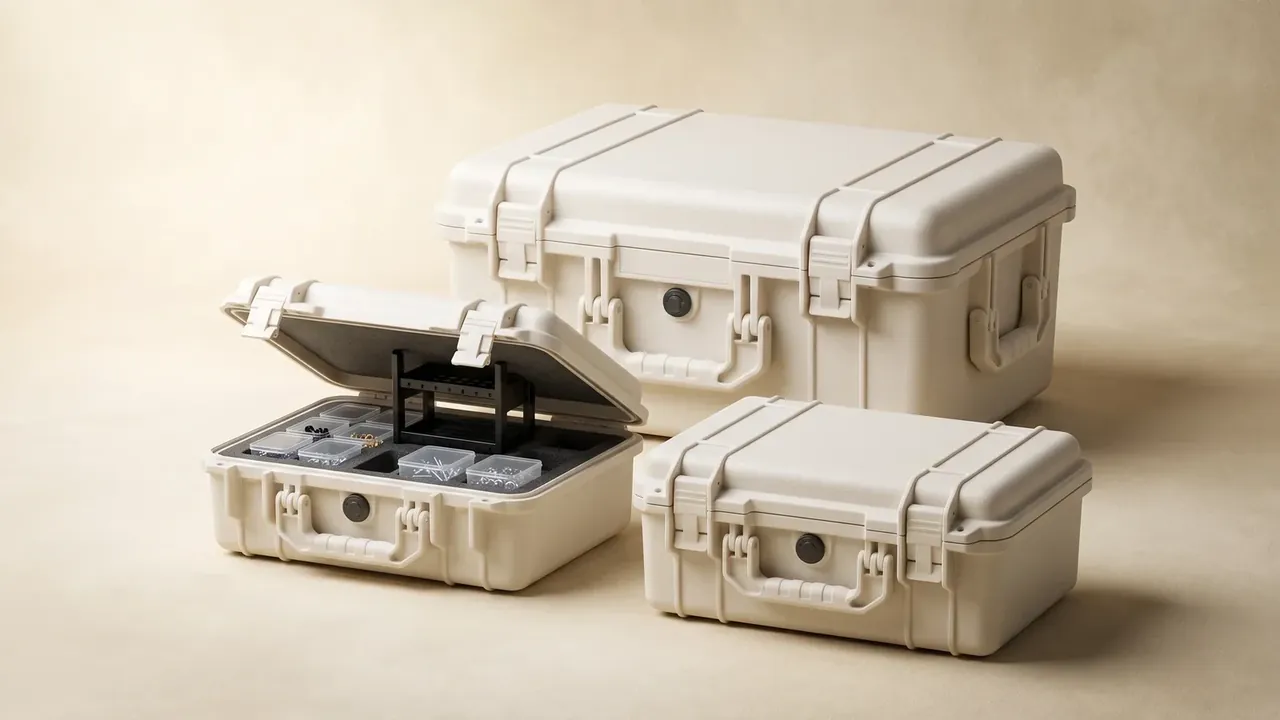
Quick answer: A plastic case box with handle is settled on the bench, not in a brochure: 0.5 mm at the lid seam, 3.2 mm at the handle boss, and 55 to 75 N of latch force decide it.
Table of contents
- Three Fits to Measure on Sampling Day
- Folding Handle, 12 mm Finger Clearance
- Latch Count Against Case Length
- Hanging, Stacking and Drop: Three Numbers
- Four Release Gates from T0 to Volume
- FAQ
1. Three Fits to Measure on Sampling Day
Last November a 42 litre cream sample was unwrapped at the workshop, its lid rim rubbed white, its handle boss hairline-cracked. We built the tool from it and ran T0 that afternoon.
The first pass on a plastic case box with handle ignores appearance and measures fit. Colour is a masterbatch call, sink marks a cooling change, but a wrong fit means cutting steel.
| Point | Gauge | Pass line | Deviation found |
|---|---|---|---|
| Lid seam gap | 0.5 mm feeler | 0.5 passes, 0.8 stops | local interference, rim whitened |
| Handle boss wall | ultrasonic gauge | 3.2 mm minimum | 2.4 mm after sink |
| Hinge pin clearance | bore micrometer | 0.3 mm | 0.55 mm, lid rocks |
| Latch force | push-pull gauge | 55 to 75 N | 38 N, self-opening |
The handle boss failed first. Nominal wall is 2.8 mm and the boss should thicken to 3.2 mm, yet the tool held thin steel there, so coolant never reached the corner. The weld line landed on the highest-stress radius and opened on the first hard pull. We ran the body at 40 °C with 28 seconds of cooling and 1.6 per cent shrinkage allowed. Nobody had gauged it before the steel was cut. The drawing looked heavy; the flow front still starved.
Five points, three of them out.
2. Folding Handle, 12 mm Finger Clearance
On a plastic case box with handle the folding grip is the only moving part, judged in two states: folded, and pulled out.
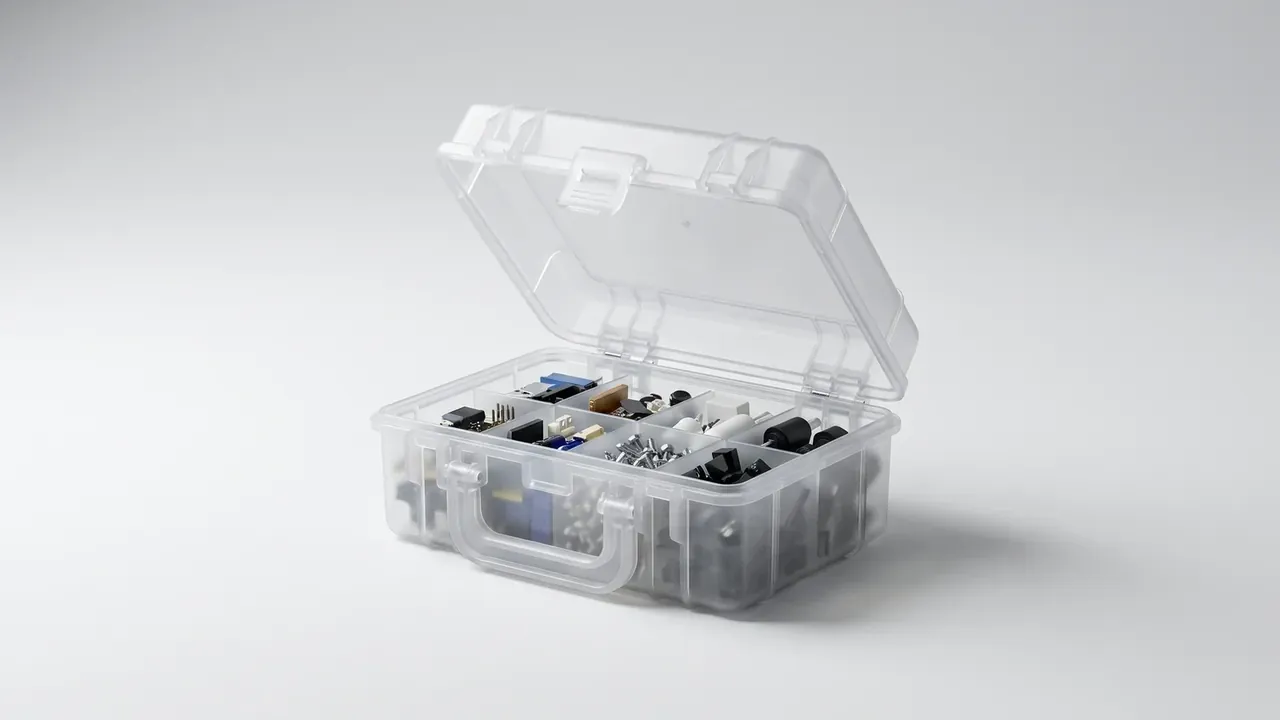
Folded, the grip should sit 12 mm off the wall. That gap decides whether four fingers go in, or only fingertips hook the edge. Six checks cover it:
- Clearance: 12 mm, or 15 mm for thin gloves;
- Return: against the wall in one second, within 8 degrees;
- Side play: no pivot movement when pushed;
- Pin: 4.5 mm, no burr;
- Cold: four hours at minus 20 °C, return within three seconds.
The 12 mm figure is not a preference: at 6 mm only two knuckle joints fit, and the case changes hands every ten metres. A pivot radius of R2.5 ended cold-impact cracking.
3. Latch Count Against Case Length
Latches on a plastic case box with handle follow case length. An extra one does not seal better; it only opens harder.
| Case length | Latches | Opening force | Share per latch |
|---|---|---|---|
| Under 450 mm | 2 | 55 to 65 N | half each |
| 450 to 700 mm | 3 | 60 to 75 N | centre slightly higher |
| Over 700 mm | 4 | 65 to 75 N | 30 per cent at each end |
| Valve version | 2 plus a secondary | from 70 N | vent first |
On a 620 mm body, four latches pushed the opening force to 92 N, two gloved hands' worth. Back at three, the same mould read 68 N and the water test held.
Sealing comes from the rib and the compression left in the gasket; latches only hold those together.
4. Hanging, Stacking and Drop: Three Numbers
On a plastic case box with handle, a full-load hang is the closest bench test to a real carry: one case, one sling, one stopwatch.
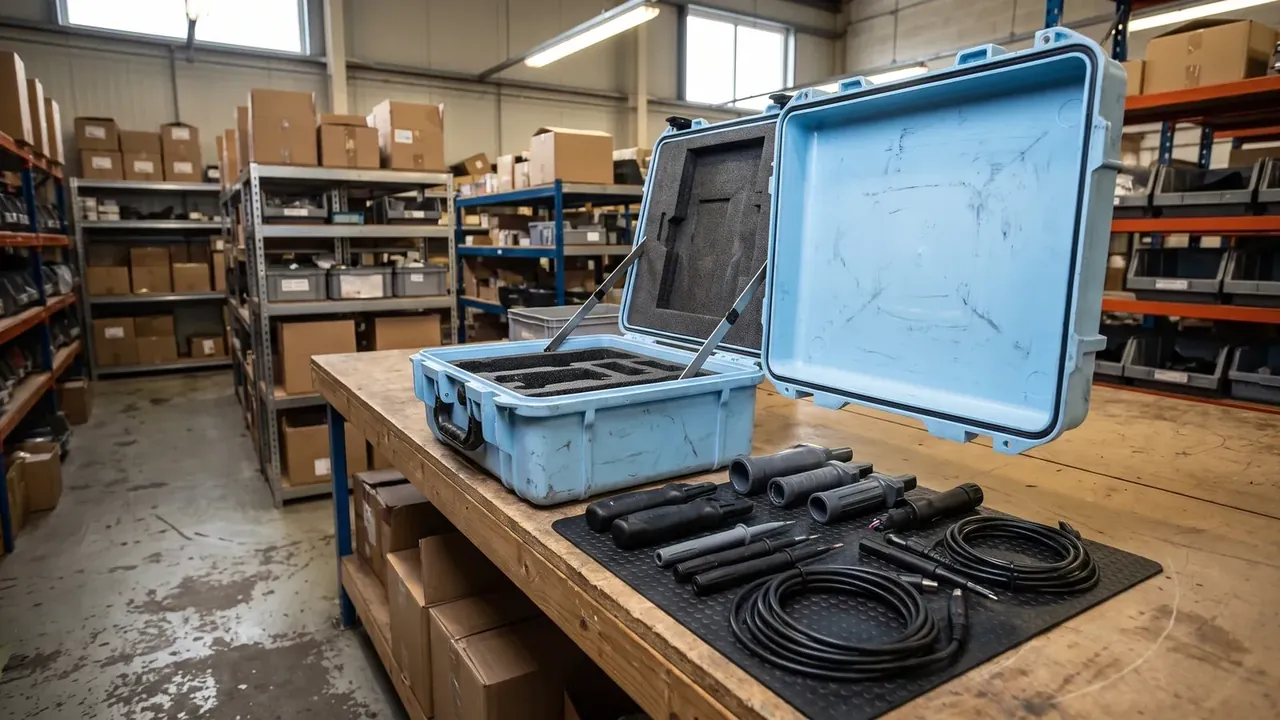
Hang 25 kg for 30 minutes, then measure the lid seam at once; set must stay under 1.5 mm. Then stack five loaded cases for 72 hours at 40 °C, with no collapse at the bottom. Then drop six faces from 1.2 m: no latch may spring, no handle may leave its pivot.
Lid angle deserves a look. A 105 degree opening on two steel stays is common, the pivot on the lid side so the open lid stays over the footprint. Past 120 degrees it needs half a metre of clear floor behind.
Of the three, the drop passes easily and stacking fails: rarely wall thickness, but a lid ribbed one way only, so five units press a trough across the span.
5. Four Release Gates from T0 to Volume
- T0: single cavity, fit and handle return, two tool changes allowed;
- T1: production tool, all five points, report with actual values;
- PP: 200 units, five-high stacking and 48 hours salt spray;
- MP: three units per 500 checked for force and seam gap.
Two tool rounds sit between T0 and T1: cooling at the boss, venting at the seam, about three weeks. A plastic case box with handle quote that excludes tool changes bills each one later.
Conclusion
The order runs fit, handle, latches, three tests, four gates. Fit decides whether it closes, the handle whether it travels, the latches and tests whether it survives the trip. Measure the five points and a plastic case box with handle has been inspected, not photographed.
This article discusses only the container (case body) side of specifications and design intent, and does not cover any handling, loading or use of the contents.
Related Reading
- Choosing a gun case for opening and carrying on site
- What to test by hand during a showroom visit
- Working back from airframe size to a drone case insert
- Setting compartments by loading unit on an ordnance box
Related Products
- 8 Series — Gun Cases; Military Equipment Cases; Camera Equipment Cases; Drone Cases; Watch Cases; Knife Cases; First Aid Cases; Electronics Equipment Cases
- WL8-2812 PP Gun Case — model WL8-2812
- All protective cases and toolboxes: 7 series, 158 models