

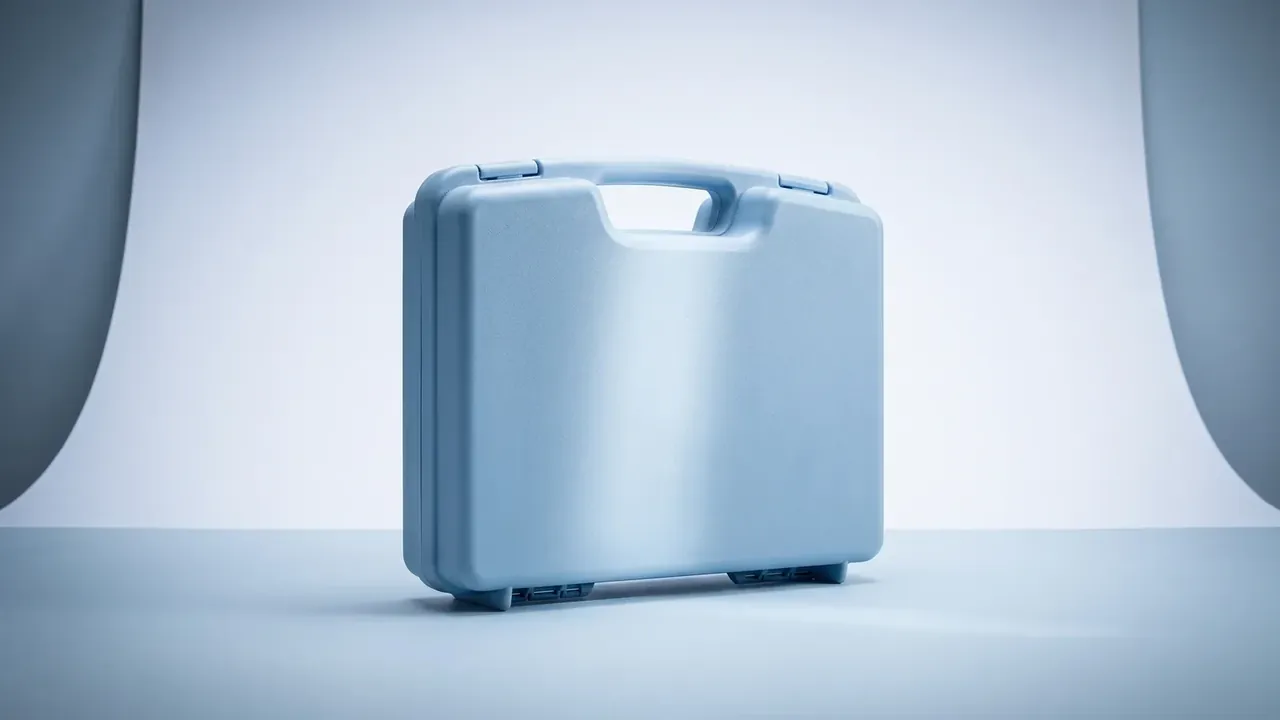
Quick answer: Judge a plastic medical transport case by splitting the evidence into two lines. ISO 13485 covers the supplier's process records; IEC 60529 covers the shell itself. Then re-run four field actions on disinfectant compatibility, cold-chain hold time, seal tightness and label traceability. A case that cannot reproduce any one of them is not a match, whatever the brochure says.
Table of contents
- Compliance starts with two separate paper trails
- Disinfectant compatibility: alcohol and chlorine contact limits
- Cold-chain hold time: measuring the two to eight degree window
- Seals, labels and material statements
- FAQ
1. Compliance starts with two separate paper trails
Look at a case on the bench and the first job is telling two sources of evidence apart. ISO 13485 governs the organisation and its processes, and a case body is only one purchased component swept into purchasing control. IEC 60529 governs the enclosure itself and says nothing about who built it. Treating an IP67 report as proof of system compliance is the commonest mix-up in procurement; a quality certificate on its own never shows whether the lid seam holds moist air out.
Once the clauses are pushed down to a physical plastic medical transport case, four things are checkable at a desk: design-change notification, incoming inspection records, batch traceability, and supplier re-evaluation.
| Clause | Criterion | How to verify |
|---|---|---|
| ISO 13485 purchasing control | Supplier evaluation dated within 12 months | Ask for the evaluation form and audit outcome |
| ISO 13485 traceability | Every case carries a batch number linked to mould and lot | Pull 3 cases and trace the moulding record |
| IEC 60529, IP67 | 1 m immersion for 30 minutes, no visible ingress | Match the third-party report to the model and batch |
| ISO 10993-1 contact assessment | Material grade of contact parts stated in the instructions | Ask for the assessment conclusion and material declaration |
2. Disinfectant compatibility: alcohol and chlorine contact limits
Cleaning is not a function of the case; it is a compatibility question. Two routines dominate hospital floors: a 75 percent alcohol wipe, and surface disinfection at 500 mg/L available chlorine followed by a clean-water pass. Alcohol contact runs about 30 minutes per cycle. The criterion is not one colour change, but whether 200 cycles leave the surface tacky and the print lifted.
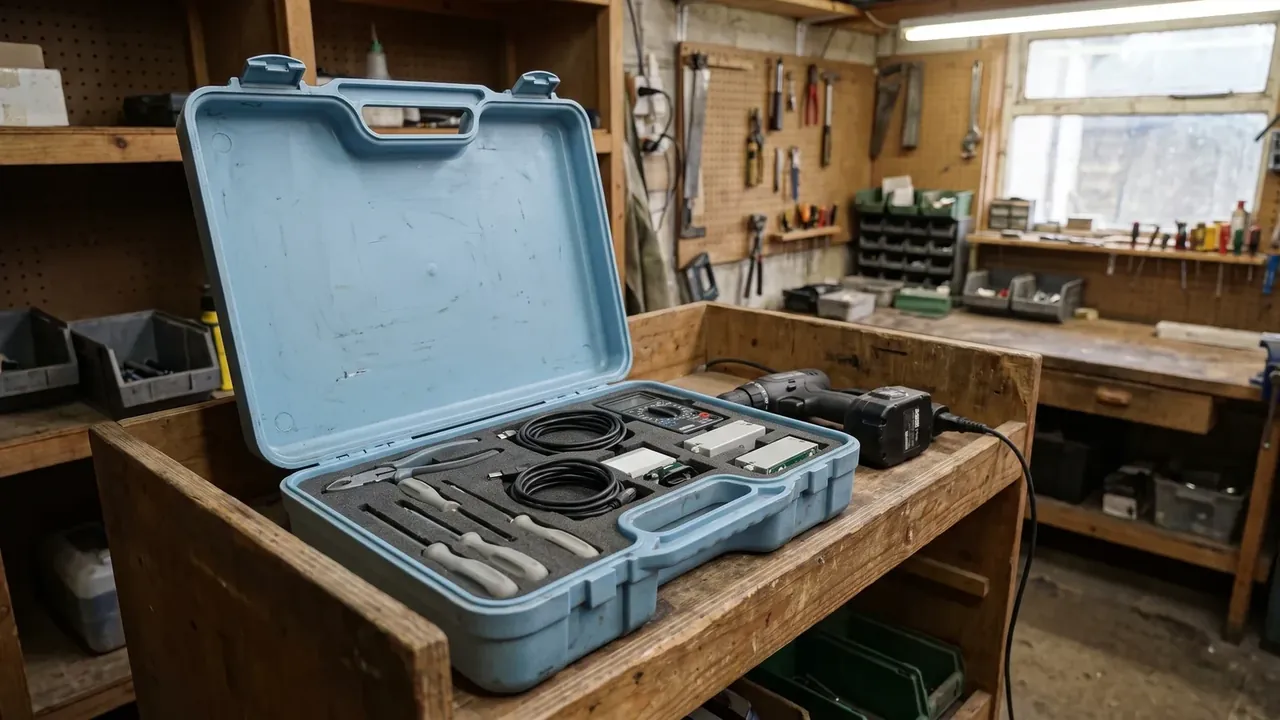
Material differences surface here. Polypropylene shrugs off alcohol, yet repeated chlorine contact leaves a chalky bloom that scrapes off under a fingernail. Polycarbonate stays clear but crazes after enough alcohol wipes. Both grades work; ask for a wipe count, not a resistance table.
The gasket is the other weak point. Nitrile handles alcohol, silicone covers a wider band, and neither enjoys chlorine. Spraying disinfectant onto the seal and latching it wet is the fastest way to age a plastic medical transport case.
3. Cold-chain hold time: measuring the two to eight degree window
A case does not refrigerate anything; it only adds thermal resistance. The measurable criterion is a duration: eight hours after closing, the interior stays at or below eight degrees Celsius, produced at 32 degrees ambient, seventy percent load, lid opened once every two hours. An empty curve reproduces nothing.
Wall thickness and foam set the floor: a 3 mm wall over 25 mm of polyurethane is the usual pairing.
Five actions cover the field check:
- Log the four corners and the centre, sampling every 5 minutes
- Pre-chill the case and coolant packs at two to eight degrees for 12 hours
- Load seventy percent of the payload, leaving an air gap
- Open the lid for 60 seconds every two hours
- Accept only if every logger stays within two and eight degrees
4. Seals, labels and material statements
Seals, labels and material statements are the three items most often skipped on a plastic medical transport case, and each one can stop an acceptance on its own.
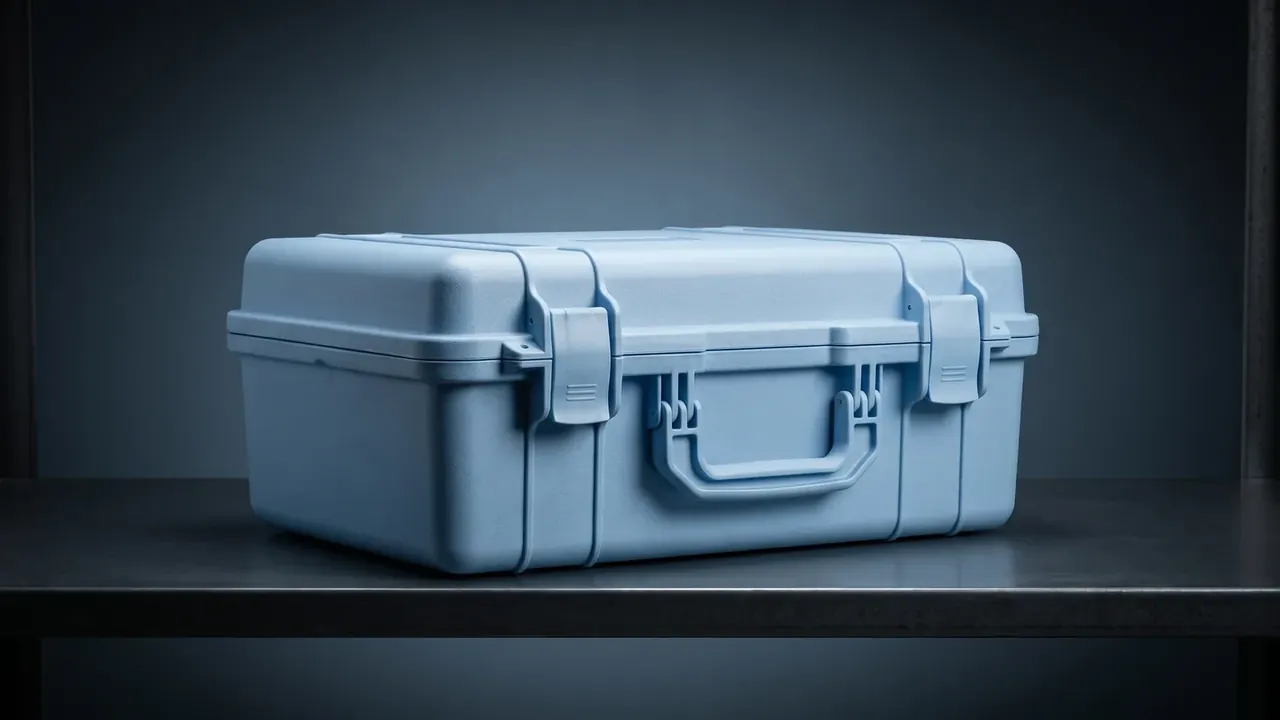
Seal criteria run two ways. Inward, pressure decay: charge to 20 kPa, hold 60 seconds, accept no more than a 1 kPa drop. Outward, spill resistance: 500 ml inside, tilt 45 degrees for 10 minutes, no weeping on the outer wall. A double-lip gasket wants about 25 percent compression; over-compress it and the lip takes a set.
Labels are about abrasion and legibility. UDI splits into a device identifier and a production identifier, and the barcode must still scan after 48 hours at 60 degrees Celsius and ninety percent humidity. Fifty alcohol wipes must not blur it, so the label sits inside the lid.
The material statement should name the grade of every part touching contents, state whether plasticisers are present, and give the contact category behind the biocompatibility assessment.
| Clause | Criterion | How to verify |
|---|---|---|
| Pressure decay | 20 kPa held 60 seconds, drop no more than 1 kPa | Pressurise on site with a gauged fitting |
| Spill resistance | 500 ml tilted 45 degrees, no trace after 10 minutes | Fill an empty case and tilt it |
| Gasket compression | About 25 percent when latched | Measure the seam gap with a feeler gauge |
| Label durability | Scannable after 48 hours at 60 C and ninety percent RH | Climate chamber plus a barcode reader |
Conclusion
Choosing a plastic medical transport case comes down to six reproducible actions: system records, ingress rating, disinfectant compatibility, cold-chain duration, seal tightness and label traceability. Each one needs evidence re-run on the buyer's bench rather than read in a catalogue. When two cavity depths or two seal designs sit side by side, they belong on the same scorecard. Anything that cannot be re-measured is not a specification yet, and a plastic medical transport case is only as good as the checks it survives.
This article discusses only the container (case body) side of specifications and design intent, and does not cover any handling, loading or use of the contents.
Related Reading
- How the shell and insert of a medical case are built
- How medical case layouts differ by department
- Selection criteria for military supply transport cases
Related Products
- 8 Series — Gun Cases; Military Equipment Cases; Camera Equipment Cases; Drone Cases; Watch Cases; Knife Cases; First Aid Cases; Electronics Equipment Cases
- WL8-2812 PP Gun Case — model WL8-2812
- All protective cases and toolboxes: 7 series, 158 models