

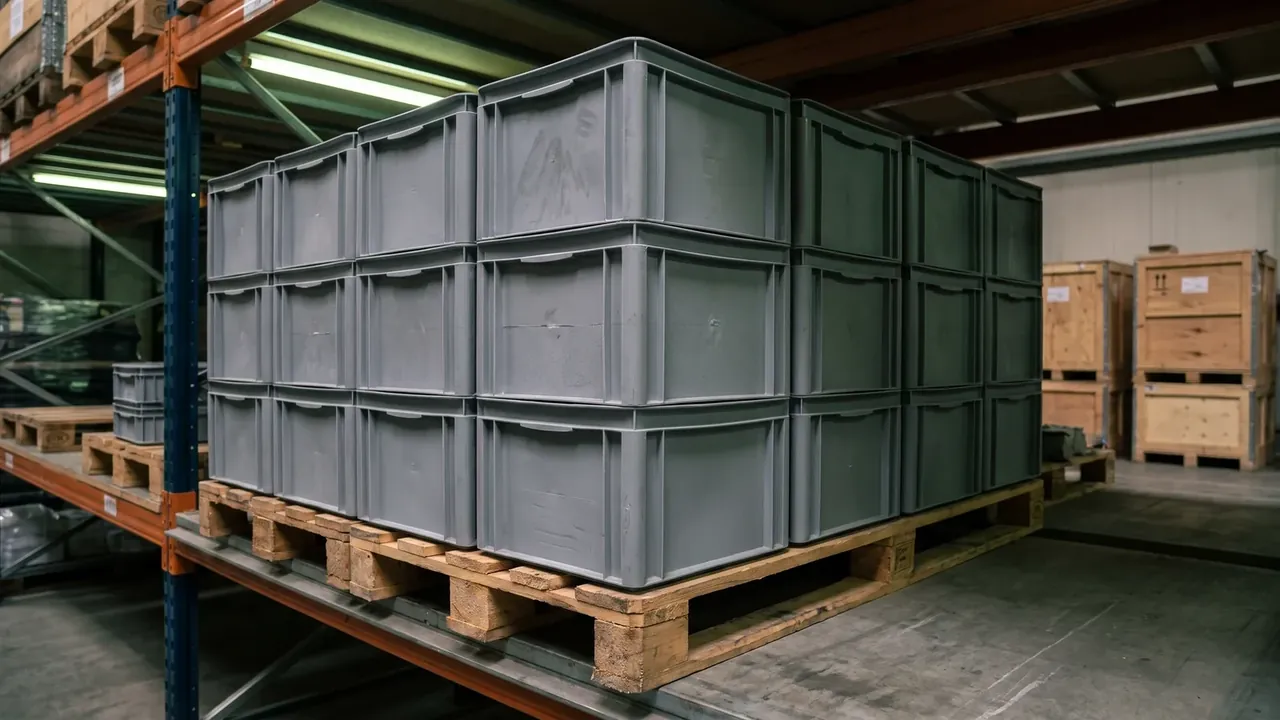
Quick answer: A Plastic Tool Box, Portable is decided by five points: wall thickness against ribs, the living hinge transition, latch holding force, the handle load path, and the moulding window that reproduces all four.
Table of contents
- Five Structural Points
- From Drawing to Sample Approval
- Wall Thickness and Ribs: Where the Load Goes
- Material and the Moulding Window
- Four Hard Numbers for Portability
- FAQ
1. Five Structural Points
A Plastic Tool Box, Portable is a thin-wall load-bearing part, not a box: it carries over 20 kg of tools on 2 kg of its own weight, takes four stacked layers and survives drops, so load routing matters more than thickness.
The five points follow the load path: walls set stiffness, ribs spread local loads, the hinge sets open-close life, the latch keeps the lid shut, the handle takes the carrying load.
| Point | Value | Failure if cut |
|---|---|---|
| Wall and lid | 3.0 and 2.4 mm | bulging, dished lid |
| Ribs | 1.2 mm, 40 mm apart | sink marks, buckling |
| Living hinge | 0.8 mm web | cracking at 30,000 cycles |
| Latch | 160 N | popping open in transit |
| Handle | 20 kg rating | whitening at the root |
2. From Drawing to Sample Approval
Structure changes cost money in the mould, not the drawing. Approval order: cavity and dividers, then footprint and stacking step, then wall and ribs. Reverse it once and later steps are recalculated.

Samples are approved in a showroom, not against a 3D model. Three tests: both latches open with the same feel, the box does not distort after 20 kg is carried 20 m, and the bottom lid dishes under 1 mm after 24 hours in four layers.
3. Wall Thickness and Ribs: Where the Load Goes
Walls run 3.0 mm and the lid 2.4 mm, deliberately: the wall resists lateral stack force, the lid resists weight from above, and its centre passes that weight to the edges through ribs, so it can be thinner. A lid as thick as the wall warps as it cools.
Ribs stay at or below 0.4 times the wall — 1.2 mm behind 3.0 mm. Thicker ribs draw a sink mark: a groove outside, a void inside, so the rib carries less. The 40 mm spacing matches 300 mm lid spans.
Rib height needs restraint: at 6 mm the part releases cleanly, higher needs 1 degree of draft. Corners take a radius of 1.5 times the wall, or a drop cracks them.
4. Material and the Moulding Window
The body is usually copolymer polypropylene. Regrind is fine to 20 percent; beyond that melt flow destabilises, thin sections fill unevenly, and unit weight varies by 15 g.
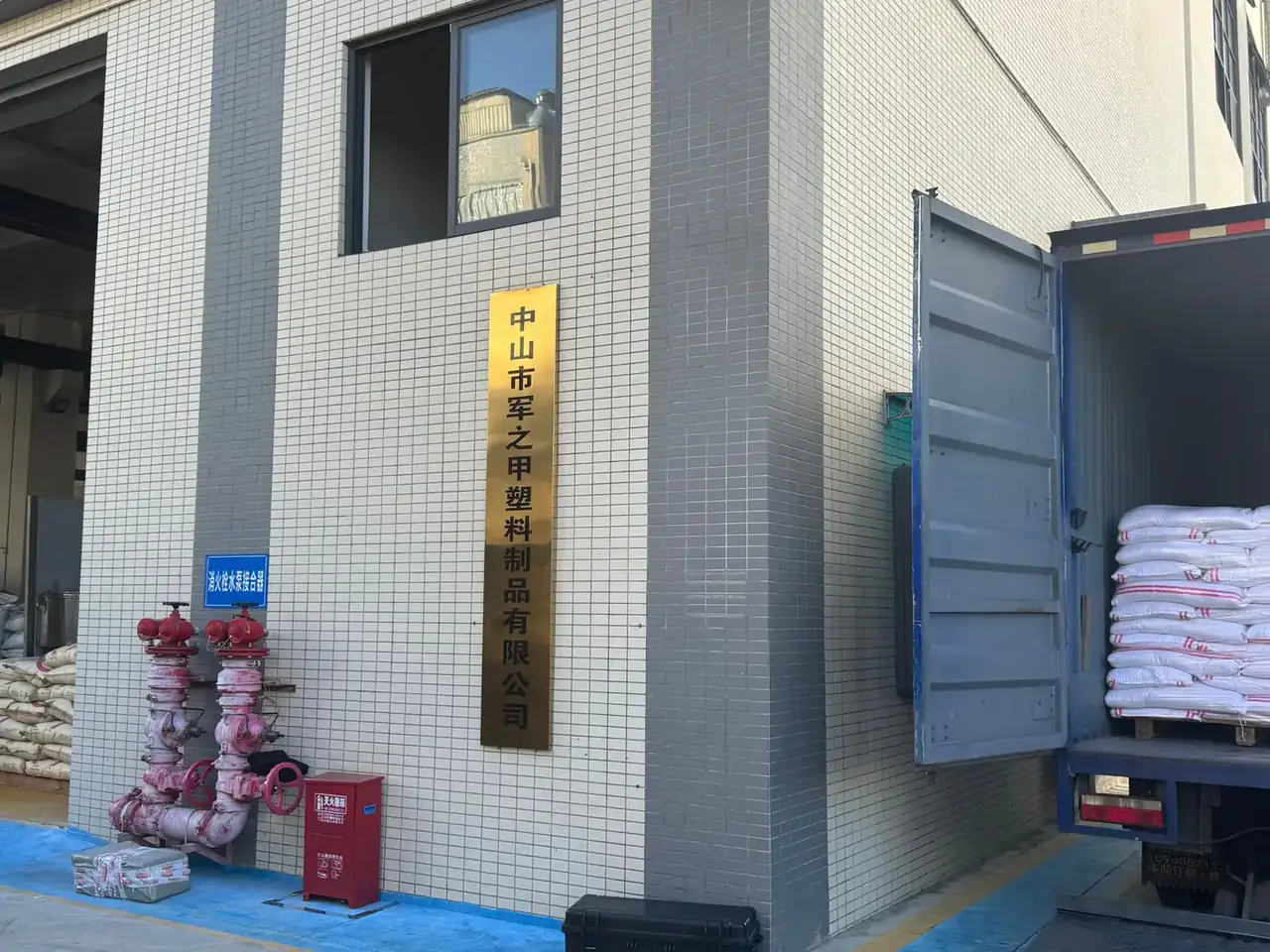
Resin arrives in 25 kg woven sacks. The window: 215 degrees Celsius melt, 45 degrees mould, packing at 40 MPa for 6 seconds, cooling 20 seconds, a 55 second cycle on a 450 tonne press.
Mould temperature is the sensitive variable. Below 40 degrees the melt freezes in the ribs and short-shots the root; above 55 degrees cooling stretches to 28 seconds and shrinkage climbs from 1.6 to 2.0 percent, loosening the lid fit. Holding 45 plus or minus 3 keeps it stable.
5. Four Hard Numbers for Portability
Portability is four numbers that pull against each other: weight, footprint, stacking height, drop height.
| Parameter | Value | Test condition |
|---|---|---|
| Weight | 2.1 kg | empty, handle fitted |
| Footprint | 460 by 330 by 175 mm | hinge bosses included |
| Stacking | 4 high | 25 kg per layer, 24 hours |
| Drop | 1.0 m, six faces | 2 hours at minus 10 C |
The number most often skipped is the cold drop: at room temperature 1.0 m leaves a mark, but after 2 hours at minus 10 degrees the same corner cracks through. Cold units need impact modifier, which costs rigidity, so stacking drops to three layers.
Weight links to stacking: 2.1 kg per unit adds 8.4 kg over four layers, and with 25 kg per layer the bottom unit carries close to 110 kg, the figure that decides whether the lid needs a cross rib.
Conclusion
The structure and process come down to five points: wall thickness for stiffness, ribs to spread load, a hinge for cycle life, a latch for transit, a handle for carrying. The moulding window reproduces them — 215 degrees melt, 45 degrees mould, 20 seconds cooling are conditions, not suggestions. Together they make a Plastic Tool Box, Portable that carries and stacks.
This article discusses only the container (case body) side of specifications and design intent, and does not cover any handling, loading or use of the contents.
Related Reading
- Material comparison for portable plastic tool boxes
- Portable plastic tool boxes against the alternatives
- Selection points for portable tool boxes
- How to choose a PP plastic case
Related Products
- 8 Series — Gun Cases; Military Equipment Cases; Camera Equipment Cases; Drone Cases; Watch Cases; Knife Cases; First Aid Cases; Electronics Equipment Cases
- WL8-2812 PP Gun Case — model WL8-2812
- All protective cases and toolboxes: 7 series, 158 models