

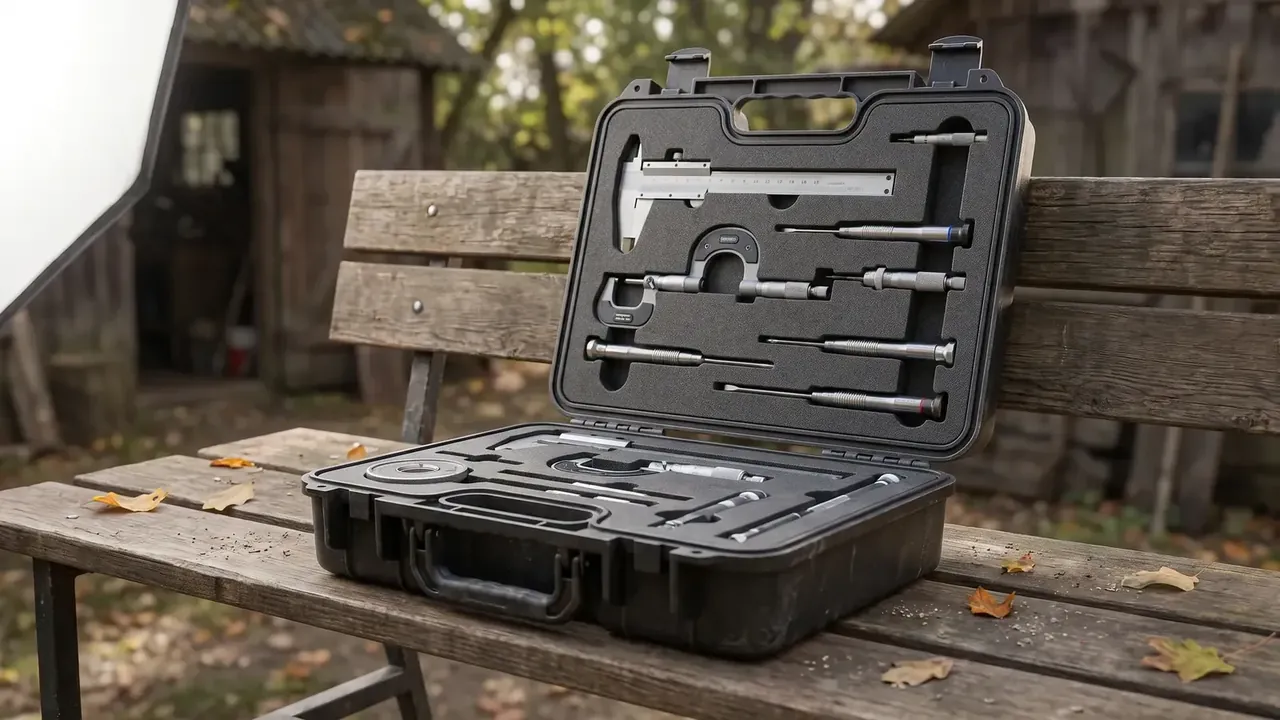
Quick answer: A Plastic Tool Box, Portable is specified by three groups of numbers: the internal cavity, the outer envelope with its stack pitch, and the wall sections. Fix the cavity first, derive the envelope from it, then prove both with load and stack tests.
Table of contents
- Three Size Groups Behind Every Specification
- Calibrating the Internal Cavity
- Wall Grades and Rib Ratios
- Load Rating Against Stack Height
- Tolerances, Warp and Weight
- FAQ
1. Three Size Groups Behind Every Specification
A Plastic Tool Box, Portable can fill two pages of a specification sheet, yet three groups decide whether the part works: the internal cavity, the outer envelope with its stack pitch, and the wall sections.
A mid-size instrument box shows the arithmetic. A cavity of 445 x 320 x 160 mm sits inside an envelope of 470 x 345 x 178 mm, which leaves 12.5 mm of wall per side and a 42 mm stack pitch. Shave that and the latches lose their seating area; add to it and the same cavity eats 8 percent more material.
| Layer | Dimension | Example | Cost if set small |
|---|---|---|---|
| Cavity | length x width x depth | 445 x 320 x 160 mm | long tools no longer fit |
| Envelope | outer size and pitch | 470 x 345 x 178 mm, 42 mm | wasted shelf height |
| Walls | base, side, lid | 3.0 / 2.6 / 2.2 mm | bulging sides, dished lid |
| Load | working load | 25 kg | marks at the handle root |
2. Calibrating the Internal Cavity
Cavity figures are the smallest of three readings: 10 mm below the rim, at mid-depth, and above the bottom fillet. A 1.5 degree draft over 160 mm tapers each side 4.2 mm, so only the small end is worth quoting.
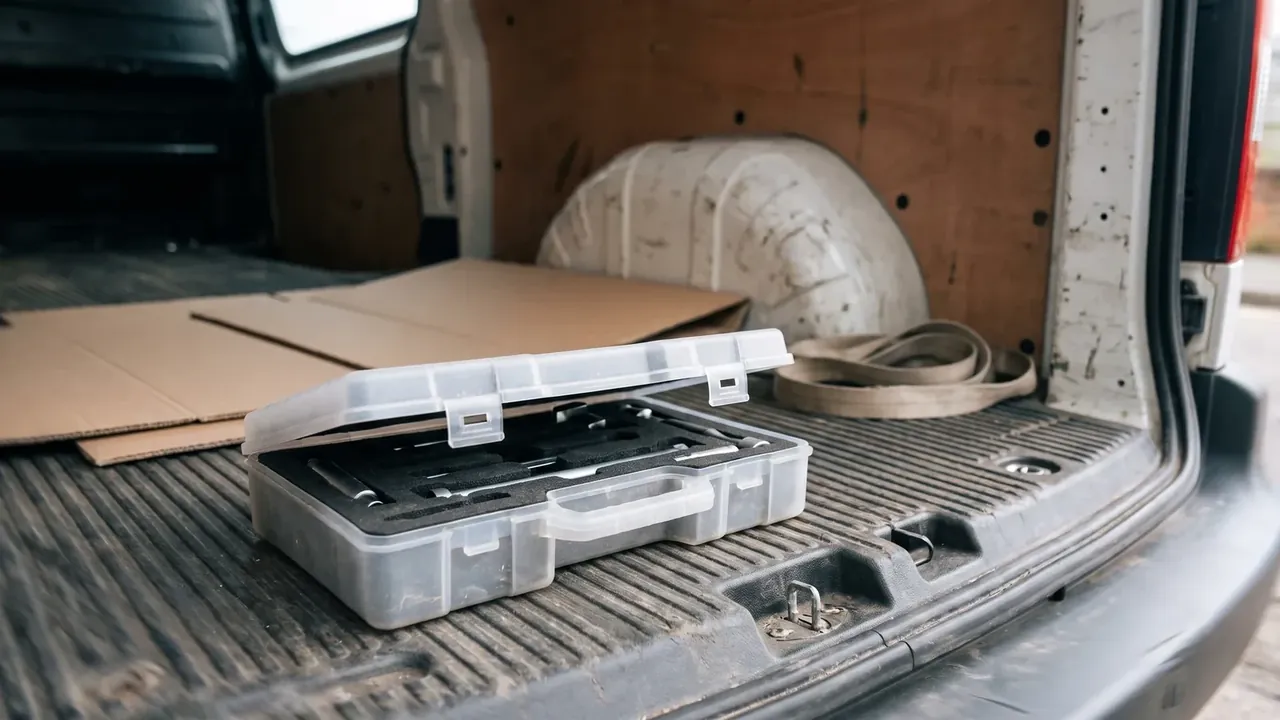
Slots leave 2 mm of clearance and run to two thirds of tool thickness, with 20 mm EVA foam and 3 mm divider walls flush to the rim. Then prove it by hand: drop in a 400 mm caliper and a 60 mm micrometer case, and a business card should slide between tool and foam.
3. Wall Grades and Rib Ratios
Walls are graded by duty: base 3.0 mm for stack load, side 2.6 mm against bulging, lid 2.2 mm to save weight, held near 1 : 0.87 : 0.73. Ribs run 1.5 mm, which is 0.55 of the side wall, on a 36 to 40 mm pitch and no taller than 12 mm. Thicker ribs sink a shadow on the show face; thinner ones whiten under the ejectors.
| Region | Wall | Rib thickness and pitch | Acceptance |
|---|---|---|---|
| Base | 3.0 mm | 1.5 mm / 36 mm | flatness within 0.8 mm |
| Side | 2.6 mm | 1.5 mm / 40 mm | no bulge at 25 kg |
| Lid | 2.2 mm | 1.5 mm / 36 mm | sag 1.5 mm or less |
Tooling belongs in the same document: two cavities, 780 tonnes of clamp, a 48 second cycle, and a 1.5 percent shrinkage allowance. Applied the wrong way round, that allowance grows the cavity 6 mm and every latch shifts.
4. Load Rating Against Stack Height
Working load is 25 kg, what a user carries daily. Failure load is 50 kg or more, where the box deforms under test. Collapse them and a supplier builds to the lower figure. The handle is rated 400 N static, about 40 kg.
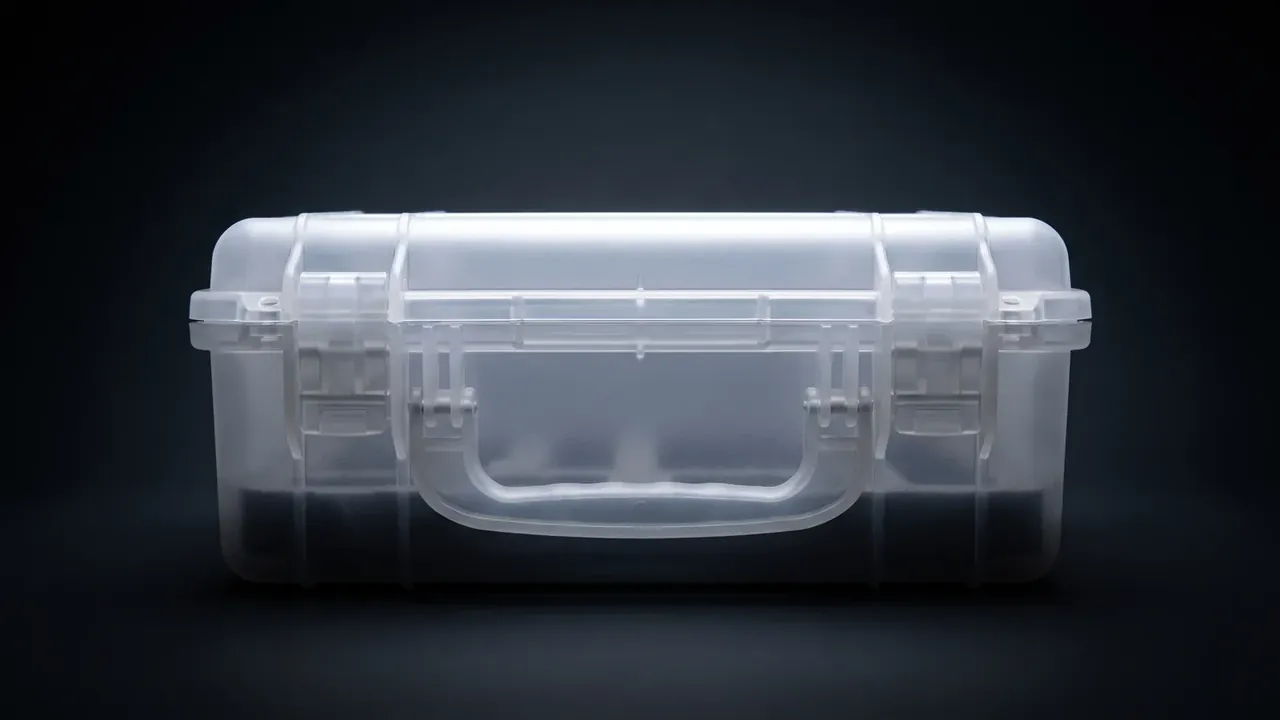
Five layers for 72 hours puts 100 kg on the bottom box, about 6.1 kPa across the 0.162 square metre footprint, with sag under 1.5 mm. Change to six layers and pressure reaches 7.3 kPa, so recalculate or write the limit down.
5. Tolerances, Warp and Weight
Cavity and divider fit take plus or minus 0.4 mm, the envelope 0.8 mm, the pitch 0.5 mm, with base flatness at 0.8 mm and overall warp within 1.2 mm. A warped box rocks on the shelf and the stack leans by the fifth layer.
Weight is held at 1.85 kg plus or minus 3 percent. Every 0.1 mm taken off a wall saves about 3 percent of material and adds 0.3 mm of lid sag, an exchange rate worth printing.
Conclusion
Specification work on a Plastic Tool Box, Portable is a chain of differences, not a hunt for the thickest wall. The cavity follows the tools, the envelope follows the walls and latch bosses, the sections follow duty. Write that chain down and the Plastic Tool Box, Portable is genuinely specified.
This article discusses only the container (case body) side of specifications and design intent, and does not cover any handling, loading or use of the contents.
Related Reading
- Material comparison for portable plastic tool boxes
- Specification figures for consolidated tool kits
- How to choose a PP plastic case
- How tool box organisers are laid out
Related Products
- 8 Series — Gun Cases; Military Equipment Cases; Camera Equipment Cases; Drone Cases; Watch Cases; Knife Cases; First Aid Cases; Electronics Equipment Cases
- WL8-2812 PP Gun Case — model WL8-2812
- All protective cases and toolboxes: 7 series, 158 models