

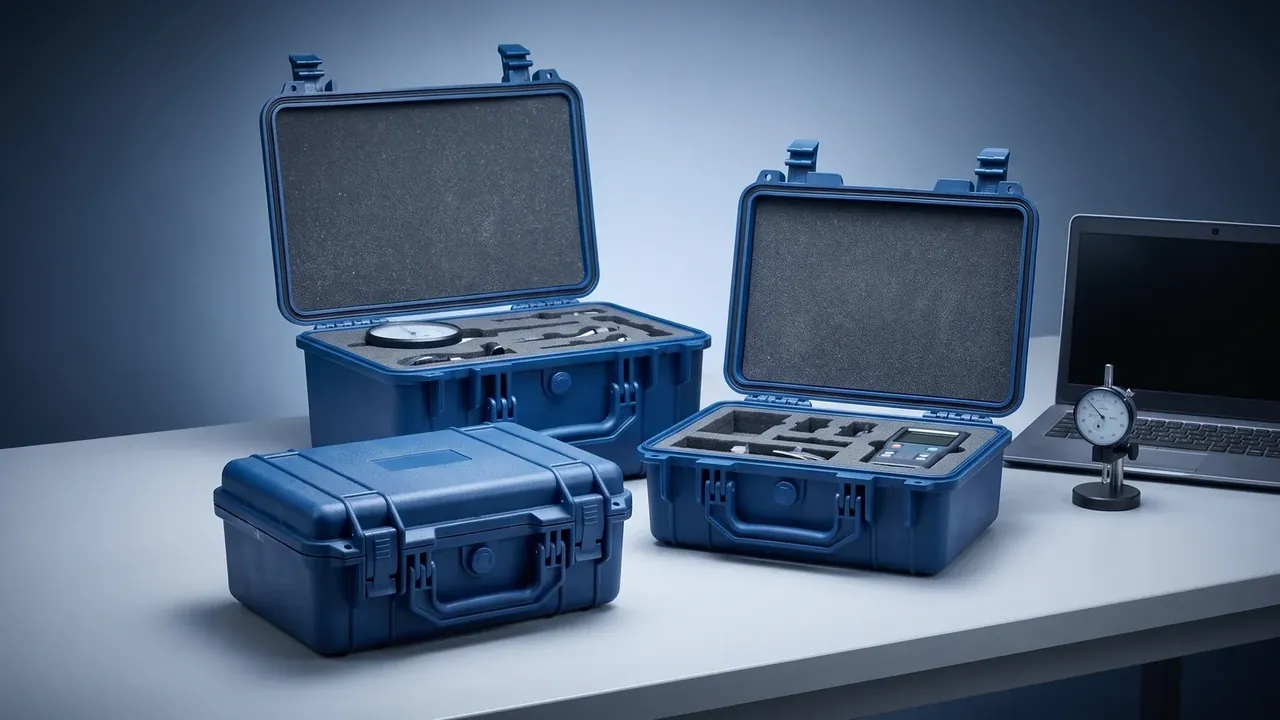
Quick answer: On a plastic toolbox with handle, the grip is the only part a hand holds for the whole carry, so five checks settle it: form, diameter, safety factor, carry split and stowed size. Each has a number you can measure.
Table of contents
- Three handle types and where the load lands
- Grip diameter 25 to 32 mm and glove fit
- Four times the rated load and five thousand lifts
- Two-person carry one-hand carry and stowed footprint
- FAQ
1. Three handle types and where the load lands
The grip is the one place on the case where a hand, not a bolt, takes the load. A plastic toolbox with handle uses one of three arrangements, and the wrong one cannot be rescued by any later parameter.
| Handle type | Structure | Where the load lands | What to check |
|---|---|---|---|
| Moulded in | Formed with the lid, short ribs at the grip | The lid-to-body joint | Whether ribs eat finger clearance |
| Folding | Hinged, springs back to the wall | Two pivot blocks and a stop | Hinge play and pinch risk |
| Telescopic | Two aluminium tubes, coated grip | Tubes and the locking catch | Section play and catch reliability |
A moulded handle costs least, at the price of lid height: clearance often falls short of 35 mm for a gloved hand. A folding handle puts the whole case into two pivots, so a wall under 3 mm cracks first. A telescopic one spreads force into the tubes and suits two-person lifts, but stands proud when closed.
A thick grip is not a good grip. Feel is circumference against the centre of gravity, and the further the mass sits, the larger the moment.
2. Grip diameter 25 to 32 mm and glove fit
Grip diameter runs from 25 to 32 mm, matching palm girth of roughly 180 to 220 mm. Take 25 mm for short one-hand carries, 28 mm as the general value, and 32 mm for thick gloves or a two-person lift.
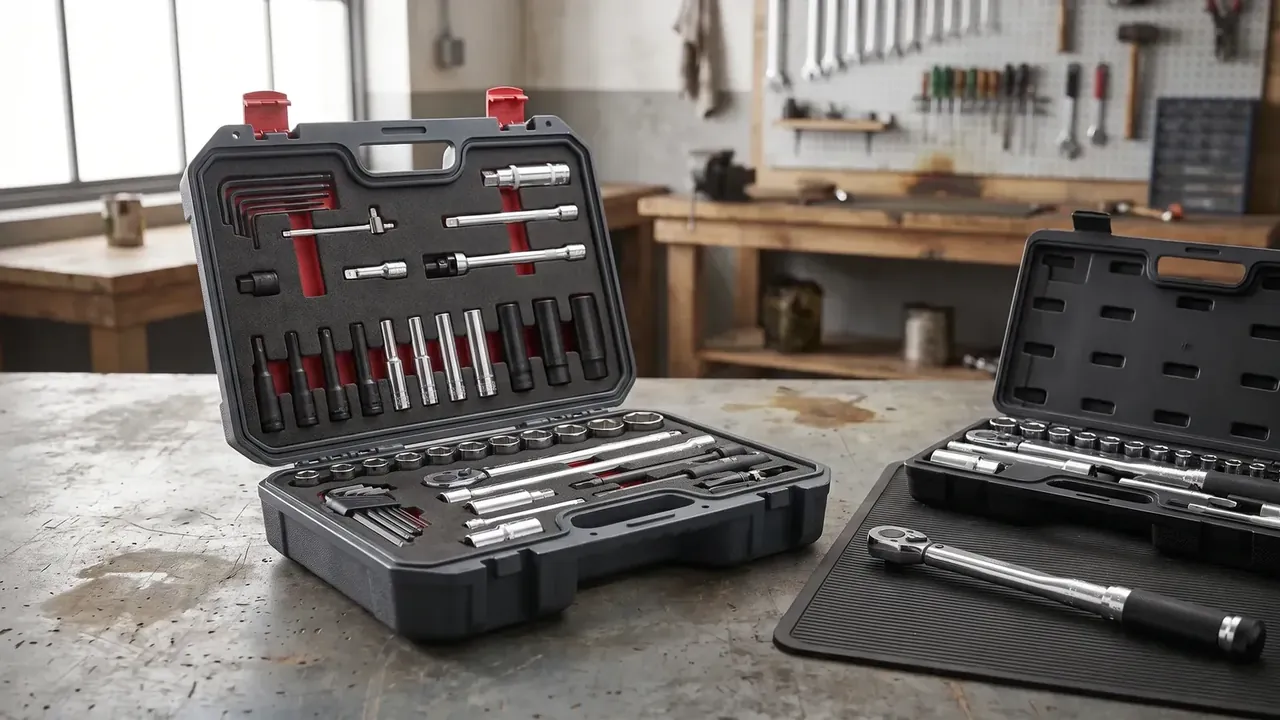
Gloves barely appear on datasheets yet decide the size. A 0.8 mm coated glove changes nothing; a 6 mm winter glove adds 4 to 5 mm to the effective diameter, so a 28 mm grip is suddenly squeezed at the base of the fingers.
One worked case: at 30 mm diameter with 35 mm clearance, four fingers pass under a 0.8 mm glove; with 6 mm gloves only three fit and the fourth rides on the case edge. Tight clearance pushes the user into hugging the case with both arms.
Two site variables matter. Past a 50 m carry, take a 28 mm grip with a soft sleeve, since bare plastic leaves a red line across the palm. Sweat cuts friction on a smooth grip by about twenty per cent, which two shallow grooves largely restore. A plastic toolbox with handle gets blamed for both.
3. Four times the rated load and five thousand lifts
The safety factor has plain arithmetic: rated weight times four, hung, then inspected for cracks or set. A 20 kg case is tested at 80 kg.
- Static: 80 kg hung an hour, grip set no more than 2 mm.
- Fatigue: 5,000 lifts at 1 Hz over a 55 mm stroke, pivots free of cracks.
- Cold: four hours at minus 20 °C, then three corner drops at once.
- Heat: four hours at 60 °C, grip must not soften or sag.
- Pivot pin: 72 hours of neutral salt spray, still turning freely.
The 5,000 figure is not a service life. At eight lifts a day over 250 working days, one plastic toolbox with handle sees about 20,000 lifts in a decade, so 5,000 only proves the pivots do not fail outright. What fails first is usually the lid hinge: past 0.4 mm of play the lid shifts sideways during a carry and water follows the gap in.
4. Two-person carry one-hand carry and stowed footprint
In a one-hand carry the weight hangs from one palm and the case swings with each step, leaving the wrist to absorb the moment. A two-person carry looks easier, yet each person does not take half.
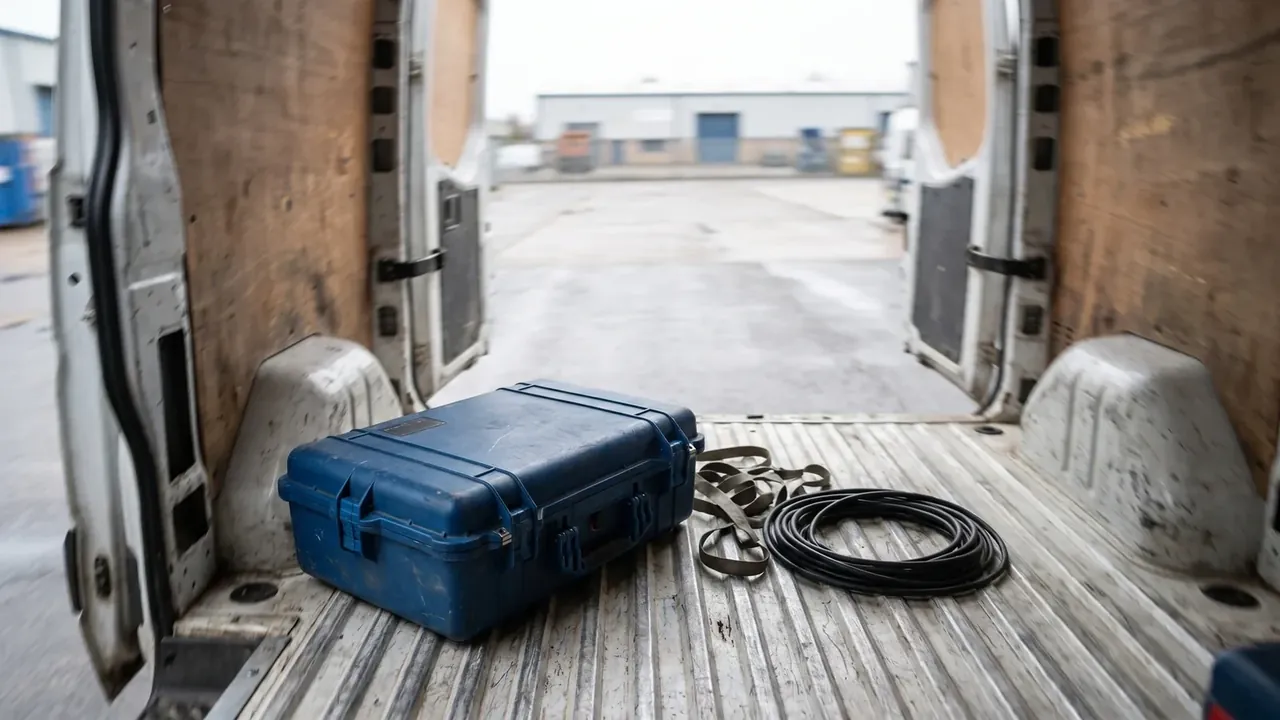
When two people fall out of step the load reaches about one and a half shares, and the side landing first takes it. A plastic toolbox with handle rated 40 kg carried by two peaks near 30 kg on one grip, which is why two-person versions add side handles.
| Carry method | Load split | Criterion |
|---|---|---|
| One hand | All load at the grip centre | 18 kg maximum, 35 mm clearance |
| Two people | Halved, peaking when out of step | 20 kg each, symmetric side handles |
| Hoist | Two lifting points, handle idle | Lifting lug wall from 5 mm |
| Drag | Handle guides only | No side pull on the grip |
Stowed footprint is the check buyers skip. A folding handle sits within 8 mm of the wall, so cases stack three high and take a third less floor. A telescopic handle still projects about 40 mm when closed, and stacking without a board puts the upper case onto the tubes.
Conclusion
The checks start with form, then diameter, safety factor, carry split and stowed size, not with how the lid looks. Form decides where the force lands, diameter whether a hand closes around it, the four-times load and 5,000 lifts whether it fails, and the stowed size how much shelf it eats. Measure all five, and a plastic toolbox with handle earns the carry it was bought for.
This article discusses only the container (case body) side of specifications and design intent, and does not cover any handling, loading or use of the contents.
Related Reading
- Equipment case choices when the case ships with the machine
- Medical case carrying and cleaning inside a ward
- Pistol case carry practice at the range
Related Products
- 8 Series — Gun Cases; Military Equipment Cases; Camera Equipment Cases; Drone Cases; Watch Cases; Knife Cases; First Aid Cases; Electronics Equipment Cases
- WL8-2812 PP Gun Case — model WL8-2812
- All protective cases and toolboxes: 7 series, 158 models