

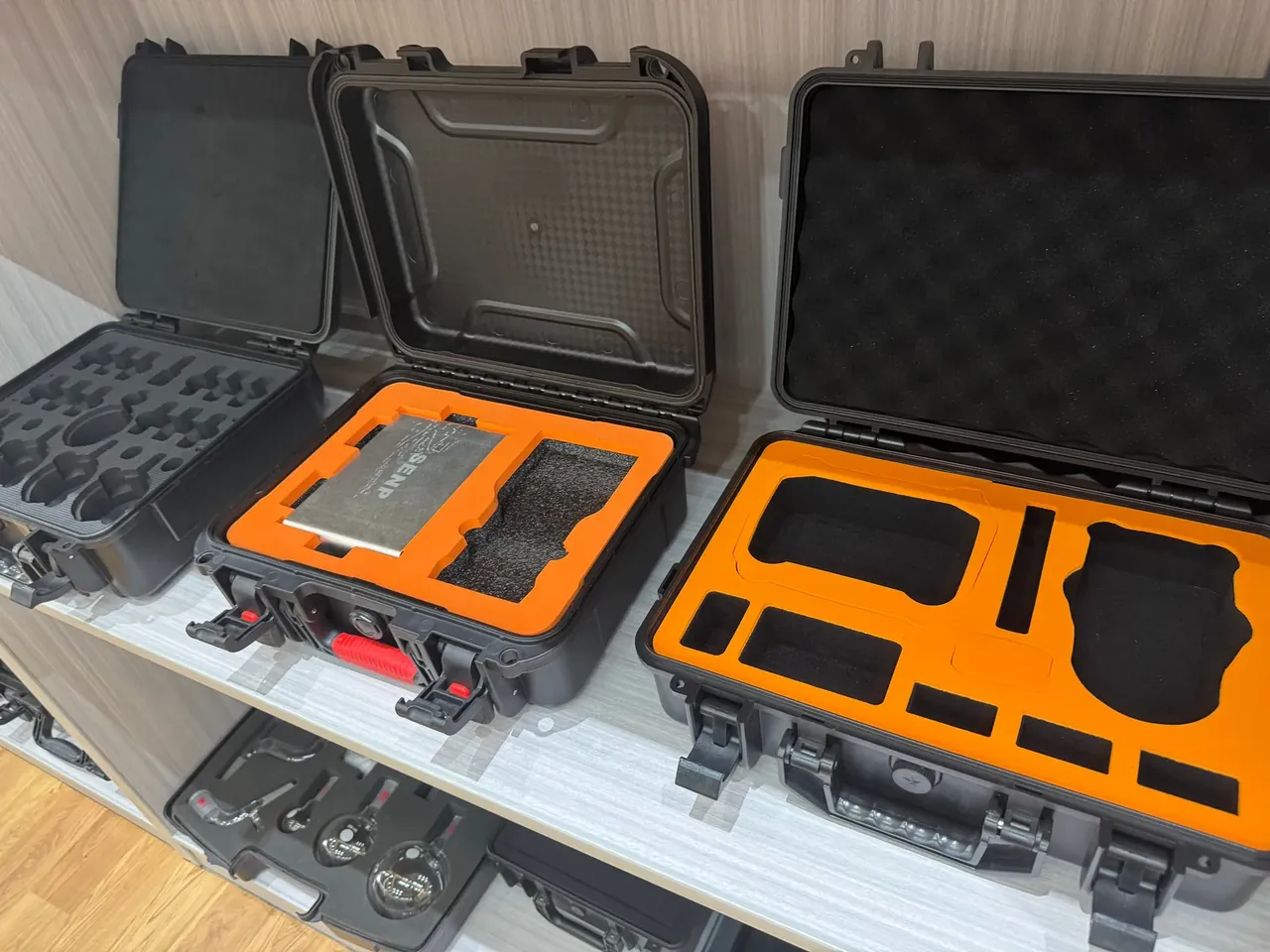
Quick answer: A Portable acoustic measurement mic case pairs 32 kg/m³ foam with 95 mm post spacing, reading peak acceleration after a 1.2 m six-face drop.
Table of contents
- Foam density in a Portable acoustic measurement mic case
- Spacing of the base support posts
- Peak acceleration after the drop
- Residual compression on a static recheck
- Density setting for the instrument batch
- FAQ
1. Foam density in a Portable acoustic measurement mic case
Impact reaches the base support posts first, and a mismatch between foam density and post spacing sends the acceleration peak into the liner wall. A Portable acoustic measurement mic case is 390 by 280 by 130 mm outside, 340 by 235 by 90 mm inside, with a 3.4 mm wall; posts sit at 95 mm centres with 32 kg/m³ foam between them. Harder foam is not safer: stiff cells pass shock to the wall, while a softer grade lets the posts compact and lose height.
One mould lot runs three density grades on one drop rig, 27 kg/m³, 32 kg/m³ and 38 kg/m³, spacing held at 95 mm. The ledger puts density grade first, and a change to the foam batch or cut thickness voids that grade; earlier readings from a Portable acoustic measurement mic case are not carried forward.
| Density grade | Foam density | Post spacing |
|---|---|---|
| Lower | 27 kg/m³ | 95 mm |
| Nominal | 32 kg/m³ | 95 mm |
| Higher | 38 kg/m³ | 95 mm |
Only 32 kg/m³ keeps the peak under 28 g and residual compression under 0.6 mm together. At 27 kg/m³ the foam cannot absorb a 1.2 m travel and the peak rises to 31 g; 38 kg/m³ leaves more margin but is not the lowest passing grade. On the lower grade of a Portable acoustic measurement mic case the pairing fails, not the resin.
2. Spacing of the base support posts
The 95 mm spacing is the second grading quantity. Posts absorb part of the shock before the foam compacts, and spacing sets how much bending the central span carries. Beyond 95 mm the floor centre dishes first and lifts the peak; a tighter gap chops the foam and leaves the cavity wall without backing.
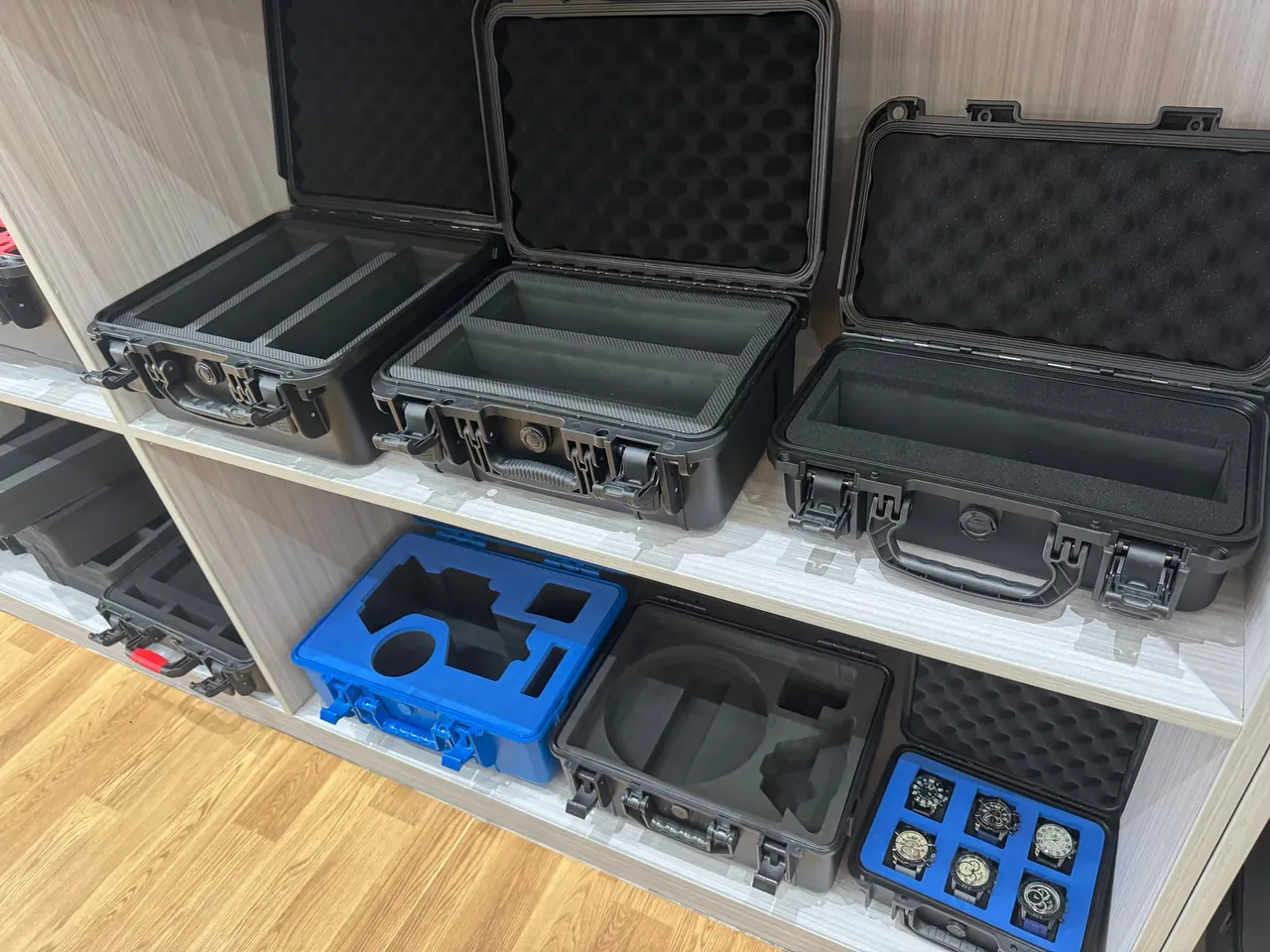
Two latches close at 285 N each on one gasket at 16% compression, logged beside the spacing. The lid record of a Portable acoustic measurement mic case files both figures, and a shell missing either stays out of the ledger. After 4200 cycles posts are re-measured; looseness at a foot voids the spacing cell.
3. Peak acceleration after the drop
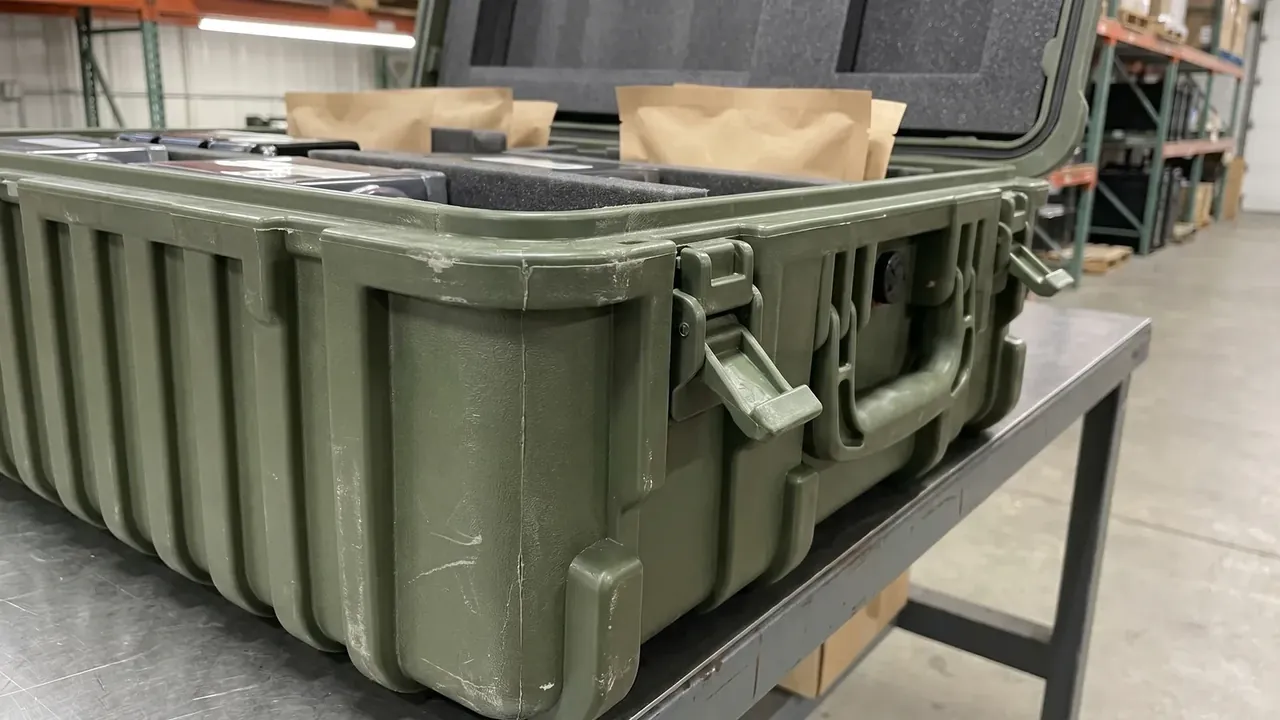
The drop is fixed at 1.2 m, one release on each of six faces. The closed shell is mounted on the rig, an accelerometer fixed inside the floor and read to 1 g. The verdict takes the highest peak, not the average, since the limit asks whether foam and posts keep the worst-face shock off the wall. A Portable acoustic measurement mic case writes 28 g first on its release sheet, the other five faces kept as trend data.
| Drop face | Peak acceleration | Peak limit |
|---|---|---|
| Base down | 26 g | 28 g |
| Long side down | 21 g | 28 g |
| Short side down | 24 g | 28 g |
The base-down face reads 26 g, only 2 g under the 28 g line; long and short sides come in at 21 g and 24 g, so base posts carry most of the shock. A Portable acoustic measurement mic case repeats all six faces three times on a 23 °C / 50% RH rig and records the grade only when the peak order holds.
4. Residual compression on a static recheck
The drop does not end with a verdict; the shell settles at 23 °C / 50% RH and post height is measured again. Residual compression is the post-top difference, read to 0.1 mm and held to 0.6 mm. The peak measures what the wall took at impact; residual compression measures deformation the foam and posts fail to spring back, so the two are separate.
| Peak value | Residual compression | Density grade |
|---|---|---|
| 26 g | 0.4 mm | Nominal |
| 31 g | 0.9 mm | Lower |
| 19 g | 0.2 mm | Higher |
The 31 g group also crosses 0.6 mm at 0.9 mm, so both limits fail together; the higher grade pushes both down but sits above nominal and stays off the instrument specification. A Portable acoustic measurement mic case admits only shells whose three cells match, and one that skips the static recheck earns no grade.
5. Density setting for the instrument batch
The instrument batch closes on one line, not a reading-by-reading review. The density setting is the lowest grade whose peak stays below 28 g after the six-face drop; foam below it is re-cut as a whole lot. A batch freezes 2.3 kg empty, 4 kg loaded, 4200 cycles and two latches at 285 N, and a new foam mould sends the drop and static recheck back to the start.
No single sample stands for the batch. Density grade, spacing, the highest peak and residual compression are logged for every shell, and four matching cells admit it. Moulding parameters and drop readings for a Portable acoustic measurement mic case sit in separate columns, tolerances trace to the rig, and IP65 is filed as a method reference, not a rating claim.
Conclusion
Four cells of readings settle the instrument batch of a Portable acoustic measurement mic case: 32 kg/m³ foam holds the six-face peak under 28 g, 95 mm spacing keeps the floor centre from dishing, and residual compression stays below 0.6 mm. A crossed cell sends that shell back for re-cutting. JUNZHIJIA keeps the 4200-cycle rig records by batch; tolerances are drawn by Kexin New Materials (Guangdong) Co., Ltd.
Related Reading
- Carrying Cases: Portable Structure & Everyday Handling Protection
- Cobot Teach Pendant Cases: Pendant & Controller Protection
- Instrument-Box Series: Precision, Detection, Analysis, Measurement & Calibration Boxes
- Measuring Instrument Case Applications: Lab, Field, Cleanroom
Related Products
- 8 Series — Gun Cases; Military Equipment Cases; Camera Equipment Cases; Drone Cases; Watch Cases; Knife Cases; First Aid Cases; Electronics Equipment Cases
- WL8-2812 PP Gun Case — model WL8-2812
- All protective cases and toolboxes: 7 series, 158 models