

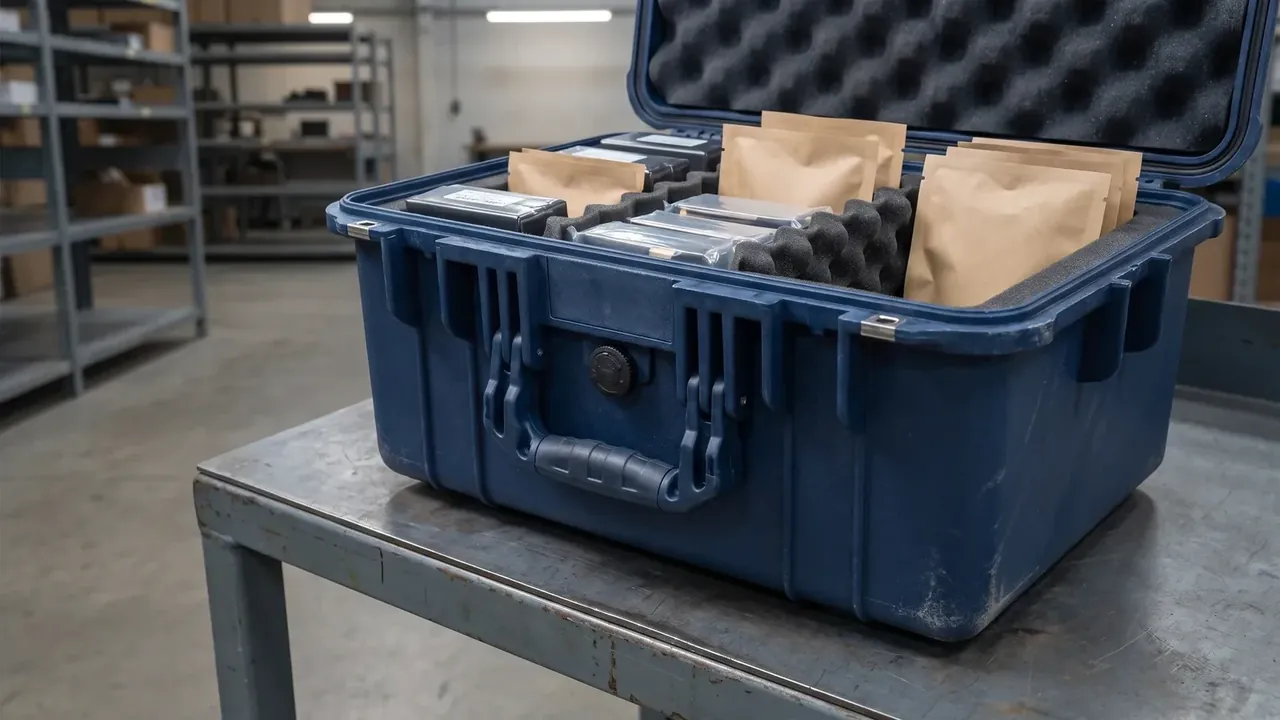
Quick answer: A Portable camping clutter box hard shell sets 0.25 mm hinge-pin clearance and a 6 mm stacking boss, keeping lid deflection under 1.5 mm over 24 h.
Table of contents
- Hinge-pin clearance of a Portable camping clutter box hard shell
- Stacking boss height on the lid
- Deflection readings after three-layer stacking
- Pin looseness after the folding-cycle rig
- Clearance reject line for folding batches
- FAQ
1. Hinge-pin clearance of a Portable camping clutter box hard shell
The shell measures 560 x 400 x 240 mm outside and 495 x 340 x 175 mm inside, with a 3.6 mm wall; empty it weighs 4.3 kg and the rated load is 9 kg. A Portable camping clutter box hard shell splits each side wall into folding panels joined by four hinge sets, each carrying an 8 mm pin whose fit into its bore is held at 0.25 mm. That fit opens the stiffness chain: the wall must swing freely when folded, yet leave no slack for the lid to settle under a stacked load.
Pin clearance governs the folding action alone; stacking is handed to a boss on the lid.
2. Stacking boss height on the lid
A Portable camping clutter box hard shell raises a boss at each of the four lid corners, 6 mm high, so the feet of the box above seat into that 6 mm step when stacked. A low boss lets the upper load bear straight onto the lid foam; a tall one keeps the lid from closing and stops the two 320 N catches from seating. The boss is moulded with the lid in one batch, with a shallow step around its face so a shifted layer cannot slide clear in one motion.
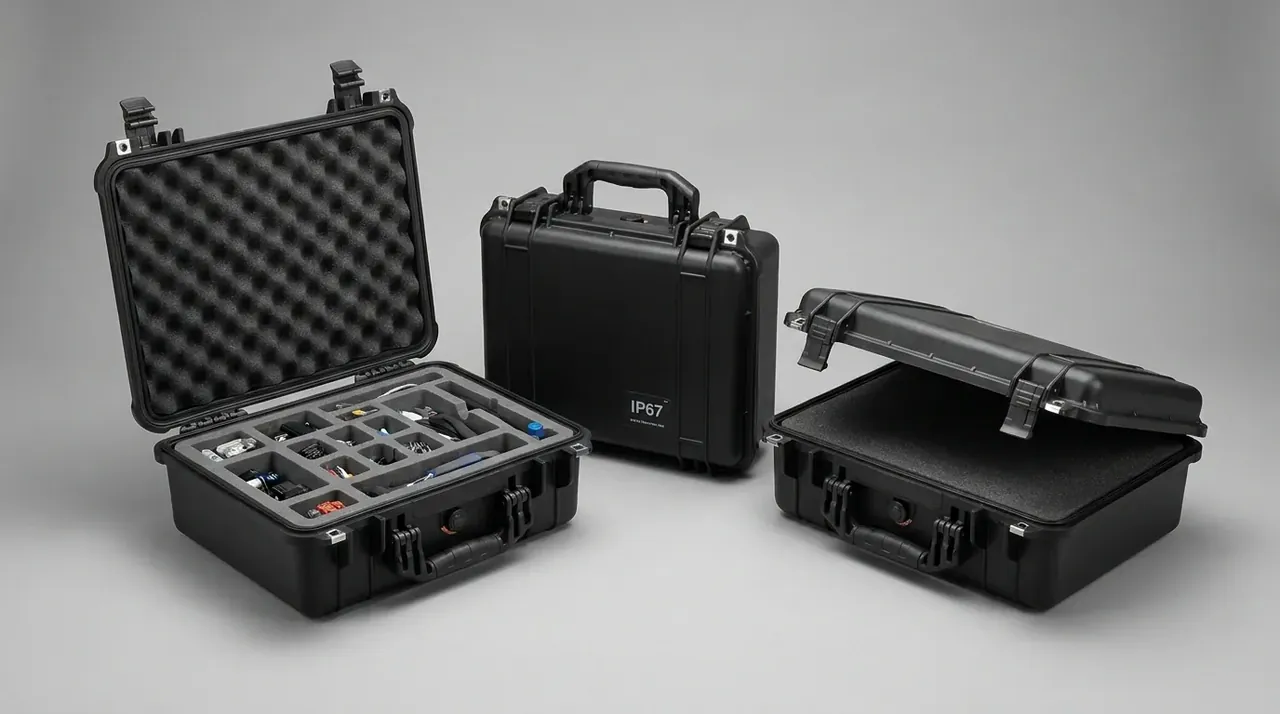
The table sets out how layer count relates to lid loading, with boss height fixed at 6 mm and a deflection base logged per layer.
| Stacked layers | Load per layer | Deflection base |
|---|---|---|
| 1 layer | 9 kg | 0.5 mm |
| 2 layers | 9 kg | 1.0 mm |
| 3 layers | 9 kg | 1.5 mm |
3. Deflection readings after three-layer stacking
Stacking runs at three layers for 24 h, each layer at 9 kg, with a Portable camping clutter box hard shell closed, its catches shut and the bosses aligned layer by layer. At the 24 h mark the stack is unloaded and a dial gauge reads lid-centre drop against the four-corner datum, accepted at no more than 1.5 mm. The number taken is residual set after unloading, not the elastic dip under load.
| Deflection reading | Stack time | Verdict |
|---|---|---|
| 0.8 mm | 24 h | Pass |
| 1.2 mm | 24 h | Pass |
| 1.5 mm | 24 h | Boundary |
| 1.8 mm | 24 h | Recheck |
| 2.1 mm | 24 h | Reject |
The 1.5 mm line exists so the 0.25 mm pin fit and the 6 mm boss keep their mating reserve after stacking. The lid rests 2 h after unloading for a second reading, confirming foam rebound has not lifted a boss off its seat. One sample per batch takes a 1.0 m six-face drop, checked only for whether a boss has pulled out of the lid; any pull-out triggers a joint recheck of hinges and boss faces. The seal is verified to the IP65 method, no certificate number goes on the sheet, and 24 h is never written up as a test grade. Deflection is read only at the lid, shell and bosses, nowhere else. When end pieces are filed together, layer count, load and unloading time go into one sheet so the second and third layers cannot later be confused.
4. Pin looseness after the folding-cycle rig
A Portable camping clutter box hard shell folds its side panels through a fixed stroke 3000 times on the rig, with pin clearance at all four hinge sets read every 500 cycles. One judgement applies: clearance after 3000 cycles must stay within 0.5 mm. Looseness here does not ask whether a hinge broke; it asks whether the 0.25 mm starting fit has worn into a gap that can rock.
The four hinge sets are logged by position, with post-cycle clearance laid out below.
| Hinge position | Starting clearance | After 3000 cycles |
|---|---|---|
| Left hinge set | 0.25 mm | <=0.5 mm |
| Right hinge set | 0.25 mm | <=0.5 mm |
| Front hinge set | 0.25 mm | <=0.5 mm |
| Rear hinge set | 0.25 mm | <=0.5 mm |
5. Clearance reject line for folding batches
A Portable camping clutter box hard shell checks all four hinge sets per shot at 0.25 mm. Reject sits on the spread across the four sets of one shell, not on a single hinge: a spread past 0.15 mm sends the tool back, since uneven bore shrinkage splits corner loads during stacking. Outer 560 x 400 x 240 mm and inner 495 x 340 x 175 mm are remeasured in sampling, and the 3.6 mm wall must show no local thinning.
Reject looks at one whole shell, not at a single tidy hinge.
Conclusion
A Portable camping clutter box hard shell builds its stiffness chain from the 0.25 mm fit of four 8 mm hinge pins, closes it through a 6 mm lid boss, and lands on <=1.5 mm lid deflection after three layers sit 24 h. A 3000-cycle rig adds the 0.5 mm clearance recheck, while bosses that stay seated after a 1.0 m drop, two 320 N catches and a seal verified to IP65 keep one set of readings and one stacking alignment across the shell. Batch sampling puts reject on the spread of the four hinge fits, so uneven bore shrinkage stops before assembly.
Related Reading
- Camping storage box structure explained
- Camping RV accessory case layouts
- Stackable lidded outdoor box specs
- Outdoor cooking case shell design
Related Products
- 8 Series — Gun Cases; Military Equipment Cases; Camera Equipment Cases; Drone Cases; Watch Cases; Knife Cases; First Aid Cases; Electronics Equipment Cases
- WL8-2812 PP Gun Case — model WL8-2812
- All protective cases and toolboxes: 7 series, 158 models