

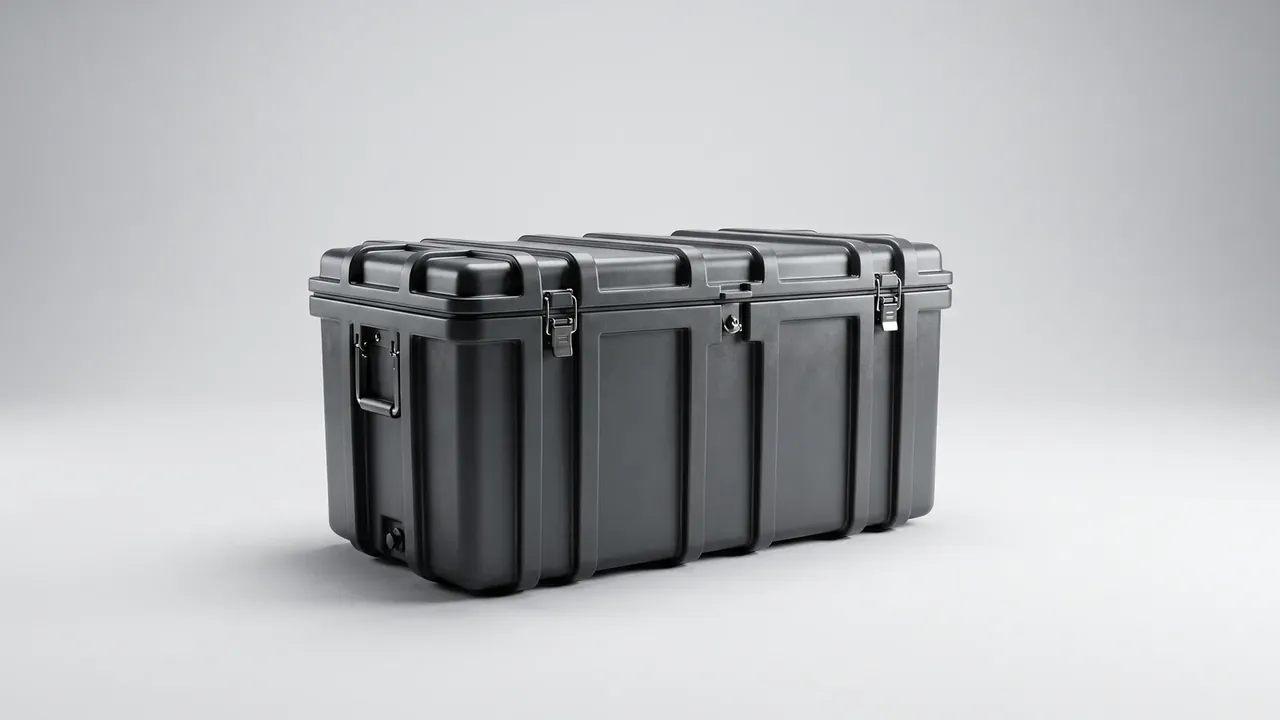
Quick answer: Judge a portable case on five figures measurable on a sample: empty weight against loaded weight, the posture its handle and trolley allow, outside dimensions with protrusions counted, balance once packed, and whether wearing parts can be replaced singly.
Table of contents
- Five criteria for a portable case
- Criterion 1: empty weight and loaded weight
- Criterion 2: handle, strap and telescopic trolley
- Criterion 3: outside dimensions and clearance
- Criteria 4 and 5: balance, fill rate and replaceable parts
- FAQ
1. Five criteria for a portable case
Product pages lead with litres, material, colour and price. None answers whether one person can still carry the case when it is full.
The order matters: weight caps the load, the handle decides the posture, dimensions decide the door, balance decides whether it stays carryable. Two portable cases listed at 550 x 350 x 230 mm, one at 2.8 kg and one at 4.1 kg, are different jobs after 200 m on one hand.
| Criterion | Measure | Acceptable line |
|---|---|---|
| Weight | Empty and loaded | Quarter of loaded |
| Posture | Handle and trolley | Wrist straight |
| Dimensions | Envelope plus protrusions | 80 mm at the door |
| Balance | Offset, volume used | Offset within 30 mm |
| Spares | Handle, trolley, wheels | Sold separately |
2. Criterion 1: empty weight and loaded weight
Empty weight is the first charge on the budget. Hold the load at 10 kg for 200 m on one hand, 12 kg for 50 m, 20 kg two-handed, and 8 kg where stairs are a daily route, which puts the empty weight ceiling at 2.6, 3.0 and 2.2 kg.
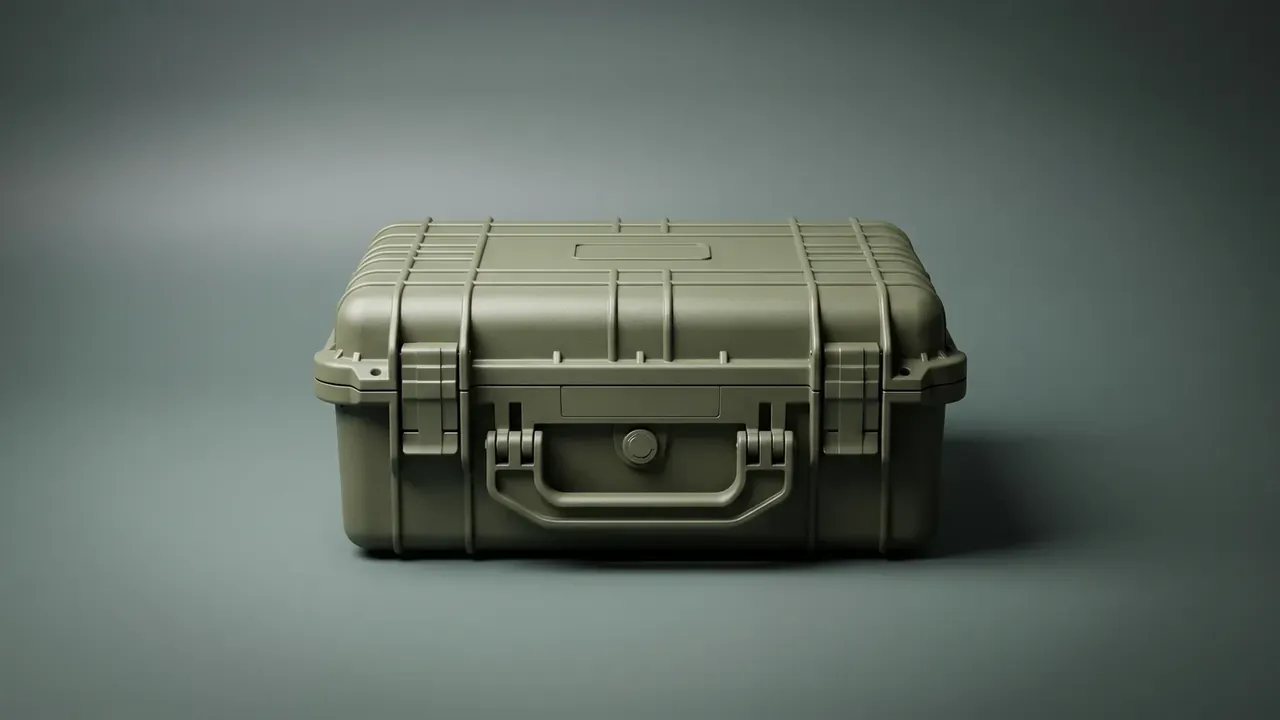
A 2.8 kg portable case with a 1.1 kg insert leaves a little over eight kilos for equipment. The shell is the smallest source: a moulded insert runs 0.6 to 0.9 kg heavier than a flat one, and metal latches add 0.2 kg.
3. Criterion 2: handle, strap and telescopic trolley
A portable case meets the person at three points only. Fix the posture first.
Grip diameter runs 25 to 30 mm, 35 mm with gloves. A mount passing through the wall with a 1.5 mm backing plate resists pull-out better than a screw into a plastic boss, and holds 500 N static for a minute.
Three trolley sections reach 1,050 mm with play under 8 mm; past 10 mm the case weaves as you walk. Wheels of 80 mm, rated 60 kg a pair; smaller ones leave the hand numb after 200 m of concrete.
4. Criterion 3: outside dimensions and clearance
A portable case passes three openings: office door at 800 mm clear, lift door at 900 mm, tailgate at 1,100 mm. Add handle and wheel protrusions, usually 30 to 50 mm.
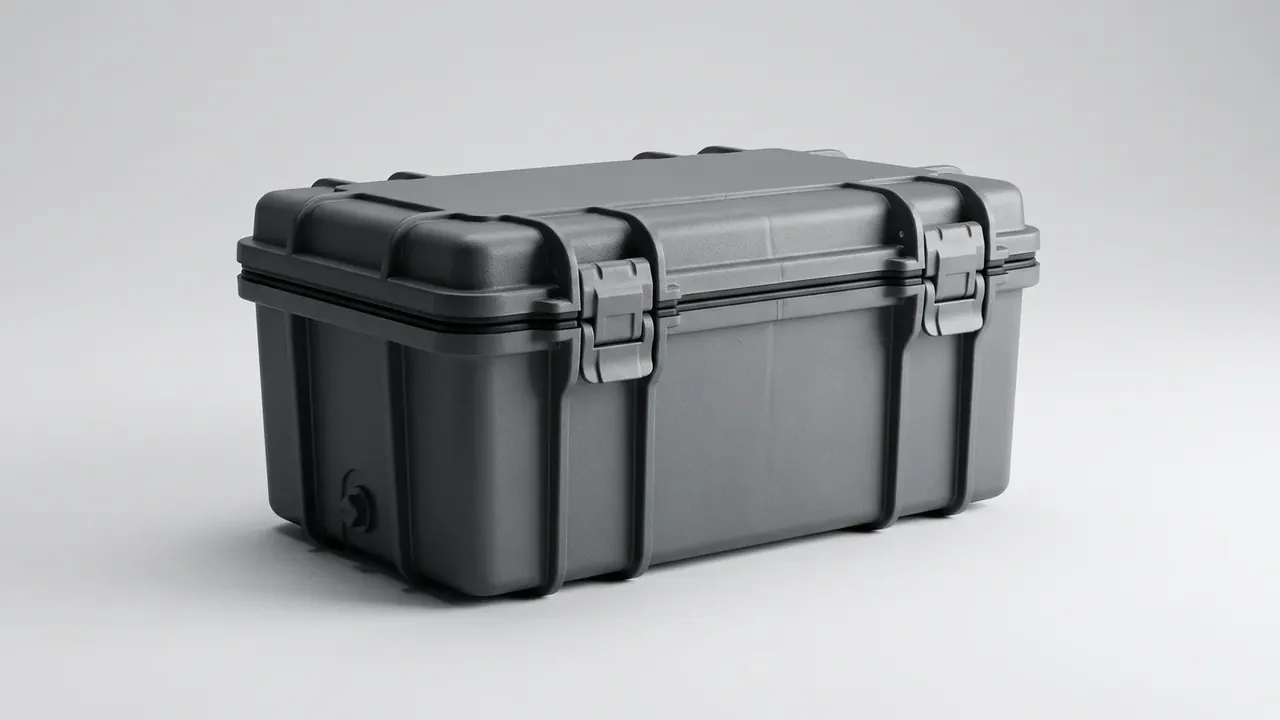
A case listed at 550 x 350 x 230 mm, with wheels standing out 20 mm, occupies 570 x 370 x 250; those 20 mm stop it at a lift door. Cabin limits are tighter: 550 x 400 x 200 mm with wheels counted.
| Opening | Clear width | Usable envelope |
|---|---|---|
| Office door | 800 mm | 620 mm max |
| Lift door | 900 mm | 700 mm max |
| Overhead bin | 550 x 400 x 200 mm | 1,150 mm linear |
5. Criteria 4 and 5: balance, fill rate and replaceable parts
Loaded, the centre of gravity should sit within 30 mm of the handle line. One kilo of offset at 300 mm adds 0.3 kg-m of torque on the wrist. A fill rate of 65 to 75 percent is sensible; below 55 percent the case is oversized.
The parts that fail first are the handle, wheels and latches, so those three should be replaceable singly. A bolt-on mount with four M5 screws is a ten-minute swap; a moulded-in one turns a cracked boss into a new lid.
| Part | Failure | Spare |
|---|---|---|
| Handle | Elongated boss | One |
| Wheels | Tread worn to 70 mm | One pair |
| Latches | Spring fatigue | Two |
Conclusion
Keep empty weight under a quarter of the loaded weight, fix the posture before the structure, count protrusions in every dimension, check balance with the case full, and insist that wearing parts can be swapped. Leave one out and the price stops telling you whether the saving sits in material or in parts. Chosen this way, a portable case survives a year of corridor work.
This article discusses only the container (case body) side of specifications and design intent, and does not cover any handling, loading or use of the contents.
Related Reading
- Weight and grip in portable tool cases
- Cabin size limits for carry-on cases
- How a hand-carry hard case is built
- Selection lines for wheeled protective cases
Related Products
- 8 Series — Gun Cases; Military Equipment Cases; Camera Equipment Cases; Drone Cases; Watch Cases; Knife Cases; First Aid Cases; Electronics Equipment Cases
- WL8-2812 PP Gun Case — model WL8-2812
- All protective cases and toolboxes: 7 series, 158 models