

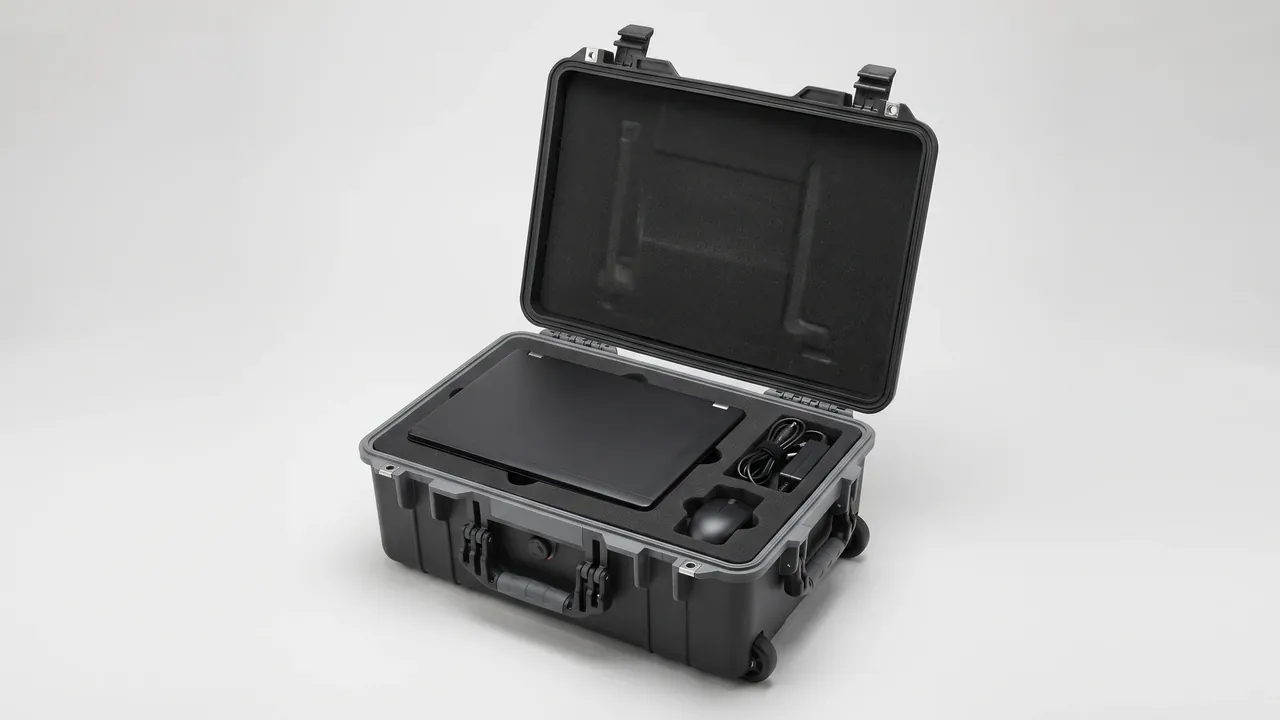
Quick answer: Measure the device, size the cavity, fit the foam, proof the handle, then check closure. Leave 5 to 8 mm per side, use 30 kg/m³ polyethylene foam, and keep the empty case under 2.5 kg.
Table of contents
- Portable Cases PC Begin With Three Measurements
- Foam Liners and How the Unit Sits
- Latches, Seals and Opening Feel
- Handle Load Versus Total Weight
- Finish, Marking and Incoming Inspection
- FAQ
1. Portable Cases PC Begin With Three Measurements
Measure the device before the case. Portable cases pc work starts with three sets: length, width and thickness including feet and ports; height with the screen open; and the stack height of the power brick. A 15.6-inch machine with a 90 W adapter jumps from 30 mm to 95 mm.
Keep 5 to 8 mm clearance per side. Under 5 mm, fingers cannot lift the unit out; over 8 mm, the foam must be squeezed and the cut walls loosen. Add 25 to 30 mm outside the cavity for wall, lid tongue and foam squeeze.
Furniture sets the limit: desk drawers give 120 mm of clear height and rack shelves sit 450 mm apart, so a body over 100 mm will not go in.
| Device | Cavity (mm) | Outer size (mm) | Empty weight |
|---|---|---|---|
| 14-inch laptop | 350×245×35 | 400×300×80 | 1.9 kg |
| 15.6-inch laptop | 385×265×40 | 430×320×95 | 2.3 kg |
| Small desktop with GPU | 300×200×120 | 360×260×175 | 2.9 kg |
2. Foam Liners and How the Unit Sits
Foam locates equipment rather than filling space. A portable cases pc liner works on three zones: chassis corners, hinge side and base support face. Use 30 kg/m³ polyethylene at 10 percent compression, pockets 1.5 mm larger per side.
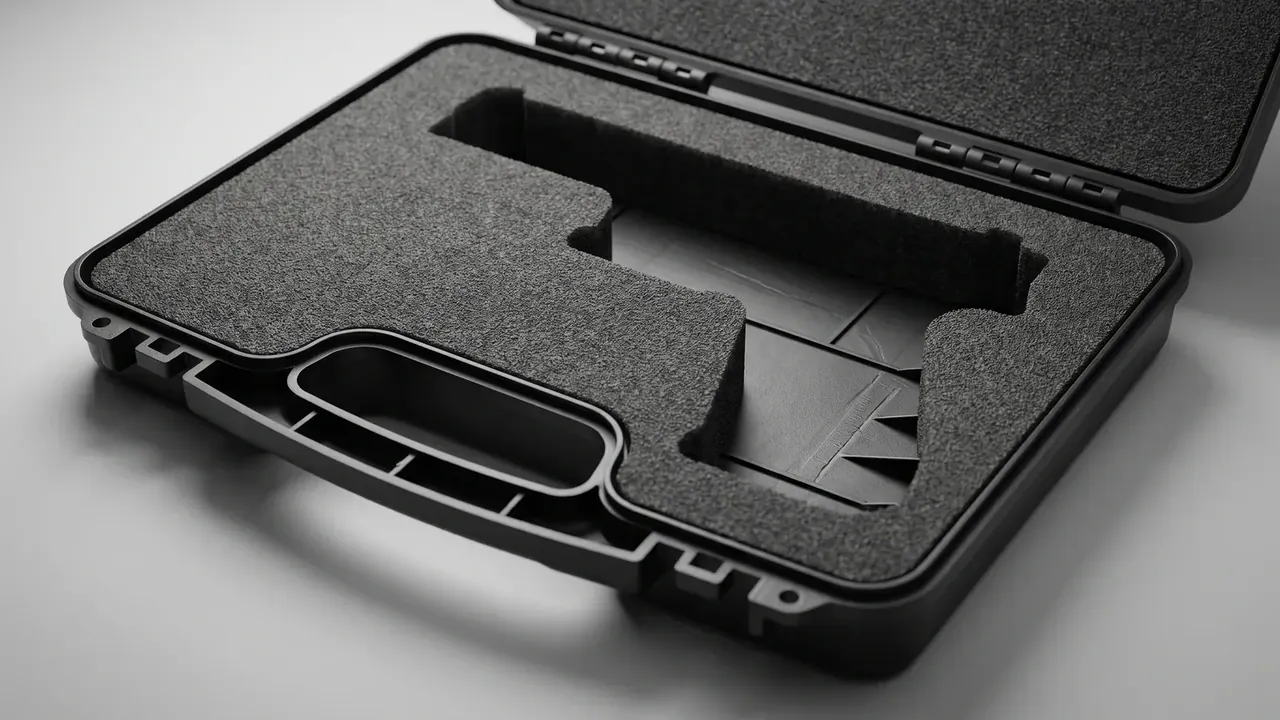
The lid carries 10 mm of flat foam, the base 20 mm of cut foam. Thirty millimetres combined is the minimum that stops a unit shifting in a 1.2 m drop; skimp and every impact lands on a corner.
Cut quality matters more than grade. CNC work holds pocket walls within 0.3 mm; hot-wire cutting leaves 1 mm of taper per side, so one edge sits tight and the other loose.
3. Latches, Seals and Opening Feel
A portable cases pc opens a dozen times a day, so latch feel decides whether people keep using it. Specify a two-stage draw latch at 40 N each, 80 N per pair; below 30 N the lid pops on a bumpy ride, above 55 N a gloved hand cannot work it.
IP54 is enough: these cases carry electronics and need rain and dust protection, not immersion. Run an EPDM gasket at 25 percent compression with set under 20 percent, and add a pressure valve where day-night swings reach 15 °C.
A detent hinge resting at 100 degrees lets one hand load without holding the lid; stainless pins hold 0.5 mm after 8000 cycles.
| Part | Check | Value |
|---|---|---|
| Latch | Draw force, each | 35 to 45 N |
| Gasket | Compression | 25% ±5% |
| Hinge | Cycle life | 8000 cycles |
4. Handle Load Versus Total Weight
Moulded handles share the shell at 4 mm wall and rely on side ribs; riveted handles use six M4 rivets, and a loose hole lets the handle rock.
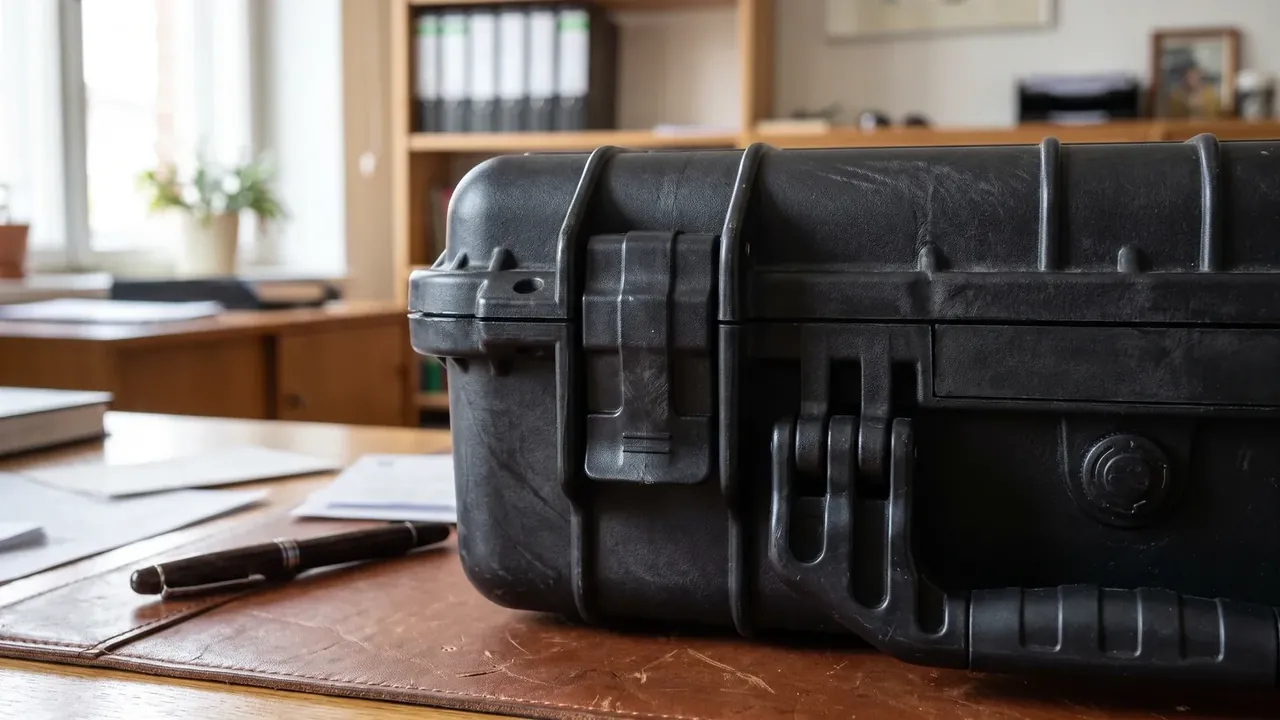
Proof the handle at 1.5 times loaded weight for 30 minutes: a 5 kg case hangs at 7.5 kg. Keep empty weight under 2.5 kg so a 15.6-inch machine with adapter lands near 4.8 kg.
Balance matters as much as mass. With the handle centred, the centre of gravity sits within 50 mm of the hand; move it to one end and ten minutes of walking aches a wrist. Past 6 kg loaded, use a trolley.
5. Finish, Marking and Incoming Inspection
Finish is durability, not decoration. A portable cases pc shell in texture at 0.3 to 0.5 mm depth hides scratches in the grain; gloss shows every hairline.
Mould the marking instead of applying it: a 6 mm box number sunk 0.4 mm lasts the life of the case, while a label lifts within three months. Control colour to ΔE 1.5, and on the dock drop each case from 1.2 m per face and check base flatness at 1 mm.
Conclusion
Choosing among portable cases pc starts with three measurements, moves to a three-zone foam layout, then latch force and gasket compression, then handle proof and balance, and ends with colour, marking and drop tests. The first two decide whether the equipment fits, the last three whether the case still feels right a year later. Work in that order and the portable cases pc you buy will clear the drawer and survive a 300-metre walk.
This article discusses only the container (case body) side of specifications and design intent, and does not cover any handling, loading or use of the contents.
Related Reading
- Selection criteria for equipment cases
- Where electronic equipment cases are used
- How custom foam inserts are built
- Choosing a protective case size band
Related Products
- 8 Series — Gun Cases; Military Equipment Cases; Camera Equipment Cases; Drone Cases; Watch Cases; Knife Cases; First Aid Cases; Electronics Equipment Cases
- WL8-2812 PP Gun Case — model WL8-2812
- All protective cases and toolboxes: 7 series, 158 models