

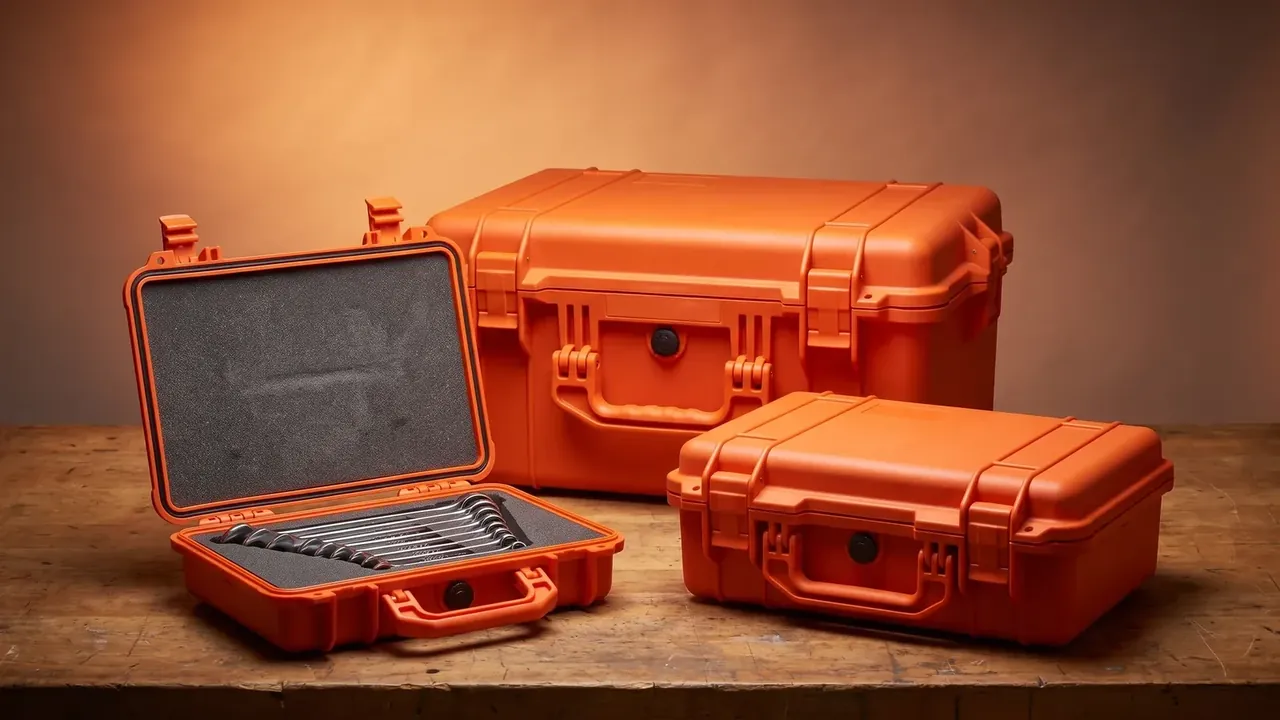
Quick answer:Portable Instrument Case Handle Design starts at the grip: 25-30 mm diameter, 100-120 mm palm contact, 4x static load, 20,000 folds and a 6 mm pivot.
Table of contents
- Grip Diameter and Palm Contact Width
- Handle Height and Case Centre of Gravity
- Static Load and Fatigue Multiples
- Hinge Pivot and Fold Stops
- One-Hand Swaps and the Two-Hand Threshold
- FAQ
1. Grip Diameter and Palm Contact Width
A twelve-kilo instrument carried for ten minutes and for an hour is two different objects. The fingers hook the handle at first; later the thumb web and heel of the palm take over, and after that only stubbornness is left.
Portable Instrument Case Handle Design lands the grip at 25-30 mm, the space left between fingertips and palm heel once four fingers close. At 25 mm an adult hand wraps it fully and the thumb web stays slack; at 30 mm the palm opens wider and the forearm aches while standing still.
Dropping from 30 to 25 mm shortens the wrap by roughly 17%, which is why the same load feels lighter. Contact width sits at 100-120 mm along the strip the palm touches: at 100 mm a 15 kg case presses into four fingers, at 120 mm the load spreads into the heel with 20% more area.
Portable Instrument Case Handle Design also settles the section. A round bar rotates in a sweaty hand, while a D-section puts a flat face under the fingers; a TPE overmould at Shore A 50-60 stays warm and grippy.
| Grip | Contact width | Feel | Suits |
|---|---|---|---|
| 25 mm | 100 mm | Fingers wrap fully | Cases under 10 kg |
| 28 mm | 110 mm | Balanced | Most instrument cases |
| 30 mm | 120 mm | Palm open, heel loaded | Long carries, gloves |
2. Handle Height and Case Centre of Gravity
Height runs from the inside of the arch to the lid, and it must clear four fingers plus a margin. Too low and knuckles scrape the lid, which shows up the moment gloves go on; too high and the body swings wider at the side with every step.
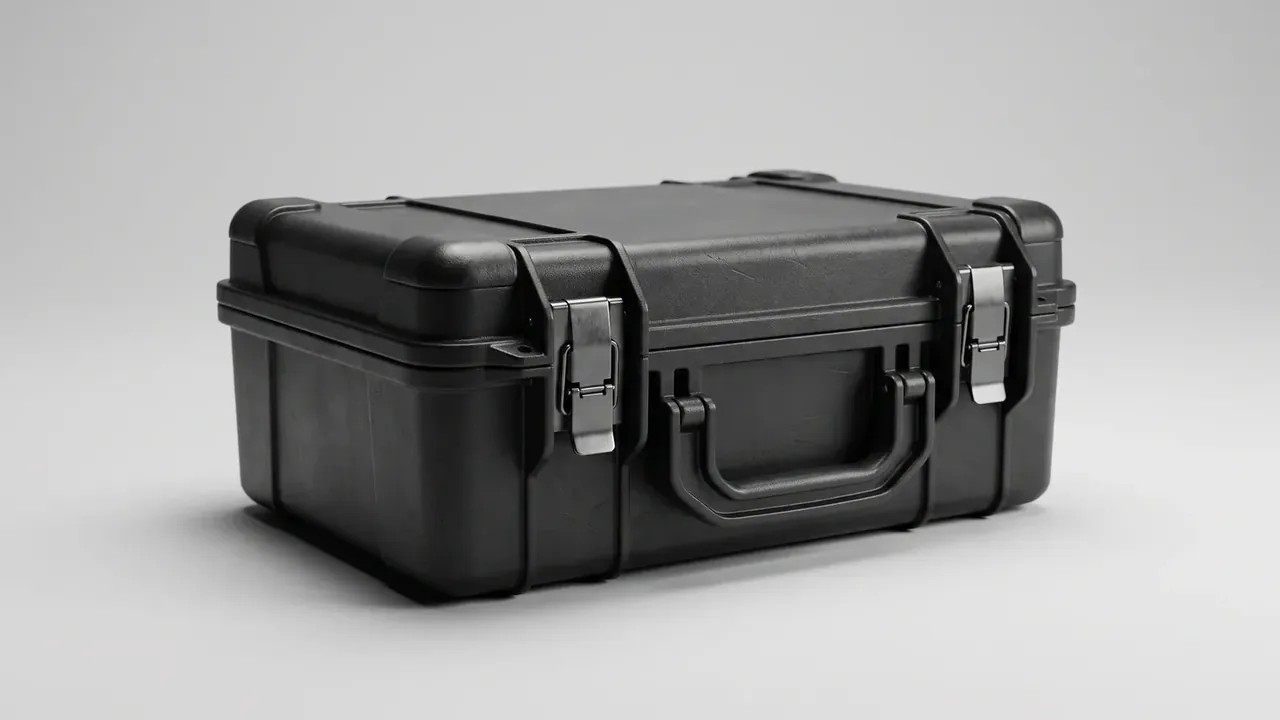
Height and balance are one problem. The vertical line through the centre of gravity must fall on the middle of the handle span, not on its front edge. A forward centre tips the case and bends the wrist back; a rearward one presses the forearm.
Top-heavy builds are the sensitive ones. With the instrument in the upper tray and the battery low, the centre sits near the middle of the body and a centred handle hangs level. When the mass sits close to the lid, the handle moves forward.
| Handle height | Finger clearance | Attitude | Note |
|---|---|---|---|
| Low | Fingers do not fit | Knuckles on the lid | Worst with gloves |
| Right | Passes with margin | Level, little swing | Centre on span |
| High | Wide gap | Swings at the side | Needs steadying |
3. Static Load and Fatigue Multiples
Portable Instrument Case Handle Design applies 4x the case weight as a static test, a factor that carries the shock of setting the case down. A 15 kg case goes to 60 kg and hangs for 30 min. A white line at the root is the material signalling yield before it fails.
Portable Instrument Case Handle Design counts fatigue at 20,000 folds, one open-and-close cycle per count. At 20 cycles a day the figure covers several years, and it tests the pivot, the stop face and the root radius at the same time.
In Portable Instrument Case Handle Design the two tests measure different things. Static load asks whether the root is strong enough; fatigue asks how fast the bearing surfaces wear. A handle that passes static and fails fatigue usually has a rounded stop face, so the arch leans back when raised.
Portable Instrument Case Handle Design rejects a handle when the root whitens under 4x static load, or when the stop fails after 20,000 cycles. Neither check opens the case: press once, cycle, look at two places.
| Loading | Look at | Pass | Fail |
|---|---|---|---|
| 60 kg static, 30 min | Root | No white line | White line appears |
| 20,000 folds | Pivot, stop face | Firm at 90 degrees | Arch leans back |
| 15 kg one hand, 30 min | Grip zone | No palm marks | Numb fingers |
4. Hinge Pivot and Fold Stops
On a folding model every force ends on one pin. The pivot is 6 mm because that is where shear area and boss thickness meet: halve the diameter and the shear area falls to 25%, so strength drops faster than the diameter does.
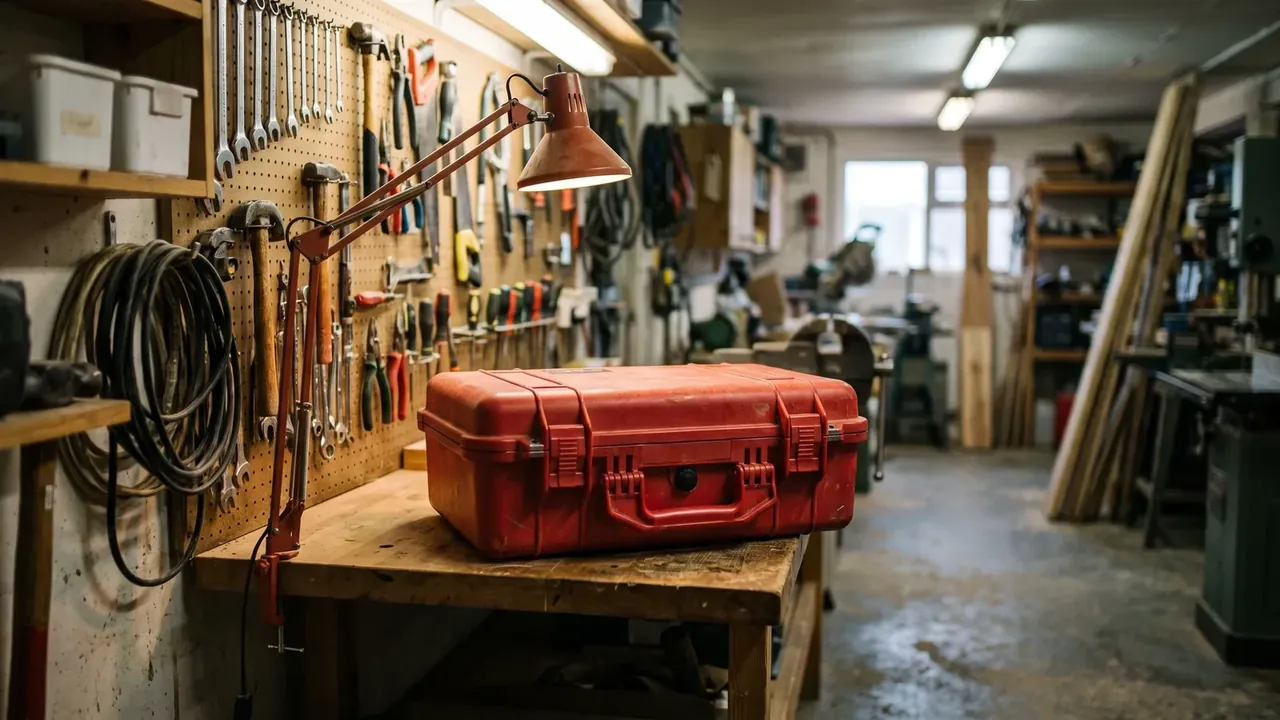
Portable Instrument Case Handle Design makes the pivot turn, not carry. Once the arch is up at 90 degrees the load passes through the stop face and the pin only locates the parts. Handles that skip this go loose, because plastic on plastic wears a layer away and the angle passes 90 degrees.
Stowing is the other half. Folded down, the handle face should sit level with the lid or slightly below, since anything standing proud is crushed first when cartons are stacked. Flush means the stack load lands on the lid, not on the handle.
In Portable Instrument Case Handle Design a bushing decides service life. Run the pin straight in a plastic hole and the hole turns oval; add a bushing and the wear lands on a part that costs less than the case.
5. One-Hand Swaps and the Two-Hand Threshold
Portable Instrument Case Handle Design puts the one-hand limit at 15 kg, which is a grip-stability figure rather than an arm-strength one. Above it the palm sweats and the wrist leans the body to compensate, so a swap waits until the case is on the ground.
The swap sequence matters. Turn the wrist so the case rests against the thigh, bring the free hand under the arch, then release the first hand. Skip the thigh and the full load hangs on one arm for an instant.
Above 15 kg, two hands: one person on a handle each side, or two people taking one end each. A two-person lift needs symmetrical handles, or the case tilts.
The threshold is not fixed. 15 kg assumes dry hands and level ground; rain, gloves and stairs pull it down. Prove it at the worst case during prototyping: cotton gloves, damp hands, 30 min without a swap.
Related Reading
- How grip shape spreads palm pressure
- Handle load and the joint into the case wall
- Ribs at the handle root on a twin-latch body
- Which side a handle belongs on for a two-person lift
JUNZHIJIA
Related Products
- 8 Series — Gun Cases; Military Equipment Cases; Camera Equipment Cases; Drone Cases; Watch Cases; Knife Cases; First Aid Cases; Electronics Equipment Cases
- WL8-2812 PP Gun Case — model WL8-2812
- All protective cases and toolboxes: 7 series, 158 models