

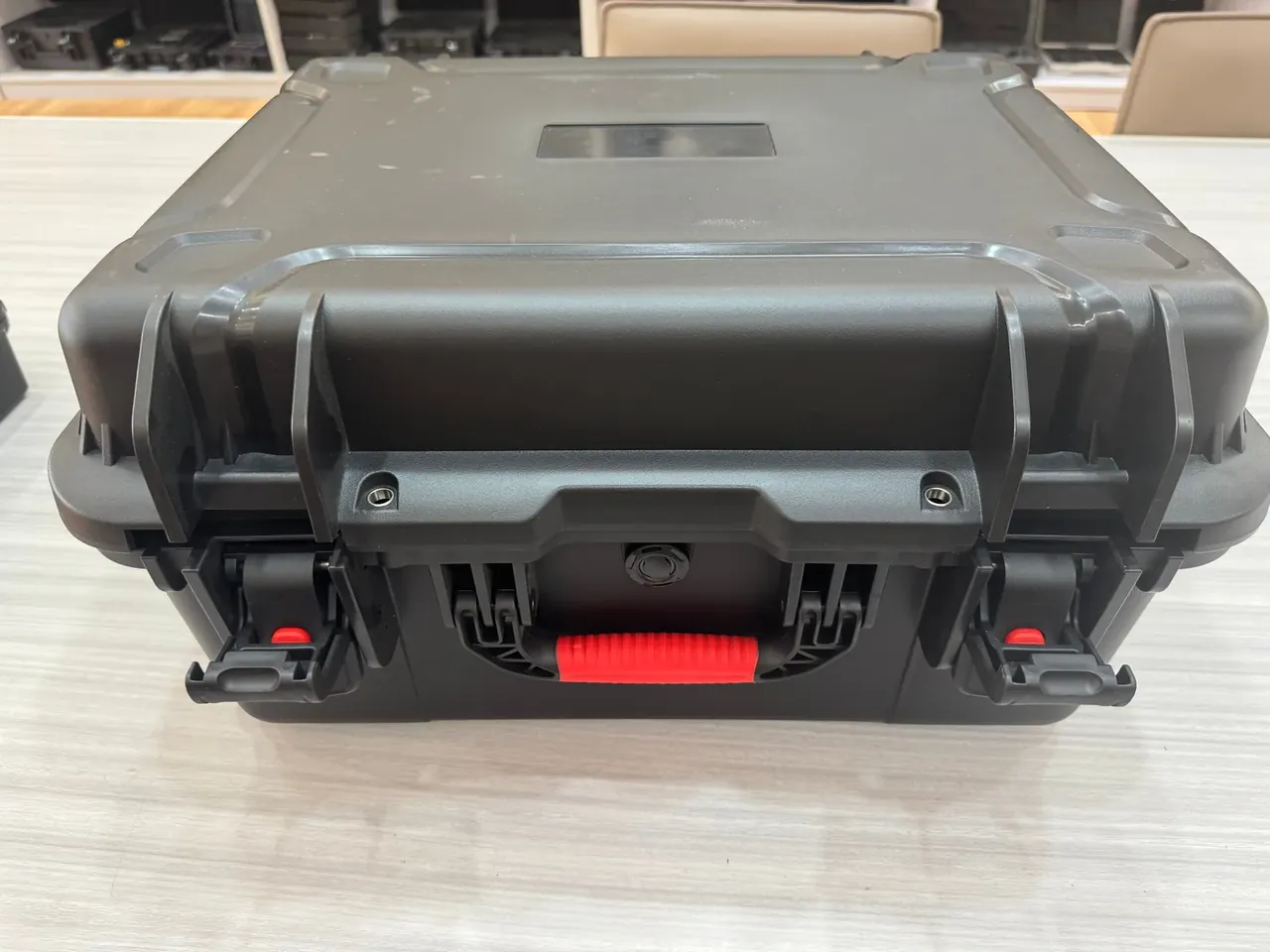
Quick answer: A Portable live streaming kit briefcase routes cables through a 12 mm lid layer, keeping an 18 mm air gap so the frame presses only a 15 mm bezel.
Table of contents
- Why a Portable live streaming kit briefcase separates the cable layer from the screen
- Sizing the 12 mm lid layer and 6 base cells
- The 18 mm air gap and a frame that presses only the bezel
- The 1.0 m drop: checking the panel, not the bezel
- Latches, handle and temperature limits on these clearances
- FAQ
1. Why a Portable live streaming kit briefcase separates the cable layer from the screen
Fitting a kit into a 500 by 360 by 180 mm shell is a thickness problem. A panel cannot take load, yet cables need a path, and on one level the closing frame pushes cables onto the panel. A Portable live streaming kit briefcase separates them with a 12 mm lid layer, 6 base cells and an 18 mm inward air gap.
The split is plain: press where load is allowed, touch nothing where it is not.
| Kit position | Where it sits | Structural value |
|---|---|---|
| Display panel | Facing the lid | 18 mm air gap |
| Cables | Inside the lid | 12 mm routing layer |
| Small parts | Base | 6 individual cells |
| Full bezel rim | Lid opening | 15 mm on each of 4 sides |
The table fixes position, so a liner change never reshuffles the load path.
2. Sizing the 12 mm lid layer and 6 base cells
Dimensions work outside in: 500 by 360 by 180 mm outer, 450 by 310 by 140 mm cavity, 3.2 mm wall. The 140 mm height holds panel, cables and parts. A Portable live streaming kit briefcase assigns 18 mm to the air gap and 12 mm to the lid, leaving the rest for base cells.
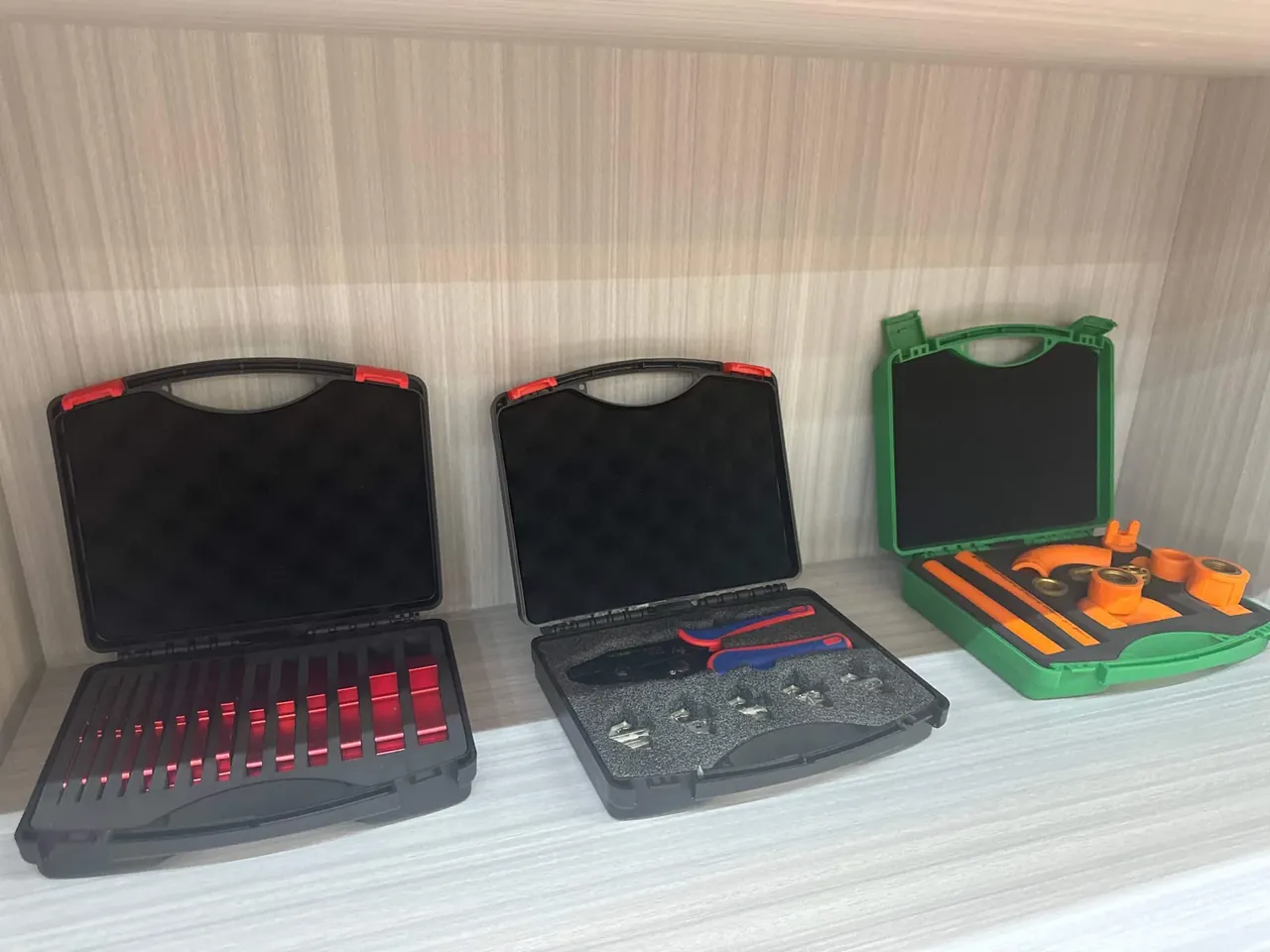
The 12 mm routing layer is a clear height from the lid inner face, not a foam thickness. It must clear the largest connector bend yet leave the liner short of the panel. Too shallow and cables flatten, moving frame load to the panel centre. Too deep and the 18 mm gap shrinks, so the panel touches the lid in a 1.0 m drop. A Portable live streaming kit briefcase measures the connector, fixes the layer, then checks the gap. Base cells are cut by part count.
Only the 18 mm air gap remains after closing. Nothing may fill it and the frame must not bridge it.
3. The 18 mm air gap and a frame that presses only the bezel
The frame sits on the lid inner rim and decides where load goes. A Portable live streaming kit briefcase narrows contact to 15 mm on each of the 4 bezel sides, leaving the middle open against the 18 mm gap, so force runs down the walls, never across the screen.
| Load bearing | Part | Judgement |
|---|---|---|
| May bear load | 4 bezel sides | 15 mm press width each |
| May bear load | Cell walls | 6 divided cells |
| Must not bear load | Display panel | Cleared by 18 mm air gap |
| Must not bear load | Cables in lid | 12 mm layer clear of frame |
15 mm on each side is a press width, not a clearance: check it with a feeler gauge, since one wide side drags load into the panel zone. The 18 mm gap is 3 mm larger, leaving room for liner compression at the minus 10 to 50 degrees Celsius ends.
4. The 1.0 m drop: checking the panel, not the bezel
The criterion lands on the panel. A Portable live streaming kit briefcase runs a 1.0 m drop, then checks for dents and rechecks the 15 mm width on all 4 sides. A centre dent means the frame bridged the bezel; an edge dent means the liner ate into the gap.
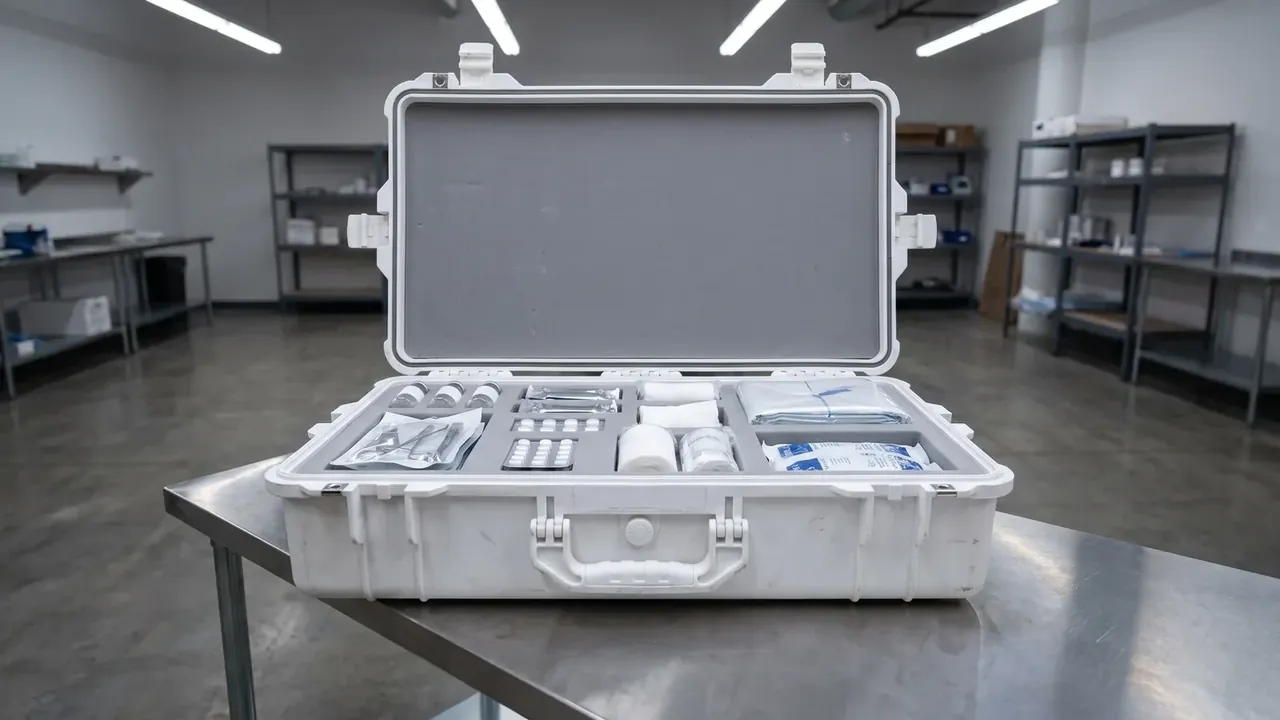
Drops run base, lid, long side and short side, with a fresh close before each reading. Two latches at 320 N each and a 300 N handle decide whether the lid lifts a crack at impact; once it does, the contact shifts and a dent follows. A Portable live streaming kit briefcase logs the 4-side width before and after, and a drift over 1 mm sends the check back to liner compression.
Measure width before air gap in the retest. JUNZHIJIA keeps that order on the inspection card.
5. Latches, handle and temperature limits on these clearances
Duty numbers: 2 latches at 320 N each, a 300 N handle, a 3.8 kg shell carrying 6.2 kg, IP65, minus 10 to 50 degrees Celsius. None rewrite 12 mm or 18 mm, but they decide whether the clearances survive handling and temperature swing.
| Clearance | Part | Reason |
|---|---|---|
| 12 mm | Lid routing layer | Cables clear of screen |
| 18 mm | Inward air gap | Panel clears frame |
| 15 mm on 4 sides | Bezel loading | Frame contact |
| 6 cells | Base compartments | Parts separated |
Under 6.2 kg the base bows; if it reaches the cell walls, all 6 mouths tilt. A Portable live streaming kit briefcase runs full-height ribs so load travels through the case walls, keeping 12 mm and 18 mm fixed. IP65 is the sealing rim benchmark, with the gasket inside the same 4-side press width.
Conclusion
A Portable live streaming kit briefcase gives cables, screen and parts three paths: a 12 mm lid layer, 6 base cells and an 18 mm inward air gap. The frame presses only 15 mm on each of the 4 bezel sides, and 2 latches at 320 N, a 300 N handle and minus 10 to 50 degrees Celsius hold the clearances steady. Ask where the frame lands, then read the 1.0 m drop result.
Related Reading
- Structure and selection of live broadcast cases
- Bays and liners in broadcast film equipment cases
- Panel clearance design in camera equipment cases
- Size and load criteria in portable case selection
Related Products
- 8 Series — Gun Cases; Military Equipment Cases; Camera Equipment Cases; Drone Cases; Watch Cases; Knife Cases; First Aid Cases; Electronics Equipment Cases
- WL8-2812 PP Gun Case — model WL8-2812
- All protective cases and toolboxes: 7 series, 158 models