

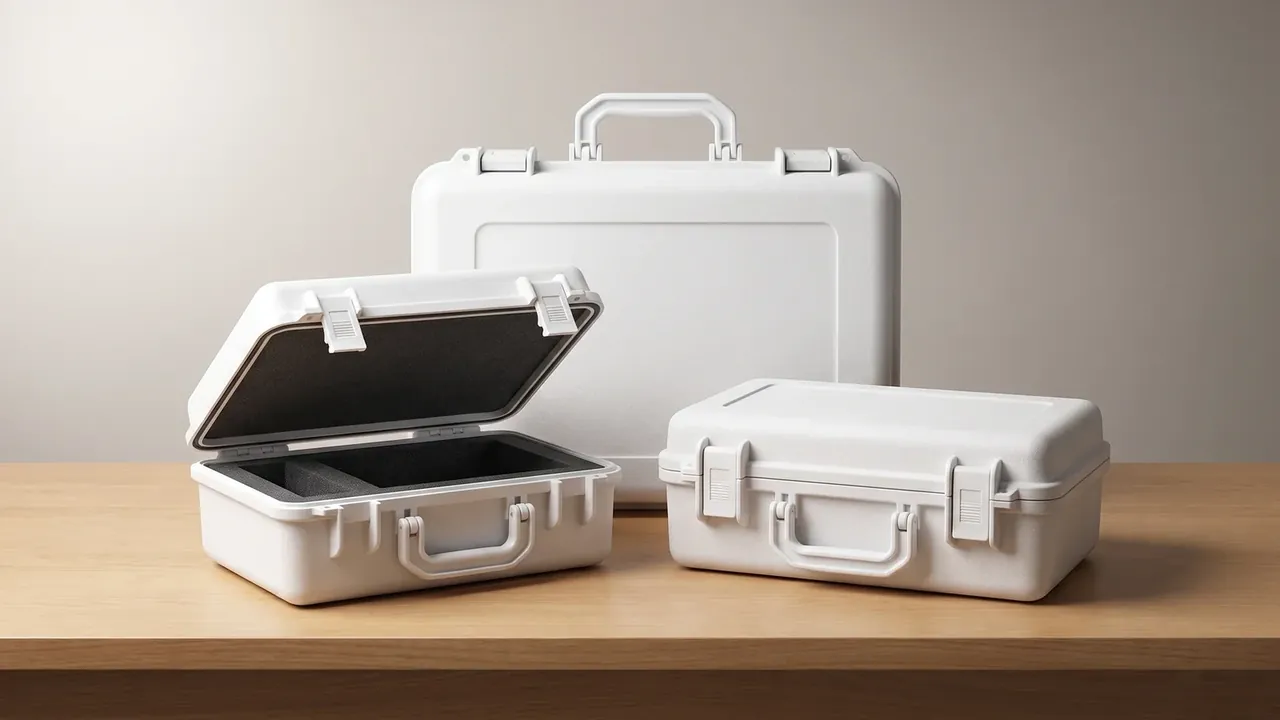
Quick answer: A portable plastic carrying case is judged by how it leaves the ground. Hand carry, shoulder sling and cabin carry fail at different points, so weight ceilings, envelope limits and load paths cannot be swapped between them. Fix the carry mode first and every later figure becomes comparable.
Table of contents
- Three Carry Modes and the Clauses That Apply
- Total Weight: Case, Liner and Load Margin
- Outer Envelope: Sum of Sides and Cabin Limits
- Handle and Shoulder Strap: Where the Load Lands
- Three Field Checks and a Verification Sheet
- FAQ
1. Three Carry Modes and the Clauses That Apply
Two portable plastic carrying case units can share one shell drawing yet need different structures: one is swung by hand for two hundred metres, the other pushed into an overhead bin.
| Carry mode | Loaded weight | Envelope control | Clause worth reading |
|---|---|---|---|
| Hand carry | 9–13 kg | Handle near centre of gravity | MIL-STD-810H Method 516.8 |
| Shoulder sling | 12–18 kg | Strap anchor height | IEC 60529 dust rating |
| Cabin carry | 7–10 kg | Sum of sides, wheel protrusion | Airline cabin envelope |
Read standards down to the method number. Method 500.5 covers low pressure at 4,572 m; Method 516.8 covers shock severity. Under IEC 60529, IP67 means one metre of water for thirty minutes, while IPX5 is only a jet spray, so gasket demands differ by a full grade. The drawing must carry the full envelope, handle, wheels and latches included.
2. Total Weight: Case, Liner and Load Margin
Weight is where a portable plastic carrying case comparison goes wrong. Rated load states what the shell holds, not how long a person carries it.
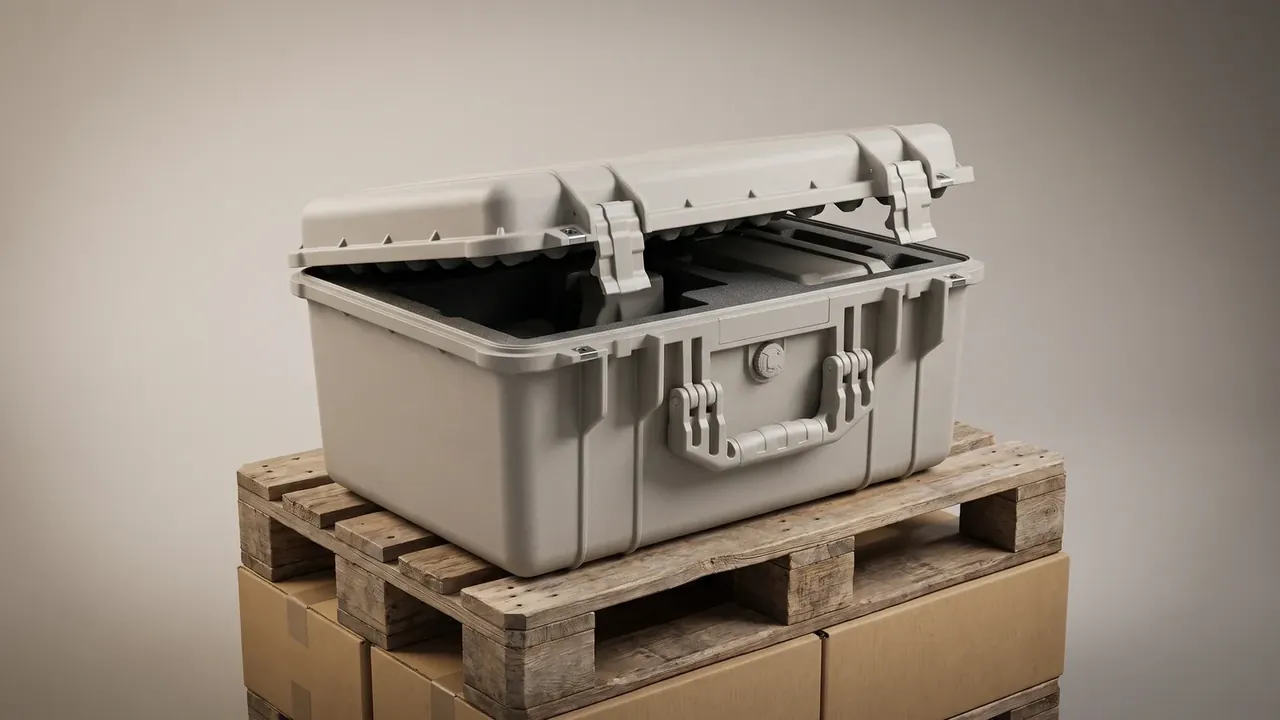
| Element | Reference | What it changes |
|---|---|---|
| Empty shell | 2.6 kg | Two shells of one size differ 0.7 kg in ribs |
| Liner | 0.4 kg | 25 kg/m³ foam lightens once pocketed |
| Equipment | 0.8–2.5 kg | Pocket depth follows the heaviest item |
| Hardware | 0.3 kg | Anchors, rivets and webbing add up |
Keep the loaded total at or under 13 kg and a one-hand carry stays steady for ten minutes; above that, widen the sling webbing to 38 mm so pressure moves to the shoulder. It is a field line, not a standard, but applying it to every sample keeps a comparison honest.
When the figures do not fit a portable plastic carrying case, drop equipment first, step down a shell size second, and consider wheels last.
3. Outer Envelope: Sum of Sides and Cabin Limits
Envelope decides whether a portable plastic carrying case clears a cabin door, and measuring is where errors enter.
- Sum of sides: length, width and height together at or under 115 cm;
- Handle protrusion: a folded handle still stands 18 mm proud;
- Wheels: exposed wheels add 22 mm in diameter, recessed ones take it from internal volume;
- Latches and feet: lid latches stand 6 mm proud, four feet take 4 mm each.
Run the tape flat, press over ribs rather than bridging them, and record the largest reading.
4. Handle and Shoulder Strap: Where the Load Lands
Handles fail at the load path rather than in the material, which is why one resin cracks in one mode and survives another.
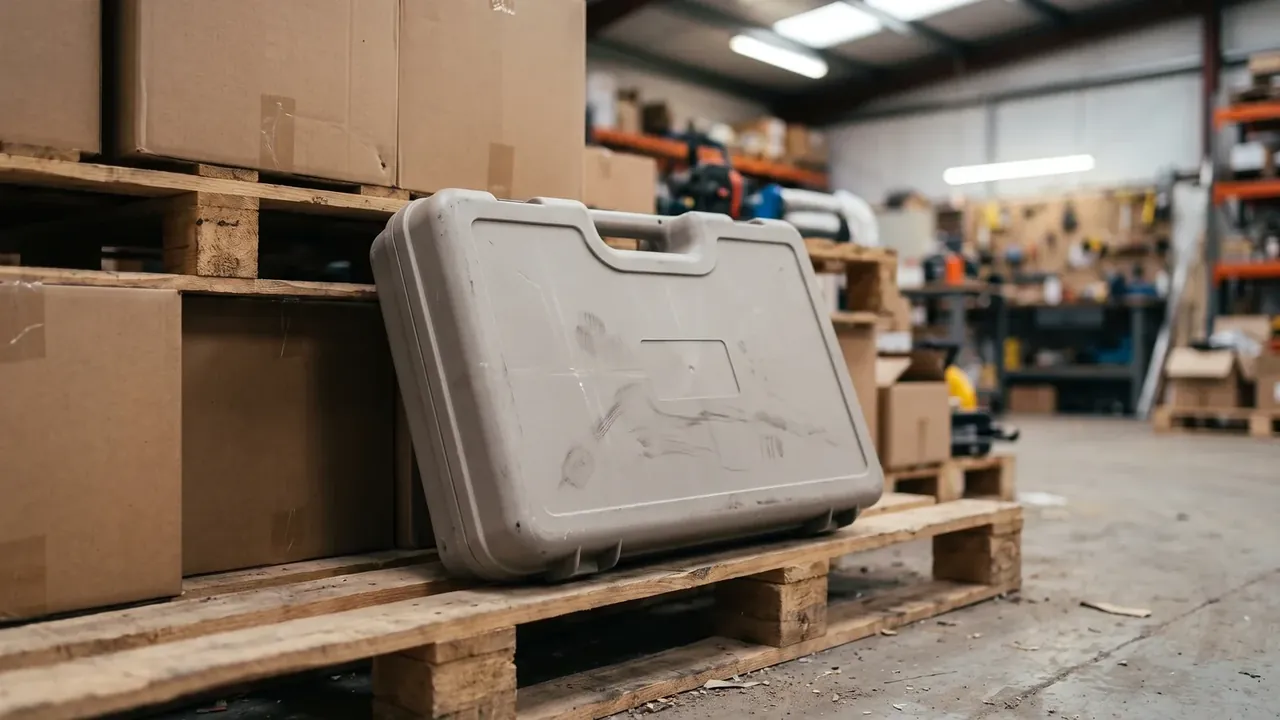
On a hand-carried unit the load concentrates at the two roots of the handle saddle, where 4.5 mm of wall and an R3 fillet resist cracking. On a sling unit the load shifts to side-wall anchors, where webbing passes through a metal D-ring, with 8 mm webbing and five backstitch rows holding tension evenly. On a cabin unit the case is shoved into a bin, so the load lands on lid edges and corners, which want a double wall. Before accepting a sample, load it, walk two hundred paces, cycle the latches thirty times, and check the handle roots for whitening. Whitening marks stress concentration rather than cosmetic wear. Sling versions need a look at the anchor rivets, since a poor rivet lets webbing tear from the hole edge.
Cold sharpens the point on any portable plastic carrying case: two hours at minus 20 °C lowers toughness, and an identical load cracks the same root sooner.
5. Three Field Checks and a Verification Sheet
No instruments are needed to screen a portable plastic carrying case on site: lift it empty, walk it loaded, cycle the latches.
| Check | Pass line | How to record |
|---|---|---|
| Empty lift | Lid flat, seam aligned | 1.5 mm feeler gauge |
| Loaded walk | No whitening after 200 paces | Photo on file |
| Latch cycling | No self-release after 30 cycles | Tally sheet |
One cheap extra check: press the four corners of the open lid. A creak means the panel lacks stiffness.
Conclusion
Comparing a portable plastic carrying case means fixing the carry mode, then aligning weight, envelope and load path against it. The three thresholds do not transfer. Write loaded weight, sum of sides and handle wall thickness as three measurable figures, and the decision stops depending on feel. Once the field checks are done, most samples answer for themselves.
This article discusses only the container (case body) side of specifications and design intent, and does not cover any handling, loading or use of the contents.
Related Reading
- Portable tool box selection: weight, liner and handle first
- Portable plastic boxes against alternative formats
- Equipment case selection from the carry posture backwards
- What to ask during a showroom or sample visit
Related Products
- 8 Series — Gun Cases; Military Equipment Cases; Camera Equipment Cases; Drone Cases; Watch Cases; Knife Cases; First Aid Cases; Electronics Equipment Cases
- WL8-2812 PP Gun Case — model WL8-2812
- All protective cases and toolboxes: 7 series, 158 models