

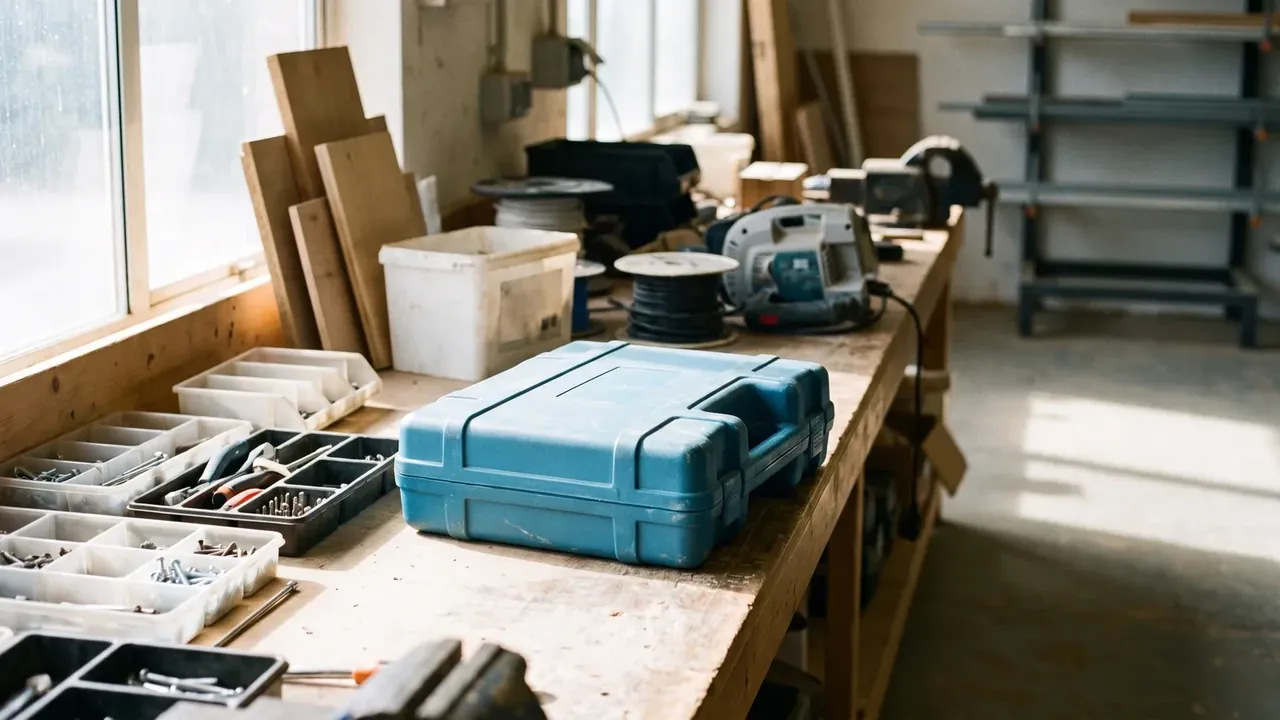
Quick answer: A Portable Tool Box is specified from the inside out: fix internal space and tray grid, work back through wall, rim step and envelope, then check handle rating and stack tiers.
Table of contents
- How the Dimension Chain of a Portable Tool Box Runs
- Wall Thickness, Ribs and Self-Weight
- Single-Box Load and Handle Rating
- Stack Tiers and What the Base Really Touches
- Sealing Class and Pallet Module
- FAQ
1. How the Dimension Chain of a Portable Tool Box Runs
A Portable Tool Box drawing usually carries the outer envelope only, yet internal space decides fit. Build from the inside: tool outline, 6 mm clearance, then wall, rim step and draft.
Take 460 × 340 × 190 mm outside, 2.6 mm wall, 3.2 mm rim step per side, 3.0 mm base, 2.8 mm lid, 8 mm rim overlap, 0.3 mm shut-off. Internal length lands at 448.4 mm, called 448 ±1.0; width 328 ±1.0; height 176 ±0.8.
| Dimension | Nominal | Tolerance |
|---|---|---|
| Outer length | 460 mm | ±0.8 mm |
| Inner length | 448 mm | ±1.0 mm |
| Inner height | 176 mm | ±0.8 mm |
Inside gets plus tolerance, outside minus. At 1.6 percent PP shrink the 460 mm direction moves 7.4 mm, so cavity steel is cut to measured values.
2. Wall Thickness, Ribs and Self-Weight
Wall thickness is derived from a weight ceiling, not picked for strength. One-hand carrying tops near 12 kg, leaving the body 2.4 to 3.0 kg; a 2.6 mm wall with a 3.0 mm base lands at 2.4 kg.
Ribs follow at 0.6 of the wall, so 1.6 mm at the root: heavier roots sink onto the stacking face, lighter ones fill halfway. Ribs 5 mm tall at 80 mm pitch, crossed, take a 500 N centre load from 3.6 to 1.1 mm.
| Main wall | Body weight | Cycle |
|---|---|---|
| 2.2 mm | 2.1 kg | 62 s |
| 2.6 mm | 2.4 kg | 74 s |
| 3.0 mm | 2.9 kg | 92 s |
3. Single-Box Load and Handle Rating
Load takes two paths: base and walls carry contents as distributed pressure, the handle carries the box as a point load. At 20 kg the floor sees 0.05 MPa, the handle root ten times that.
Size the handle at three times the rating, 60 kgf or 590 N. The grip is 26 × 14 mm, roots stay at R5, and the hinge pin is 6 mm stainless in an H8 bore.
4. Stack Tiers and What the Base Really Touches
Tier count comes from the lid of the bottom box. At five high it carries four full boxes, about 785 N, or 196 N per corner, spread over 2828 mm² of pad contact at near 0.28 MPa.
A base never sits flat: shrinkage lifts the middle, so a new box touches on four corners with 1.5 mm of air and the footprint overstates capacity threefold. A 1.5 mm reverse crown lands the centre only under load.
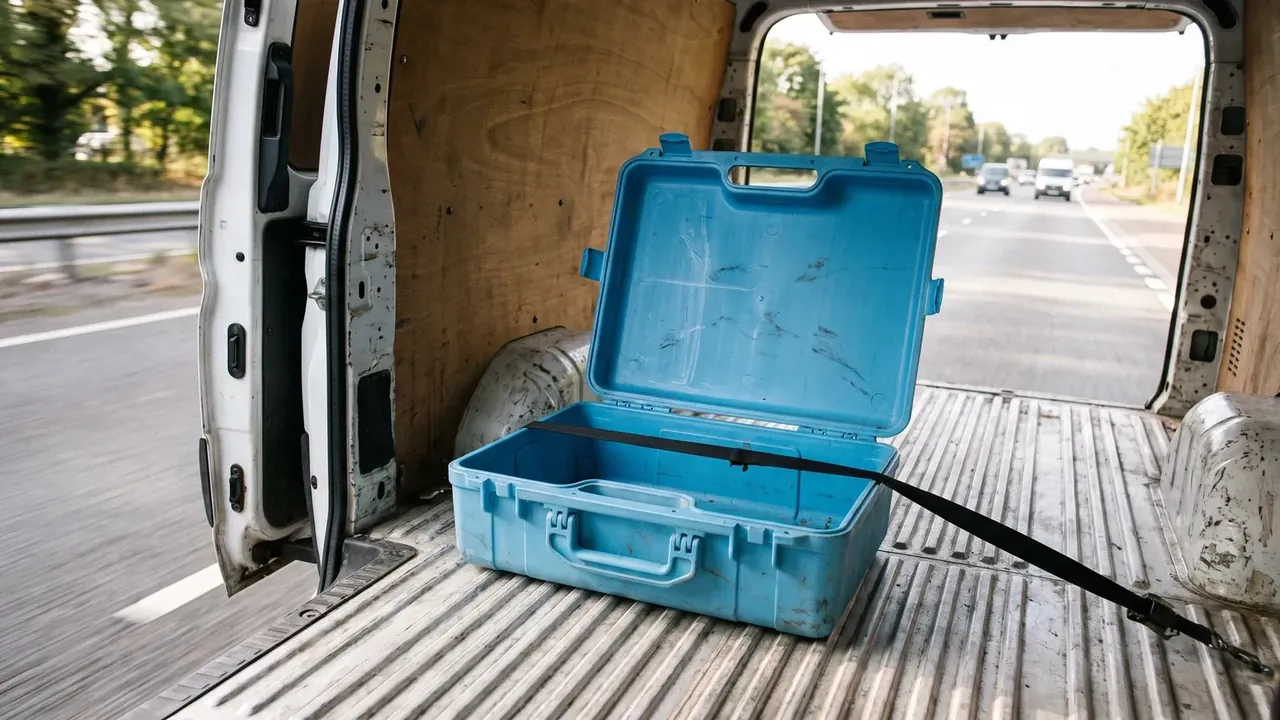
In a van, 400 N of strap tension must run in the 2 mm deep side channels; a 190 mm box stops at eight tiers.
5. Sealing Class and Pallet Module
A sealing class means nothing without test conditions. Dust class 6 uses talcum at 2 kg/m³ for 8 h; water class 5 a 6.3 mm nozzle at 12.5 L/min for 3 min per face. A Portable Tool Box passes on an 8 mm rim depth and a seal set 25 to 30 percent.
Latch count is a perimeter sum: a 1600 mm rim needs 960 N for 0.6 N/mm, so four 350 N latches are the minimum.
| Item | Value | Note |
|---|---|---|
| Rim depth | 8 mm | 25–30% seal set |
| Latches | 4 | from 0.6 N/mm |
| Pallet module | 1200 × 1000 mm | four per layer |
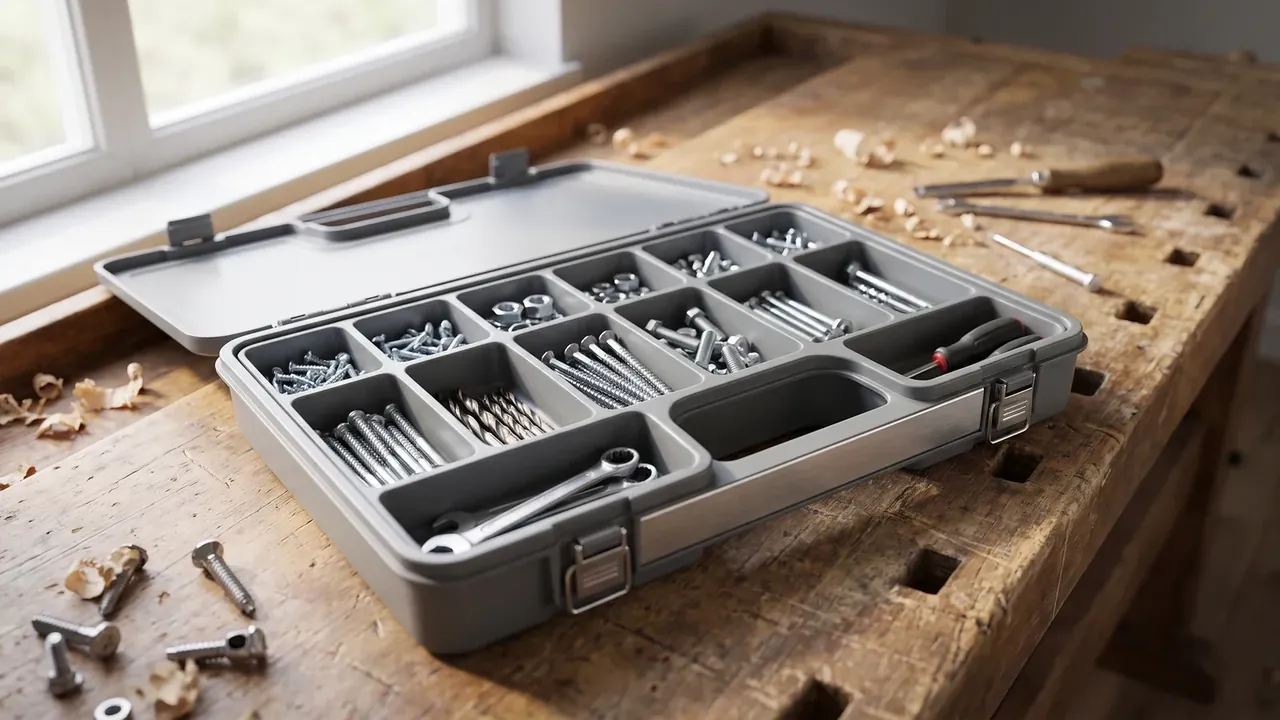
A 1200 × 1000 mm pallet takes four boxes per layer, four tiers with dividers reach 796 mm. The grid follows the inside: 448 × 328 mm split 4 × 3 gives bays of 108 × 106 mm.
Conclusion
The specification of a Portable Tool Box is a closed chain: inside sets envelope, envelope sets wall, wall sets weight, and weight with tier count pushes back on height. Settle those four and the Portable Tool Box stacks as drawn.
This article discusses only the container (case body) side of specifications and design intent, and does not cover any handling, loading or use of the contents.
Related Reading
- Choosing a portable tool box: from dimensions to load
- Material comparison for plastic portable tool boxes
- How to specify an internal divider layout
- Tool box lid structure and its load path
Related Products
- 8 Series — Gun Cases; Military Equipment Cases; Camera Equipment Cases; Drone Cases; Watch Cases; Knife Cases; First Aid Cases; Electronics Equipment Cases
- WL8-2812 PP Gun Case — model WL8-2812
- All protective cases and toolboxes: 7 series, 158 models