

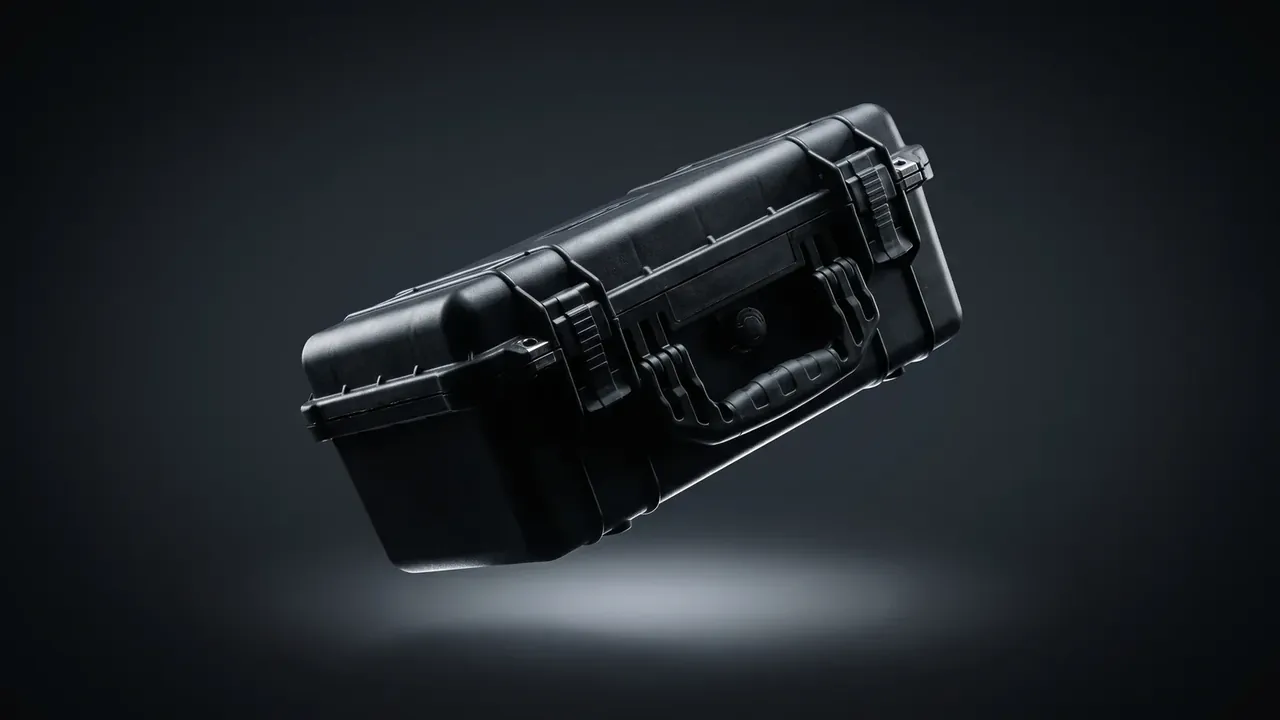
Quick answer: A PP material plastic tool case lands in five scenes first: electronics benches, plumbing sites, garages, lab sampling and field inspection. Each fixes three numbers: wall at 2.2 or 3.5 mm, one or two latches, EVA or a moulded tray.
Table of contents
- Where a PP Material Plastic Tool Case Lands First
- Light Loads on Benches and Lines
- Wet, Oily and Chemical Limits
- Vehicle Mounting and Stacking
- Turning a Scene into a Purchase Line
- FAQ
1. Where a PP Material Plastic Tool Case Lands First
A PP material plastic tool case is bounded by the polymer: 0.90 g per cubic centimetre makes it a tenth lighter than ABS, absorption sits near 0.02 percent, and −20 to 90 °C service covers steam rinsing and a closed van.
| Scene | Cavity | Wall | Load |
|---|---|---|---|
| Electronics bench | 400×300×120 | 2.2 | 6–8 kg |
| Plumbing site | 450×330×180 | 3.0 | 12–15 kg |
| Garage | 500×350×190 | 3.5 | 18–22 kg |
| Lab sampling | 350×260×100 | 2.0 | 4 kg |
| Field inspection | 480×360×200 | 3.2 | 15 kg |
The scene decides the rest: a bench PP material plastic tool case opens forty times a shift and takes a 0.4 mm living hinge rated past 100,000 folds, while a site unit opened twice a week takes a metal pin. A 500 mm cavity projects 1,750 cm², putting the press at 700 to 875 t.
2. Light Loads on Benches and Lines
A bench asks a PP material plastic tool case to be shallow and stackable: cavity under 120 mm, a 2° crown, 3 mm EVA in the lid.
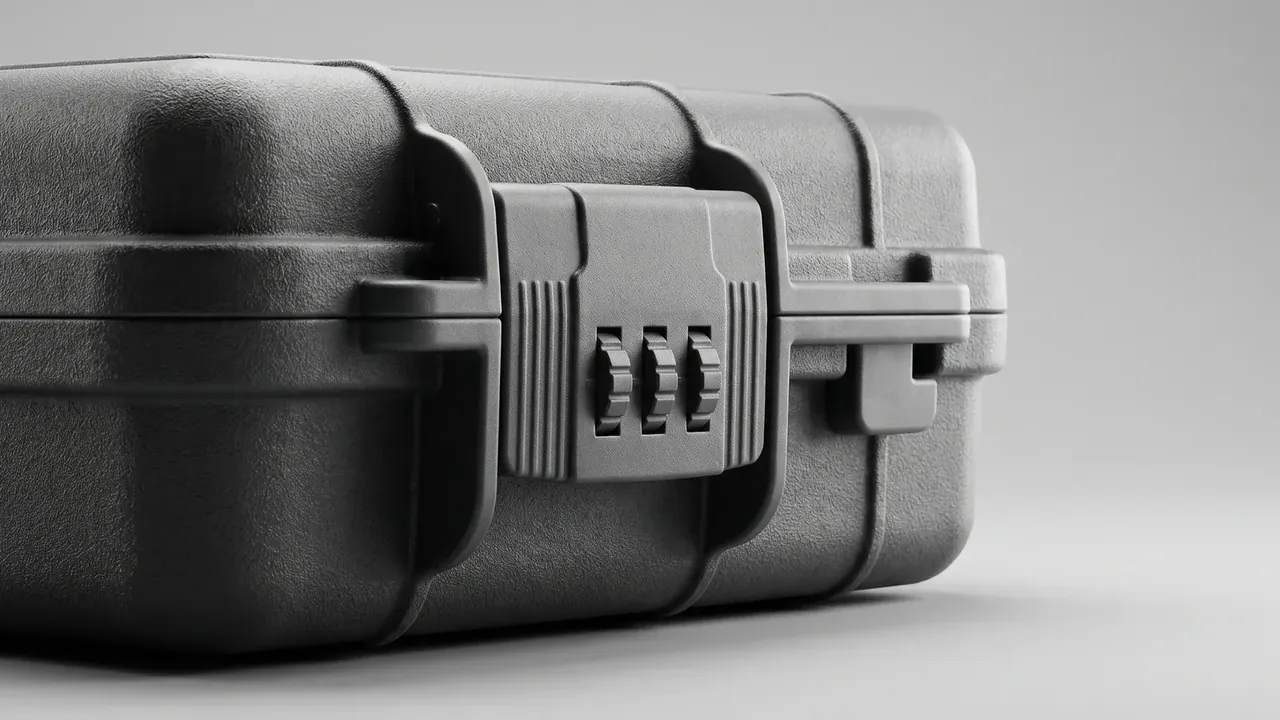
Latch feel belongs in the specification: 30 to 45 N for one, 60 to 80 N for a pair, under 25 N it pops open, over 90 N one hand cannot work it.
Eight empty cases stack, and three loaded ones put 60 kg on the bottom lid with under 1.5 mm of set after 24 hours, so two 6 mm ribs on 120 mm centres go inside.
3. Wet, Oily and Chemical Limits
PP handles acids and alkalis and dislikes hydrocarbons: rain and washdown leave the body alone, while engine oil, diesel and brake fluid swell it until the lid gap opens.
Thirty days of contact: 5 percent sulphuric acid gains under 0.1 percent cold and 0.2 at 60 °C, engine oil 1.5 and 4, ethanol 0.4 and 1.2, brake fluid 2 with deformation.
Detergents from pH 2 to 12 and a 70 °C rinse for 30 minutes are safe at a 100 °C deflection; chlorinated solvents are not. A garage case can carry a 15 mm drip tray in the floor.
4. Vehicle Mounting and Stacking
A van is a different test: 10 to 500 Hz at 1.5 g for one shift equals a month on a bench, so resonance, latch release and slip all need answers.
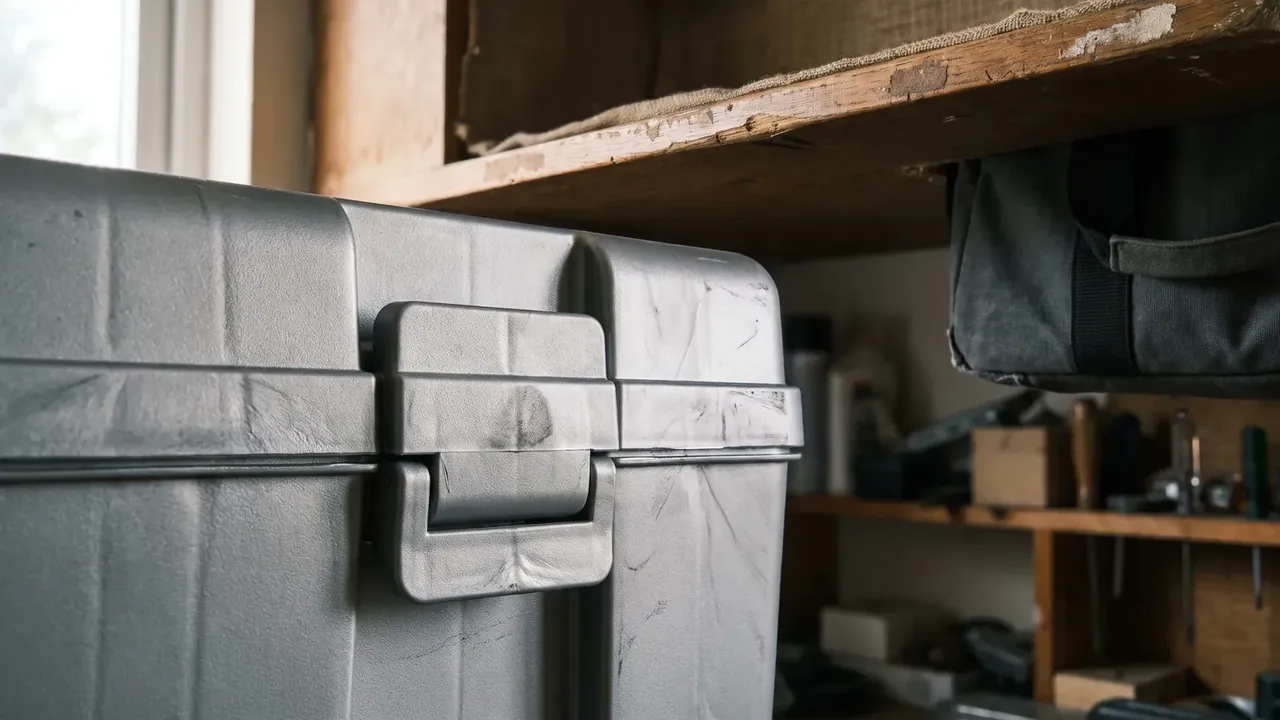
Ribs handle resonance at 120 mm pitch, 1.6 mm thick, 8 mm tall, with four 8 mm feet.
For latch release, mould a 2 mm hook so the arm lifts before it swings out, or leave 4 mm holes for a nylon tie that costs three seconds.
5. Turning a Scene into a Purchase Line
The order sheet needs seven lines: size, grade, wall, colour, latch, lining, print. Shrinkage is skipped most often, though a PP material plastic tool case moves 1.2 to 2.0 percent and a body is drawn at 1.5 to 1.8; without it, lid and base sit 3 mm apart.
| Item | Write it as | Failure if vague |
|---|---|---|
| Grade | block copolymer, MFI 12 | winter cracks |
| Wall | 3.0 mm body, 1.6 mm ribs | 20% overweight |
| Shrinkage | 1.5–1.8%, oriented | uneven lid gap |
| Latch | two, 60–80 N | opens in a carry |
| Lining | EVA 30 mm, 12 pockets | tools knock |
Sampling follows the scene: 10,000 lid cycles, a 1.2 m drop on six faces, three edges and a corner, 30 minutes per axis, 30 days of immersion. Lining tracks tool height: 20 mm of EVA under 40 mm of tool.
Conclusion
Scene first, then numbers: load, openings and chemicals pick the wall, the latch and the lining. One millimetre of wall moves weight by a fifth, and 20 N of latch force separates a case that opens itself from one nobody can work. Written into the order, those figures become a specification for a PP material plastic tool case.
This article discusses only the container (case body) side of specifications and design intent, and does not cover any handling, loading or use of the contents.
Related Reading
- PP case grades and batch sizing
- PP against ABS for case bodies
- Divider layout inside a tool box
- Alternatives to a portable plastic tool box
Related Products
- 8 Series — Gun Cases; Military Equipment Cases; Camera Equipment Cases; Drone Cases; Watch Cases; Knife Cases; First Aid Cases; Electronics Equipment Cases
- WL8-2812 PP Gun Case — model WL8-2812
- All protective cases and toolboxes: 7 series, 158 models