

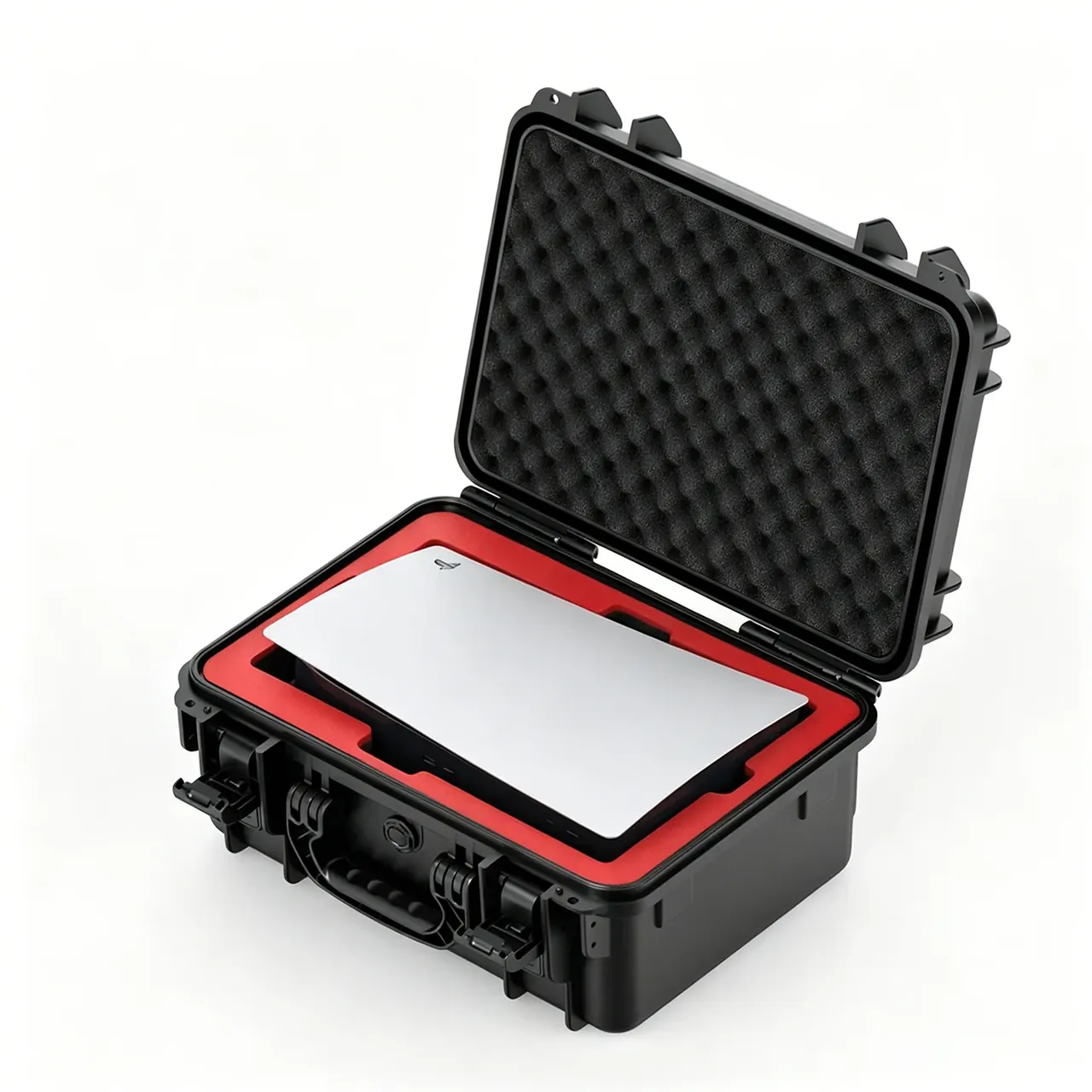
Quick answer: Case psi inspection is mandatory in only 8 of 25 common destinations, and those eight clear cargo against a COC rather than paperwork.
Table of contents
- Eight of twenty-five destinations require it
- Four points the inspector actually checks
- How AQL level II sampling lands on an order
- Certificates, agencies and the seven-day window
- FAQ
1. Eight of twenty-five destinations require it
Of 25 destinations a case factory ships to regularly, 8 make pre-shipment inspection a condition of entry. The eight are Saudi Arabia, Nigeria, Kenya, Algeria, Iraq, Egypt, Tanzania and Uganda.
The split is not about how hard a case is to build. It is about who signs the certificate and where the cargo stops. The first group needs a COC from an authorised agency, and without that number in the destination system the container is not released. The second group needs the invoice, packing list and bill of lading to agree.
| Destination | Programme | Document | Site hours |
|---|---|---|---|
| Saudi Arabia | Pre-shipment inspection | COC | 3 h |
| Nigeria | SONCAP | SC | 2 h |
| Kenya | PVoC | CoC | 2 h |
| Algeria | Pre-shipment inspection | Certificate | 3 h |
| Iraq | Pre-shipment inspection | COC | 4 h |
| Egypt | Pre-shipment inspection | COC | 3 h |
| Tanzania | PVoC | CoC | 2 h |
| Uganda | PVoC | CoC | 2 h |
Iraq takes 4 h because serial numbers are checked carton by carton, so a 1200-unit order is broken out of 6 pallets. Saudi Arabia and Egypt take 3 h, with the extra hour on label checks. Nigeria and Kenya finish in 2 h and seal on the spot.
A 40HQ holds 1200 cases at 20 per pallet, which is 60 pallets, and the inspector opens 6. What the factory controls is whether all 60 carry one batch label and whether 300 mm aisles let a forklift reach them.
2. Four points the inspector actually checks
The item that sends a batch back is the label, not the finish. A short count of 1 unit can be fixed on paper, a scratch can be swapped, but a wrong label means new labels and a second appointment. The four points take 2 to 4 h.
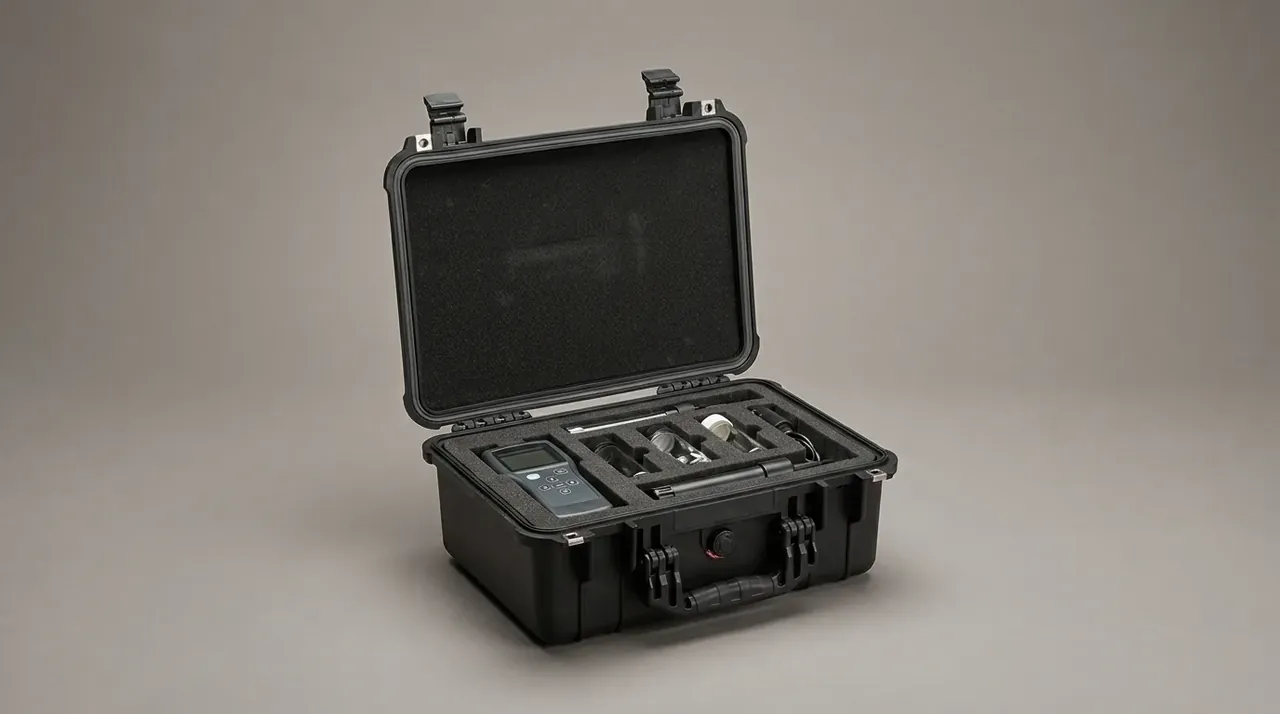
Quantity is counted against the packing list, by pallet, never by opening cartons. Six of 60 pallets at 20 units gives a 120-unit sample and zero shortage tolerance. A list of 1200 against 1198 physical units means the batch waits for replenishment and a new booking.
Finish is checked at three points: colour match, scratches, latches and hinges. A scratch over 30 mm is a defect, a cracked latch is a reject, and a foam corner missing more than 5 mm is replaced. Work under daylight, because colour shifts under sodium lamps.
Packaging covers carton strength and stacking: five-ply corrugated, 15 kg gross per carton, corner boards on all four corners.
Labels carry the fourth check. Text is at least 2.5 mm high, the batch code runs 12 digits and matches the COC application, and the label sits 10 mm from the lid edge, where a 3 mm skew is accepted. Rework here is the expensive kind, because one new label drags the packing list and certificate with it.
3. How AQL level II sampling lands on an order
Sampling follows ISO 2859-1 general inspection level II for sample size, while accept and reject numbers stay with the agency under AQL 2.5. A 1200-unit lot falls on code letter K, a sample of 125, so 6 pallets are opened for 120 units and 5 spares cover the gap.
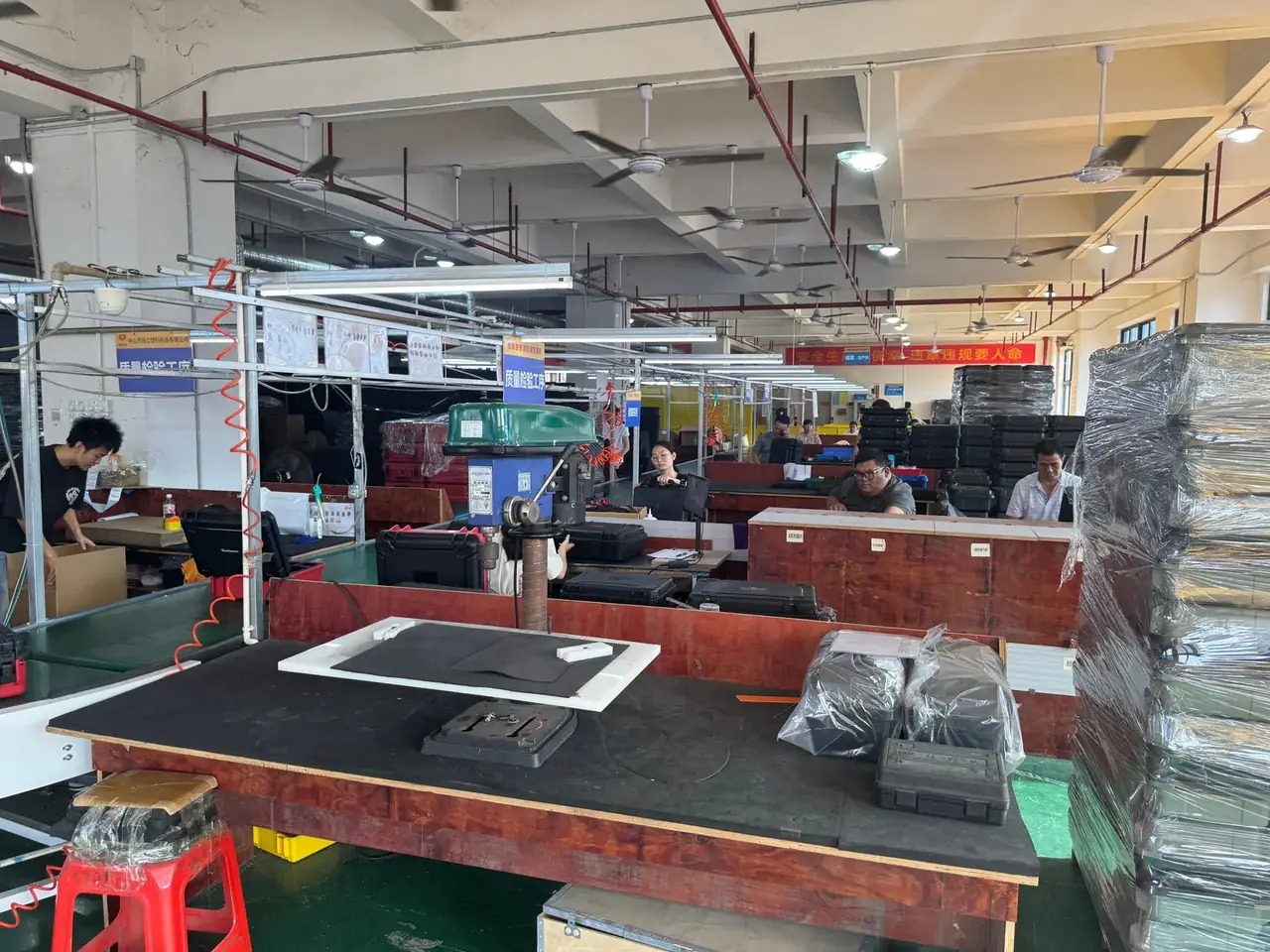
Group the lot before the visit, because a mixed lot burns the slot. Split 1200 into 60 pallets of 20, give every pallet the same batch code, and let the inspector pick six at random. If codes are mixed, the sample will not match the application and the agency asks for the lot to be re-presented. That is not a re-inspection, but it costs another slot, and in peak season the next slot is 10 days out. Grouping costs 0.2 USD per label.
Appearance runs at AQL 2.5, while structure, meaning latch pull and hinge cycling, takes 5 destructive samples per batch. Those 5 units are not delivered, so carry 0.5% extra in the quotation.
Staff the visit with three people: one breaking pallets, one counting, one talking. Three clear 120 units in 2 h; one needs 5 h.
4. Certificates, agencies and the seven-day window
The booking window is 7 days from application to inspector on site. Peak season, September to December, runs 10 days, so orders chasing a sailing date plan on 10. Document review takes 2 of those days and scheduling takes 5.
Certificates come from SGS, BV, Intertek and TÜV, each destination authorising a different list, so check the roster. Two things decide the choice: whether there is an office within driving distance, and whether the certificate is signed at head office. An office within 2 h keeps rescheduling free.
Failed batches are re-inspected per visit at 320 USD, plus 180 USD for a 48 h rush. That fee is a schedule cost: one re-inspection moves the shipment 7 days, and a 40HQ accrues 12 USD a day.
The cheap way to pass first time is to run the same checklist 3 days early. Copy the four points onto one page with a signature box after each.
Conclusion
Case psi inspection planning reduces to one line: check whether the destination is on the list of eight, then check which sample size the lot falls into. For those eight, lock the 7-day booking into the schedule on order day, group the lot at 20 units per pallet, and self-check labels 3 days before the visit. Those three moves lift the first-time pass rate from roughly 60% to above 90%. For the other 17, skip the 320 USD re-inspection reserve and spend the effort on wood packaging and shipping marks. Work down the table below: the destination sets the programme, the focus sets who signs before the inspector arrives. A booking made 7 days out costs nothing, while a re-inspection costs 320 USD and a week of detention, and the eight lanes reward preparation rather than price talk.
| Destination | Inspection focus | Site hours | Cost of failure |
|---|---|---|---|
| Saudi Arabia | Labels and foam | 3 h | 320 USD |
| Nigeria | Quantity and packing | 2 h | 320 USD |
| Kenya | Quantity and labels | 2 h | 320 USD |
| Algeria | Finish and packing | 3 h | 320 USD |
| Iraq | Serial numbers | 4 h | 320 USD |
| Egypt | Labels and batch codes | 3 h | 320 USD |
| Tanzania | Packing and quantity | 2 h | 320 USD |
| Uganda | Finish and quantity | 2 h | 320 USD |
This article discusses container-side specifications and design implications only, and does not cover any handling, loading or use of the contents.
Related Reading
- How AQL sampling is applied in practice
- Export packing and inspection handover
- Recording incoming batch inspection
- Case configuration for pipeline inspection tools
Related Products
- 8 Series — Gun Cases; Military Equipment Cases; Camera Equipment Cases; Drone Cases; Watch Cases; Knife Cases; First Aid Cases; Electronics Equipment Cases
- WL8-2812 PP Gun Case — model WL8-2812
- All protective cases and toolboxes: 7 series, 158 models