

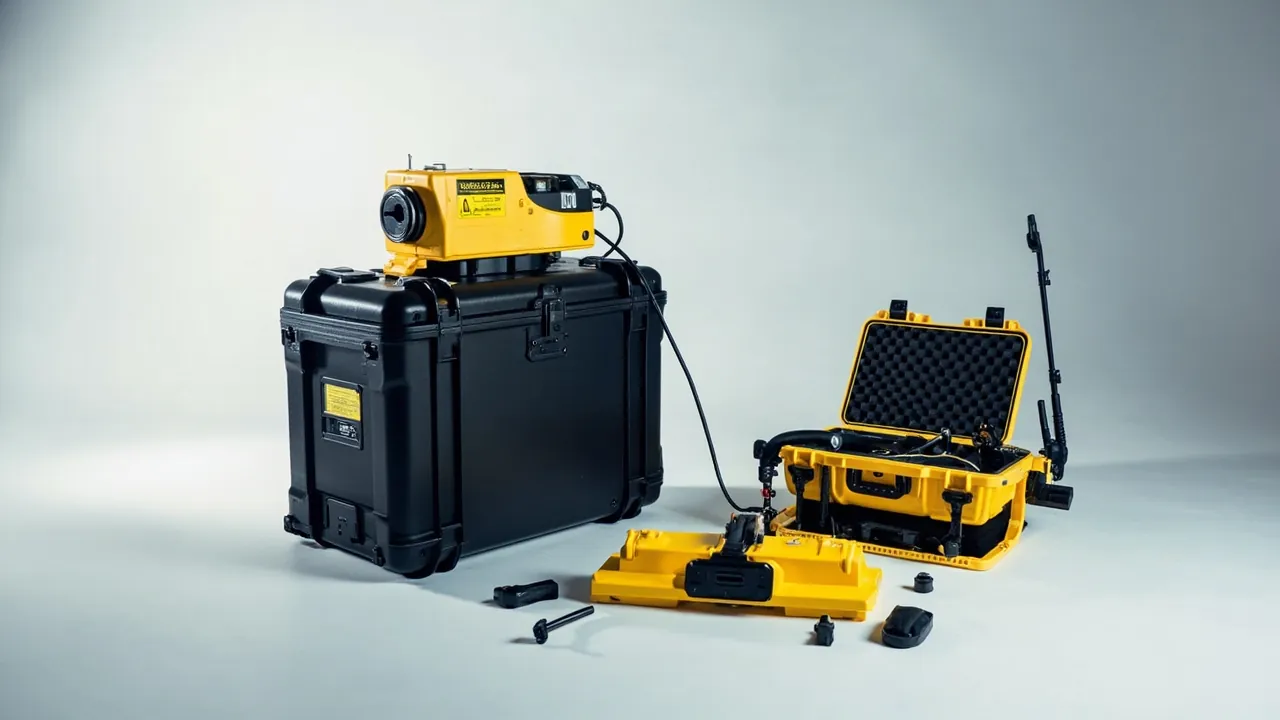
Pipeline inspection and pigging work underpins the safe operation of long-distance transmission pipelines, refinery process lines and municipal networks. Equipment used for this work shares one distinctive feature: precision electronics, long slender members and deformable elastomers all travel in the same job kit. The conclusion up front: a pipeline inspection and pigging case must achieve three things. Inspection camera probes and optics must not be impacted or contaminated, elastomer components on crawlers and pigs must not be compressed long term, and batteries together with data storage modules must be protected from moisture, shock and heat. Specify IP65 as the baseline, and IP67 where electronic hosts and batteries are involved. The insert should use four zones for host, probes, cables and elastomers, and every optical face needs its own hard shell secondary protection.
Field problems are telling. An industrial borescope arrives with a hairline crack in the sapphire window at the probe tip, imaging turns hazy, and the whole probe must be replaced. A pipeline crawler's polyurethane wheels take a permanent set inside the case and the unit tracks off-line downhole. A pig's polyurethane cups deform permanently after weeks of compression in a hot shipping container, degrading both passability and sealing. A lithium battery pack is held at the port because transport compliance documents are incomplete. None of these outcomes are bad luck. They come from a packaging concept that does not match the equipment's physical behavior. This article covers cameras, crawlers, pigs and electronics with batteries, and provides directly usable case selection, insert design, test verification and acceptance guidance for pipeline operators, inspection service providers, and refinery equipment and procurement teams.
Table of Contents
- 1. Transport Pain Points for Inspection and Pigging Equipment
- 2. Where Inspection Cameras Fail: Probes, Optics and Insertion Tubes
- 3. Structure and Protection Requirements for Pipeline Crawlers and Robots
- 4. Elastomer Protection for Pigs and Spheres
- 5. Dedicated Protection for Electronics, Batteries and Data Storage
- 6. Case Selection: IP Rating, Material and Long-Item Options
- 7. Insert Design: Four Zones, Profile Cradles and Cable Management
- 8. Vibration, Shock and Transport Test Verification
- 9. Moisture, Dust and Cleanliness Control
- 10. Field Awareness: Hazardous Areas and Pipeline Conditions
- 11. Battery Transport Compliance and Documentation
- 12. Incoming Inspection, Counting and Traceability Labels
- 13. Custom Insert Workflow and OEM/ODM Delivery
- 14. Selection Decision Tables and Common Misconceptions
- Frequently Asked Questions
- Conclusion & Related Reading
1. Transport Pain Points for Inspection and Pigging Equipment
Inspection and pigging work happens between two extremes: routine storage and cross-region deployment from a warehouse at one end, and field work in remote terrain, process units or municipal manholes at the other. Equipment moves back and forth constantly, far more often than typical industrial instruments. Three pain points follow.
- High value and deep integration per set. A pipeline inspection system typically includes a host, control unit, multiple probes, tens or even hundreds of meters of insertion tube or cable, power supplies and data accessories. Damage to any single element can take the whole system out of service, and there is often no backup in the field.
- Rigid long members and flexible long members coexisting. Probe insertion tubes and push rods are slender rigid items that cannot be bent past a limit. Cables and umbilical lines are flexible long items that cannot take sharp folds or kinks. The two demand completely different packaging logic, and mixing them damages both.
- A high proportion of elastomer components. Crawler wheels, pig cups, sealing discs, scrapers and guide wheels are largely polyurethane, nitrile rubber and fluoroelastomer. These materials are extremely sensitive to the combination of sustained compression and elevated temperature, developing compression set that directly changes pig operating parameters.
Inspection equipment also brings work permit, hazardous area entry and data compliance requirements. A packaging concept that gets battery transport documents and equipment traceability labels right at the same time measurably reduces coordination overhead between field teams and logistics.
From a protection engineering standpoint, the design goal for pipeline inspection and pigging cases is to keep optical faces clean and intact, keep long members free of bending, keep elastomers free of sustained static load, and keep batteries and electronics in a controlled temperature and humidity environment. This aligns with the sensitivity-tiered approach in the instrument case selection guide, except that inspection equipment spreads its sensitivities more widely and needs more compartments.
2. Where Inspection Cameras Fail: Probes, Optics and Insertion Tubes
The industrial borescope is the eye of pipeline inspection and one of the most expensive single items. Its weak points cluster in four places.
| Location | Structure / material | Typical transport failure | Protection notes |
|---|---|---|---|
| --- | --- | --- | --- |
| Lens protection window | Sapphire or optical glass | Cracking, scoring, oil contamination | Dedicated hard cap, never contact a hard object |
| Illumination LED and light source | High-brightness LED or fiber bundle | Solder joint cracking, fiber breakage | No impact or compression, own compartment |
| Probe articulation section | Micro hinges and pull wires | Pull wire breakage, seized joint | Keep factory bend attitude, never force straight |
| Insertion tube | Tungsten braid or stainless flexible conduit | Kinks, jacket damage, internal wire breakage | Enforce minimum bend radius, coil or large-arc spooling |
| Host and control unit | Circuit boards, display, connectors | Board solder cracking, screen breakage, connector deformation | Own compartment, ESD liner, cushioning layer |
| Connectors | Precision multi-pin connectors | Bent pins, lost seals | Fit caps, store in individual bags |
The critical rule: every optical face needs its own hard protective cap with a soft inner lining. A common mistake is wrapping a probe in tissue or bubble wrap and calling it protected. Once it contacts another part in transit, the optical window cracks or scores. The correct approach:
- Use a hard cap matched to the probe diameter, in plastic or metal, lined with soft foam or silicone.
- Give the probe its own compartment with 5 to 10 mm of clearance on all sides, never sharing a compartment with metal parts.
- Coil the insertion tube according to the manufacturer's minimum bend radius, typically 8 to 15 times the tube outer diameter as a rule of thumb. Larger is always safer than smaller.
- Secure the coil with soft hook-and-loop straps or a dedicated spool. Never cinch it with cable ties.
- The transition between probe and insertion tube is a stress concentration. Add a support block so it does not hang unsupported.
For spooling and support design on insertion tubes, see the treatment of flexible long items in the custom insert design guide.
Optical faces should also be cleaned with lens tissue and dedicated cleaning fluid and confirmed dry before packing. If equipment goes straight into the case after field work, residual oil and dust on the tube wall can cure onto optical surfaces and form a contamination layer that is very difficult to remove. For cleaning the case itself, see how to clean a protective case.
3. Structure and Protection Requirements for Pipeline Crawlers and Robots
Pipeline crawlers, including inspection robots and in-line inspection tools, combine mechanics, electronics and drives. Their transport protection priorities are as follows.
Running gear and wheels
- Polyurethane wheels, magnetic wheels and tracks develop permanent set under sustained static load. Place the unit in a state where the running gear carries no load before packing, or design wheel channels in the insert so wheels are suspended or supported over a large area at low stress.
- Tracked units need tension released or a tension-retaining block fitted so long-term tension does not deform the track.
- Wheel axles and bearing seats are precision mating surfaces. Add soft separators at all contact points.
Drive and transmission
- Motor output shafts, gearboxes and couplings dislike lateral load. Restrain the housing, not the drive shaft.
- Hydraulically driven crawlers need oil drained and ports plugged to avoid leakage contaminating the insert and electronics.
- If the crawler has articulated or telescoping structure, keep it in factory stowed attitude and fix it with limit blocks.
Electronics bay and sensor modules
- Electronic bays are often pressure-rated or sealed structures. Shell deformation can compromise sealing, so the insert must avoid point loads on the housing.
- Camera modules, laser ranging, ultrasonic thickness probes and inertial measurement units are precision sensors. Give them separate compartments with an ESD-safe liner.
- Cap cable exits and connectors to prevent pin deformation.
Structure and center of gravity
- Crawlers are often top-heavy or asymmetric front to rear. Lay out support points by the actual center of gravity so no section cantilevers.
- Units over 25 kg need handles, wheels or a pallet format for forklift handling. See case wheels and trolley handle.
For anti-vibration design on robotics equipment, see the cushioning curves and multi-layer energy absorbing structures described in seal and shock case design.
4. Elastomer Protection for Pigs and Spheres
Pigs look rugged but are surprisingly sensitive to packaging. The reason is that their key performance parameters, namely interference fit, sealing capability and passability, are all governed by the geometry of polyurethane cups and sealing discs, the components most prone to permanent deformation under sustained compression and heat.
Common pig types and their protection priorities:
| Type | Main elastomer | Transport risk | Protection notes |
|---|---|---|---|
| --- | --- | --- | --- |
| Foam or solid sphere | Sphere body | Flattening, scoring, oil absorption | Dedicated cylindrical compartment or profile cradle, never stacked |
| Cup pig | Polyurethane cups | Permanent cup deformation, edge curling | Suspend the cups, no axial or radial static load |
| Disc and scraper pig | Scraper blades | Blade bending, edge rolling | Fit support rings, keep natural attitude |
| Caliper pig | Caliper plate, data logger | Plate deformation, logger shock damage | Pack the plate separately, own compartment for the logger |
| Smart pig (in-line inspection) | Cups plus electronics bay plus sensors | Combined risks, heavy | Multi-point support by center of gravity, cushioned electronics bay |
| Magnetic pig | Magnet assemblies | Attracting debris, magnetic field affecting other parts | Magnetic shielding, keep away from electronics and instruments |
The critical rule: pig cups and sealing discs must be in a no-static-load condition when packed. Practical measures:
- Use a cylindrical insert, in PE or EVA, so the pig's circumference is loaded evenly rather than at points.
- If stacking is unavoidable, add rigid dividers between layers and never let upper weight bear on cups.
- For long-term storage, use a suspended rack so the pig lies horizontally with cups hanging free of load.
- Temperature matters equally. Polyurethane and rubber develop compression set far faster under sustained load above 40 degrees Celsius. Container interiors can reach 60 to 70 degrees Celsius in summer, so shipping terms should state that prolonged high-temperature exposure is to be avoided.
Rule of thumb: pig cup interference is measured in millimeters, and a few percent of compression set is enough to visibly degrade sealing. Preventing long-term compression matters more than preventing impact.
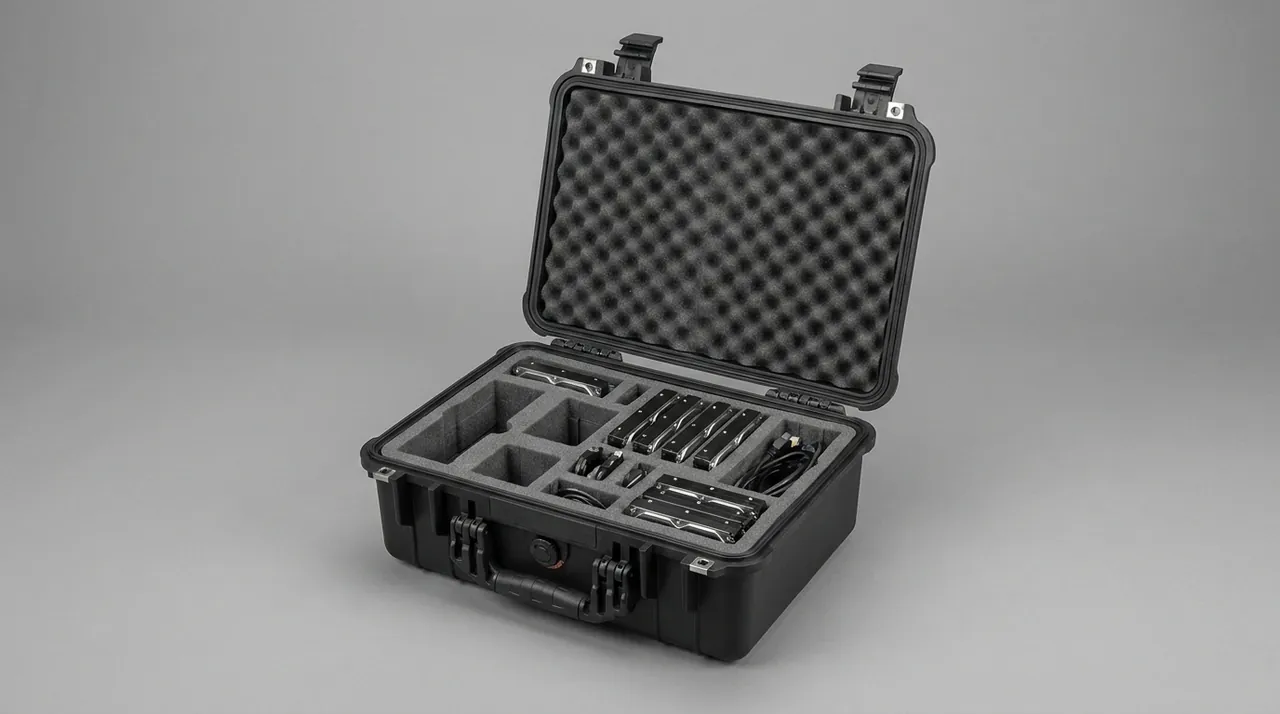
5. Dedicated Protection for Electronics, Batteries and Data Storage
Modern pipeline inspection equipment is fundamentally a data acquisition system, and the protection level of its electronics and energy storage determines whether the kit works the moment it is opened.
Host and control unit
- Own compartment with at least 10 mm of cushioning on all sides, never sharing with heavy metal parts.
- Use static-dissipative insert material at contact surfaces. For precision boards and sensors, see the zoning and grounding practice in ESD shielding case design.
- Cap interfaces and connectors to prevent pin deformation and dust ingress.
- Protect displays with a rigid plate or peelable film.
Lithium battery packs and chargers
- State of charge management. Lithium battery transport commonly requires state of charge limited to 30 percent of rated capacity, subject to carrier and destination regulations.
- Terminal insulation and short circuit prevention. Pack each pack separately, fit insulating caps or tape over terminals, and never leave multiple bare packs touching in the same compartment.
- Temperature and moisture. Avoid direct sunlight and high heat. Place desiccant and a humidity indicator card inside the case.
- Documentation. Lithium batteries typically require a UN 38.3 test summary, a transport conditions appraisal certificate and an MSDS. Air freight also requires compliance with IATA dangerous goods rules. See ADR and IMDG hazmat transport for related packaging logic.
- Capacity marking. Different rated energy in watt-hours triggers different transport provisions, so mark rated energy and battery type clearly on the outer case.
Data storage and backup
- Solid-state drives and memory cards are static sensitive. Pack them in antistatic bags separately.
- State clearly in the packing list that data has been backed up and confirmed by the client, so transport risk does not become data loss risk.
- For critical jobs, consider a dual-channel approach where data travels with a person while equipment goes by freight.
6. Case Selection: IP Rating, Material and Long-Item Options
Pipeline inspection and pigging equipment spans a huge size range, from a handheld borescope host to multi-meter pigs and crawlers. Case selection must be organized by equipment group rather than one case per system.
Ingress protection follows IEC 60529 and its Chinese equivalent GB/T 4208. Use the table below.
| Equipment group | Recommended rating | Main reason | Note |
|---|---|---|---|
| --- | --- | --- | --- |
| Camera host and probe case | IP67 | Optics fear water and dust, field work leaves residue | Temporary immersion protection is reassuring |
| Pipeline crawler case | IP65 or above | Electronics bay fears moisture, body gets dirty and needs washing | Case should tolerate washdown |
| Pig case | IP65 | Elastomers fear moisture and sunlight, no precision electronics | Focus on light blocking and ventilation |
| Battery and charger case | IP67 | High short circuit and moisture risk | Separate case, never mixed with equipment |
| Cable and insertion tube case | IP65 | Long items, bend and moisture sensitive | Long format with spooling reels |
| Accessory and tool case | IP54 to IP65 | General tools and spares | Configure by usage frequency |
Material choices:
- One-piece injection molded PP or PE cases. For hosts, probes, batteries and accessories. Excellent sealing, chemical resistance and low weight.
- Copolymer polypropylene panel with aluminum frame long cases. For insertion tubes, push rods, pigs and long cables. Lengths of 1.5 to 3 m are practical with internal support beams and spooling reels.
- Rotomolded LLDPE cases. For heavy crawlers and complete pigging sets, with the best impact resistance, internal metal frames and lifting points.
On flammability, cases entering process unit areas or fire-sensitive storage can be specified to meet a UL94 vertical burn rating such as UL94 V-0, with material certificates requested. This is a material property only and constitutes no explosion protection or fire certification.
Hardware and gasket reliability is routinely overlooked. Long cases need latch counts scaled with length so the middle section gasket is properly compressed. Stainless or removable hinges are recommended. See toolbox hinge, latch and seal selection.
JUNZHJIA, manufactured by Kexin New Materials (Guangdong) Co., Ltd., supplies pipeline inspection cases as a combined package of a molded host case plus an aluminum frame long case, with cavities and spooling reels customized to probe count and insertion tube length, together with protection rating statements and material certificates per project.
7. Insert Design: Four Zones, Profile Cradles and Cable Management
For pipeline inspection and pigging equipment, a four-zone insert structure works best.
- Host zone. Control host, display and power module, independently cushioned with a static-dissipative liner.
- Probe zone. One compartment per probe with hard protective caps, optical faces oriented up or sideways, never down.
- Cable zone. Insertion tubes, umbilicals, power and data cables coiled in separate areas with reels or large-arc supports.
- Elastomer and accessory zone. Pigs, cups, spare running gear, tools and consumables, all in a no-static-load condition.
Insert material reference:
| Material | Density range | Characteristics | Typical application |
|---|---|---|---|
| --- | --- | --- | --- |
| EVA foam | 60 to 120 kg/m3 | Tunable stiffness, CNC carveable, low shedding | Host location, probe compartments |
| PU foam | 30 to 80 kg/m3 | Molded in one piece, good energy absorption | Irregular body wrapping |
| PE foam | 25 to 45 kg/m3 | Low cost, easy to cut | Large-part bedding, filling |
| XPE crosslinked foam | 30 to 60 kg/m3 | Thermoformable, thin-wall friendly | Panels, instrument layers |
| Static-dissipative foam | Per surface resistance spec | Conductive or dissipative | Electronic hosts, board areas |
| Rigid divider (PP, PVC, plywood) | Not applicable | Load bearing, isolating | Layer separation, heavy support |
Cable management practice:
- Insertion tubes and push rods. Use a reel with a diameter at least twice the manufacturer's minimum bend radius, secured with soft hook-and-loop straps.
- Umbilicals and fiber lines. Avoid small-radius sharp folds. A rule of thumb is a bend radius of at least 10 to 15 times the cable outer diameter. Cap both ends after coiling.
- Between cables. Add separators to prevent chafing and jacket wear, and avoid stacking cables of very different diameters.
- Labels. Fit weather-resistant labels at both ends of every cable showing number and function, avoiding repeated trial connections in the field.
For inspection service companies that reconfigure kits frequently, a removable divider system allows rapid reconfiguration so one case serves multiple job setups.
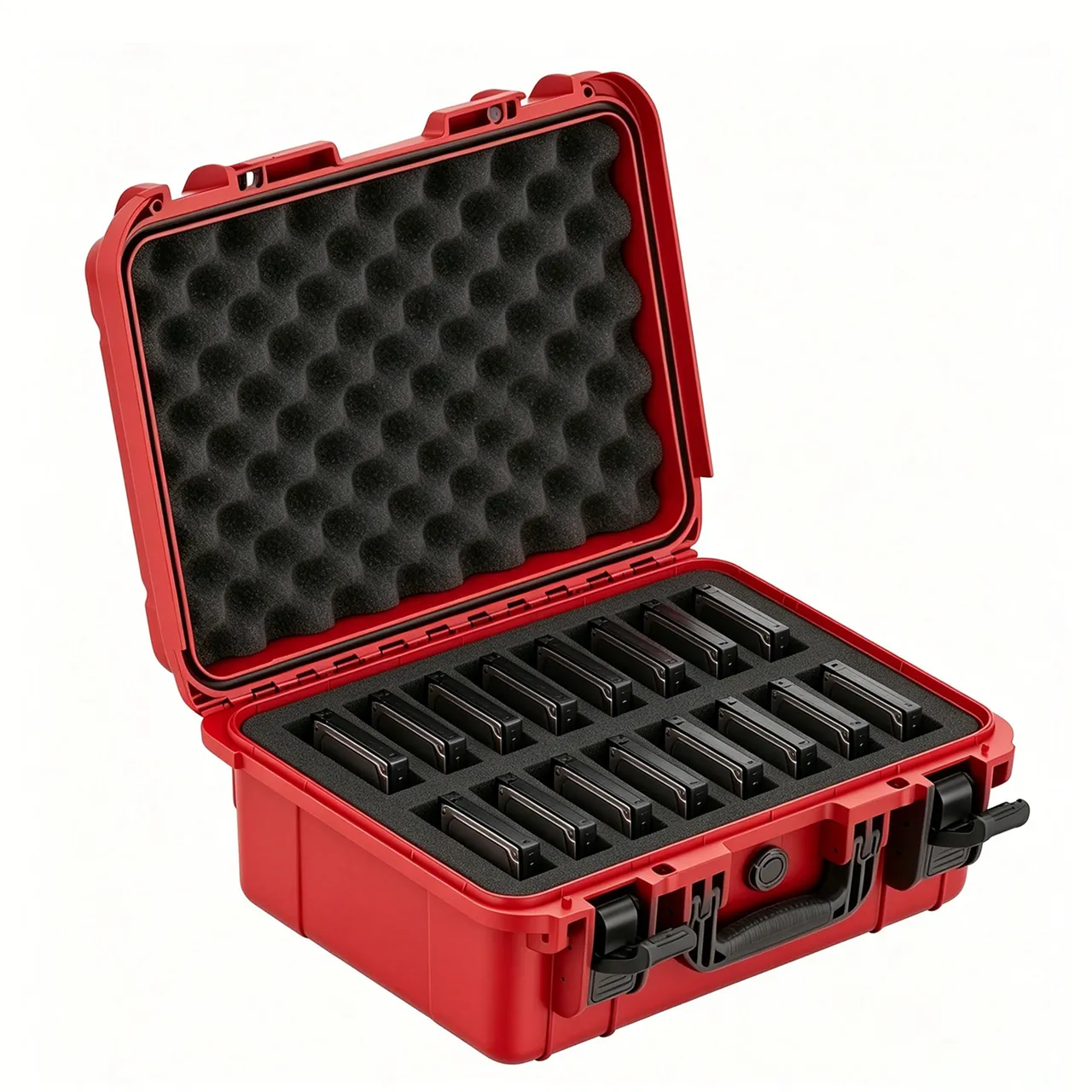
8. Vibration, Shock and Transport Test Verification
Pipeline inspection equipment takes both road vibration, which is a fatigue issue, and handling shock, which is a strength issue. Field work often involves rough terrain and manual carrying, so real loads are harsher than for ordinary industrial spares.
Three international test families are commonly used.
- ISTA. The ISTA 1 series suits factory pass-fail screening. The ISTA 3 series adds conditioning, random vibration, drops and shock, tracking real distribution environments more closely. Export shipments often specify ISTA 3A. See ISTA transport testing procedure.
- ASTM D4169. Selects sequences and assurance levels by distribution cycle, suited to long-haul air plus road deployment. See ASTM D4169 distribution cycle testing.
- GB/T 4857. The Chinese family of basic transport package test methods covering stacking, vibration, impact and drop, and the most cited basis in domestic tenders. See GB/T 4857 transport packaging testing.
Environmental conditions can be cited from MIL-STD-810H method numbers and levels for vibration, shock, humidity and temperature. It must be stated clearly: citing MIL-STD-810H methods only standardizes test conditions and levels. It does not mean the product holds any military certification, nor that it passed every test in the standard. See MIL-STD-810H case compliance for compliant wording.
Recommended verification package for pipeline inspection equipment:
| Test | Reference basis | Key observation | Pass criterion (rule of thumb) |
|---|---|---|---|
| --- | --- | --- | --- |
| Random vibration | ISTA 3 / GB/T 4857.23 | Insert displacement, probe contact with hard parts | No displacement, no contact marks |
| Drop (corner, edge, face) | ISTA 3A / GB/T 4857.5 | Case rupture, insert crushing | Case intact, insert set under 10 percent |
| Stacking compression | GB/T 4857.3 | Long case mid-span bending, seal failure | Dimensional change within allowance |
| Temperature-humidity cycling | GB/T 4857.2 | Condensation, mold on optics, label lift | No condensation, no mold |
| Post-test functional check | Company procedure | Imaging, travel, data readout | Function normal, no parameter drift |
Practical note: for equipment with optical faces, make an opening imaging check mandatory by comparing against a standard target or test chart to confirm image clarity and illumination uniformity against factory reference images.
9. Moisture, Dust and Cleanliness Control
Pipeline inspection equipment works in damp, dusty and oily pipeline environments, so pre-packing cleaning matters as much as humidity control inside the case.
Pre-packing treatment
- Clean housings, probes and cable jackets with lint-free cloth to remove oil and dust.
- Clean optical faces with lens tissue and dedicated fluid, let them dry, then fit protective caps.
- Confirm the equipment and cables are fully dry. Packing damp gear after field work is the leading cause of mold and corrosion.
- Clean and dry contaminated elastomer components such as cups and sealing discs separately, avoiding prolonged oil contact with polyurethane.
Humidity control inside the case
- Desiccant sizing. Calculate from internal free volume and transit duration. A practical rule is 1 to 2 kg of high-performance desiccant per cubic meter of free volume, doubled for ocean freight and wet regions.
- Humidity indicator cards. Place where they can be read immediately on opening and treat them as acceptance evidence. Target below 60 percent relative humidity at opening, and below 50 percent for cases with optics and electronics.
- Vapor corrosion inhibitor. Use VCI film or emitters for metal structures, push rods and tools, confirming compatibility with copper, zinc and electronics.
- Pressure equalization valves. A well-sealed case develops a pressure differential across climate zones or in air freight, causing hard opening or gasket damage. See case pressure equalization valve configuration.
Cleanliness awareness
For hydraulically driven or hydraulically tensioned crawlers, hydraulic fluid cleanliness directly affects component life. ISO 4406 expresses solid particle contamination level using three code numbers for particles above 4, 6 and 14 micrometers. Packaging measures that support this include plugging all oil ports, using low-shedding insert material, avoiding opening the case in dusty environments, and keeping tools clean when changing hydraulic parts.
10. Field Awareness: Hazardous Areas and Pipeline Conditions
Pipeline inspection and pigging work frequently takes place near process units, oil and gas transmission stations, tank farms and municipal gas networks. Many of these are explosive gas atmospheres. IEC 60079, the international family for equipment in explosive atmospheres, with its Chinese counterpart GB 3836, is the governing framework; the European Union applies the ATEX directive system.
Two points matter.
First, a protective case is an outer packaging container, not explosion-proof electrical equipment. Packing inspection equipment in an IP67 case grants no explosion protection certification. Whether the equipment itself has a protection concept such as intrinsic safety or flameproof enclosure depends on its design, not on the packaging.
Second, packaging should support the safety boundary of field work. Practical measures:
- Mark cases with wording such as not an explosion-proof container, do not open inside a hazardous area, per plant HSE convention.
- Unpack, assemble and charge in a safe area outside the classified zone. Never charge equipment or swap batteries inside a hazardous area.
- Follow site hot work and electrical management rules for battery charging and storage.
- Confirm pre-entry checks under the work permit before the tool goes downhole, and account for all cases and accessories so no tool is left in the unit area.
- For components with residual oil or liquid, such as waste collection items after pig retrieval, follow hazardous goods requirements and apply ADR and IMDG hazmat transport packaging rules where relevant.
Defining the boundary and marking it professionally significantly reduces coordination overhead between procurement, logistics and HSE.
11. Battery Transport Compliance and Documentation
Lithium batteries are standard on pipeline inspection equipment and represent the highest transport compliance risk. The following is general guidance; specific provisions must always follow carrier requirements and destination regulations.
| Item | Common requirement | Packaging response |
|---|---|---|
| --- | --- | --- |
| State of charge | Commonly not above 30 percent of rated capacity | Record and mark before dispatch, note on outer case |
| Terminal protection | Prevent short circuits | Individually insulated packing, caps or insulating tape |
| Individual packing | Prevent contact and compression | One pack per compartment, no bare mixed loads |
| Documentation | UN 38.3 test summary, transport appraisal, MSDS | Moisture-proof document pouch in the case |
| Marking | Battery type, rated energy in Wh, warning marks | Clearly legible on the outer case, away from the seam |
| Air freight | Comply with IATA dangerous goods rules | Confirm declaration method with the forwarder in advance |
| Temperature | Avoid high heat and direct sunlight | Light-blocking case, terms prohibiting prolonged sun exposure |
Practical advice:
- Keep a battery register. Record each pack's number, capacity, production date, UN 38.3 report number and latest transport record.
- Documents travel with the case. Put copies in a moisture-proof pouch fixed inside the case so they are never missing.
- Separate batteries from equipment. Use a dedicated, clearly marked battery case so carriers can identify and inspect it easily.
- Avoid extreme temperatures. Container interiors can reach 60 to 70 degrees Celsius in summer. Lithium capacity fades faster under heat, and pig elastomer compression set accelerates. Shipping terms should prohibit prolonged high-temperature exposure.
12. Incoming Inspection, Counting and Traceability Labels
Inspection equipment has many accessories, cables and configuration combinations, so counting efficiency at goods-in directly determines equipment availability. Three items belong in procurement and logistics contracts.
- Appearance and packaging check. Case intact, no water ingress, gaskets complete, humidity card in range, seal numbers continuous.
- Opening count. Verify item by item against the packing list, using GB/T 2828.1, the standard for sampling procedures for inspection by attributes, with an agreed AQL. See custom case acceptance and AQL.
- Functional re-check. By equipment type: imaging and illumination for borescopes, travel and communication for crawlers, dimensional and visual checks for pigs, voltage and appearance for batteries.
Suggested acceptance checklist:
| Check item | Method | Acceptance basis | Action on failure |
|---|---|---|---|
| --- | --- | --- | --- |
| Case appearance and sealing | Visual plus seal number | No damage, no water ingress | Isolate and inspect contents |
| Internal humidity | Humidity indicator card | RH at or below 60 percent (50 percent with optics or electronics) | Replace desiccant and recheck |
| Insert integrity | Visual and tactile | No powdering, collapse or displacement | Replace insert |
| Optical window and lens | Visual with oblique lighting | No cracks, scoring or contamination | Return or replace the probe |
| Probe articulation and tube | Visual plus bending | Smooth joint, no kinks, no broken wires | Repair or replace |
| Host function | Power-on self test | Clear imaging, normal parameters | Repair |
| Crawler travel | No-load travel test | Tracks straight, no abnormal noise | Repair |
| Pig elastomers | Visual plus caliper measurement | No visible permanent set, dimensions within tolerance | Return or accept as downgraded |
| Battery | Voltage measurement plus visual | Normal voltage, no swelling, no leakage | Isolate immediately and dispose as hazardous waste |
| Accessories and documents | List cross-check | Quantities match, documents complete | Replenish |
Traceability labels deliver high return at low cost. Use weather-resistant plates on every case showing equipment name and model, asset number, project or pipeline, quantity, manufacturing date, packing date, case number and a QR code linking to the electronic record. For inspection service providers, equipment that can be found, matched and traced markedly improves dispatch efficiency.
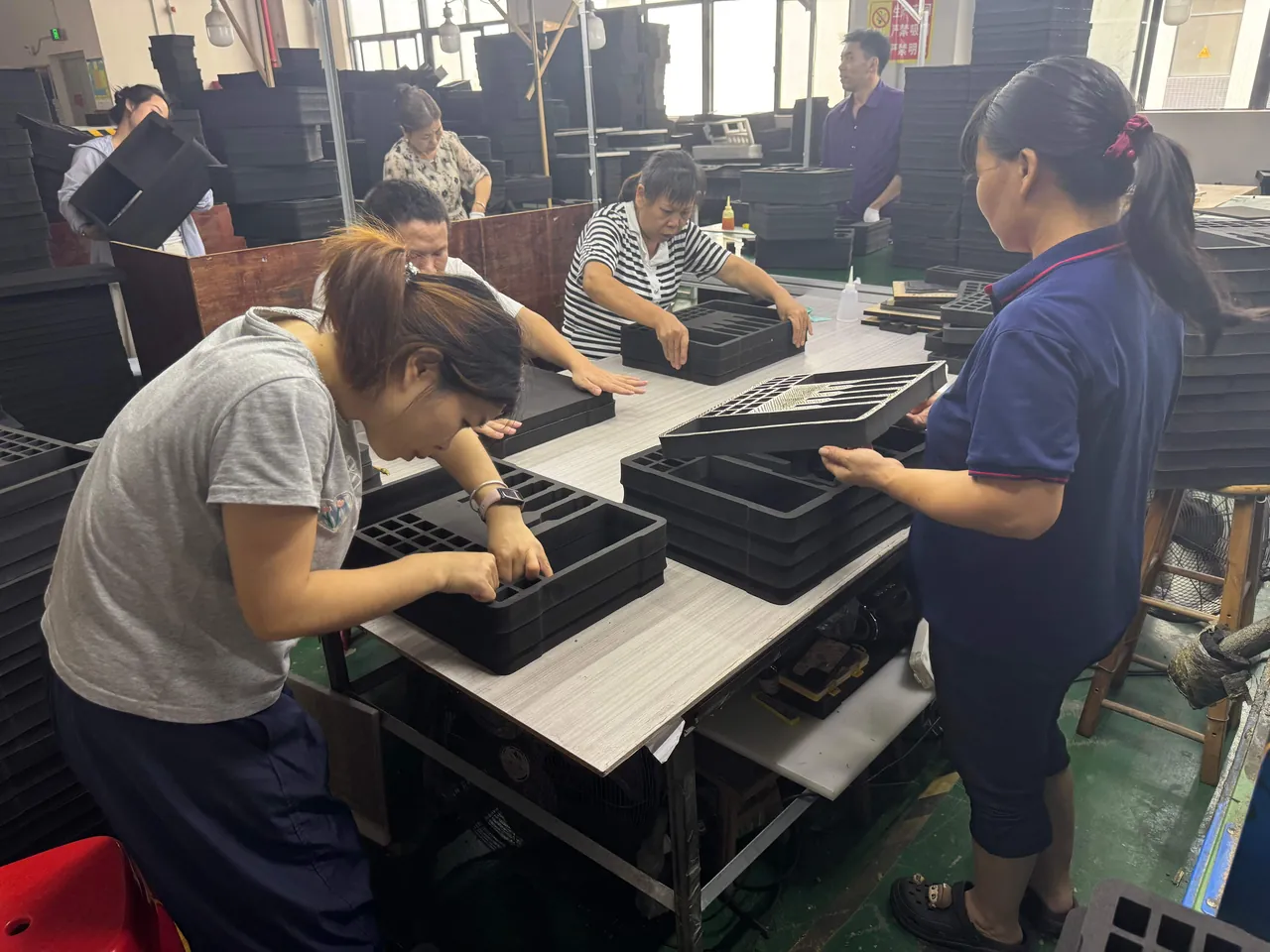
13. Custom Insert Workflow and OEM/ODM Delivery
For pipeline operators and inspection service companies running multiple equipment sets and long-term case provisioning, the packaging concept should be standardized rather than procured ad hoc. JUNZHJIA, manufactured by Kexin New Materials (Guangdong) Co., Ltd., serves global wholesale, distribution and OEM/ODM customers with one-stop support from case selection and insert customization to documentation. A typical workflow:
- Requirements gathering. Equipment list and drawings, dimensions, weights, kit combinations, transport modes (road, sea, air) and annual volume.
- Concept design. Case specification, material, protection rating, hardware configuration, four-zone insert layer drawings and 3D assembly views.
- Prototype confirmation. First case and insert built so the customer can load actual equipment and verify handling and restraint.
- Test verification. Vibration, drop, stacking and temperature-humidity cycling as agreed, with test records issued.
- Production and quality control. Batch sampling with first-article and process records retained.
- Documentation. Material certificates, protection rating statements, test records, packing drawings and label templates.
- Continuous improvement. Inserts and hardware adjusted from field feedback under version-controlled drawings.
When evaluating suppliers, see the criteria in how to choose a protective case OEM factory. Three points matter most: non-standard dimension and long-item capability, verifiable test records, and references in the same industry. For tooling amortization, minimum order quantities and lead time structure, see custom case mold cost analysis.
Users should also manage packaging as an asset with finite life. Gaskets harden, foam powders, latches loosen and hinges deform over time. Use protective case service life to set a periodic inspection schedule, with a full assessment typically after 3 to 5 years or more than 200 open-close cycles.
14. Selection Decision Tables and Common Misconceptions
For quick decisions, common scenarios are mapped below.
| Scenario | Equipment traits | Recommended case | Recommended insert | Key verification |
|---|---|---|---|---|
| --- | --- | --- | --- | --- |
| Handheld borescope host with 2 to 3 probes | Precision electronics plus optics | Mid-size molded case, IP67 | Host zone, probe compartments, hard caps | Drop plus imaging recheck |
| Long insertion tubes and push rods, 3 to 30 m | Slender, bend sensitive | Aluminum frame long case, IP65 | Spooling reels plus large-arc supports | Vibration plus bend radius check |
| Pipeline crawler, 20 to 60 kg | Electronics bay plus running gear | Rotomolded or heavy aluminum frame case, IP65 | Profile cradles with unloaded wheels | Stacking plus travel test |
| Pigs, cup or scraper type | Mostly elastomer | Long or cylindrical case, IP65 | Cylindrical insert, no-static-load support | Dimensional recheck plus visual |
| Smart pig (in-line inspection) | Combined structure, heavy | Heavy-duty case, IP67 | Multi-point support by center of gravity, cushioned bay | Drop plus functional recheck |
| Batteries and chargers | High short circuit risk | Dedicated molded case, IP67 | Insulated compartments plus ESD layer | Appearance plus voltage check |
| Cables and accessory packs | Many types, flexible long items | Mid-size case, IP65 | Zoned coiling plus label control | Count plus visual check |
Common misconceptions:
- Myth one: bubble wrap is enough for optical faces. Bubble wrap has no hard shell and can abrade the optic. Use a padded hard cap.
- Myth two: the tighter the insertion tube is coiled, the better. Coiling below the minimum bend radius breaks internal wires. Larger coils are always safer.
- Myth three: a tightly packed pig cup will not move. Long-term static pressure causes permanent set. No-static-load support matters more than tight packing.
- Myth four: equipment and batteries can share a case. Battery short circuit risk is high and regulations usually require separate packing. Use separate cases.
- Myth five: packing damp gear after field work is fine. Moisture is the leading cause of mold, corrosion and optic contamination. Clean and dry before packing.
- Myth six: MIL-STD-810H is a certification. It is a source of test methods, not a certificate.
- Myth seven: one insert design lasts forever. Equipment models and configurations change. Insert drawings need version control.
Frequently Asked Questions
Q: What does an inspection camera probe fear most in transit, and what protection is enough?
A: Two things: impact from contact with hard objects, and contamination of optical faces by dust and oil. The probe tip usually carries a sapphire or optical glass window, and even a light point impact can create hairline cracks that show up later as haze or abnormal light spots, often only after the equipment reaches the worksite. The correct approach is a dedicated hard cap for each probe, lined with soft foam or silicone, with the probe in its own compartment and 5 to 10 mm of clearance from metal parts on all sides. The articulation section must keep its factory bend attitude and must never be forced straight, which can break pull wires internally. Coil the insertion tube to the manufacturer's minimum bend radius, typically 8 to 15 times the tube outer diameter, and secure it with soft hook-and-loop straps rather than cable ties that create local pressure points. Clean optical faces with lens tissue and dedicated fluid before packing and confirm they are dry so oil cannot cure onto the surface during storage, and protect the illumination source from impact as well.
Q: How should insertion tubes and push rods be coiled without damage?
A: Control the bend radius and avoid stress concentration. First, confirm the manufacturer's minimum bend radius and coil at a diameter at least twice that value, because larger is always safer than smaller. Second, use a reel matched to the tube diameter, with a groove slightly wider than the tube so it sits naturally without pinching. Third, secure the coil with soft hook-and-loop straps or elastic ties. Never use nylon cable ties or wire, because localized pressure dents the jacket and can break internal wires. Fourth, the transition between probe and insertion tube is a stress concentration, so add a support block so it does not hang unsupported during transport. Fifth, do not let multiple tubes overlap and squeeze each other without a separator between them. Sixth, for long-term storage keep them coiled but inspect periodically so the same spot is not loaded indefinitely. Check for jacket damage, kinks or bulges before packing, and mark the coil diameter on the case so anyone repacking the kit reproduces the same safe geometry.
Q: Why do pig cups cause trouble in transit?
A: Cups, sealing discs and scrapers are typically polyurethane or rubber, and their key parameters are interference fit and elastic recovery. These materials are very sensitive to the combination of sustained compression and elevated temperature, developing compression set. In other words, without any impact at all, a cup left compressed and stored hot can change dimension by a few percent, which is enough to degrade sealing and passability in service. Container interiors can reach 60 to 70 degrees Celsius in summer, accelerating the process considerably. Protection practice: use a cylindrical insert so the pig circumference is evenly loaded rather than at points, keep cups in a no-static-load condition and use a suspended rack for horizontal storage where needed, add rigid dividers if stacking is unavoidable and never let upper weight bear on cups, and state in the shipping terms that prolonged high-temperature exposure is prohibited. Preventing long-term compression matters more than preventing impact for these components, because deformation is silent and only becomes visible at the size check.
Q: What details are easy to overlook when packing a pipeline crawler?
A: Five points. First, running gear under load: polyurethane wheels and tracks take a permanent set under sustained static pressure, so design wheel channels so wheels are suspended, or arrange the unit so the running gear is unloaded. Second, center of gravity support: crawlers are often top-heavy or asymmetric front to rear, so support points must follow the actual center of gravity to avoid cantilevered sections that amplify vibration. Third, hydraulics: drain oil and plug ports on hydraulically driven units to prevent leakage contaminating the insert and electronics, and maintain hydraulic fluid cleanliness to the level the components require. Fourth, electronics bay shell protection: pressure-rated or sealed housings can lose sealing if point-loaded, so the insert must avoid point contact and distribute load over a wider area. Fifth, cable exits and connectors: fit protective caps to prevent pin deformation and record connection relationships in the packing list so field teams do not have to test connections repeatedly on site before every run.
Q: What should be considered when shipping lithium batteries for inspection equipment?
A: Five points, with the caveat that specific provisions always follow carrier requirements and destination regulations. First, state of charge management, commonly limited to no more than 30 percent of rated capacity, marked on the outer case. Second, terminal insulation and short circuit prevention, with each pack packed individually and terminals capped or taped, never leaving multiple bare packs touching in one compartment. Third, individual packing, as batteries are usually required to be separated from equipment or at least isolated so carriers can identify and inspect them quickly. Fourth, documentation, typically a UN 38.3 test summary, a transport conditions appraisal certificate and an MSDS, with air freight also requiring compliance with IATA dangerous goods rules. Keep copies in a moisture-proof pouch fixed inside the case. Fifth, temperature management, avoiding direct sunlight and high heat through the whole journey. A battery register recording number, capacity, production date and transport history is also recommended, because it makes both compliance checks and replacement planning straightforward.
Q: Should the case be IP65 or IP67, and how do I choose a long-item case?
A: Match the rating to equipment sensitivity and work environment. Cases with optical faces and electronic hosts should be IP67, because dust tightness plus temporary immersion protection means you can wash the outside after field work without worrying about ingress. Pig cases dominated by elastomers and metal structures can be IP65, with the focus on light blocking, ventilation and moisture control. Battery and charger cases should be IP67 and kept separate from the rest of the kit. For long items such as insertion tubes, push rods and pigs, use copolymer polypropylene panel with an aluminum frame, which can reach 1.5 to 3 m with internal support beams. Latch count should scale with length so the mid-section gasket stays properly compressed rather than lifting away from the seal. Fit spooling reels or large-arc supports inside to control bend radius. Note that an IP rating covers solids and water only, not shock, vibration or temperature-humidity cycling, so long case bending resistance comes from structure, not from the sealing rating.
Q: Equipment works near hazardous areas. Does the packaging need explosion-proof certification?
A: No, and it should not be requested. A protective case is an outer packaging container, not electrical equipment for explosive atmospheres, so the certification framework of IEC 60079, Chinese GB 3836 or the EU ATEX directive does not apply. Packing inspection equipment in an IP67 case creates no explosion protection certification. Whether the equipment itself has a protection concept such as intrinsic safety or flameproof enclosure depends on its design, not on the packaging. The correct approach is to define the safety boundary: unpack, assemble and charge in a safe area outside the classified zone, and mark the case with wording such as not an explosion-proof container, do not open inside a hazardous area, per plant HSE convention. Never charge equipment or swap batteries inside a hazardous area. If shipping components with residual oil or liquid, follow hazardous goods packaging rules instead. Clear boundaries and clear markings significantly reduce coordination overhead between procurement, logistics and HSE.
Q: Which standards should packaging verification cite, and how do I explain them to a customer?
A: Organize along three lines. For transport performance, the ISTA series such as ISTA 3A and ASTM D4169 distribution cycle sequences are common, while domestic tenders often cite GB/T 4857 with its stacking, vibration, impact and drop items. For environmental conditions, cite MIL-STD-810H method numbers and levels covering vibration, shock, humidity and temperature, while stating clearly that these are only method sources and do not represent military certification or a full pass. For materials and components, cite UL94 for case flammability, ISO 9227 neutral salt spray for metal hardware corrosion resistance, IEC 60529 with GB/T 4208 for ingress protection, and ISO 4406 particle level expression where hydraulic cleanliness matters. Write these citations into the technical requirement and require suppliers to provide test records and material certificates so acceptance has a documented basis. Then convert the citations into named acceptance actions such as insert displacement inspection, opening imaging re-check on every probe, and pig elastomer dimensional re-measurement, so the standards become checkable steps rather than compliance language.
Q: What opening checks should be performed when inspection equipment arrives?
A: Five steps. Step one, appearance and documents: check case seal numbers, humidity indicator card color, packing list, quality certificates and battery transport documents for completeness. Step two, optical inspection: examine each probe visually with oblique lighting for cracks, scoring and contamination, and where possible compare imaging and illumination uniformity against a standard target or test chart. Step three, mechanical inspection: check insertion tubes for kinks, bulges and broken wires, exercise probe articulation for smooth movement, and run a no-load travel test on crawlers to confirm straight tracking and no abnormal noise. Step four, elastomer inspection: visually check and caliper-measure pig cups and sealing discs for permanent set and dimensional tolerance. Step five, electronics and batteries: run host self tests and confirm data readout, measure battery voltage and check for swelling or leakage, isolating any suspect pack immediately as hazardous waste. Perform all checks in a clean area to keep dust out of optics and electronics.
Conclusion & Related Reading
The essence of a pipeline inspection and pigging case is translating four engineering constraints into concrete structure and insert language: optical faces must not be touched, long members must not be kinked, elastomers must not be compressed, and electronics with batteries must not get wet. IP65 or IP67 with desiccant handles water and dust, hard caps with separate compartments handle optic damage, spooling reels with bend radius control handle long-member kinking, no-static-load support handles elastomer set, static-dissipative liners with a dedicated battery case handle electronics and energy storage risk, and labels with sampling routines handle traceability. Do all six and the high-frequency losses of chipped probe windows, broken insertion tube wires, deformed pig cups and moisture-damaged electronics fall systematically.
Write the protection rating, insert type, optic protection method, test basis and acceptance method into your technical requirement and require suppliers to provide material certificates and test records. JUNZHJIA, manufactured by Kexin New Materials (Guangdong) Co., Ltd., supports non-standard case design, custom inserts and OEM/ODM volume delivery, and supplies inspection and packing documentation per project so pipeline operators and inspection service companies can fold packaging into equipment asset management rather than leaving it as evidence in a post-incident dispute.
Related Reading