

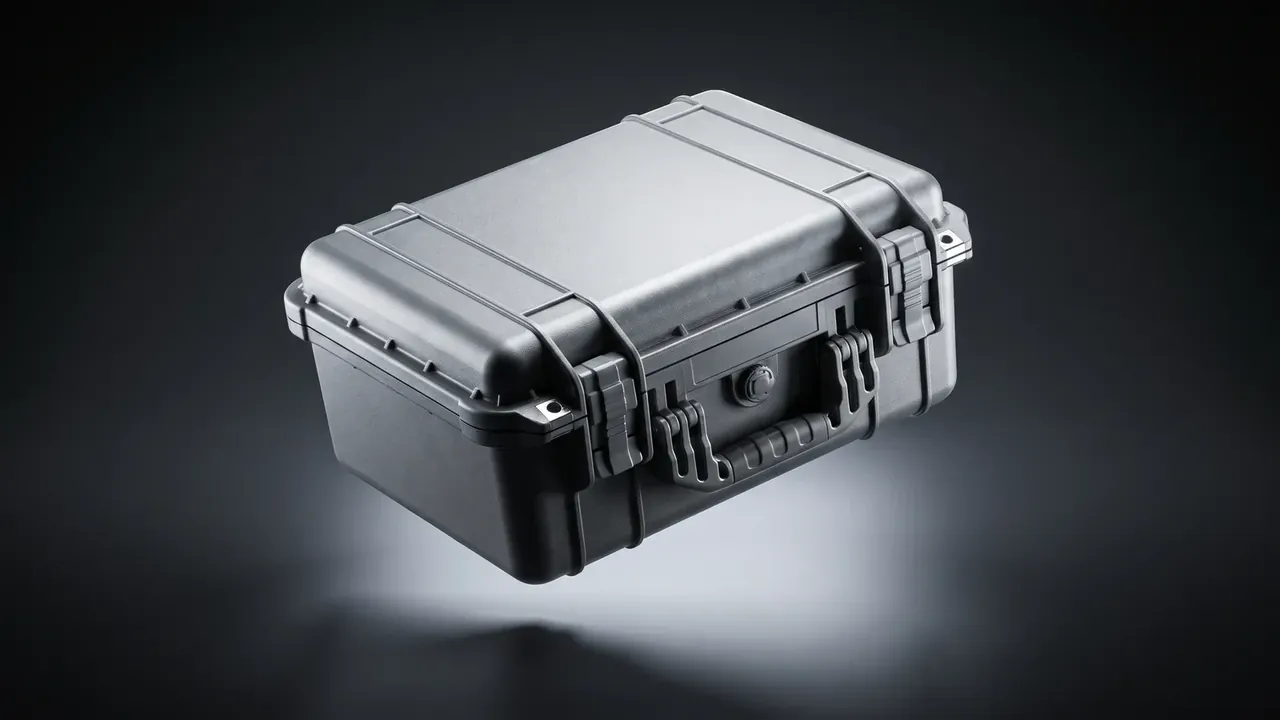
Quick answer: A professional mechanic tool case is judged by oil, brake cleaner, one-hand opening and a fall off a lift, not by crush strength. MIL-STD-810H Method 516.8 and the IEC 60529 spray and immersion criteria work as test references here, but they are cited benchmarks rather than certification claims.
Table of contents
- Four Actions on the Shop Floor
- Oil, Brake Cleaner and the Limits of the Shell
- Tray Zoning and Lid Tool Positions
- One-Hand Opening, Drops and Rolls
- FAQ
1. Four Actions on the Shop Floor
The order never changes: the case sits by the pit or the lift, the lid opens, a tool comes out, the tool goes back, the lid closes, the case rolls under the bench. Each move writes a requirement.
Opening has to work one-handed. Retrieval has to be readable at a glance. Return has to work without looking. Closing has to survive a knee on the latch.
Those four weights shift by site. A dealership bay offers a flat bench and forty open-close cycles a day, so pace wins. Roadside work happens with the case leaning against a tire. A mine site sets it down on broken rock, where a single fall shows whether the corners were designed or guessed.
Design arguments around a professional mechanic tool case almost always trace back to whichever of those four actions somebody sacrificed.
2. Oil, Brake Cleaner and the Limits of the Shell
Shop chemistry is harsher than weather. Engine oil is a slow soak, brake cleaner is a solvent hit, alkaline wash is a warm bath, and diesel sits between them.
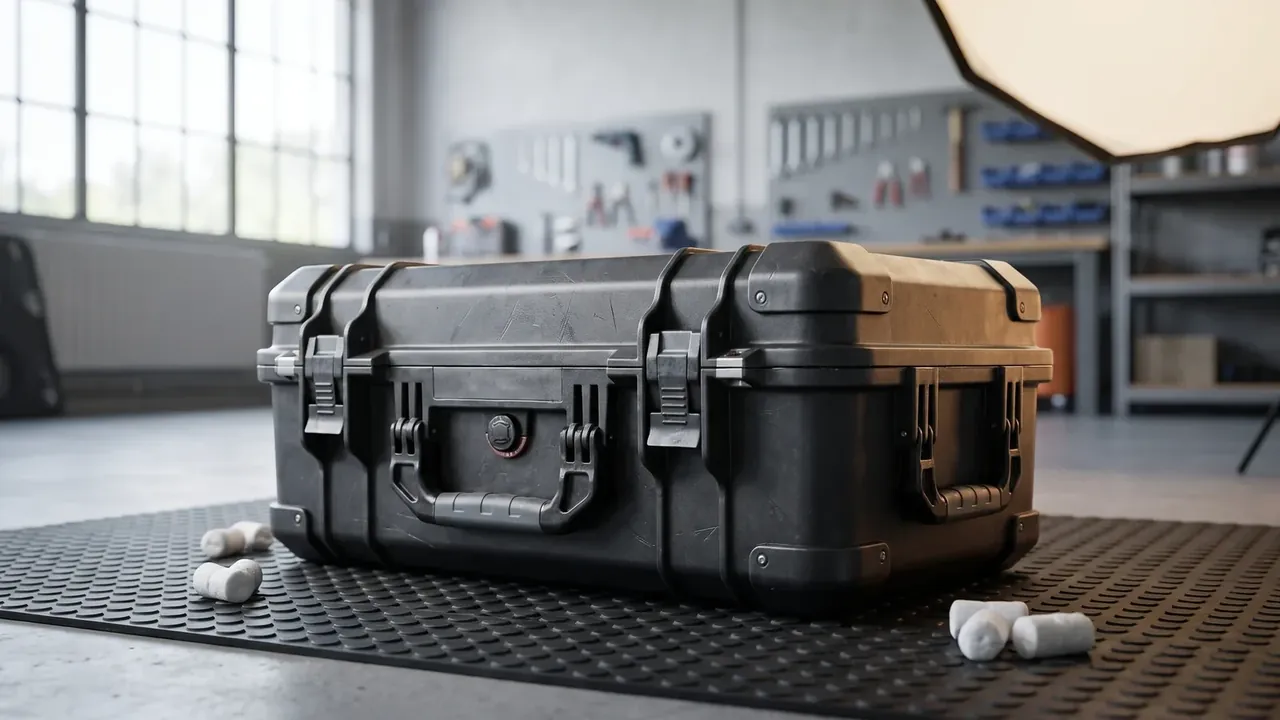
ABS gains nearly four percent in oil over 24 hours and goes soft, with hinge bosses failing first; polypropylene gains under half a percent in the same bath. That is not a quality gap, it is a selection error.
| Medium and condition | PP | ABS | PA66 with 30% glass | Watch item |
|---|---|---|---|---|
| 15W-40 oil, 24 h | +0.4% | +3.8%, softens | +0.2% | Hinge bosses |
| Brake cleaner, 50 wipes | no gloss loss | surface whitens | slight gloss loss | Print and texture |
| 5% alkaline, 40 C, 8 h | stable | stress cracks | stable | Latch roots |
| Diesel, 72 h | +0.9% | swells 6% | +0.3% | Seal groove fit |
Gaskets follow a different rule. Nitrile resists mineral oil and hardens in ketone-based brake cleaner; EPDM resists ketones and swells twelve percent after 72 hours in oil. No single compound covers both, so a professional mechanic tool case either names the dominant fluid or runs a dual-durometer co-extrusion in the lid groove.
Washing matters more than the fluid. A pressure washer at 80 bar, held 30 cm away at an angle under 45 degrees, roughly matches what the IPX4 oscillating spray criterion covers across ten minutes. A case that gets dunked in a wash tank has to be built to the IPX7 figure of one meter for thirty minutes. Both are cited criteria, not certification promises; the report still has to come from a third party.
Aim the wand straight into the seal groove and no gasket holds.
3. Tray Zoning and Lid Tool Positions
Trays set retrieval speed. Three levels, split by depth: 30 mm at the front for short items, 45 mm in the middle for long shanks, 60 mm at the back for instruments with heads. Load ratings run 4, 6 and 5 kg per cell, and anything heavier needs a rib across the cell floor.
| Zone | Depth | Load per cell | Stored shape | Retrieval |
|---|---|---|---|---|
| Front | 30 mm | 4 kg | short, flat | thumb lift |
| Middle | 45 mm | 6 kg | long, angled | full draw |
| Back | 60 mm | 5 kg | head up | two hands |
Lid positions are usually molded as elastic clips, six in a row, 1.2 kg per item, opening toward the hinge. Facing them outward looks easier to load, but the row bends every time the lid shuts and the spring is gone inside six months.
Leave 8 mm between tray and lid. Under 5 mm, a handle standing above its cell presses into the lid liner; over 12 mm, tools jump their cells when the case tips and strike the wall instead of the lid.
4. One-Hand Opening, Drops and Rolls
One-hand opening can be measured. Lid opening force stays under 45 N, each latch releases at 30 N, and a damped hinge holds the lid at 100 degrees without slamming shut. Oil on the hands halves friction, so all three numbers need another twenty percent of margin.
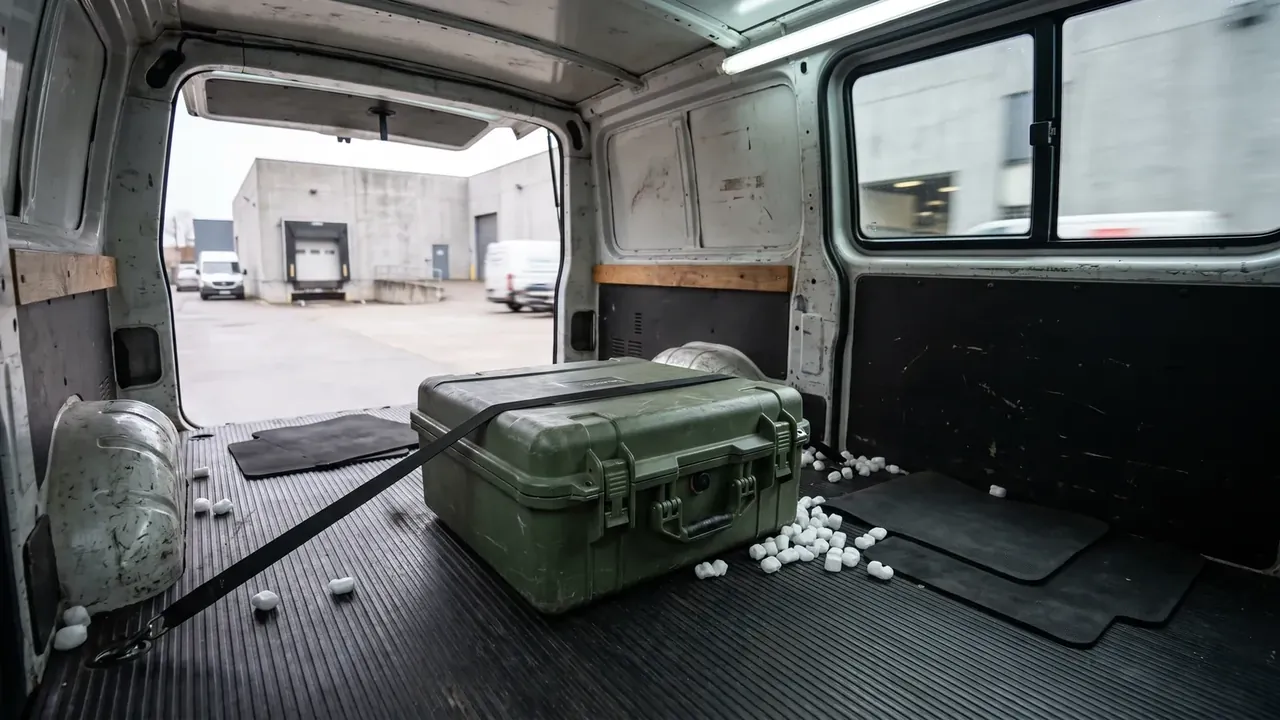
Drops follow MIL-STD-810H Method 516.8 Procedure IV: 1.2 m, twenty-six drops over six faces, three edges and twelve corners, with the empty case at 4.6 kg. That procedure was written for equipment, so a case borrowed into it has to be tested with its insert fitted; an empty case passing says nothing about a loaded one.
Rolling is specific to shop floors. A case sliding off a lift usually rolls before it lands, and a three-meter roll down a 45-degree ramp punishes corners harder than a vertical drop. Double-wall corners come out with paint loss; single-wall corners crack on the first edge.
Temperature belongs in the same sum. A bay runs from minus 5 degrees Celsius in winter to 45 near a bake booth, and polypropylene drop height has to be discounted to eighty percent of its room-temperature value across that range.
Conclusion
The specification of a professional mechanic tool case is not picked from a wall-thickness table, it is derived from the actions at the bay: fluids choose the material, washing chooses the seal, retrieval order chooses the tray, and drops and rolls choose the corners. MIL-STD-810H and IEC 60529 supply repeatable criteria, and using them as acceptance language beats using them as marketing. Get those four aligned and the professional mechanic tool case still closes and still carries in year three.
This article discusses only the container (case body) side of specifications and design intent, and does not cover any handling, loading or use of the contents.
Related Reading
- Zoning logic inside a mechanic tool pouch
- Tool pouches on the bay and in the field
- Hard case or pouch for mechanic work
- Cleaning intervals and gasket replacement
- Purchasing and sampling for a mechanic pouch
Related Products
- 8 Series — Gun Cases; Military Equipment Cases; Camera Equipment Cases; Drone Cases; Watch Cases; Knife Cases; First Aid Cases; Electronics Equipment Cases
- WL8-2812 PP Gun Case — model WL8-2812
- All protective cases and toolboxes: 7 series, 158 models