

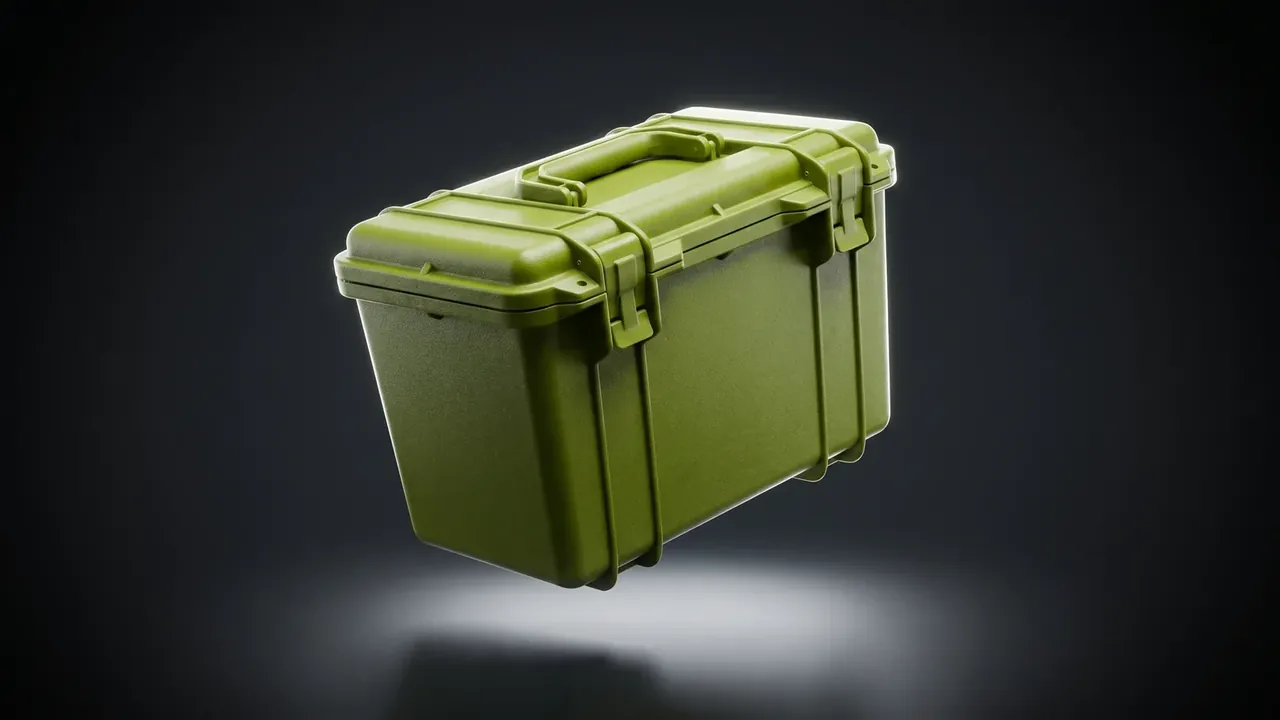
Quick answer: Six trades sharing a tool room rarely need six case types. One liner per trade, a ledger per case number and a six-minute handover keep a professional tool storage case moving.
Table of contents
- Six Trades, One Body
- Six Liners, One Body
- Case Numbers and a Ledger
- A Six-Minute Handover
- Three Carry Segments
- Four Configuration Mistakes
- FAQ
1. Six Trades, One Body
Every extra shell shape adds a spares list, a manual and a liner mold. Standardise on one external size of professional tool storage case instead, and let the liner separate electricians, pipefitters, welders, fitters and inspectors.
Standardising needs volume and load inside one band. Cases that differ threefold in volume and fourfold in payload will not take the same liner.
| Trade | Pieces | Volume | Load | Opens per shift |
|---|---|---|---|---|
| Electrician | 28 | 32 L | 21 kg | 40 |
| Pipefitter | 34 | 40 L | 26 kg | 55 |
| HVAC | 22 | 28 L | 18 kg | 12 |
| Welder | 16 | 24 L | 15 kg | 8 |
| Instrument fitter | 40 | 20 L | 9 kg | 30 |
| Inspector | 12 | 16 L | 7 kg | 18 |
Piece counts run 12 to 40, loads 7 kg to 26 kg. Instrument fitters carry the most pieces at 9 kg, welders the fewest at 15 kg. Rate the load from the heaviest trade, the cavities from the busiest.
2. Six Liners, One Body
Once the body is shared, every difference moves into the liner. One professional tool storage case carries six quick-release EVA liners, pockets 3 mm deeper than the tool so a gloved hand can lift a wrench.
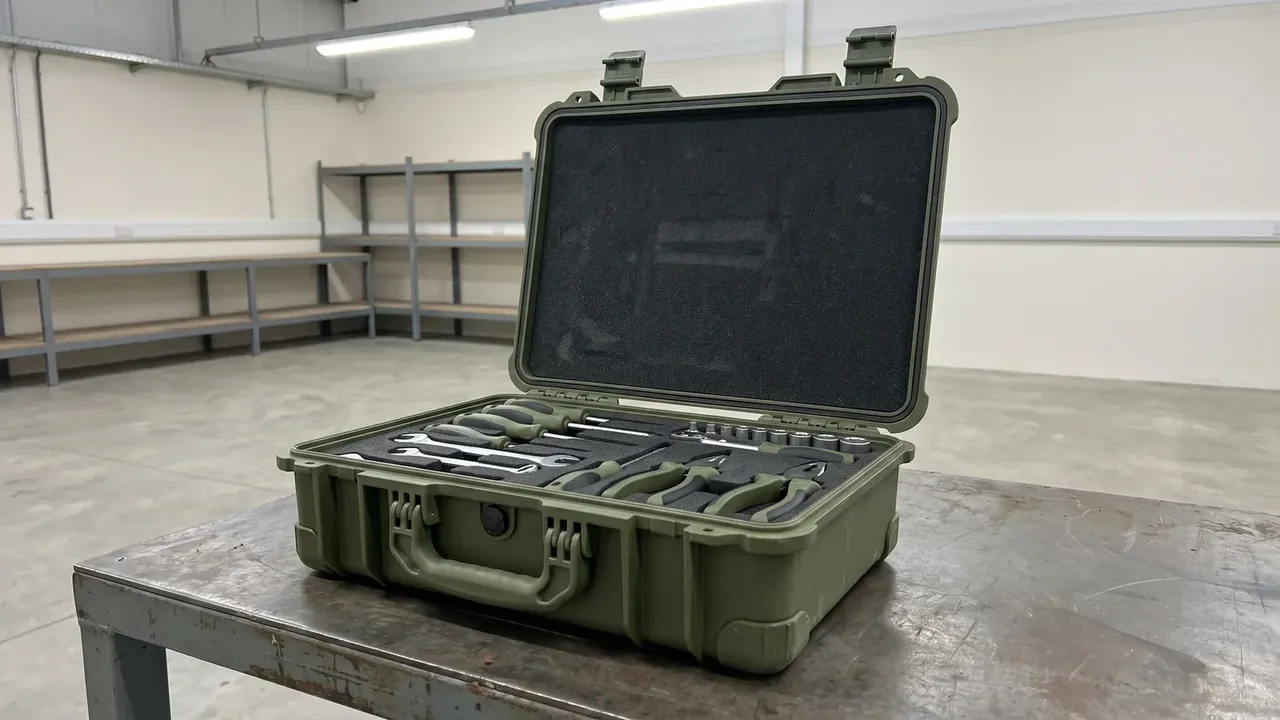
A swap is four moves: open, pull the liner, align the locating pins, press flat. Under 90 seconds, faster than re-sorting loose tools. Press the lid onto a misaligned liner and its edge rolls, so the next removal jams.
Those pins are the joint of the scheme. Worn bores let the liner shift, the pockets stop lining up and swap time doubles. More than 2 mm of movement at a corner means a new liner.
Judge latch life by cycles, not years. At 12 openings a day a case sees about 3000 a year, so specify latches rated for 5000. A 2.5 mm wall and 30 kg/m³ liner density set the weight of six stacked liners.
3. Case Numbers and a Ledger
With six liners in rotation, the number on a professional tool storage case follows the trade, never the person. Code plus serial gives EL-07 for the seventh electrical case, and a 60 mm reflective label stays readable from a low shelf at night.
The ledger needs five columns:
- Case number: trade code plus serial
- Liner fitted: trade and revision
- Borrower: employee number, never a name
- Issue and return time: to the minute
- Missing items: cavity code plus part name
Borrowing runs scan, count, tag, return. Step three is the one crews skip, and an untagged gap is logged as a loss by the next shift, adding seven or eight false reports a month.
4. A Six-Minute Handover
On a three-shift line a case is most likely abandoned at handover. One crew leaves it beside the machine, the next draws a spare professional tool storage case, and two bodies are outside at once.

The handover is fixed at six minutes: count, cross-check the ledger, carry the case back and photograph it. The photo tells the next crew which shelf it returned to.
Counting consumes the time. A 40-cavity case takes two and a half minutes cavity by cavity. Read tags first, then check empties, and it drops to fifty seconds.
| Window | Action | Pass criterion | Time |
|---|---|---|---|
| Minute 1 to 2 | Read tags, check empties | Counts match | 50 s |
| Minute 2 to 3 | Spot-check five cavities | Parts match ledger | 40 s |
| Minute 3 to 4 | Verify signatures | No unsigned case out | 30 s |
| Minute 4 to 6 | Return and photograph | Photo shows level | 120 s |
The sheet carries two words: checked. Checked traces to a person; complete cannot be verified.
5. Three Carry Segments
From rack to workstation a case passes three segments: hand carry indoors, trolley between floors, loading onto a vehicle. Each has its own ceiling, and the same professional tool storage case behaves differently in each.
Indoors, keep the carry under 6 m and the case under 25 kg; past 6 m use a trolley. The handle load lands on two pin bosses, and hairline cracks appear within three months. Between floors use a flat trolley at 45 kg per case, two stacked at most. Strap around the waist, never the handle. For vehicle loading leave 40 mm between cases.
All three share one rule: the case travels upright. Stacked flat, the lower lid carries the upper weight, and a 2.5 mm lid creeps under 30 kg until the gasket stops sealing.
6. Four Configuration Mistakes
The first is treating liners as consumables. Deformed pockets rattle tools and kill latches first.
The second is six liners sharing one number. EL-07 on paper, a pipefitter's liner in the foam.
The third is letting the case follow the person. A spare fills the station and the ledgers diverge.
The fourth is the quietest: standing the case on end in the bottom rack until the gasket sets.
Conclusion
Sharing one body across six trades saves spares and retraining, not just purchase price. Liners sorted by trade, numbers tied to stations, handovers cut into minutes: that combination lets one professional tool storage case rotate through six crews.
This article discusses only the container (case body) side of specifications and design intent, and does not cover any handling, loading or use of the contents.
Related Reading
- Hardware tool box allocation in the workshop
- Rolling tool case use across floors
- Vehicle tool case use for roadside repair
- Tool box organizer dividers for inspection and repair
- Firearm storage case setup for ranges
Related Products
- 8 Series — Gun Cases; Military Equipment Cases; Camera Equipment Cases; Drone Cases; Watch Cases; Knife Cases; First Aid Cases; Electronics Equipment Cases
- WL8-2812 PP Gun Case — model WL8-2812
- All protective cases and toolboxes: 7 series, 158 models