

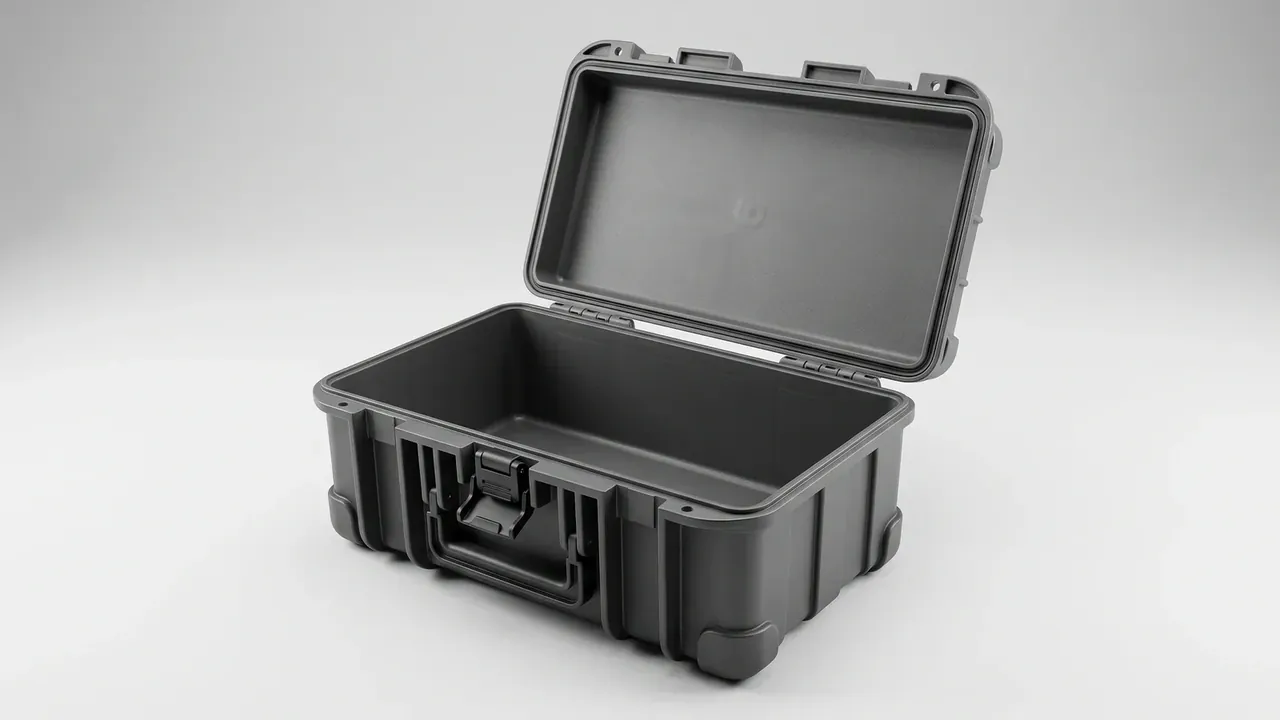
Quick answer: Three sampling rounds put a rotomolded case, a molded case with a steel frame and an aluminium-frame plywood case through one bench test. The Prop Charge Container wins on stacking and cold opening, loses on weight and lead time; where a case opens often, molding wins.
Table of contents
- Where the Brief Started
- Round One: Three Cases on One Bench
- Round Two: Cutting Cost, Keeping Structure
- When Not to Choose It
- FAQ
1. Where the Brief Started
A Prop Charge Container project rarely starts with a shape drawing. It starts with an inspection sheet: twenty-two kilos loaded, five shelf levels fixed, minus eighteen Celsius on a winter night. Those three sentences became three limits, and seven suppliers became three.
| Limit | Pass line | Why it sits there |
|---|---|---|
| Stacking | 22 kg, 5 high, 72 hours, sink under 2 mm | Shelf levels are fixed, so changes mean re-racking |
| Cold opening | 4 hours at minus 18 C, force under 45 N | Thick gloves leave sixty percent of bare-hand grip |
| Seal retention | 20 kPa, drop under 1.2 kPa in 30 minutes | Reads as gasket compression |
Pressure decay is the limit people underestimate. Opening force can be rescued with a bigger handle, stacking with more ribs. Decay depends on groove depth, gasket hardness and where the latch pulls. One sample died there: it leaked 2.6 kPa, with a fifty-five Shore A gasket in a groove cut 0.4 mm too deep.
2. Round One: Three Cases on One Bench
We built all three to one internal volume, 5 mm clearance per dimension, filled them with ballast and ran the same sequence. Matching the size makes the result structural, not a matter of who built bigger.
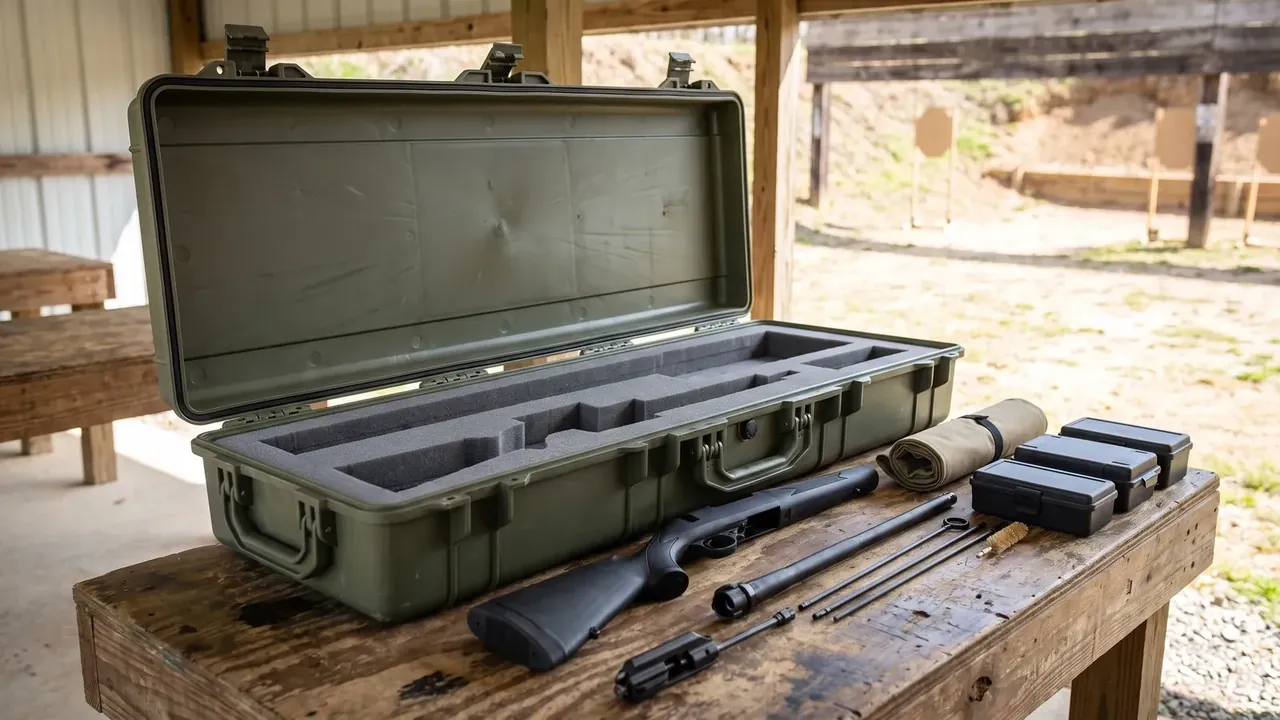
| Option | Wall | Empty | 5-high, 72 h | Force at 20 C | Lead time |
|---|---|---|---|---|---|
| Rotomolded | 4.5 mm | 7.2 kg | 1.8 mm sink | 26 N | 16 days |
| Molded, steel frame | 3.2 mm | 6.1 kg | 4.6 mm sink | 34 N | 11 days |
| Aluminium, plywood | 2.0 mm | 8.9 kg | No sink, rivets loose | 41 N | 21 days |
The sink column explains the most. The molded case did not lack ribs; its rim bowed first, leaving contact on two edges. The aluminium frame did not sink, so the load went into rivets, three of which turned by hand on strip-down.
The Prop Charge Container was slowest at sixteen days and a kilo heavier empty. A handler lifting forty times a shift feels that kilo by noon.
3. Round Two: Cutting Cost, Keeping Structure
Round two removed material rather than substituting it. The rotomolded option won the bench, yet cost thirty-seven percent more per unit, and tooling only amortises above three thousand pieces.
- Wall down from 4.5 to 4.0 mm, full thickness at four rib roots, sink at 2.1 mm;
- A 12 mm lid lip replaced the liner panel, taking 0.6 kg out of each case;
- Two front latches became one centre latch plus side catches, force from 26 to 33 N;
- Handle root radius R8 to R12, where rotomolding thins first;
- Corner bumpers dropped for 1.5 mm of local thickening; no crack after the drop.
The revised case weighed 6.6 kg and cost nineteen percent less, with every limit held. Round three changed one part: a hollow gasket at sixty-five Shore A and twenty-eight percent compression, pulling decay to 0.6 kPa and giving two newtons back on opening force.
4. When Not to Choose It
The Prop Charge Container is not the best answer everywhere. Raise the opening frequency, drop the payload or add salt air, and its structural margin turns into dead weight.
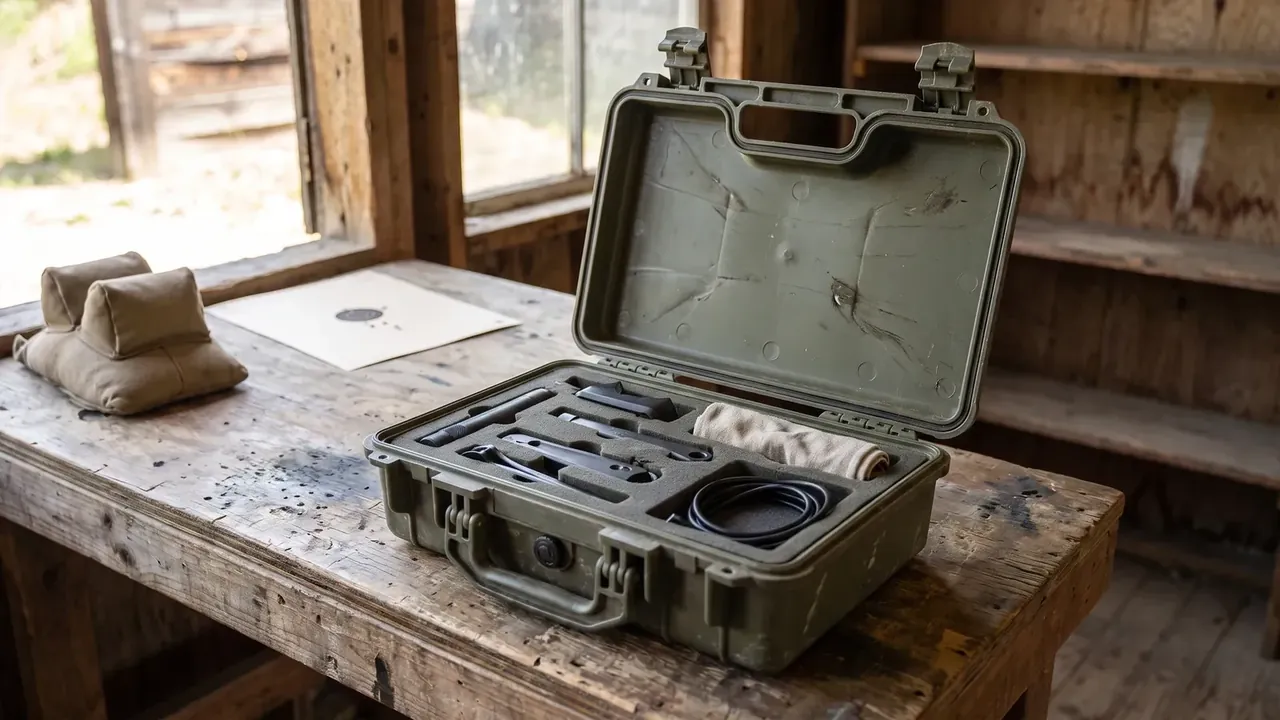
A point opened four times a day wears hinge pins before the body ages, and the lid rocks. A thin-wall molded case with stainless pins suits that duty better.
Three months in an open yard needs stainless hardware. Our steel latches showed red rust after 96 hours, and plating will not carry two years.
Below 8 kg by hand, the stacking margin goes unused.
All three share one shape: no five-high stacking, no opening at minus eighteen. Choosing a case means picking the least bad compromises.
Conclusion
The case that survived three rounds came out 0.6 kg lighter and nineteen percent cheaper, with every limit met. The decisions were never about material; they came from three limits read out of site conditions. Stacking and sealing are what a Prop Charge Container is good at, and weight and lead time are what it costs.
This article discusses only the container (case body) side of specifications and design intent, and does not cover any handling, loading or use of the contents.
Related Reading
- Material and static control for a Prop Charge Container
- What a Prop Charge Container is
- Ammunition container materials: steel, aluminium, plastics
Related Products
- 8 Series — Gun Cases; Military Equipment Cases; Camera Equipment Cases; Drone Cases; Watch Cases; Knife Cases; First Aid Cases; Electronics Equipment Cases
- WL8-2812 PP Gun Case — model WL8-2812
- All protective cases and toolboxes: 7 series, 158 models