

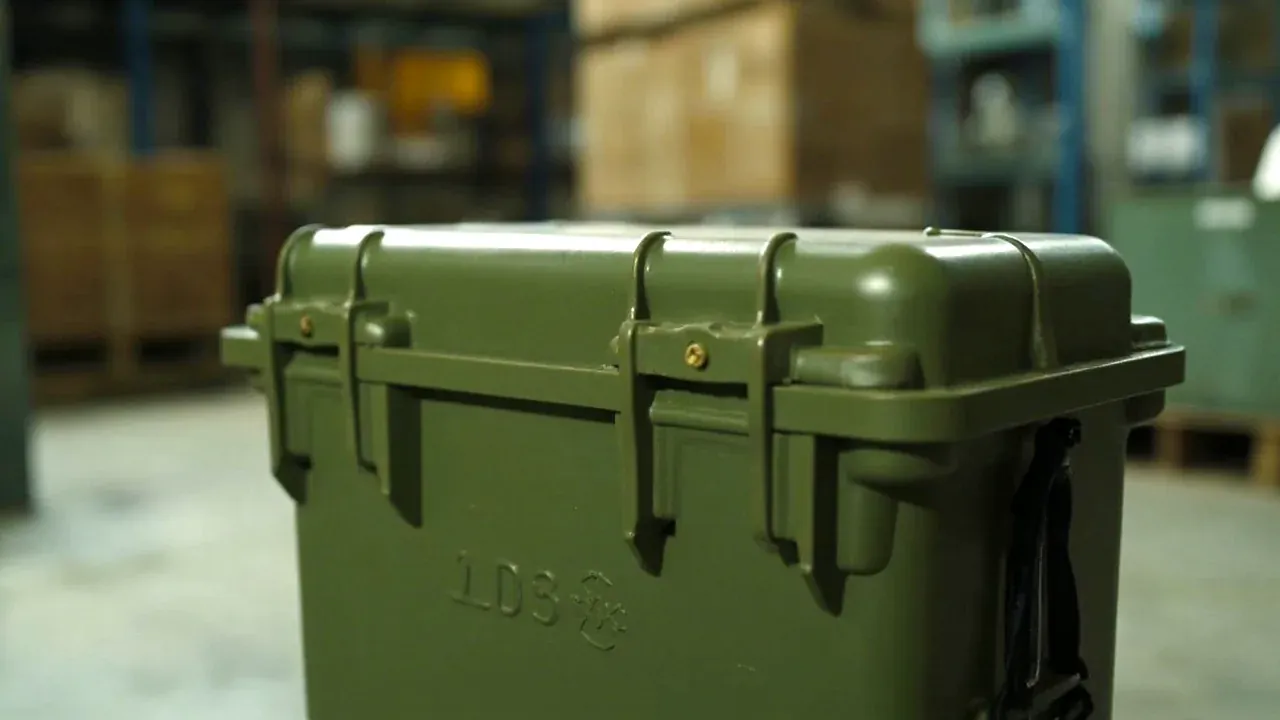
Quick answer: A propellant charge container is the rigid outer case around the charge, and it earns the name by handling four duties at once: one defined route for static charge to earth, sealing and relief that do not cancel each other, a liner that does not shed, and a stack load that runs down the walls to the feet. Miss one and the others cannot compensate. Check stud to liner first, then the lid and the vent.
Table of contents
- The outermost case in the packing hierarchy
- A continuous path from the surface to earth
- Sealing and relief pull in opposite directions
- Liners that do not shed, cut or collect charge
- A four-line check sheet and the stack load
- FAQ
1. The outermost case in the packing hierarchy
In the packing hierarchy the propellant charge container sits outermost: the charge keeps its own moisture barrier, that package drops into a rigid case, and the case goes on a pallet. It owns four quantities - where static charge drains, which seam admits water, whether the liner sheds, and how load reaches the floor.
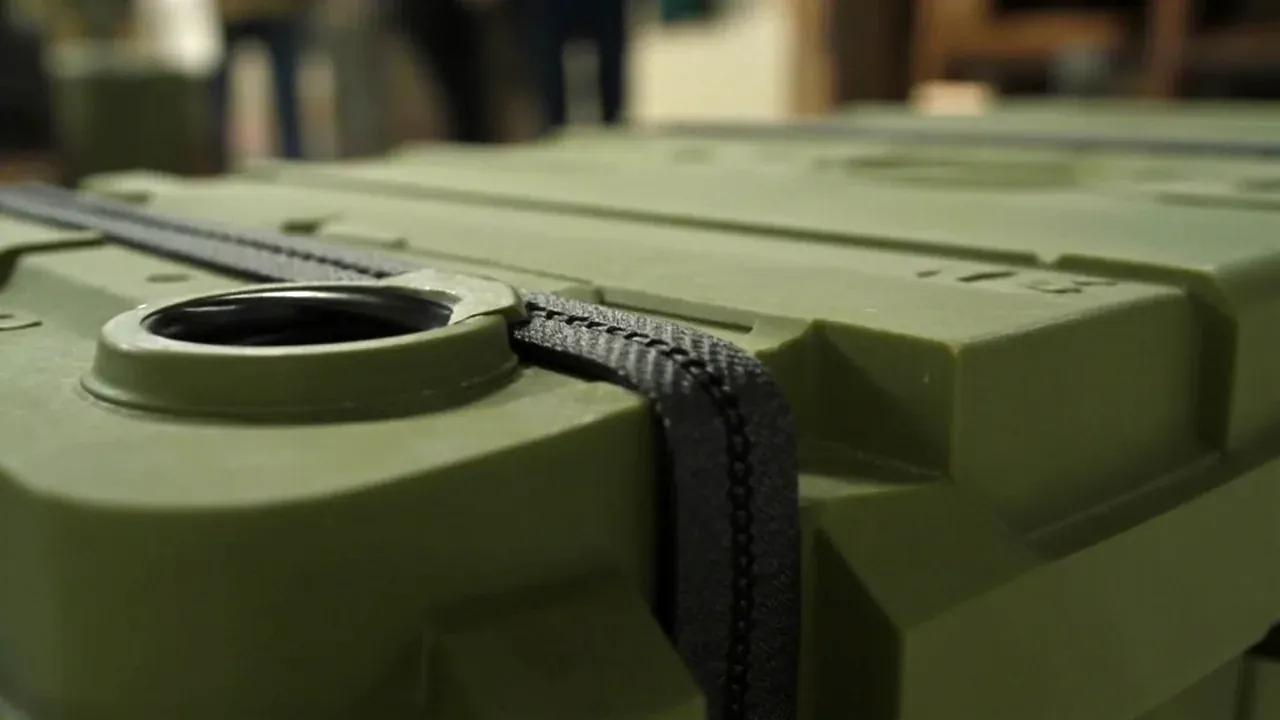
The usual misreading treats it as a shell that only has to be stronger. Extra wall adds weight; sealing harder without relief lifts the rim. Each duty needs its own inspection step.
2. A continuous path from the surface to earth
Polyethylene is an insulator, often above ten to the fourteenth ohm on the surface, so handling charge stays where it lands. A propellant charge container fixes that with conductive carbon in the compound, or with a liner bonded to a stud.
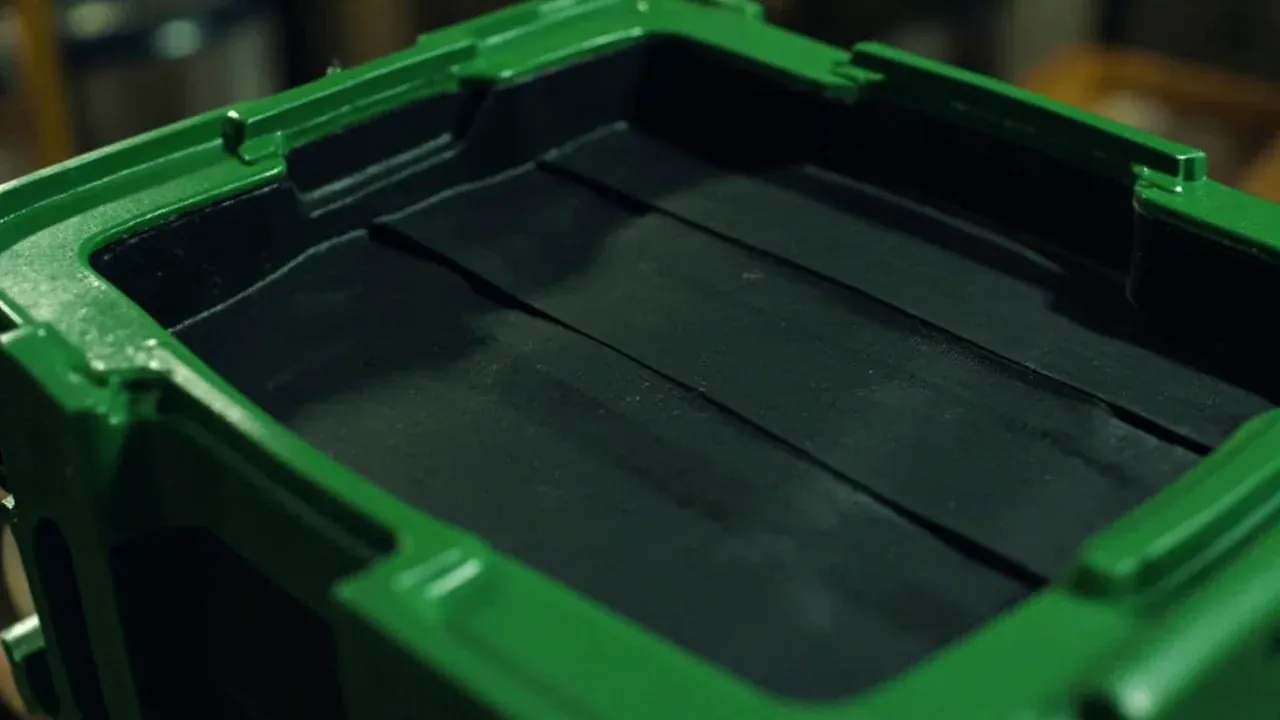
The path fails at hinges and latches. A braided strap across the hinge, clamped under plates on moulded inserts, carries the connection; latch hardware stays out. Measure stud to liner at five points.
3. Sealing and relief pull in opposite directions
Sealing keeps water out; the vent lets pressure go. Temperature and altitude swings build tens of millibars across the wall of a propellant charge container, enough to lift the rim. Seal without relief and the gap opens when the pressure peaks.
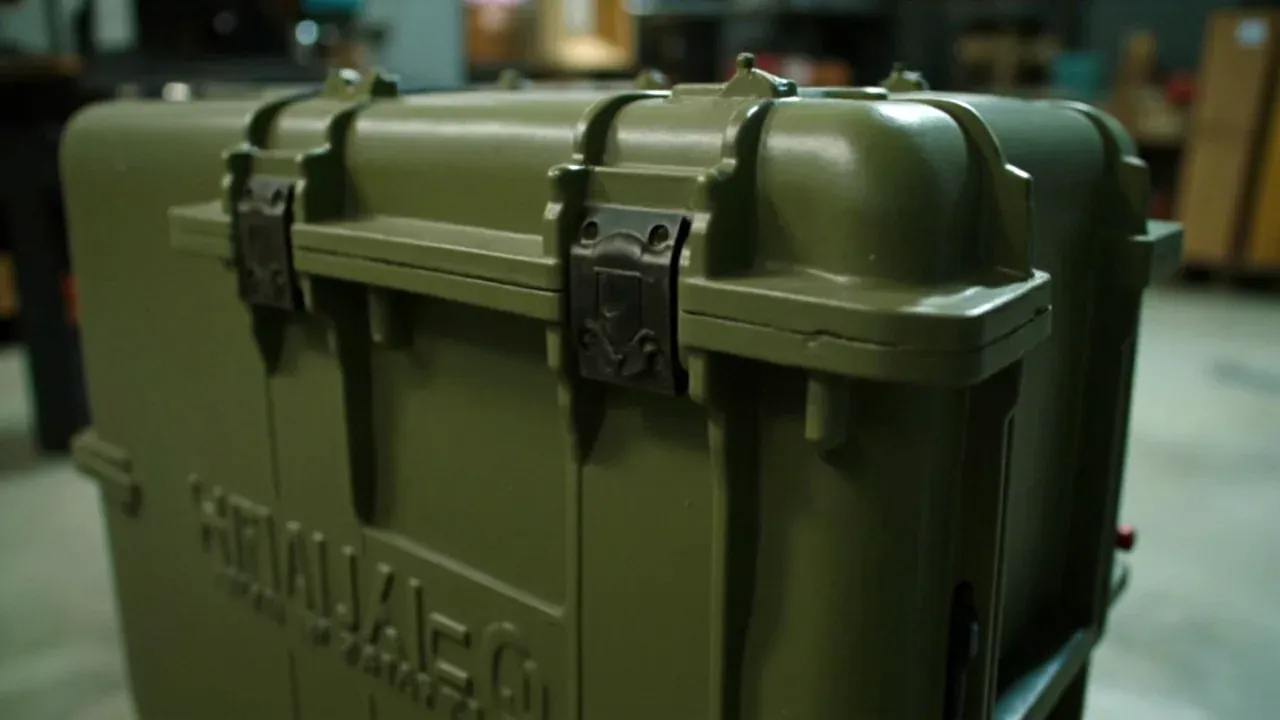
The two parts age at different rates, so give each its own rule. A gasket is judged by compression, a membrane against light. Build them as separate items, or one failure takes the whole lid assembly out.
4. Liners that do not shed, cut or collect charge
The liner positions the charge, and its real risk is debris rather than cushioning. Expanded bead, open-cell foam edges and flocking break into particles that collect in the bottom. Closed-cell sheet or moulded ribs inside a propellant charge container close that route.
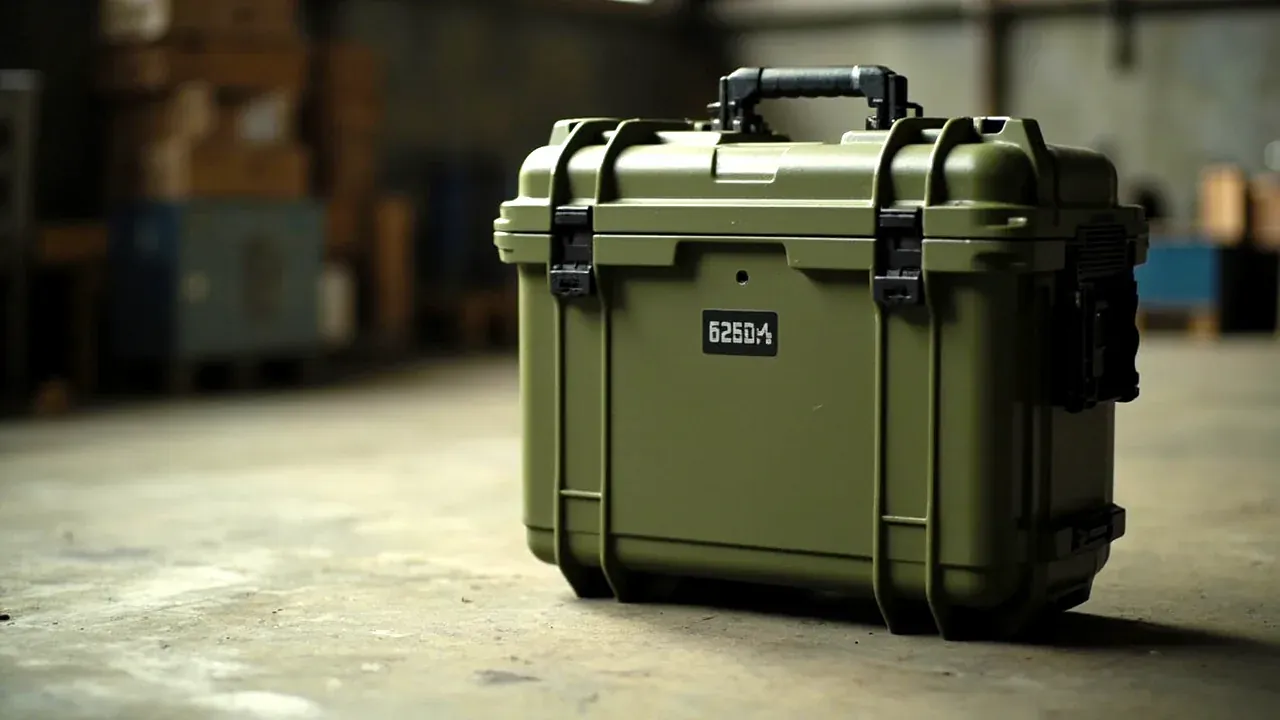
Sharp edges matter as much. A hard arris presses marks into the charge and concentrates charge at the contact point. Radius the ribs on a propellant charge container, keep a degree of draft, and leave one millimetre of clearance.
5. A four-line check sheet and the stack load
The four duties become four checks that need nothing beyond a multimeter. Resistance from stud to liner, a feeler gauge round the rim, an empty case shaken over a clean floor, and deflection on the bottom case after three months.
Stacking is the only duty that must be calculated. Four high at twenty-five kilograms leaves seventy-five on the bottom propellant charge container before a long-term factor of 1.5. Ribs must sit over the feet; offset, the load bulges the side wall.
| Duty | How it fails | Designed in | Check |
|---|---|---|---|
| Static drain | crack heard on opening, bright patch | conductive liner, stud, hinge strap | stud to liner, five points |
| Seal and relief | water line inside the rim | gasket plus end-wall vent | feeler gauge round the rim |
| Liner debris | dust or crumbs in the bottom | closed-cell sheet or moulded ribs | shake an empty case, look down |
| Stack load | bulged wall, rim out of register | ribs over the feet, fewer layers | deflection after three months |
Conclusion
Work in this order: continuity of the static path, then a gasket and a vent that each have a part of their own, then a liner that does not shed under vibration, and only then stack height. The first two decide whether a propellant charge container can be used at all; the last two decide how many years it stays in service before the first rebuild.
This article covers container-side specifications and design implications only, not the handling, loading or use of the contents.
Related Reading
- Material choice and static control
- How a fuze pack works as protective packaging
- Load, sealing and cushioning in shipping containers
- Rotomolded Cases: Rotational-Moulded Shell Structure & Pro…
Related Products
- 8 Series — Gun Cases; Military Equipment Cases; Camera Equipment Cases; Drone Cases; Watch Cases; Knife Cases; First Aid Cases; Electronics Equipment Cases
- WL8-2812 PP Gun Case — model WL8-2812
- All protective cases and toolboxes: 7 series, 158 models