

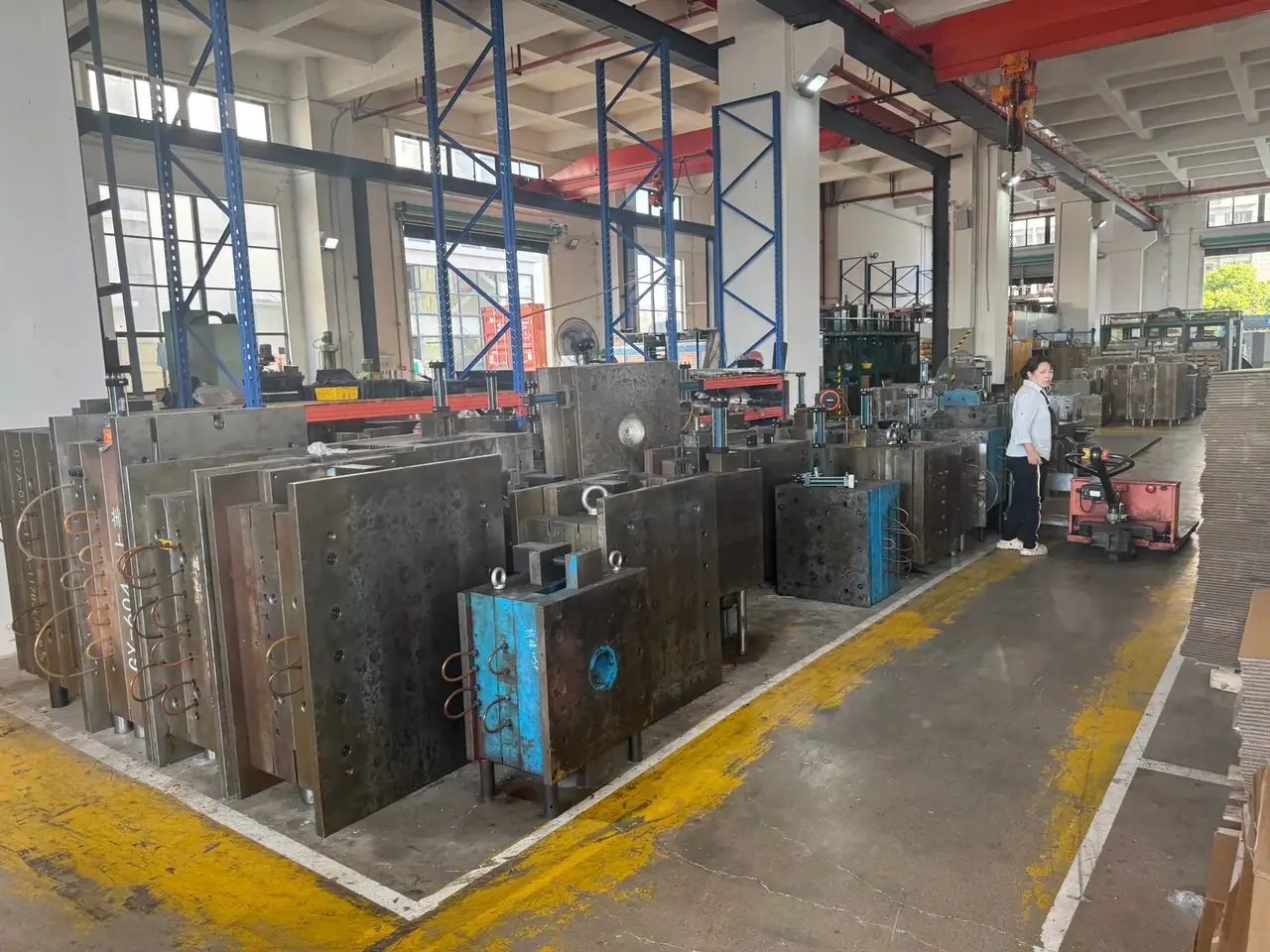
Quick answer: Protective case tooling begins with cavity count, not steel grade. A two-cavity mold spreads a 280k tool over 3,000 units at about 93 CNY each and stretches a colour change from 35 to 90 minutes, so layout is an output decision first.
Table of contents
- Two Cavities Against One
- A 280k Tool and the 3000-Unit Break-Even
- Unpacking a 90-Minute Colour Change
- A 62-Second Cycle at 12 C Water
- Three Trials: First Shot, Size, Surface
- FAQ
1. Two Cavities Against One
The first protective case tooling decision on a 700 by 500 by 300 mm shell mold is cavity count, not steel grade. A second cavity adds 18,000 CNY of steel and 46,000 CNY of machining: a 320 mm mold base, fourteen cooling circuits instead of eight, one more slide.
Output does not double. One cavity runs a 48 s cycle for 75 shells an hour, two cavities 62 s for 116, four cavities 105 s for 137. Four times the cavities buys 82 percent more output, because projection area and cooling load climb with each one.
So protective case tooling settles on two cavities. On a 1,000 t press at 340 CNY an hour, two cavities put machine time at 2.9 CNY per shell; one cavity needs a second press to match output and carries 4.6 CNY.
2. A 280k Tool and the 3000-Unit Break-Even
The 280,000 CNY quote covers a two-cavity tool with two slides and one grained surface: 62,000 in steel, 134,000 in machining, 31,000 in electrodes, 26,000 in trials, 27,000 in gauges and texturing. Machining is nearly half and rarely moves, so a protective case tooling quote is trimmed at electrodes and texture.
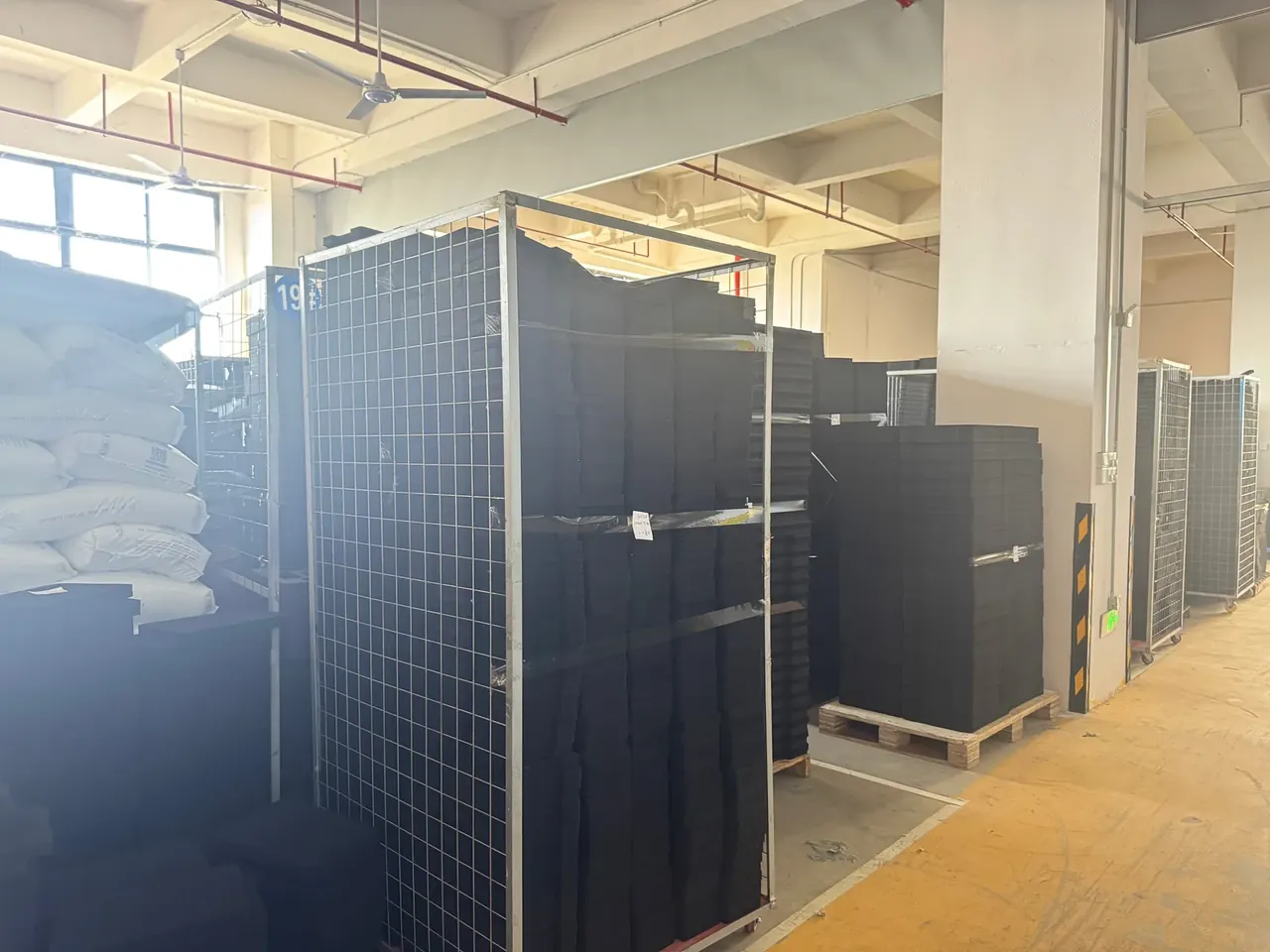
The break-even is the gap between buying and molding. A catalog case arrives at 168 CNY; a molded shell lands at 75 CNY, of which 34 is resin, 23 molding, 12 assembly and packing, 6 overhead. That 93 CNY gap divides into 280,000 to give 3,011 units.
| Item | One cavity | Two cavities | Four cavities |
|---|---|---|---|
| Tool cost (CNY 1,000) | 180 | 280 | 460 |
| Amortisation at 3,000 units (CNY) | 60.0 | 93.3 | 153.3 |
| Cycle time (s) | 48 | 62 | 105 |
| Output per hour | 75 | 116 | 137 |
| Colour change (min) | 35 | 90 | 150 |
| Clamp force needed (t) | 650 | 1,000 | 1,600 |
Read the columns as amortisation, not price. At 3,000 units a year, two cavities carry 93.3 CNY per shell and four cavities at 153.3 CNY sit above the catalog case; past 12,000 units the four-cavity figure falls to 38.3 CNY.
Year one needs its own discount. Trials and gauges add 53,000 CNY that must be absorbed, lifting the line to 3,600 units; at 1,200 units a year the tool repays in two and a half years.
3. Unpacking a 90-Minute Colour Change
No mold is swapped in a colour change; the same tool keeps running. The 90 minutes go into cleaning four zones, hopper, screw, hot runner and water circuits, and residue in any one of them returns as a speck on the next batch.
| Stage | Minutes | Main action | Best case |
|---|---|---|---|
| Stop feed, clear hopper | 12 | Close gate, pull residue, load drying resin | 8 |
| Purge screw and hot runner | 25 | 6 kg purging compound, 4 tips removed | 18 |
| Break and remake circuits | 18 | 14 water lines off, reconnected after colour | 12 |
| First-shot adjustment | 20 | Packing and mold temperature until short shots clear | 14 |
| Colour plaque and release | 15 | Compare with retained plaque, sign first shot | 10 |
The jump from 35 to 90 minutes is cavity count. Four tips become eight, and purging each extra tip costs 3 minutes; circuits go from eight to fourteen and take 9 minutes longer to remake. Four cavities reach 150 minutes, a full shift lost at two changes a month.
Two routes shorten it. Hardware means a spare screw, valve-gate runners and purging compound; planning means batching by colour so the line changes twice a month. Protective case tooling pays for one or the other.
4. A 62-Second Cycle at 12 C Water
The 62 s cycle splits into 4 s injection, 18 s packing, 32 s cooling and 8 s for opening, closing and unloading. Cooling is more than half, so water temperature sets the pace more firmly than injection speed.
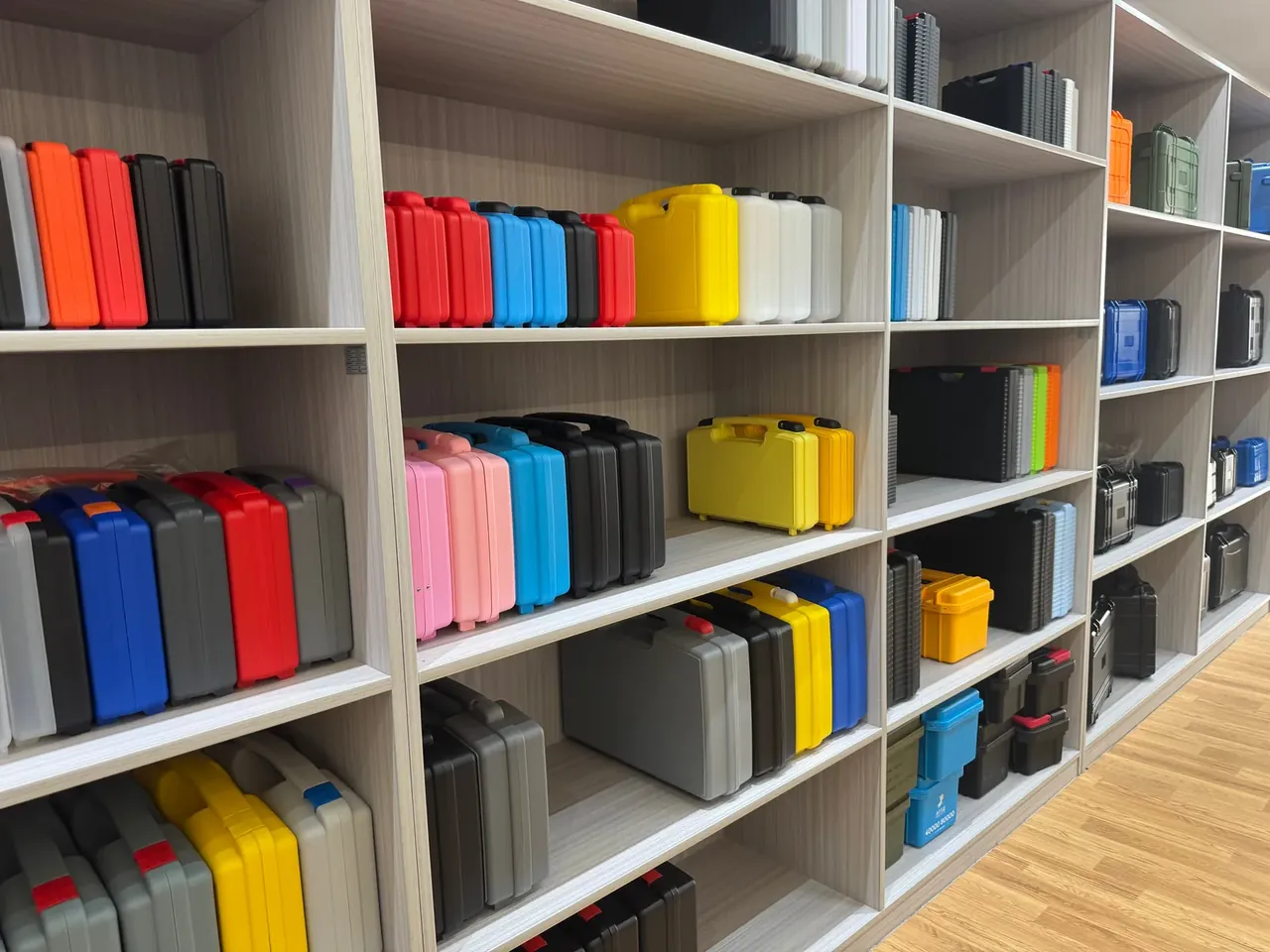
The 12 C supply is matched to a 4.5 mm wall. Every 4 C drop shortens cooling by about 3 s, but below 8 C the surface picks up a hazy flow mark, worst on grained faces, so protective case tooling treats 62 s as a balance point rather than a ceiling.
Distortion sits at the other end. With 12 C in and 18 C out, the 6 C rise means the circuits remove roughly what the melt delivers; past a 10 C rise, shrinkage between cavity and core drives flatness beyond 0.8 mm.
5. Three Trials: First Shot, Size, Surface
Protective case tooling is proven in three trials, each answering one question: does it fill, is it the right size, will the surface pass. Run together, they mix the causes.
| Round | Purpose | Criterion | Time |
|---|---|---|---|
| T1 | Fill and short shot | Fill gap under 3 percent | 4 h |
| T2 | Size and shrinkage | 0.5 mm on length and width | 6 h |
| T3 | Surface and continuous run | 200 shots, no flash, no drift | 8 h |
| Pilot | Assembly and sealing | 30 pieces, zero leaks | 2 days |
T1 reads short shots: a gap under 3 percent at the last point to fill passes, and beyond that a gate or a hotter melt comes before packing pressure. T2 reads 0.5 mm on length and width, 0.8 mm on depth, 0.3 mm on mounting holes.
T3 is the gate to production. Two hundred consecutive shots are checked for flash, colour drift and ejector whitening, and flash over 0.15 mm points to low clamp force or a blocked vent. A 30-piece run then goes to assembly and sealing.
Money in protective case tooling goes mostly into cavities and structure, the rest into colour changes and trials; with the 3,000-unit line, the 90-minute change and the 62 s cycle on one sheet, the right cavity count matches annual volume, not the largest mold the press can hold.
Related Reading
- Tooling cost for custom cases
- Who pays for tooling
- Cavities, changeover and capacity
- Blow molding versus injection tooling
JUNZHIJIA
Related Products
- 8 Series — Gun Cases; Military Equipment Cases; Camera Equipment Cases; Drone Cases; Watch Cases; Knife Cases; First Aid Cases; Electronics Equipment Cases
- WL8-2812 PP Gun Case — model WL8-2812
- All protective cases and toolboxes: 7 series, 158 models