

Quick answer: Three checks close a rail maintenance case in 90 seconds: a 1:1 shadow board, a ±0.2 kg weigh-in and a 12-digit seal, cutting misses 2.1% to 0.3%.
Table of contents
- Why the Count Happens On Board
- The Shadow Board: 1:1 Outlines, 4-Digit Codes
- Weighing: What ±0.2 kg Can and Cannot Catch
- The 12-Digit Seal and the Takt Arithmetic
- FAQ
1. Why the Count Happens On Board
A rail maintenance case settles its account in the cab, not in the tool room. One train runs 6 round trips per shift, and every turnaround needs a yes or no on 68 items. Carry the 21 kg case back, open it, tick each item, re-close and carry it out, and the loop costs 240 seconds. Six trips make 24 minutes, all out of platform dwell time.
Slowness is the smaller problem. A piece-by-piece count stakes its result on memory: the counter holds the list order, the last shortage and this trip's borrowed item at once. One lapse and the missing part travels to the next turnaround.
Three alternatives exist for a rail maintenance case, and they differ in coverage.
| Counting method | Time, s | Miss rate, % |
|---|---|---|
| Item by item | 240 | 2.1 |
| Shadow board | 90 | 0.3 |
| Weigh-in | 40 | not measurable |
| Seal number | 20 | not measurable |
They are not three ways to do the same job. The weigh-in is fastest at 40 seconds but knows only that mass is short, not what is short. The shadow board takes 90 seconds and points at a slot. The 12-digit seal records whether anyone opened the case, and says nothing about the contents. Screen by weight, locate on the board, hand over by seal, and the case carries a complete account.
2. The Shadow Board: 1:1 Outlines, 4-Digit Codes
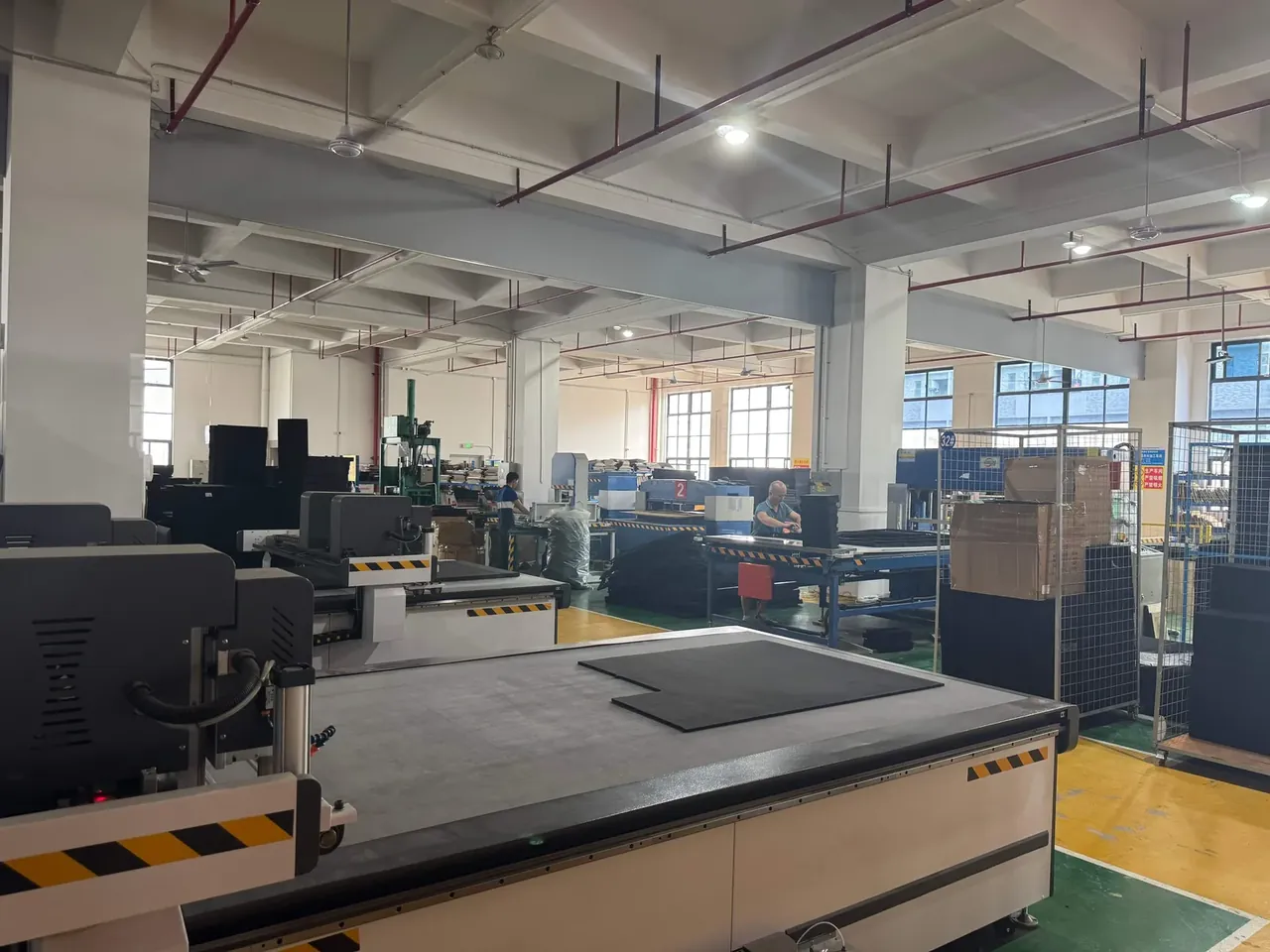
The shadow board in a rail maintenance case is a foam insert milled to each tool outline at full scale. The cutter follows the widest cross-section, pockets run one third of the tool thickness deep, and both ends get a two-finger scoop. Full scale is not styling: pocket width equals the widest section, so a missing item leaves an empty void and one sweep of the eye covers the board without reading a list.
Codes are 4 digits: row, column, then item index. A shortage becomes one sentence — row three, column two, item seven — and the receiver walks to the position instead of asking what the tool is.
Say the code, skip the name, and handover loses half its talk.
Pockets are cut 1.5 mm oversize per side. Too tight and the tool jams; too loose and the edge stops guiding the hand. EVA springs back and narrows the cut, while PE foam holds it, so the same toolpath feels half a size different.
Know what a rail maintenance case board cannot see. Two identical open-end wrenches swapped between slots leave every pocket full. Rags, tape and cable ties have no stable outline and lean on the weigh-in. The board covers rigid metal, which is the bulk of the 68.
3. Weighing: What ±0.2 kg Can and Cannot Catch
A loaded rail maintenance case weighs 21 kg. Shell, insert and hardware account for 5.5 kg, leaving roughly 15.5 kg of tools. A scale reading to 0.05 kg with a threshold of ±0.2 kg catches any single item heavier than 0.2 kg.
The 40 seconds break down as lift, settle, read, log, lower. The scale sits on the cab floor, so nobody raises 21 kg to chest height.
Two blind spots belong in the instruction. Equal-weight substitution is one: swapping a 0.4 kg adjustable wrench for a 0.4 kg pipe wrench leaves mass untouched. Wet goods are the other: a soaked rag can reach 0.3 kg and cancel out a small hex key.
A torque wrench at 2.6 kg each is a reliable target: losing one pushes the total past the ±0.2 kg gate. Weight guards heavy items, the board guards light ones; assign them so and the methods stop overlapping.
4. The 12-Digit Seal and the Takt Arithmetic
The seal number on a rail maintenance case carries 12 digits in four fields, each earning its place:
| Seal digit field | Digits | Content |
|---|---|---|
| Positions 1–2 | 2 | Line code |
| Positions 3–6 | 4 | Date as month and day |
| Positions 7–10 | 4 | Case number |
| Positions 11–12 | 2 | Check digits |
Reading happens only at handover. The incoming shift checks whether the number follows the outgoing one: if it does, nobody opened the case and the previous conclusion stands. If not, or the seal shows a second adhesive layer, the case is re-checked in full and the argument about who misremembered ends there.
Handwritten 12 digits fail most often in the date field, where four numbers run together. The check digits are the leading ten summed, modulo 97, padded to two places, so one copied digit almost never leaves the remainder intact.
Run the takt arithmetic twice. As substitution, 240 seconds against 90 saves 150 a trip and 15 minutes across 6. As stacking, 90 of board plus 20 of seal reading gives 110 a trip and 11 minutes across 6, still 13 minutes better than 24. The 40-second weigh-in is not a per-trip step; it belongs to mid-shift spot checks and end-of-service, where it cannot duplicate the board. Give each one job and the times stop cancelling.
Conclusion
The inventory method for a rail maintenance case is one manual check split into three motions. Weight owns the total, the board owns position, the seal owns custody, and at 40, 90 and 20 seconds they add up to less than the 240 of a piece-by-piece count. On board the case never returns to the tool room, so travel time stops eating the takt. Set 68 items, 21 kg and 6 trips a shift into the roster, and what remains is the order of the motions.
Related Reading
- How a tool room case is stocked and counted
- Sequencing cases inside a four-hour night window
- Load limits for heavy railway maintenance tools
Related Products
- 8 Series — Gun Cases; Military Equipment Cases; Camera Equipment Cases; Drone Cases; Watch Cases; Knife Cases; First Aid Cases; Electronics Equipment Cases
- WL8-2812 PP Gun Case — model WL8-2812
- All protective cases and toolboxes: 7 series, 158 models