

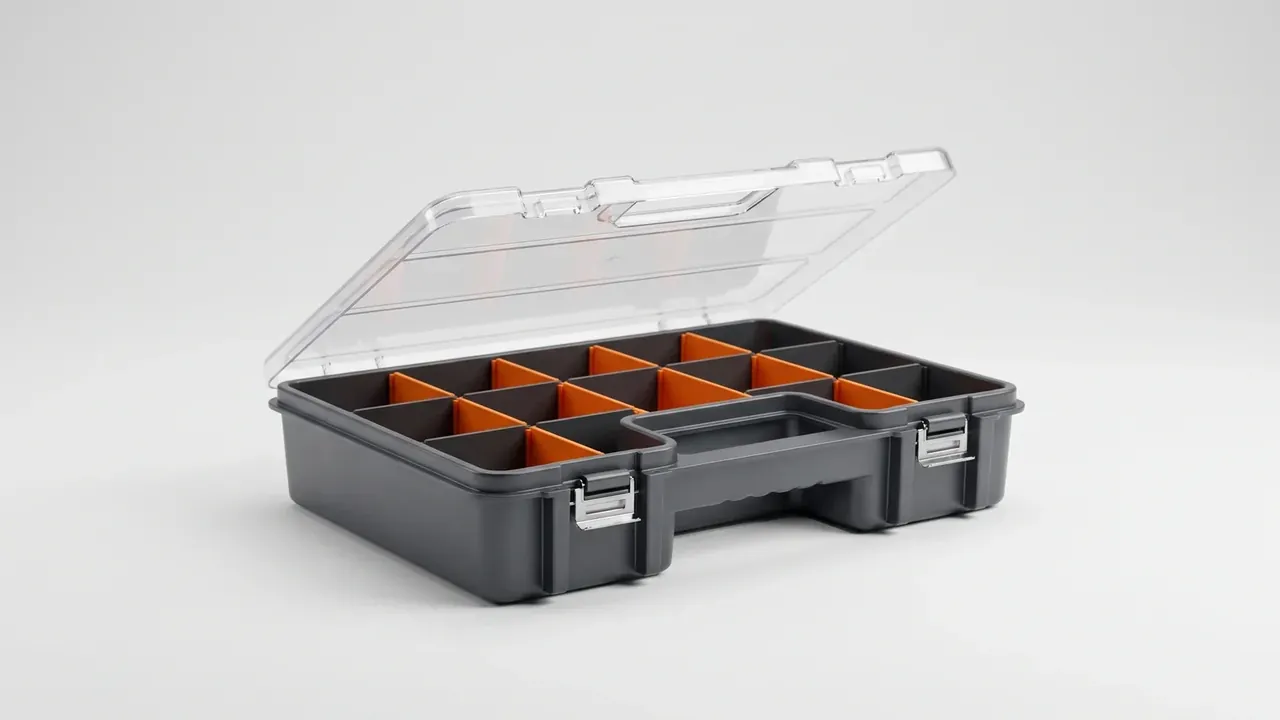
Quick answer: A night window on high-speed rail runs 240 minutes: 26 to pack and self-check, three lid openings at most, 18 held for the clearing count.
Table of contents
- The 4-hour night window time budget
- Packing actions and case checks before entry
- Swap rhythm and how often the lid opens
- Clearing the case: empty slots and latch reset
- Specifying a case for night window work
- FAQ
1. The 4-hour night window time budget
A maintenance night window opens with traction power cut at 00:30 and closes at 04:30, which is 240 minutes on paper. Only about 162 reach the track; the other 78 go to registration, carriage, setup and counting. Every extra lid opening is charged to work that cannot be recovered.
| Phase | Minutes | Case-side work |
|---|---|---|
| Before entry | 26 | Pack to the job sheet, check latches and gasket, add the shift number |
| At the track | 6 | Lay the case flat, seat the dividers, aim the head torch |
| Working | 162 | Swaps in and out, three lid openings maximum |
| Clearing | 18 | Empty-slot check, latch reset, seal verification |
| Withdrawal | 16 | Two-person carry of 400 m, tied down in the vehicle |
Worked backwards, the case side holds four blocks: 26 minutes of packing and self-check, 6 of setup at the track, three lid openings during the job, 18 of clearing. An overrun in one block is taken straight out of the 162.
2. Packing actions and case checks before entry
Packing happens in one pass on a 1.2 m bench, case flat, lid opened to 105 degrees so its weight sits outside the hinge line. The shell is inspected before the slots: 3 mm of latch travel with a firm-then-free feel, no grit in the gasket channel, no whitening at the corner ribs. Fail one and the case is swapped.
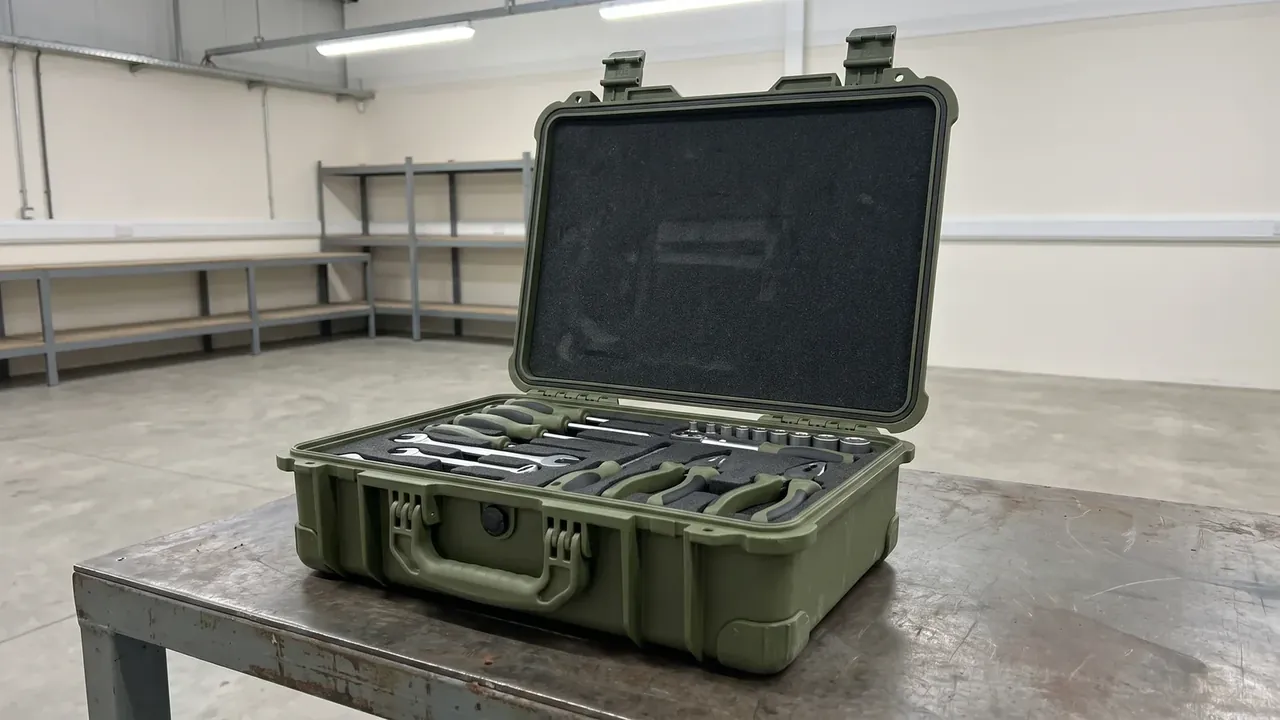
The handle is moulded in one piece with the shell and rated at 25 kg; at 22 kg loaded one technician carries it 30 m before switching hands. Under 1.2 mm cut-resistant gloves, any inner radius below 6 mm starts to bite by the third carry, so the handle meets the shell on an 8 mm fillet. Marking follows: the shift number in 40 mm white characters and one 50 mm reflective strip on each side of the lid.
3. Swap rhythm and how often the lid opens
Swaps follow a rhythm, not a need. One swap from latch to hand should sit inside 8 seconds: 2 seconds per latch, 1 to lift the lid, 3 to pick, 2 to close and re-latch. Over 8 seconds means the slot order and the swap order disagree, and the fix is the divider layout.
| Swap batch | Lid openings | Pick time | Total |
|---|---|---|---|
| First (first 60 minutes) | 1 | 8 s | 8 s |
| Second (middle) | 1 | 8 s | 8 s |
| Third (close-out) | 1 | 11 s | 11 s |
Lid openings are the cost most often left out. Each one swaps half the warm air for air at minus 8 degrees Celsius, and a silicone gasket stiffens below minus 10, so by the fifth opening the latch feel goes from crisp to dull — exactly when people who judge closure by feel start getting it wrong. High-frequency items in the shallow lid tray and 10 mm of clearance over each item keep the third batch from becoming a search.
4. Clearing the case: empty slots and latch reset
The clearing count looks at the case, not at a list. Cavity back to empty, three dividers seated flush, both latches past centre, seal number matching the record: four conditions, all of which must pass. The routine takes 18 minutes.
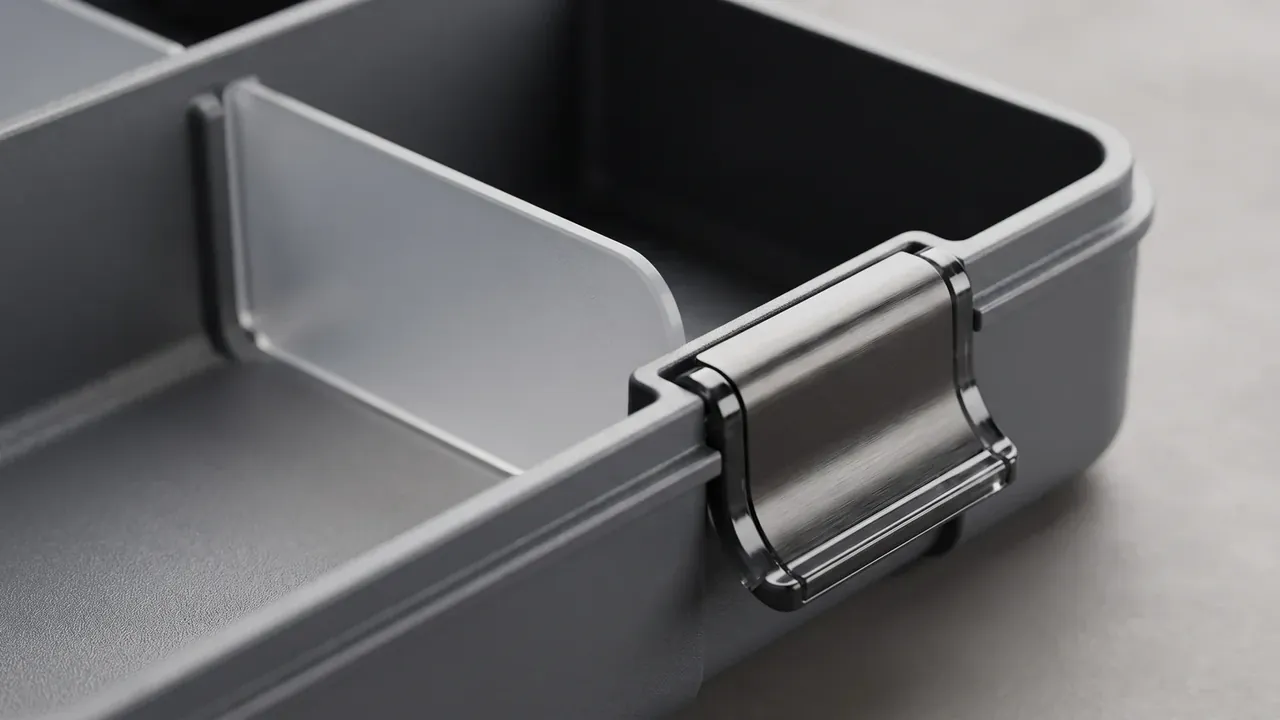
Slot numbers sit on the divider top edge at 12 mm cap height in a matte finish, so a head torch does not flare off them. Translucent dividers turn an empty slot into a lighter rectangle. Two 6 mm drains in the base keep meltwater out of the foam.
| Check | Criterion | Minutes |
|---|---|---|
| Empty cavity | No item left in any of 12 slots | 12 |
| Dividers seated | Three dividers flush with the rim | 2 |
| Latches reset | Both past centre, no play | 2 |
| Seal verified | Number matches the entry record | 2 |
A gap found at the pre-service walk-round costs a new night window, a wasted 240-minute slot and a report. Two extra minutes at clearing is the cheaper trade.
5. Specifying a case for night window work
Three requirements dominate night window work: no cold brittleness, one-hand opening, and a two-person weight. A PP copolymer with 10 percent glass fibre takes a falling-ball impact at minus 20 without cracking, and a 2.5 mm wall with a 3 mm rolled rim keeps the lower case from collapsing under a stack.
Sealing follows the IP65 wording of IEC 60529, and a 1.2 m drop onto concrete follows the MIL-STD-810H method with latches still operable one-handed afterwards. Those are test methods rather than certification claims, so ask for the report number instead of reading the icons moulded into the base.
Wheels do not roll on ballast and add 0.8 kg of dead weight, so these cases use four 8 mm widened feet that sit on the shoulder without sinking. Around 6.8 kg empty and 22 kg loaded is the comfortable two-person range; past 28 kg the case belongs on a trolley. JUNZHIJIA moulds shell and dividers in one batch and holds colour within a delta E of 1.5, which is what makes colour-coded identification work after dark.
Conclusion
Case prep for a 4-hour night window comes down to three numbers: 26 minutes to pack and self-check, three lid openings or fewer, 18 minutes for the four clearing conditions. Hit all three and the case costs the job nothing; hit one and it takes over 30 minutes out of 240. Measure the cavity before arguing about material, and count the carry distance before ordering wheels.
This article discusses only the container (case) side of specifications and design implications, and does not cover any handling, loading or use of the items inside.
Related Reading
- How rail maintenance tool cases are laid out and counted
- Case applications across rail transit operations
- Protection requirements for signal equipment cases
Related Products
- 8 Series — Gun Cases; Military Equipment Cases; Camera Equipment Cases; Drone Cases; Watch Cases; Knife Cases; First Aid Cases; Electronics Equipment Cases
- WL8-2812 PP Gun Case — model WL8-2812
- All protective cases and toolboxes: 7 series, 158 models