

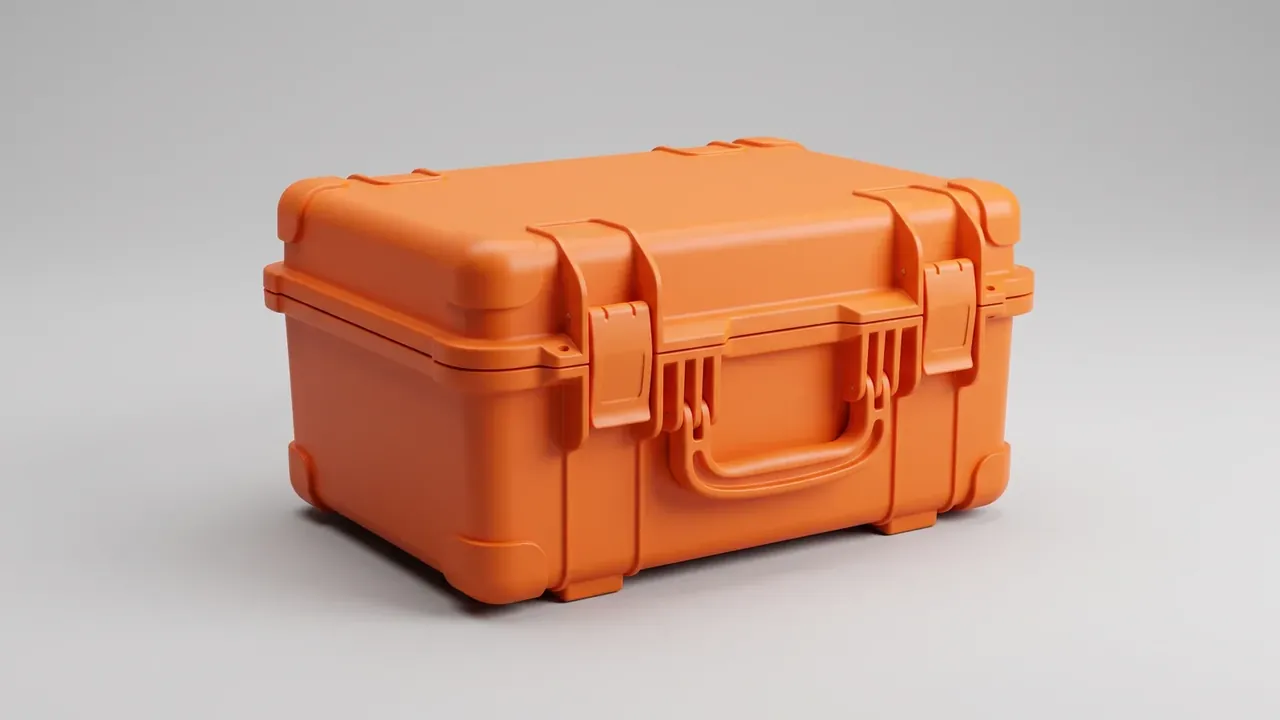
Quick answer: A railway signal case is specified by clear width, a 1000 h UV budget and three tamper layers rather than by colour or unit price.
Table of contents
- Fitting Beside the Cabinet
- UV, Salt and the Cold Range
- Three Layers of Tamper Resistance
- IP Rating and Condensation
- Inspection Cycles and Latch Life
- FAQ
1. Fitting Beside the Cabinet
The mounting position is rarely generous: between two posts or along the cabinet flank there is usually 300 to 500 mm of clear width and under 600 mm of depth. A railway signal case is drawn backwards from those two numbers, not from a catalogue.
A body no wider than 400 mm, standing 80 mm off the cabinet, leaves room for a hand and lets the lid swing to 100°. Below 90°, crews unbolt the case to reach the latches, and that habit costs more in a year than the price gap between models.
Fixings come in two families. On a post, a clamp band of 30 by 3 mm suits tube or angle from 60 to 120 mm, two bands spaced at least two thirds of the body height. On concrete, four M10 anchors at 80 mm embedment, torqued to 45 N·m with locking washers, beat any adhesive.
Earthing is a separate run: an M8 stud, a 16 mm² braid, no more than 4 Ω, bonded to the cabinet earth bar so no loop forms. Route it inside the shell through a waterproof gland.
Sequence matters: fix the body, bond the earth, then the gasket and latches. Reversed, the shell distorts under torque and the pressure test misses by the 1 kPa a railway signal case is allowed.
2. UV, Salt and the Cold Range
A railway signal case meets sunlight first. After 1000 h of xenon arc exposure a PP body with 2 percent carbon black holds about 85 percent of its tensile strength, while a pale compound yellows at 300 h; colour shift must stay inside ΔE 3.
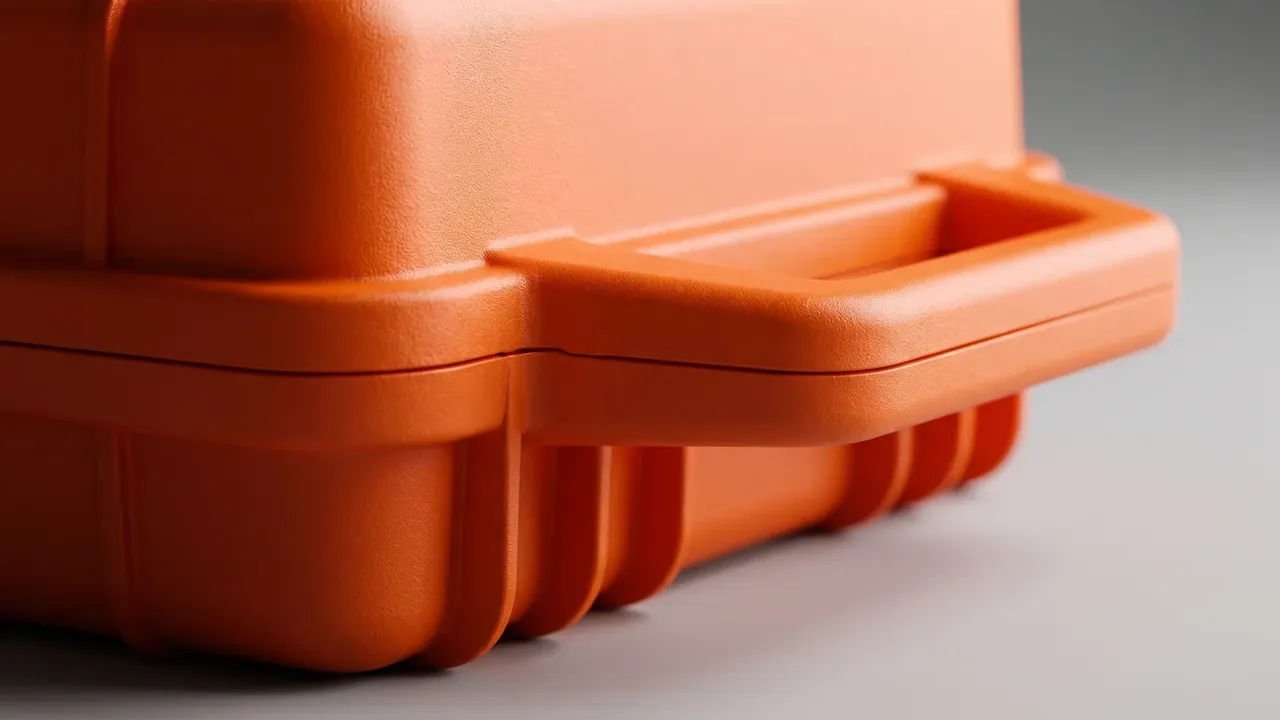
Temperature is written as −40 to 70 °C, but the interior runs 8 to 12 °C above ambient at midday. With expansion near 1.5×10⁻⁴ per °C, a 600 mm case grows almost 9 mm across a 100 °C swing, so the gasket groove needs that allowance, or the seal is tight in summer and open in winter.
Coastal lines add salt: after 480 h of neutral salt spray, 304 stainless pits at the hinge pin while 316 holds. Carbon steel has no place at all, screws and rivets included, since one mixed part becomes one rust point.
Test order belongs in the specification: UV, then salt spray, then cold impact at −40 °C. Combined retention runs about 10 points below any single test.
3. Three Layers of Tamper Resistance
A lock alone is not tamper resistance. Three layers work together — deny the grip, buy time, leave a trace — and remove one and the other two lose half their value.
| Layer | Build | Threshold |
|---|---|---|
| Deny | Hinges inside, pin drawn from within | No exposed pin or pry point |
| Delay | 2 mm drill plate, hidden pin | Hand drill held off for 3 min |
| Trace | 10 mm shackle hole, seal wire | 2 kN shackle shear |
| Anchor | Clamp band or M10 anchors | 45 N·m under vibration |
Denial is geometry: internal hinges draw the pin through the body so nothing shows outside, and a stepped lid seam leaves no gap wider than 0.8 mm for a pry bar.
Delay is material: a 2 mm cold rolled plate behind the latch area, covering 60 mm around the shackle hole, forces a drill through two steel layers, while a 6 mm pin engages only when pushed sideways. Three minutes is the target, longer than an intruder stays.
Trace is paperwork made physical: a 10 mm bore for an 8 mm shackle or a disposable seal, a 1.5 mm bush so years of opening do not oval it, and seal numbers matched to the record.
4. IP Rating and Condensation
Choose the rating from the position. A railway signal case on a sheltered flank is fine at IP65; one on an exposed post needs IP67, held at 1 m of immersion for 30 min. The higher grade costs gasket force, so every opening is heavier and latches wear faster.
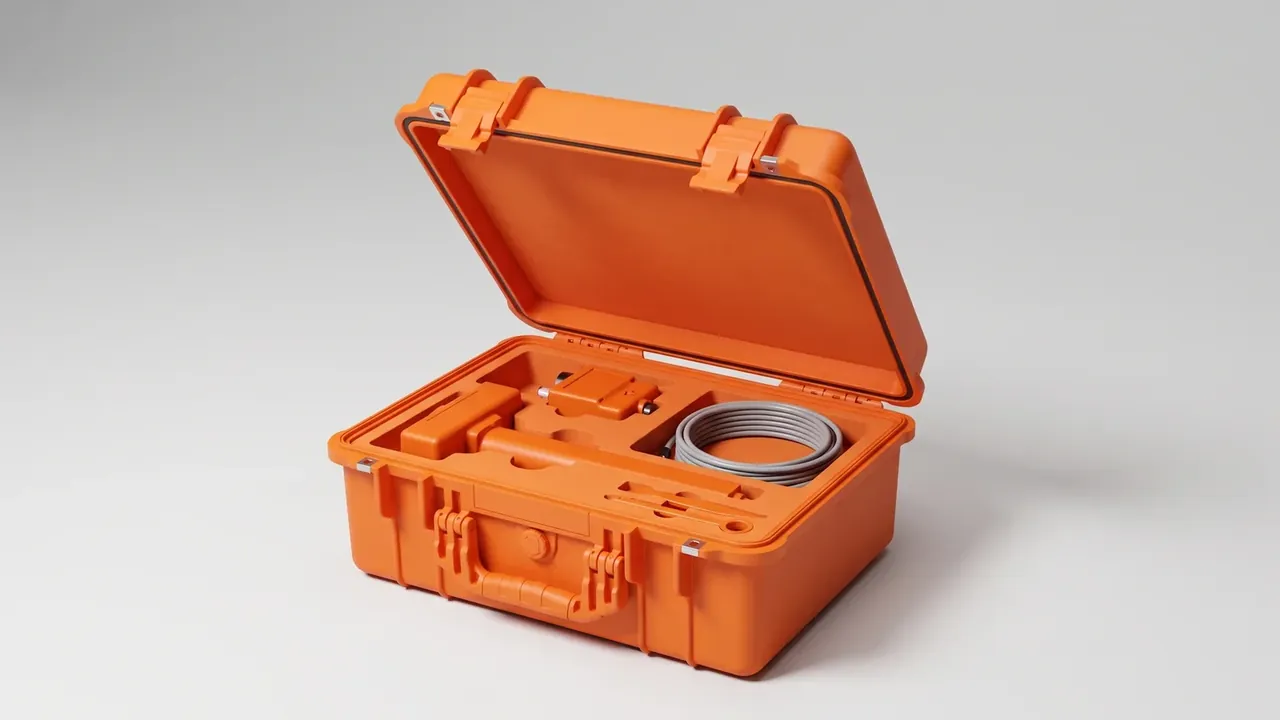
Condensation fails more cases than rain. When the day-night swing passes 15 °C the inner wall wets out; a breather valve of about 100 ml/min, 10 g of desiccant and a 2 mm liner cost far less than a heater.
Silicone or EPDM at 50 to 60 Shore A, compressed 25 to 30 percent in a double-lip groove, Pressure-test at 30 kPa for 60 s and reject anything decaying more than 1 kPa.
5. Inspection Cycles and Latch Life
Opening frequency picks the latch, and this item is most often skipped when a railway signal case is specified.
| Position | Cycles per year | Latch design life | Replacement |
|---|---|---|---|
| Rural post | 24 to 50 | 5,000 | 10 years |
| Station perimeter | 100 to 150 | 5,000 | 8 years |
| Junction building | 300 to 365 | 8,000 | 6 years |
Do the arithmetic on the worst case. A 5,000-cycle latch at 365 openings a year reads as 13 years, but UV and salt age the plastic first, so a 60 percent derating lands at 8 years.
Failure starts as force drift, not breakage: a new latch reads 60 to 90 N, and below 45 N after 3,000 operations it is due. The gasket goes on a flat 5-year interval, bore bush checked at the same visit.
Record the force, not the word normal. A number per visit becomes a curve, and the curve shows which batch of a railway signal case ages first across a line.
Conclusion
The hard part of a railway signal case is not the moulding but the eight to ten years of unsupervised service that follow. Clearance decides where it can hang; compound decides whether UV and a 100 °C swing leave the seal open; tamper layers decide whether it survives an overnight visit; latch life decides whether the next inspection is a two-minute job or a rebuild. Skip any one at specification and the maintenance budget pays later.
This article discusses only the container (case body) side of specifications and design intent, and does not cover any handling, loading or use of the contents.
Related Reading
- How a railway signal equipment case is built
- Configuring a railway maintenance tool case
- EU compliance points for exported protective cases
Related Products
- 8 Series — Gun Cases; Military Equipment Cases; Camera Equipment Cases; Drone Cases; Watch Cases; Knife Cases; First Aid Cases; Electronics Equipment Cases
- WL8-2812 PP Gun Case — model WL8-2812
- All protective cases and toolboxes: 7 series, 158 models