

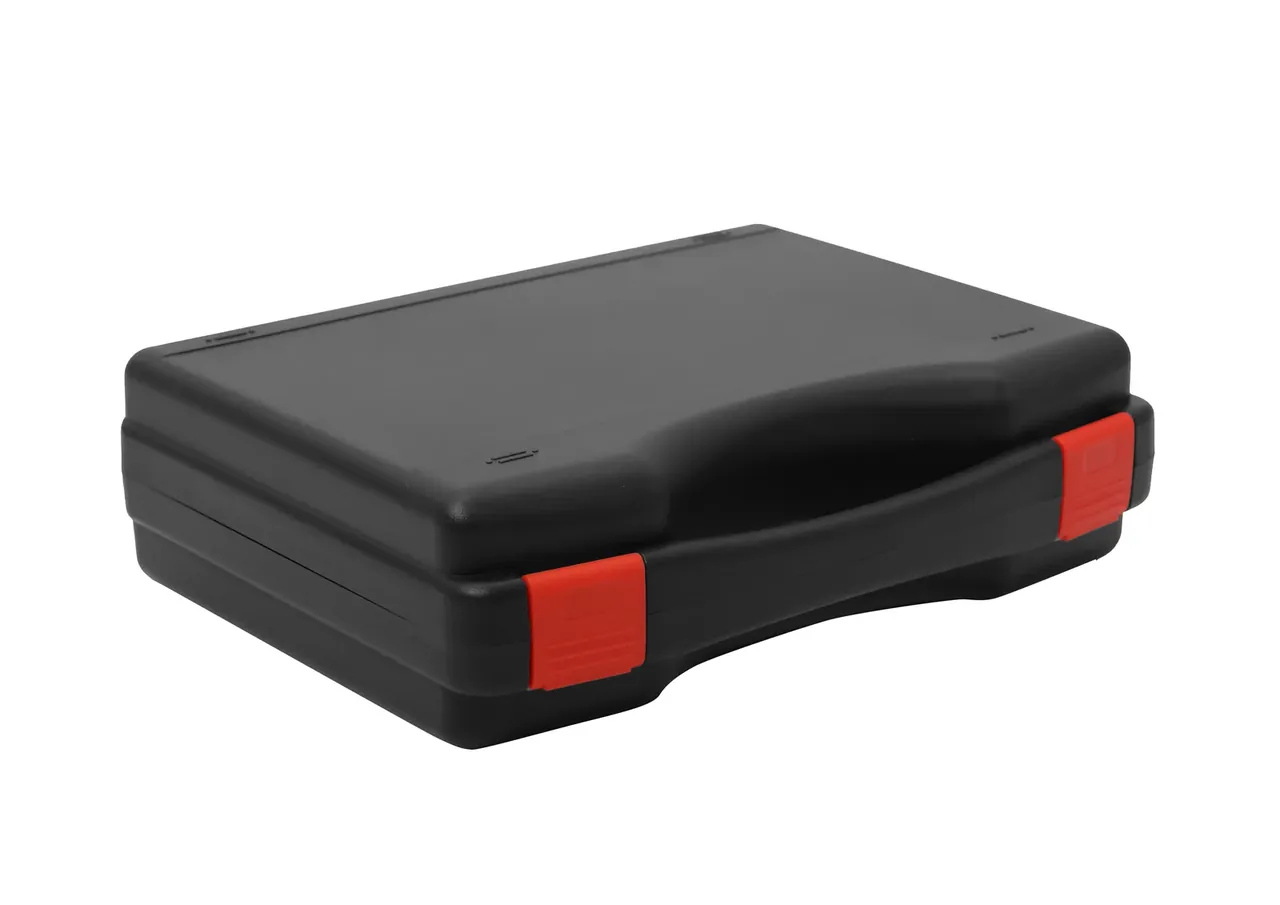
Quick answer: Case Export to EU files follow a fixed order: which directives apply first, then substance limits, as CE, RoHS and REACH answer different questions.
Table of contents
- Directive Screening Comes First
- The EU Operator Behind the Case
- RoHS: Ten Substances on Homogeneous Materials
- REACH: The SVHC Threshold and SCIP
- Technical File, DoC and Ten Years of Records
- FAQ
1. Directive Screening Comes First
Whether one black injection-moulded case needs a CE mark depends. CE results from matching a product against directives one at a time, so Case Export to EU starts with screening, not paperwork.
Directive 2006/42/EC covers machinery and interchangeable equipment, and the test is whether anything drives or moves. A case opened and closed by hand has no drive source, so it stays outside that directive.
Electronics come second. Fit internal lighting, a USB port or a radio module and EMC Directive 2015/30/EU goes live, with emissions and immunity tested on the whole unit; Low Voltage Directive 2014/35/EU only reaches 50–1000 V AC and 75–1500 V DC, so a 12 V circuit inside the case never reaches it.
RoHS comes third, not first. Directive 2011/65/EU applies to electrical and electronic equipment, so a plain plastic case sits outside its scope; fit electronics and all 10 substances apply.
| Instrument | Trigger | No electronics | File |
|---|---|---|---|
| 2006/42/EC machinery | Drive or moving parts | Out of scope | None |
| 2015/30/EU EMC | Electronics fitted | Out of scope | DoC and report |
| 2014/35/EU LVD | 50–1000 V AC | Out of scope | None |
| 2011/65/EU RoHS | Electric or electronic equipment | Out of scope | Material report |
| 1907/2006 REACH | SVHC above 0.1% | In scope | SCIP number |
A written screening statement beats a CE certificate of unknown origin.
2. The EU Operator Behind the Case
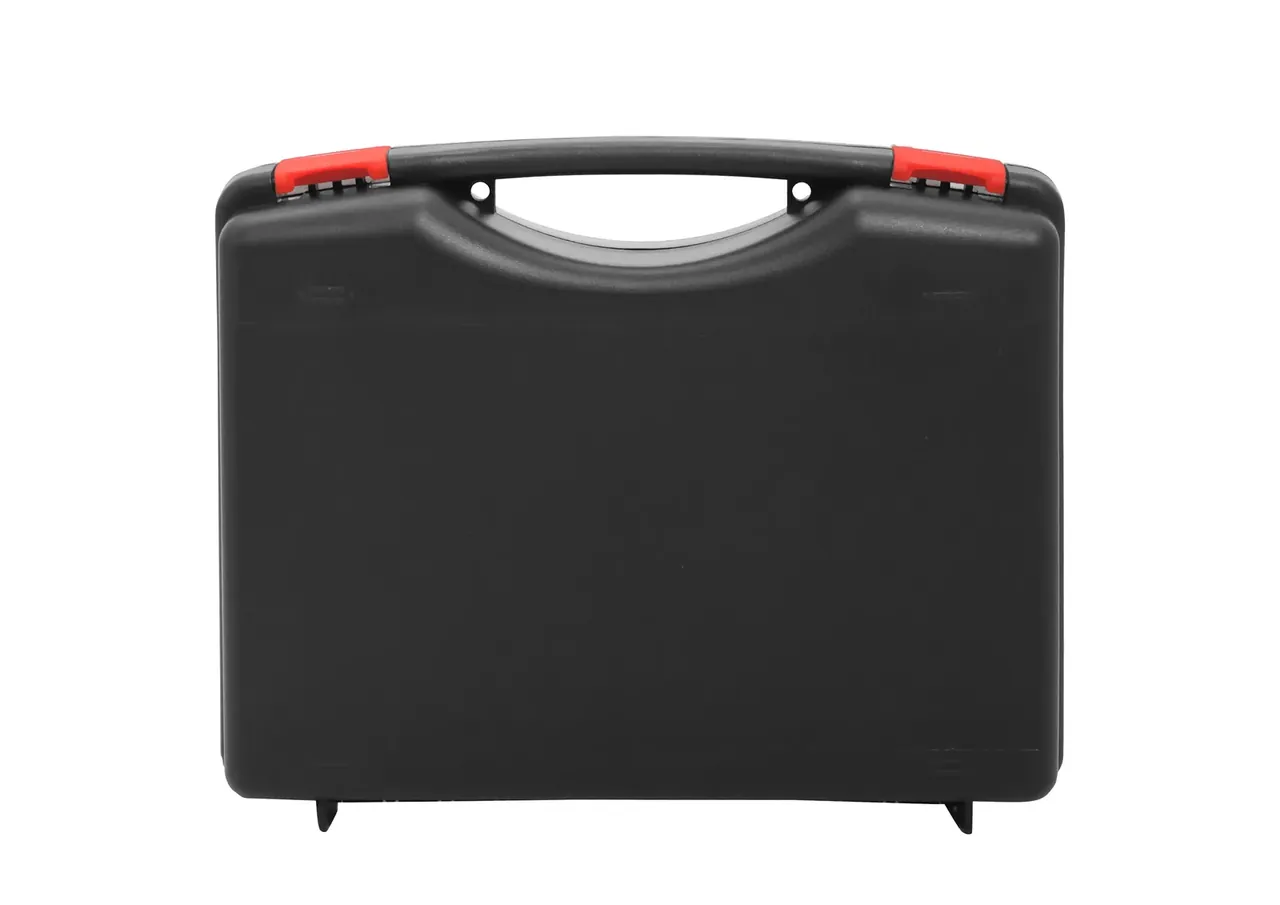
Regulation 2019/1020 has applied since 16 July 2021 and makes someone responsible inside the EU a condition for Case Export to EU shipments. Goods without an EU economic operator can be stopped by customs before anyone argues about the product.
That operator, whether importer, authorised representative or fulfilment provider, must put its name, postal address and electronic contact on the product, packaging or documents. One missing field costs 2 to 3 weeks at the port.
An importer also verifies the DoC, confirms the case still conforms after transport, keeps copies for 10 years and answers market surveillance.
On the case, the shipping mark names that operator and the batch number traces to the batch report. Teams skip this step because it involves no material, only a signature.
3. RoHS: Ten Substances on Homogeneous Materials
RoHS limits are judged per homogeneous material, the smallest unit that cannot be separated mechanically. Masterbatch, coating, plating and gasket are each assessed alone, and one failure condemns the unit.
Nine of the 10 substances sit at 0.1%, cadmium alone at 0.01%: 1000 ppm against 100 ppm. Readings must be converted to one basis before comparison, because labs report differently.
| Substance | Limit | Typical source in a case |
|---|---|---|
| Lead (Pb) | 0.1% | Colour masterbatch |
| Mercury (Hg) | 0.1% | Cells, switches |
| Cadmium (Cd) | 0.01% | Red pigment, plating |
| Hexavalent chromium | 0.1% | Fastener passivation |
| PBB, PBDE | 0.1% | Flame-retardant shell and liner |
| DEHP, BBP, DBP, DIBP | 0.1% | Soft handle and gasket |
The failure hides in accessories: a PP shell reading 0.05% lead passes while the red latch masterbatch reads 0.12% and fails the whole unit.
Annex III exemptions carry expiry dates, so confirm one is still open before relying on it; once it lapses the report dies and a Case Export to EU batch goes back.
4. REACH: The SVHC Threshold and SCIP
The 0.1% in REACH is not the 0.1% in RoHS. REACH measures the whole article, so a 4.2 kg case triggers duties only above 4.2 g of SVHC, while RoHS measures a homogeneous material whose basis may be a few grams.
Article 33 then requires enough information for the recipient, at minimum the substance name, and a consumer asking within 45 days must be answered free of charge. Since 5 January 2021 the SCIP database has required notification before such an article is placed on the market.
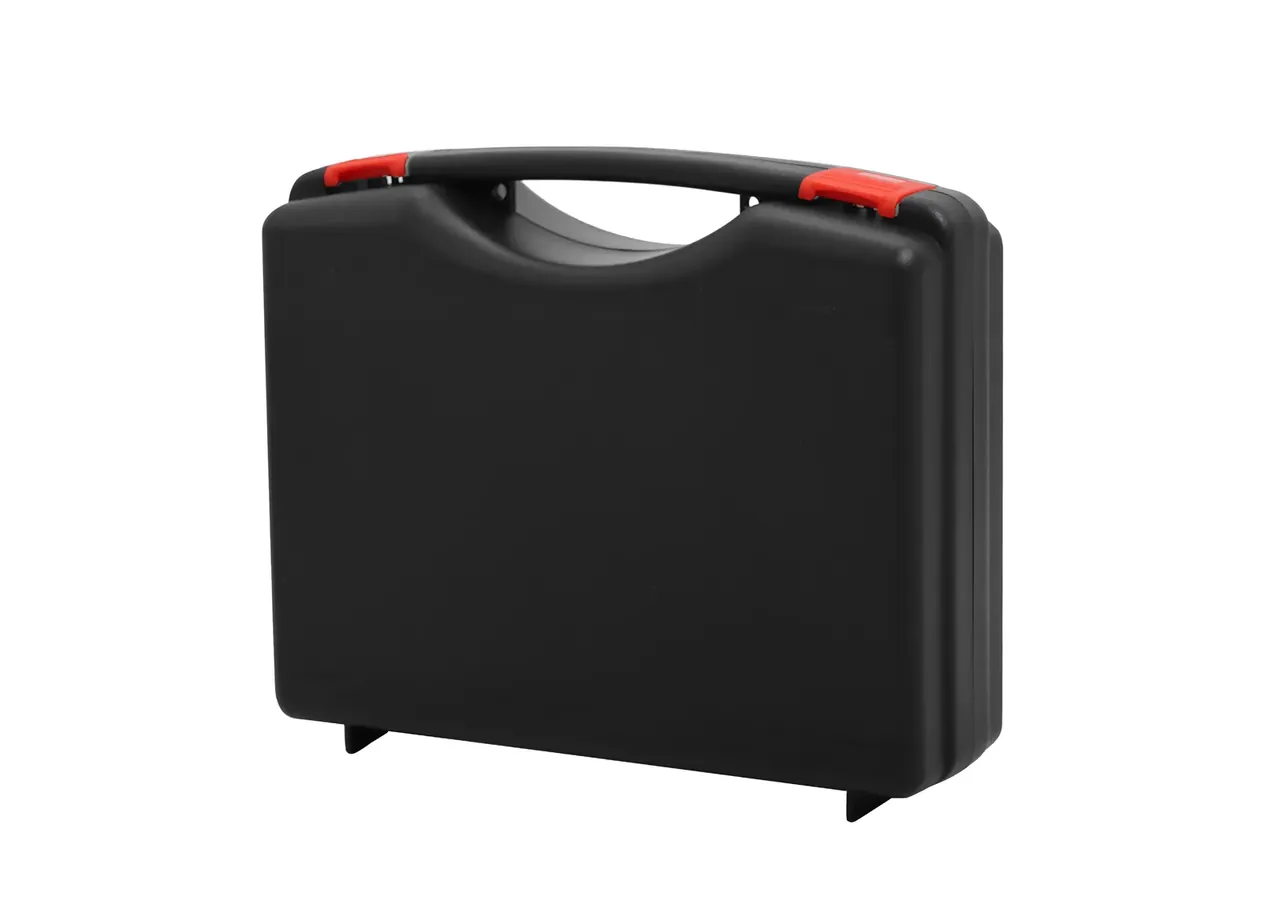
The candidate list is updated every January and June and now holds more than 240 entries, so each Case Export to EU batch should be checked against the version in force.
Notifications are built as a tree of article nodes: shell, liner and latch each count, and a missing node gets the dossier rejected.
5. Technical File, DoC and Ten Years of Records
A DoC is a self-declaration, not a third-party certificate, but its content is fixed: manufacturer name and address, model and batch, directives applied, standards cited, the EU operator, and the signatory's name and date. Miss one element and the importer cannot release Case Export to EU goods.
The technical file backs it with drawings, material declarations, reports and instructions, kept 10 years from the last Case Export to EU unit placed on the market.
| Document | Issued by | Retention |
|---|---|---|
| DoC | Manufacturer and EU operator | 10 years |
| Technical file | Manufacturer | 10 years |
| Material report | Laboratory | 10 years |
| SVHC declaration | Supplier | Tied to list version |
| SCIP number | EU operator | While supplied |
Material changes break the chain most often: a new masterbatch grade leaves the old report describing old material, so a fresh report and a new DoC date are needed.
Conclusion
The order matters more than the list. Screen for directives first: drive and electronics decide whether CE exists at all. Then judge limits: RoHS walks 10 substances across homogeneous materials, REACH tests SVHCs at 0.1% of the article. Then close the file with a complete DoC, a technical file kept 10 years and a SCIP number. Case Export to EU shipments that skip the first step pay twice.
Related Reading
- How a case clears CE marking and what the file needs
- RoHS and material reports for protective cases
- Export packaging in three layers with pallet layout
- Marking and asset traceability on the case body
Related Products
- 8 Series — Gun Cases; Military Equipment Cases; Camera Equipment Cases; Drone Cases; Watch Cases; Knife Cases; First Aid Cases; Electronics Equipment Cases
- WL8-2812 PP Gun Case — model WL8-2812
- All protective cases and toolboxes: 7 series, 158 models