

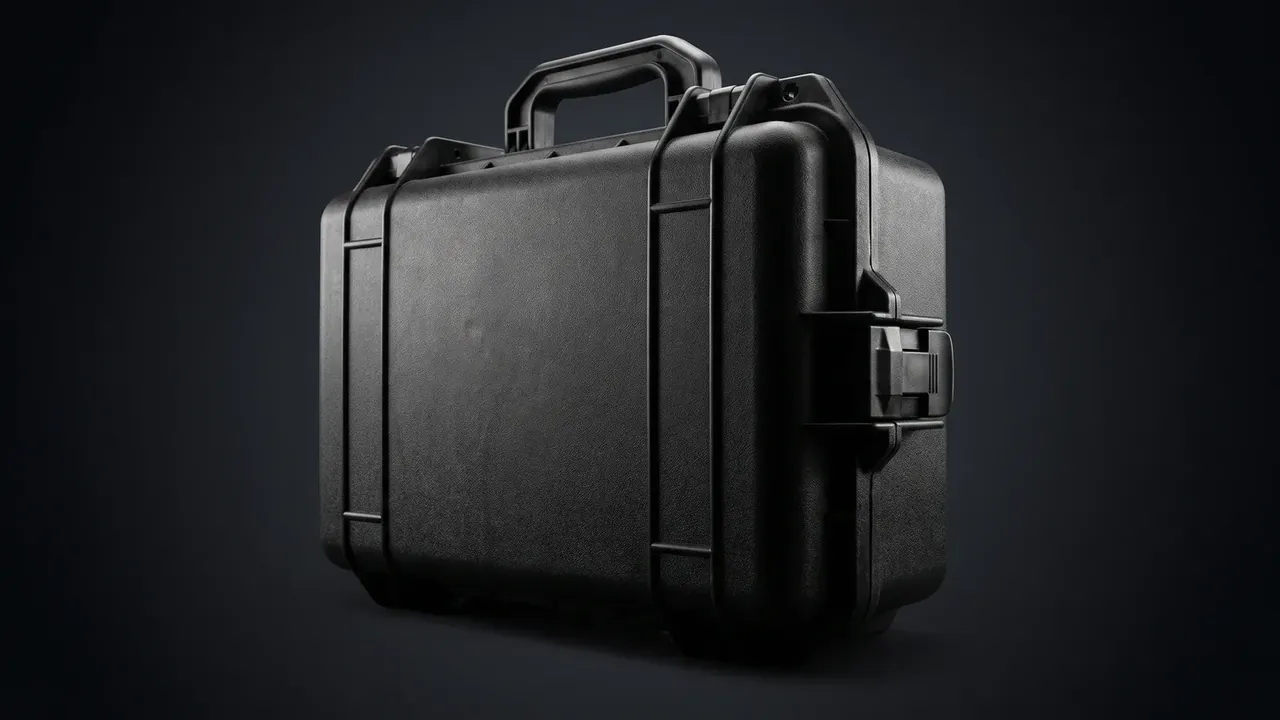
Quick answer: A Rainproof Outdoor Protective Case sheds what collects on the lid after the rain stops, and drainage matters more than another turn of the latch.
Table of contents
- Rainfall intensity and the load on the case
- Lid overlap and the drainage channel
- When a drain valve is mandatory
- Gasket compression and rebound
- Storing through the wet season and when to open
- FAQ
1. Rainfall intensity and the load on the case
The commonest mistake with a rainproof shell is sealing it so hard that water which does get in has no way out. Rain comes in bands: 2.5 mm/h barely wets the ground, 8–15 mm/h fills the gutters, 20 mm/h throws spray off the lid. A Rainproof Outdoor Protective Case is not built for one band but for the film of water each band leaves behind.
Water on the lid has three routes: along the overlap and off the edge, into the channel, or by capillary action into the gasket groove. The first two are geometry, the third is compression.
Load follows intensity. A light film carries no head, so the overlap line decides. Heavy rain overwhelms the overlap and climbs to the latch bosses, where each boss seal is tested. At 20 mm/h the outlet is the bottleneck, water sheets across the lid and presses down on the gasket.
| Intensity | Rain per hour | Water on the lid | What to inspect |
|---|---|---|---|
| Light | 2.5 mm/h | Continuous film, no pooling | Contact line along the overlap |
| Heavy | 8–15 mm/h | Overlap overwhelmed, water at the latches | Seal around each latch boss |
| Cloudburst | 20 mm/h | Sheet across the lid, outlet decides | Outlet flow and channel depth |
After the rain stops the water stays a while. Flat holds most, domed less, sloped least, and the outlet belongs on the low side; put it high and water must climb to leave.
2. Lid overlap and the drainage channel
The overlap is the band where the lid skirt sits outside the rim. Enough width forces water to travel upward before it can enter; too little, and a gust pushes it over. The overlap on a Rainproof Outdoor Protective Case has to hold in crosswind, not only in still air.
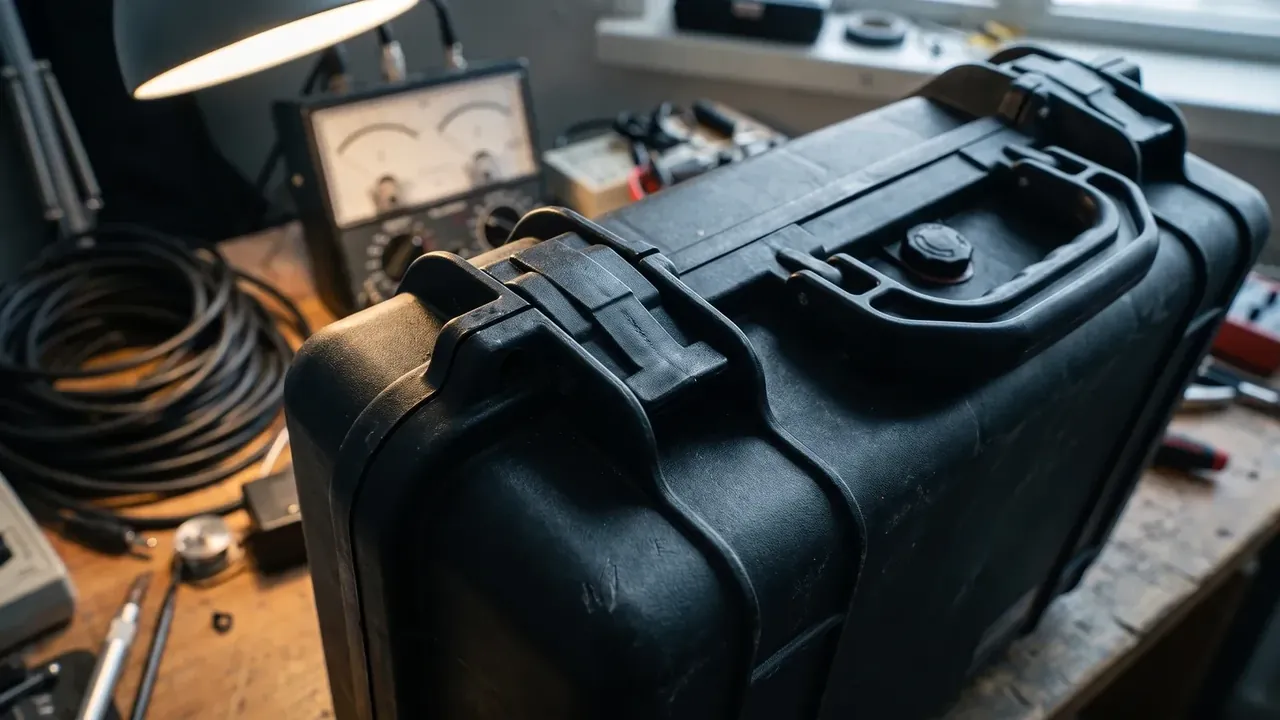
The channel runs inside the overlap at about 3 mm deep, catching what passes the first gap and walking it to the outlet. Too shallow and water spills over the lip; too deep and the floor sinks during moulding, leaving a hairline where water waits.
On a Rainproof Outdoor Protective Case the outlet position beats the count. At the lowest point of the channel, with a slight fall outward, gravity empties it; mid-run, both halves move water sideways and the middle becomes a trap. In driving rain fit a downward lip.
3. When a drain valve is mandatory
A drain valve belongs on a Rainproof Outdoor Protective Case when water can collect inside, not when the rain is heavy. Three cases call for one: storage in the open for months, washdown with a hose, and a night-time drop steep enough to condense on the inner wall. With none of them, the valve is an extra hole.
It cracks at 0.1 bar, roughly the head of 1 m of water. A shallow pool in the base never reaches that, so it is opened by hand; it leads water to the outlet rather than pumping.
| Mounting point | Suits | Key condition | What goes wrong |
|---|---|---|---|
| Lowest wall point, between ribs | Open storage, washdown | Port edge flush with the floor | Residual water, permanent damp |
| Low corner of the base | Cases set on a slope | Boss thick enough to thread | Thin boss cracks when tightened |
| Mid-wall | Forced side drainage only | Case stays level in service | Water sits below the port |
Closed, the O-ring must hold the IP67 duty of 1 m for 30 min. Build a boss before threading: cut a thread into a 2.0–3.5 mm wall and it strips in two turns.
4. Gasket compression and rebound
The gasket on a Rainproof Outdoor Protective Case keeps water out by being squashed. Closed, it sits at about 25% compression and the rebound holds it to the rim as one band. Under 20% the band breaks into segments and water enters at the breaks. Over-compression sets the compound, rebound fades over a few closings, and the breaks multiply.
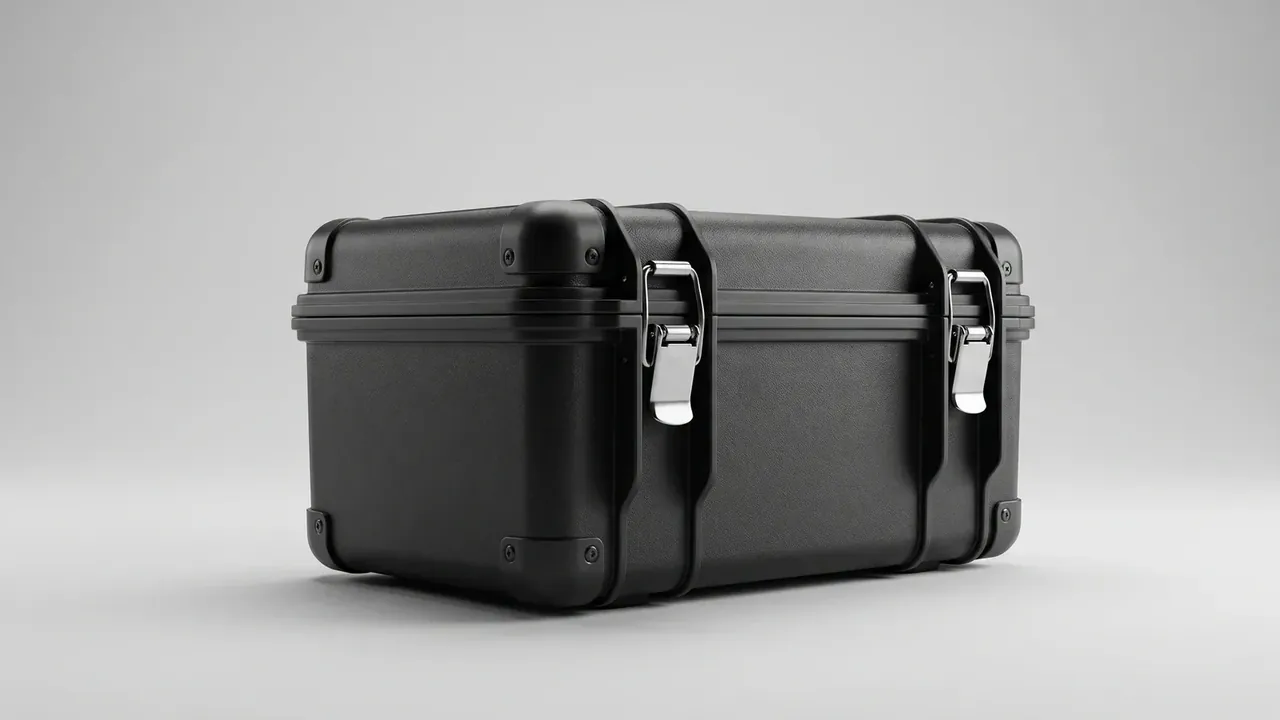
Compression drifts with temperature. A sun-warmed lid deforms and crushes the gasket harder; in cold the compound stiffens and the same latch force no longer reaches 25%. Either way rebound goes early.
| Compression | Rebound | Rain result |
|---|---|---|
| Around 25% | Back within 1 min of release | Continuous band, normal |
| 20%–25% | Slow, a print stays on the face | Fine in short rain, seeps in long |
| Below 20% | Print stays, patches harden | Rejected, replace the gasket |
UV is the other variable: after 500 h the face chalks and leaves a white bloom, which does not leak by itself but marks a compound that has gone brittle. A Rainproof Outdoor Protective Case left out all year should carry this in its annual check.
Sand in the groove is the quiet failure, sitting under the gasket, eating compression and giving water a path. Blow the groove out at every opening. After neutral salt spray at 5% sodium chloride, 35 °C, 48 h, the gasket face and latch pins get a second look.
5. Storing through the wet season and when to open
Only one attitude works through the wet season: lid up, case raised off the ground, outlet facing the fall. Lid down, water pools against the base and creeps in at the hinge and latch holes; base flat on the ground, water wicks up through the rib gaps.
Pick the moment to open a Rainproof Outdoor Protective Case. With water still standing on the lid, opening sends it down the inside face. Let the film clear, wipe the lid dry, then release the latches while supporting the lid.
The first opening after rain covers three checks: water in the gasket groove, a tide mark in the base, white scale at a latch boss. Two out of three means rain already got in. After 2 h of continuous rain, standing water inside, or compression below 20%, the case is unfit. Choosing a Rainproof Outdoor Protective Case comes down to giving water a route out: lid to overlap, overlap to channel, channel to outlet.
Related Reading
- UV hours, gasket and drain valve
- Where the waterproof standards stop
- When a drain valve is mandatory
- UV-resistant weatherproof plastic cases
JUNZHIJIA
Related Products
- 8 Series — Gun Cases; Military Equipment Cases; Camera Equipment Cases; Drone Cases; Watch Cases; Knife Cases; First Aid Cases; Electronics Equipment Cases
- WL8-2812 PP Gun Case — model WL8-2812
- All protective cases and toolboxes: 7 series, 158 models