

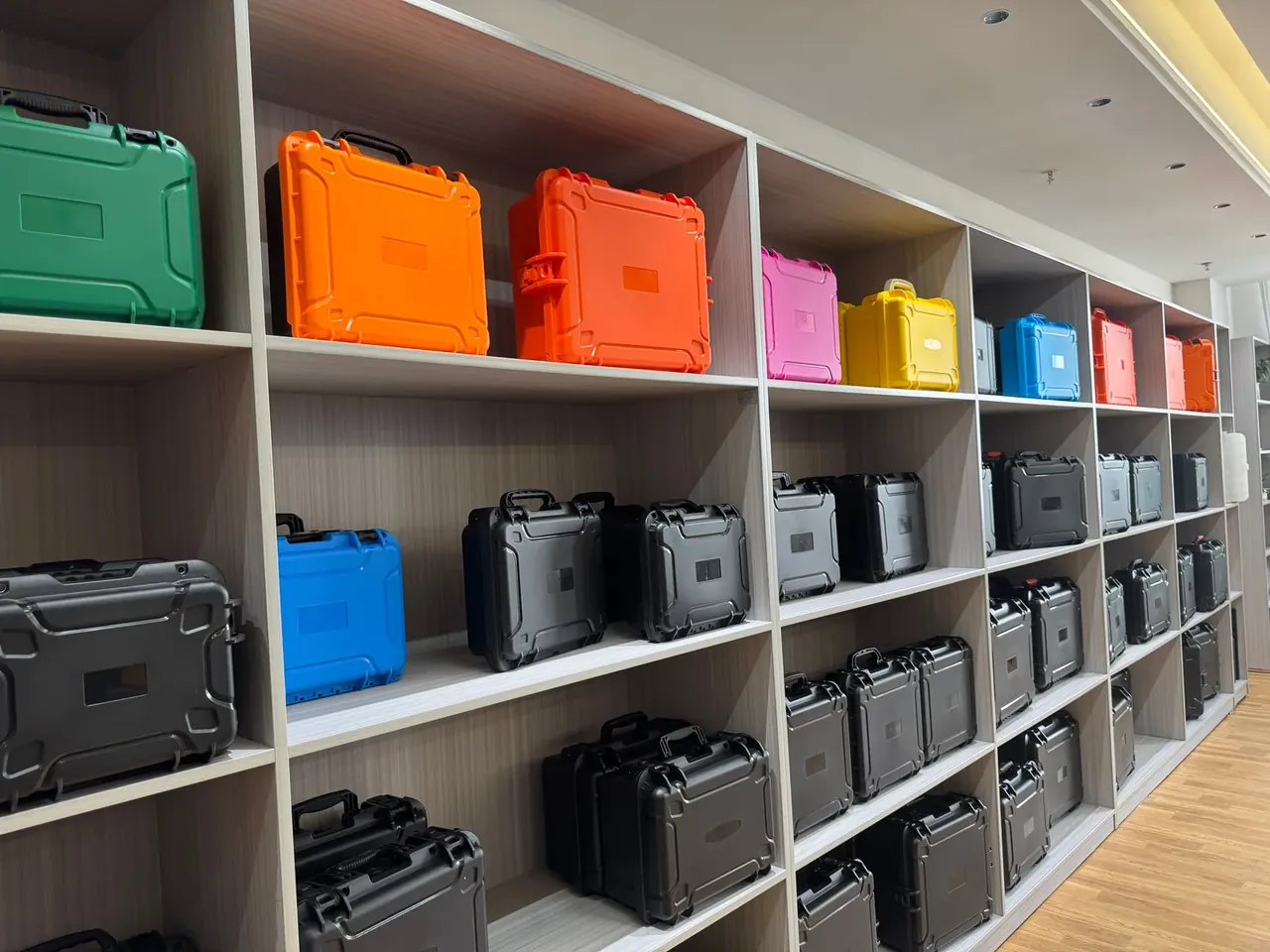
Quick answer: An Outdoor Protective Case is released on accumulated irradiance: 1200 h at 0.76 W/m², equal to 1788 h at 0.51 W/m². Gasket set must hold under 22%.
Table of contents
- UV Exposure Hours and Irradiance Accumulation for an Outdoor Protective Case
- Gasket Compression Set and Recovery
- Drain Plug Bore and Sealing Face
- Colour Fastness and Surface Chalking
- Exposure Verification and Release Criteria
- FAQ
1. UV Exposure Hours and Irradiance Accumulation for an Outdoor Protective Case
An Outdoor Protective Case fails at the gasket long before the shell gives up. A 5 mm wall carries pigment that absorbs most ultraviolet near the surface, while an 8 mm gasket section exposes far more area and loses elasticity first.
Accumulated irradiance is irradiance times hours, and the control point sits at 340 nm because that band breaks polymer backbones. Running at 0.76 W/m² is the accelerated level; ISO 4892-2 Method A uses 0.51 W/m², so the same lamp accumulates 1.49 times faster.
Twelve hundred hours at 0.76 W/m² becomes 1788 h at 0.51 W/m². A duration quoted without its level says nothing, because the same 1200 h covers two very different doses.
| Accumulated | Level | Cycle | Equal at 0.51 W/m² |
|---|---|---|---|
| 600 h | 0.76 W/m² | ISO A | 894 h |
| 1200 h | 0.76 W/m² | ISO A | 1788 h |
| 1800 h | 0.76 W/m² | ISO A | 2682 h |
The cycle runs 102 min of dry light, 18 min of light with spray, black standard at 65 °C and chamber air at 38 °C. The spray is a thermal shock, not a water supply, and hairline cracks start where hot dry rubber meets cold water.
Shell damage trails that curve. A 5 mm wall needs past 1800 h before ΔE lifts clearly, while the gasket reads at 600 h, so an Outdoor Protective Case report always lists the two apart.
2. Gasket Compression Set and Recovery
Sealing comes from compression, not softness. A 6 mm groove holding an 8 mm section compresses 25 percent on closing, and the 2 mm left presses on the sealing face.
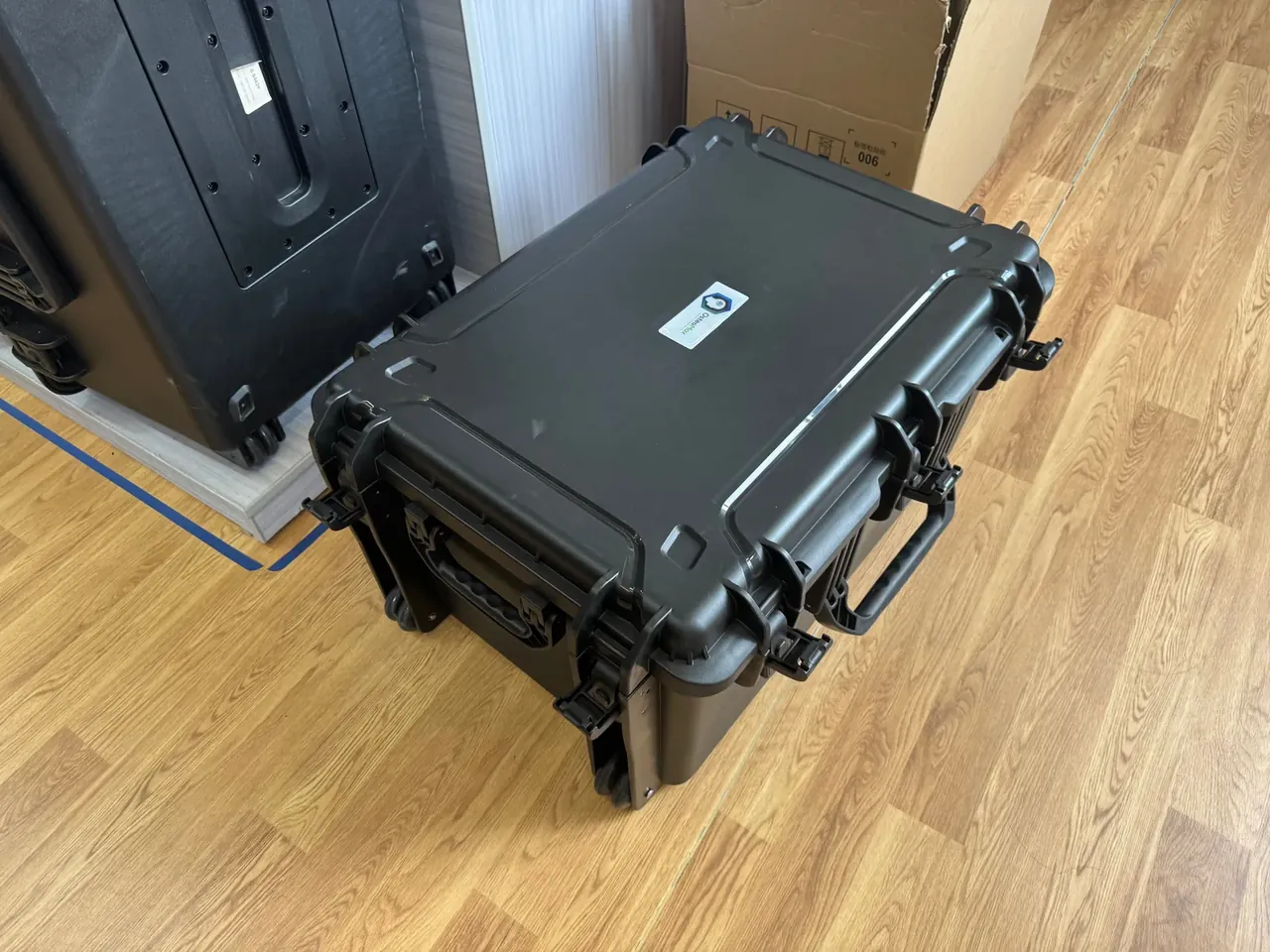
Compression set on an Outdoor Protective Case follows ASTM D395 Method B, equivalent to ISO 815: 22 h at 70 °C, 25 percent deflection, 30 min of recovery before measuring. The figure says how far the rubber fails to return, not how hard it is.
Aged rubber rarely stiffens; it stops coming back. A 22 percent set leaves 1.56 mm of the original 2 mm, line pressure drops a third, and spray tracks under the lip.
| Compression set | Condition | Hardness | Reading |
|---|---|---|---|
| 12% | 70 °C × 22 h | Shore A 55 | ample recovery |
| 22% | 70 °C × 22 h | Shore A 55 | release limit |
| 30% | 70 °C × 22 h | Shore A 55 | face loses pressure |
Shore A 55 sits between two failures: at A 45 the lid flattens the profile, while at A 70 the closing force doubles until the latch tongue runs out of travel. Cold adds a penalty: EPDM stiffens at −20 °C and seats slowly.
3. Drain Plug Bore and Sealing Face
The drain plug on an Outdoor Protective Case is not an accessory: 12 mm in bore, at the lowest point of the body, closed by an O-ring on a threaded plug.
Bore follows flow. At equal head a 12 mm bore passes 2.25 times the area of an 8 mm bore and drains in under half the time, invisible with 200 mL inside and obvious with 2 L.
The sealing face is 1.5 mm wide with the O-ring compressed 20 percent. Narrower, and one 0.5 mm grain of sand lifts a path; wider than 3 mm, the same torque spreads unevenly.
| Drain bore | Relative flow | Case volume | Note |
|---|---|---|---|
| 8 mm | 1.0 | under 20 L | clogs with sand |
| 12 mm | 2.25 | 20 to 60 L | standard choice |
| 16 mm | 4.0 | above 60 L | needs a sand screen |
Position causes more trouble than diameter. A plug 10 mm up the side wall leaves a layer of water; on the flat centre it drains fully, but needs a 3 mm reinforcing ring. IP67 covers 1 m for 30 min only with the plug closed, since water follows an open thread straight in.
4. Colour Fastness and Surface Chalking
Colour change on an Outdoor Protective Case is graded on the ISO 105-A02 grey scale from 1 to 5, where 5 means no visible change. Instrument readings use ΔE, and 2.0 is the measurable ceiling before a colour block edge shows.
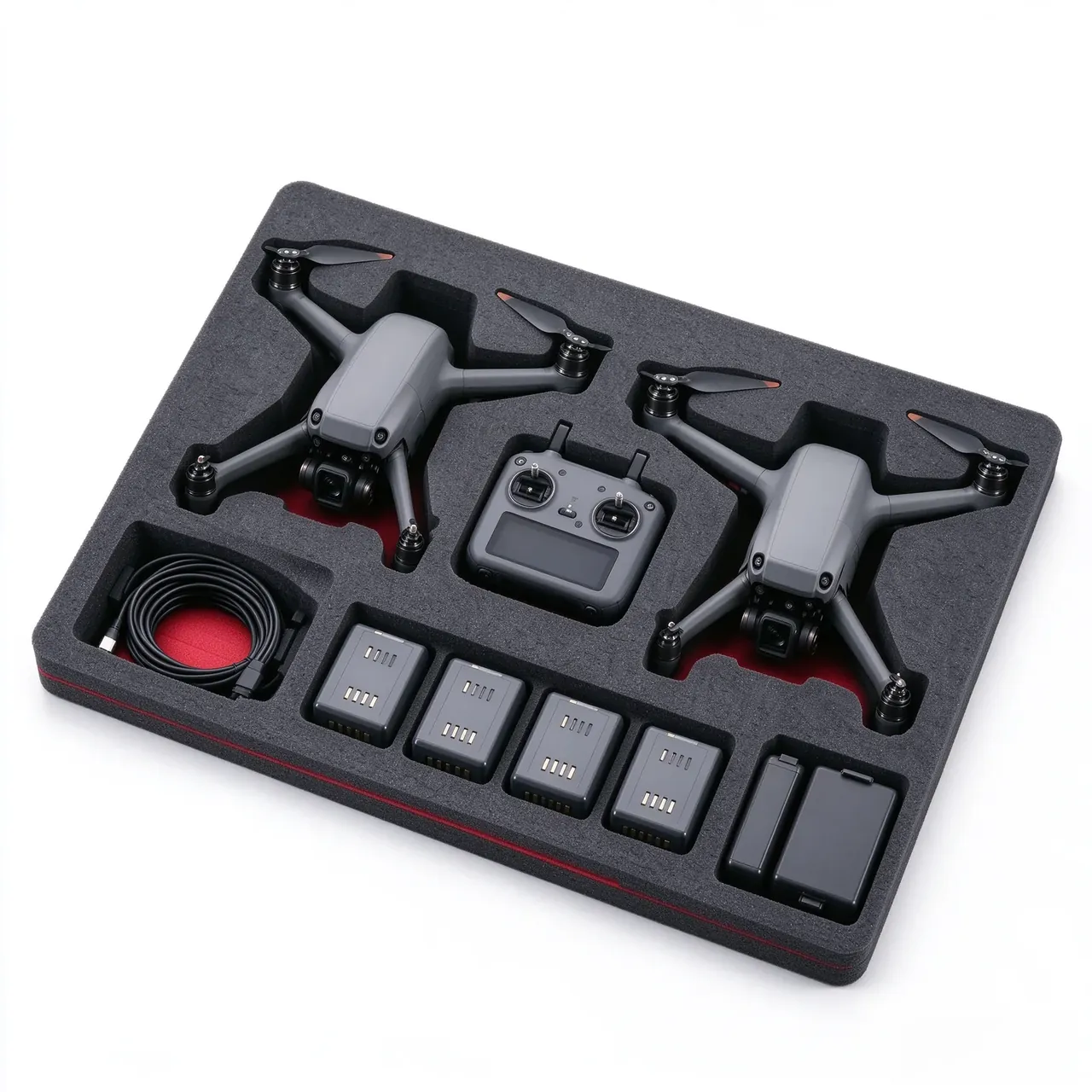
Chalking is rated by the ISO 4628-6 tape method from 0.5 to 5. Grade 1 is very slight; grade 2 is slight but already in patches. This is pigment and resin broken at the surface, so wiping exposes more of it.
Dark shells lose first: a dark surface absorbs more heat and ages faster, so a two-colour batch reaches ΔE 2.0 on the dark units. Chalking also strips resin and flattens the texture, and polishing removes the last dense skin.
5. Exposure Verification and Release Criteria
The 1200 h on an Outdoor Protective Case is not run in one block. It splits into four stations of 300 h, because the shape of the curve carries as much as the end point.
Release is fixed: past 1200 h accumulated, a set above 22 percent or chalking at grade 2 keeps the compound out of production, however well the other reads.
Each station measures ΔE, chalking grade and compression set; tensile retention is background only, since it responds to surface ageing slowly and cannot carry a release.
The record lists level, black standard temperature, spray timing, sample numbers and every reading. Mixing two levels in one report is how an Outdoor Protective Case gets signed off on a number nobody can reproduce.
Conclusion
Three ledgers decide an Outdoor Protective Case: irradiance, gasket and drain. Twelve hundred hours at 0.76 W/m² equals 1788 h at 0.51 W/m², set holds under 22 percent, the bore is 12 mm behind a 1.5 mm face, and chalking stays below grade 2. Line those up and the compound is released; miss one and the shell still is not the part that fails first.
Related Reading
- UV stabiliser systems for cases
- gasket compounds: silicone, EPDM, PVC
- cleaning and caring for case gaskets
- plastic case versus wooden crate
Related Products
- 8 Series — Gun Cases; Military Equipment Cases; Camera Equipment Cases; Drone Cases; Watch Cases; Knife Cases; First Aid Cases; Electronics Equipment Cases
- WL8-2812 PP Gun Case — model WL8-2812
- All protective cases and toolboxes: 7 series, 158 models